


If you only have time for one island day trip from Auckland, the choice usually comes down to Waiheke Island or Rangitoto Island. Both sit in the Hauraki Gulf, both are an easy ferry ride from downtown, and both deliver big views back to the city skyline. Yet the experiences could not be more different. One is New Zealand’s famous “island of wine,” all vineyard lunches, beaches and buses. The other is Auckland’s youngest volcano, a stark lava landscape made for hiking boots and daypacks. This guide lays out the practical details so you can decide, with limited time, which island is the better fit.
Ferry Time, Schedules and Total Time Needed
From central Auckland, Waiheke Island feels like a classic commuter and visitor route. Passenger ferries from the downtown ferry terminal to Matiatia Bay generally take around 35 to 45 minutes each way, with departures running frequently through the day and into the evening on most days. In practical terms, that means you can leave mid-morning, spend a full day at wineries and beaches, linger over sunset drinks and still catch a ferry back after dinner. Many visitors comfortably plan 8 to 10 hours on the island without feeling rushed.
Rangitoto Island is closer as the crow flies and the ferry ride often takes about 25 minutes, but services are limited to just a handful of departures and returns aligned with daylight and conservation rules. Typical schedules give you one or two morning sailings out and a couple of return times in the early afternoon and late afternoon. Because there is no accommodation and no evening ferry, you must plan your walk around the last boat back. Most hikers allow roughly 4 to 6 hours on the island, which is enough time to walk to the summit, explore the lava caves and return steadily.
If you want a relaxed full-day escape with flexible arrival and departure times, Waiheke fits better. If you want a focused half- or three-quarter-day adventure with a clear start and finish, Rangitoto’s timetable works, provided you are disciplined about watching the clock and catching that final ferry.
Costs, Transport and How Far Your Money Goes
For most visitors, the first cost comparison is the ferry. Standard adult return fares to Waiheke are typically higher because it is treated as a longer, premium route and a major commuter service. You may find off-peak specials or bundled wine-tour tickets, but in general expect the Waiheke ferry to be one of your bigger day-trip expenses. However, once on the island you can use public buses that meet many ferries at Matiatia, or opt for shuttle vans and hop-on-hop-off style winery buses that loop around popular vineyards and beaches. These shared options spread your costs across the whole day.
Rangitoto ferry tickets are usually a bit cheaper than Waiheke, reflecting the shorter journey and lack of commuter demand. However, there is virtually no on-island public transport beyond a seasonal tractor-style “road train” that carries visitors partway toward the summit. If you are happy to walk, your main costs are simply the ferry and any snacks you bring from Auckland. Because there are no shops or cafes, you cannot casually spend money even if you want to.
Overall, Waiheke tends to be the more expensive day out once you add in winery tastings, vineyard lunches and perhaps a taxi between far-flung beaches such as Onetangi and Palm Beach. It rewards that spend with a wide choice of food, wine and comfort. Rangitoto is comparatively low-cost but also far more basic. If you are traveling on a tight budget and comfortable packing your own food, Rangitoto can be one of the most affordable signature experiences near Auckland.
Food, Wine and On-Island Facilities
When it comes to food and wine, Waiheke Island is in an entirely different league. Often marketed as New Zealand’s “island of wine,” Waiheke has dozens of boutique wineries, many with cellar doors and serious vineyard restaurants. Iconic names like Mudbrick, Cable Bay, Tantalus and Stonyridge are well known among locals and international visitors alike for long lunches, tasting flights and sweeping views back to the city and out over the Hauraki Gulf. You will also find casual spots such as The Heke with its brewery and distillery, beachside dining at Onetangi, and food trucks or takeaways in Oneroa village where you can grab woodfired pizza or fish and chips to eat overlooking the bay.
Facilities on Waiheke are closer to what you would expect in a small town. There are multiple grocery stores, bottle shops, cafes, public toilets near main beaches, playgrounds and an active local bus network. For families or travelers who like to make decisions as they go, this infrastructure means you do not have to pre-plan every detail. Miss a bus, and you can simply get the next one. Change your mind about lunch, and there will be another café or vineyard within a short drive.
Rangitoto, by contrast, is managed as a conservation island with no permanent residents, no shops, no cafés and no potable water available to visitors. The only buildings you are likely to enter are simple shelters at the wharf and a handful of historic baches that are part of the island’s heritage story. The Department of Conservation advises all walkers to bring their own food, at least one to two litres of water per person, sun protection and warm layers. There are toilets at the wharf and near the summit, but nothing in the way of commercial services. If you arrive without supplies, your only option is to go back on the next ferry.
Beaches, Scenery and Overall Atmosphere
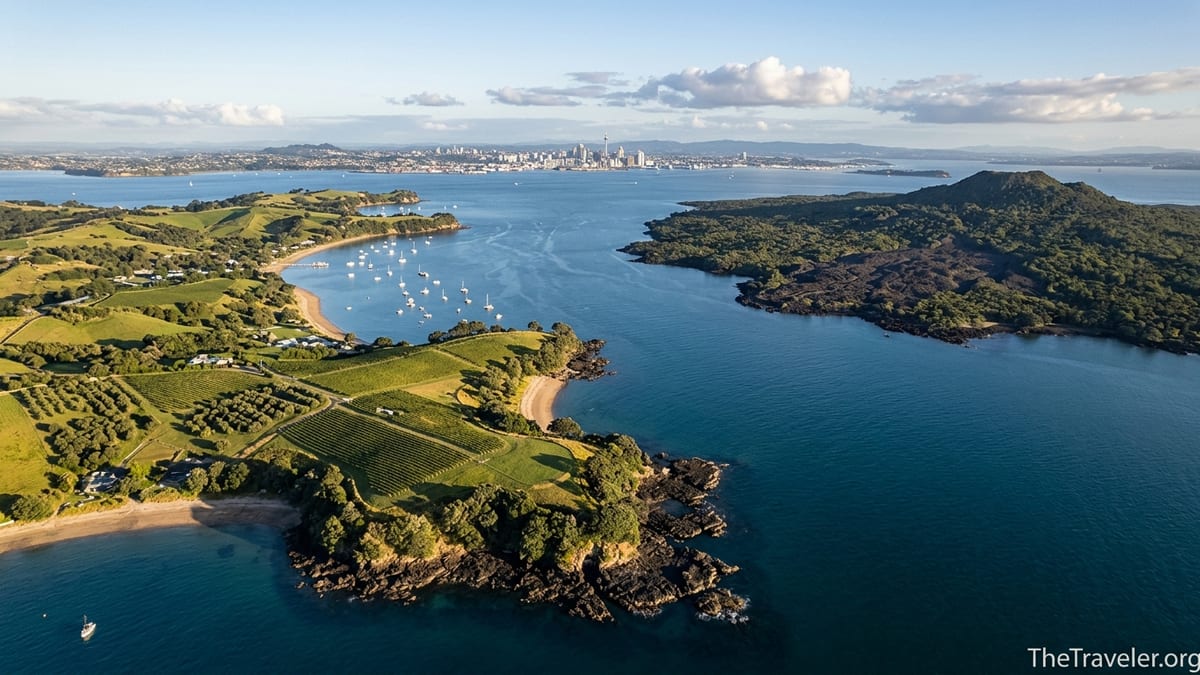
Waiheke delivers the classic island holiday feel that many visitors imagine when they think about the Hauraki Gulf. Think golden-sand beaches like Oneroa and Onetangi, calm bays dotted with yachts and safe swimming in summer. Between the beaches and hills are patchworks of vineyards, olive groves and pockets of regenerating native bush. The atmosphere in peak season is lively but not chaotic. In the height of summer you will see families picnicking at Palm Beach, couples carrying a bottle of Waiheke syrah down to the sand at Little Oneroa, and groups of friends drifting between tasting rooms on winery shuttle buses.
Rangitoto offers something far starker and more elemental. It is a relatively young volcanic cone, its flanks covered in black scoria, raw lava flows and hardy vegetation. The main summit track climbs steadily through a mix of basalt, lava fields and the world’s largest pohutukawa forest, crossing boardwalks near the crater rim before delivering a 360-degree view. On a clear day, you can look straight across to the skyscrapers of downtown Auckland, over neighboring Motutapu Island and out across the wider gulf. There are small rocky coves and mangrove-fringed shorelines, but this is not a beach destination in the usual sense: there are no patrolled swimming beaches with soft sand and ice cream shops at the back of the bay.
For mood and atmosphere, Waiheke feels social and indulgent, with plenty of places to linger. Rangitoto feels remote in spite of its proximity to the city, especially once the day’s walkers have spread out along the trails. If you want to spend your time barefoot on the sand with a glass of sauvignon blanc, Waiheke wins. If you want to feel like you have walked on the surface of an ancient eruption, Rangitoto is unmatched.
Hiking, Fitness Levels and Volcanic Experiences
Waiheke has some excellent walking tracks, many of them coastal or through regenerating bush, but hiking is usually a side activity rather than the main reason people visit. Popular routes include the headland walks near Matiatia and trails linking Oneroa with neighboring bays. These are generally well formed, with modest elevation gains and plenty of options to shorten or extend your route. Most reasonably active visitors can manage these walks in normal sneakers, and it is easy to combine a morning stroll with an afternoon of tastings.
On Rangitoto, walking is the entire point of the trip. The signature experience is the summit track, which Department of Conservation guidance suggests takes about two hours return for fit walkers, covering roughly 6 to 7 kilometers with about 250 meters of vertical gain. The track varies from formed path to rough, uneven volcanic rock, with loose gravel and little shade in places. Around the top are wooden steps and boardwalks that take you to the crater rim and out to viewing platforms. Side trips to lava caves involve short detours on even rougher terrain, where a torch or phone light is recommended if you want to explore safely.
While the summit track is rated as easy to intermediate, it can feel demanding for those not used to uphill walking or unstable surfaces. Children who regularly walk and are supervised often complete it, but local hikers note that the sharp scoria can be unforgiving if you fall and that there is limited shelter from midday sun. Good closed shoes with grip are essential and those with knee, ankle or balance issues may find the descent more challenging than the climb. For committed hikers, longer routes loop around the island or link to neighboring Motutapu, turning the day into a proper tramping outing.
Time Management, Weather and Practical Considerations
Because Waiheke has frequent ferries and plenty of services, time management is relatively forgiving. You can start late, take breaks and change plans as the weather shifts. If a forecast looks mixed, it is still easy to spend time in cellar doors, art galleries in Oneroa or undercover restaurant terraces. Rain showers are common around Auckland, but they rarely ruin a Waiheke day; they just shift the focus from the beach to the tasting table.
On Rangitoto, the fixed ferry schedule and lack of shelter make good planning more important. You need to check the day’s sailing times before you book and work back from the last return to ensure you have enough hours for your chosen walk, snack stops and photos. In strong sun, the dark lava absorbs heat and the track can become very hot; in poor weather the exposed sections feel bleak and wind-swept. Because there is no option to simply duck into a café and wait out a squall, most visitors choose Rangitoto on days with settled conditions and clear visibility to fully enjoy the views.
Footwear and packing lists also differ. For Waiheke, comfortable walking shoes or sandals are enough, with a light jacket and beachwear if the season suits. A small daypack for sunscreen, a water bottle and perhaps a towel will usually suffice, as you can top up supplies at shops throughout the day. For Rangitoto, think more like a proper day hike: sturdy shoes or hiking boots, at least one to two litres of water per person, food, a hat, sunscreen, a waterproof layer and a torch if you want to see the lava caves well.
Who Each Island Suits Best
For couples, Waiheke is the classic romantic choice. Many vineyards are set up specifically to cater for long, lingering lunches with sea views, shared platters and local wines by the glass or bottle. It is easy to piece together a day that starts with a ferry ride, flows into a tasting at Mudbrick or Cable Bay, continues with a wander through Oneroa’s galleries and finishes with sunset drinks above the vines. Rangitoto can also be memorable for couples who enjoy outdoor challenges, but the mood is more about shared achievement on a summit than about fine dining.
Families generally find Waiheke simpler unless everyone is keen on hiking. The beaches offer safe swimming and space to play, and the presence of playgrounds, public toilets, ice creams and short bus rides makes logistics straightforward. Rangitoto can work for active families with older children who can manage a few hours of uphill walking on uneven surfaces and who are excited by lava caves and volcano stories. For younger children or those with limited stamina, the combination of heat, distance and time pressure to make the last ferry may feel stressful.
Dedicated hikers will likely prefer Rangitoto, particularly if the volcano’s geology interests them. The island’s network of tracks, from the summit route to longer coastal circuits, offers a distinctly volcanic experience close to the city. That said, hikers staying several days in Auckland often enjoy doing both: Rangitoto for the eruption story and Waiheke for a slower day of coastal tracks and swims framed by wine country.
Wine lovers are almost always better served by Waiheke. Tasting rooms there pour a range of varietals from bold reds to aromatic whites, with structured flights and knowledgeable staff. You can easily visit multiple cellar doors in one day using a hop-on-hop-off bus or a guided wine tour that handles all logistics. On Rangitoto there is no alcohol service at all, and drinking on the tracks is discouraged given the conservation focus and need to pack out all rubbish.
The Takeaway
For Auckland visitors with time for only one island day trip, the choice between Waiheke and Rangitoto comes down to what kind of experience you value most. Waiheke suits travelers wanting food, wine and a relaxed full day. It is the better option if you picture yourself moving at an easy pace, tasting at vineyards, eating well, dipping into the sea and not worrying too much about missing a specific ferry. It does cost more by the time you add lunch, tastings and transport, but most people leave feeling they have had a full mini-holiday in a single day.
Rangitoto is primarily an active volcanic-hiking trip. You go for the steady climb through lava fields, the raw texture of the landscape and the summit panorama over Auckland and the Hauraki Gulf. The day is cheaper, more structured and more physical. There is no café safety net if the weather turns or your energy dips, so it is best for walkers who enjoy planning, packing and committing to the trail. For many outdoor-focused travelers, that simplicity is the attraction.
If you are a couple seeking romance, a family wanting easy logistics, or a wine lover prioritizing cellar doors and good food, choose Waiheke. If you are a hiker, a geology enthusiast, a budget traveler happy to self-cater, or someone with only half a day who wants a single, focused adventure, pick Rangitoto. Both islands are outstanding, but with limited time in Auckland, committing to the one that matches your style will turn a good day out into a great one.
FAQ
Q1. Which island is better if I only have half a day in Auckland?
Rangitoto usually fits a half-day schedule better because the ferry times naturally create a 4 to 6 hour window for hiking, and there is no need to plan multiple stops. Waiheke is technically possible in half a day, but you will barely scratch the surface and may end up spending more time on transport than relaxing.
Q2. How fit do I need to be to hike Rangitoto’s summit track?
Most reasonably active people can complete the 2 to 3 hour return summit walk, but you should be comfortable walking uphill on uneven, sometimes loose volcanic rock. If you regularly walk several kilometers and can manage stairs without difficulty, you are likely to cope, provided you take breaks and bring enough water.
Q3. Can I visit Waiheke Island without a car?
Yes. Many visitors arrive on foot and get around using the island’s public buses, which link Matiatia Wharf with Oneroa, Onetangi and other key areas. There are also shuttles, taxis and winery tour buses that make it easy to visit cellar doors and beaches without driving.
Q4. Are there any food or drink options on Rangitoto Island?
No. There are no shops, cafés or bars on Rangitoto. You must bring all the food and water you need for the day from Auckland, and you are expected to carry all rubbish back with you on the ferry.
Q5. Is swimming possible on both islands?
Waiheke has several popular swimming beaches, including Oneroa, Palm Beach and Onetangi, with sand, gentle waves and nearby facilities. Rangitoto, while surrounded by water, does not have developed swimming beaches; the shoreline is largely rocky or mangrove-lined, and most visitors focus on hiking rather than swimming.
Q6. Which island is more budget friendly?
Rangitoto is generally more budget friendly because your main expense is the ferry ticket and whatever food you pack. Waiheke ferry tickets often cost more, and once on the island it is easy to spend on tastings, restaurant meals and transport between vineyards and beaches.
Q7. What should I wear and bring for each island?
For Waiheke, comfortable clothing, walking shoes or sandals, sunscreen and a light jacket are usually sufficient, as you can buy food and drinks on the island. For Rangitoto, treat it like a day hike: sturdy shoes, sun protection, a waterproof layer, at least one to two litres of water per person, snacks or lunch and a torch if you plan to explore the lava caves.
Q8. Is either island suitable for young children or older travelers?
Waiheke is generally more suitable for young children and older travelers thanks to its beaches, playgrounds, cafés and easy transport options. Rangitoto can be rewarding for active families and older walkers who are steady on their feet, but the uneven volcanic terrain and exposure to sun mean it is not ideal for everyone.
Q9. Do I need to book tours in advance for Waiheke wineries?
In peak season and on weekends, it is wise to book tastings and vineyard lunches ahead, especially at well-known places. Outside busy periods you can often visit cellar doors on a more casual basis, but checking opening hours and making at least one booking for lunch helps avoid disappointment.
Q10. If I love both hiking and wine, is it realistic to do both islands in one visit to Auckland?
Yes, if you have at least two free days. Many travelers spend one day hiking Rangitoto and a separate, more relaxed day on Waiheke focused on wine and beaches. Trying to combine both islands in a single day is not practical given ferry logistics and the distance between them.