


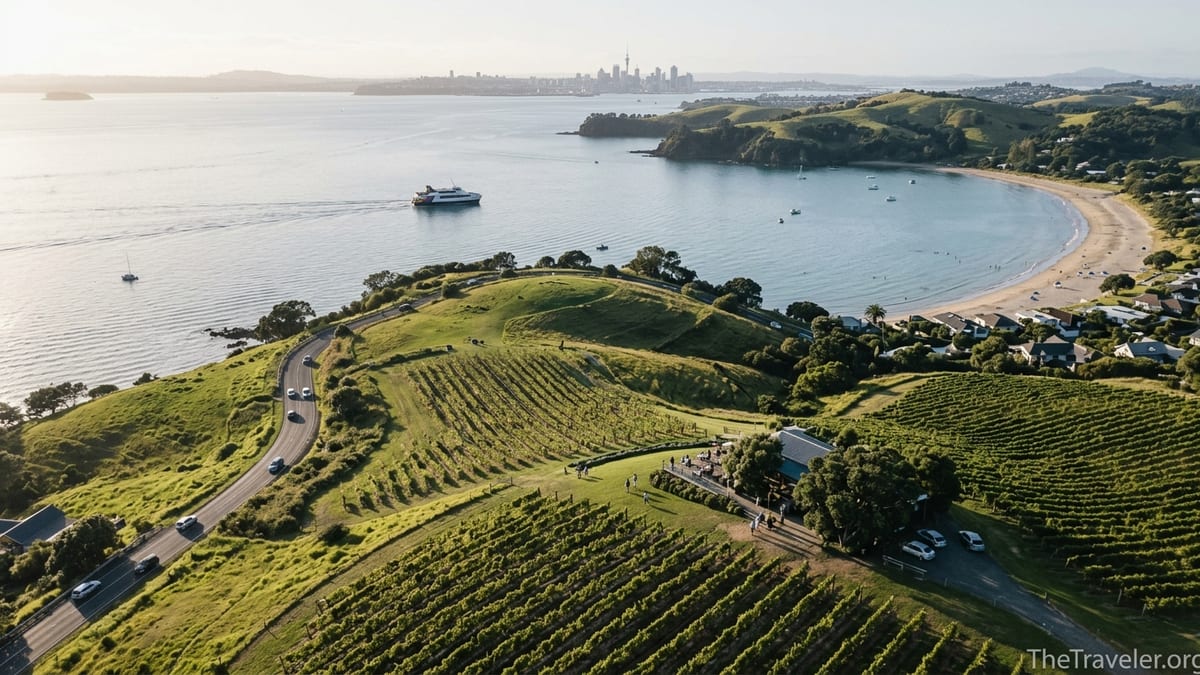
Waiheke Island has a reputation that far exceeds its size. Just 40 minutes by ferry from downtown Auckland, it combines vineyard-covered hills, sheltered bays and easy public transport in a way that makes day tripping both realistic and rewarding. With more frequent ferries, competing operators and an ever growing list of wineries and beach venues, planning your time well matters more than ever. This guide focuses on how to structure a practical Auckland to Waiheke day trip around ferries, wine tasting, beaches and getting around without a car, with clear examples that match how the island works in 2026.
Choosing and Booking Your Ferry From Auckland
For most visitors, the trip to Waiheke begins at the Downtown Ferry Terminal on Quay Street. Passenger ferries run regularly to Matiatia Wharf on Waiheke, with Fullers360 the main operator and Island Direct a smaller independent alternative. Fullers360 typically runs services roughly every 30 to 60 minutes in the middle of the day, with earlier commuter sailings and extra departures in the summer on peak dates. Crossing time is about 40 minutes direct or closer to 50 minutes if the ferry calls at Devonport on the North Shore on the way.
Adult visitor return fares on the main passenger ferries are usually in the range most travelers expect for a popular day trip route, with commuter passes and local discounts aimed at residents rather than short stay visitors. Fullers360 publishes separate pricing for flexible multi trip passes and monthly passes, but as a day tripper you will most likely buy a standard same day return at the Downtown ticket windows or self service machines. Island Direct prices are often similar or slightly lower, and some travelers choose them deliberately to support a smaller operator with a less crowded feel.
From March 2026 Fullers360 introduced seasonal timetable adjustments that increase the number of sailings between October and early autumn. In practice that means that from roughly November through March there are multiple morning departures before 10:00, which is ideal for day trippers who want time for both wineries and a swim. A realistic pattern is to aim for an 8:00, 8:30 or 9:00 departure from Auckland for a full day, or a 10:00 or 10:30 ferry if you prefer a slower start and focus only on wine tasting.
In peak periods such as January, long summer weekends and public holidays, pre booking your ferry is strongly recommended. Fullers360 has continued a pricing model that rewards off peak travel and manages capacity at the busiest times, so popular late morning and mid afternoon sailings can sell out. Booking a set outbound and return sailing online the week before you travel gives you certainty, while traveling on the earlier morning or later evening boats usually means a more relaxed boarding process than the midday departures.
Public Buses, Hop on Services and Guided Tours
Once you step off the ferry at Matiatia Wharf, you face the core transport choice that will shape your day. The simplest option is the public bus system operated under Auckland Transport branding, often using the legacy Waiheke Bus Company routes. Buses meet most ferries and follow a spine route past Oneroa village and out to Onetangi Beach, with branches serving Ostend and some residential areas. You can tap an AT HOP card if you have one from earlier Auckland travel, or buy paper tickets from the driver at modest prices per ride.
For visitors focused on winery hopping, two other options stand out. The first is the commercial hop on hop off bus services that run loops past a curated list of vineyards, beaches and viewpoints. A typical example is a loop that calls at Mudbrick, Cable Bay, Oneroa, Onetangi’s "vineyard strip" near Tantalus Estate and Te Motu, plus a stop near Stonyridge and Wild Estate. You buy one pass per person for the day, then board any of their distinctive branded buses at marked stops every 30 to 60 minutes, depending on the season. This is less structured than a guided tour but more targeted to wineries than the public bus.
Guided wine tours appeal to travelers who want to leave all logistics to someone else. Companies such as Waiheke Island Wine Tours and similar operators bundle ferry tickets, minibus transfers and hosted tastings into half day or full day trips. A typical half day "Essence of Waiheke" style itinerary in 2026 might involve a 10:00 departure from Auckland, pick up at Matiatia, and tastings at three vineyards like Mudbrick, Kennedy Point and Te Motu, followed by a drop off either at Oneroa village or back at the wharf in time for a mid to late afternoon ferry.
In practical terms, public buses are best for budget conscious travelers or those willing to mix wineries and beaches with a bit of walking. Hop on services suit independent wine lovers who want choice and flexibility but still prefer a direct link between wineries. Guided tours work well for first time visitors, cruise ship passengers with limited time, or anyone nervous about fitting tastings and transport into a tight schedule. You can also combine them, for example taking a morning guided wine tour then using the public bus to spend a lazy late afternoon at Onetangi Beach.
E Bikes, Scooters and Rental Cars
For active travelers, e bikes and scooters have changed what is realistic in a single day. Several rental shops close to Matiatia and in Oneroa village offer modern e bikes with helmets and basic maps. Daily hire rates are higher than a bus pass but let you link vineyards and beaches without waiting for scheduled services. The island is hilly, so an e bike rather than a standard push bike makes the difference between a fun cruise and a punishing climb, especially if you plan to ride out toward Onetangi or the more distant east end.
Using an e bike, a typical loop from Matiatia might follow the coastal road to Oneroa, cut inland via Surfdale and Ostend, stop at Wild Estate or Tantalus Estate for tastings, then continue down to Onetangi Beach for a swim and lunch at one of the beachfront restaurants. Later in the afternoon you could roll back via the central ridge road and finish with a sunset drink at Cable Bay or Mudbrick before catching a late ferry. Distances between these points are short in absolute terms, but the up and down terrain and narrow roads mean you should ride defensively and allow generous time.
Electric scooters and small mopeds are another option for confident riders. Some rental outlets include insurance and basic instruction, but you should treat them as small motorbikes rather than toys. Local traffic is used to mixed road users, yet in summer vehicle numbers increase and parking pressure grows at popular beaches and winery car parks. Helmets are compulsory in New Zealand, and drinking and riding carries the same legal and safety concerns as drinking and driving.
Rental cars are available on the island and through Auckland based companies that allow vehicles to be taken across on the vehicle ferry to Kennedy Point, operated by SeaLink. This can be convenient for families with young children, people with mobility issues or groups planning to explore remote bays or eastern vineyards that are poorly served by buses. However, for a straightforward winery and beach focused day trip, a car often adds stress in the form of parking, designated drivers and ferry booking complexity. Many repeat visitors now leave the car in Auckland and treat Waiheke as a pedestrian and public transport destination.
Building a Realistic Day Trip: Wineries and Beaches
Designing a workable itinerary starts with your first and last ferry times. Suppose you take an 8:30 sailing from downtown Auckland, arriving at Matiatia around 9:15. That gives roughly eight to ten hours on the island if you plan to return on a late afternoon or early evening sailing. Try to cluster your stops rather than zigzagging back and forth across the island.
For a wine first, beach later approach using public transport, one realistic pattern is to catch the bus or a hop on service directly from Matiatia to the Onetangi vineyard strip. You could book a 10:30 tasting at Tantalus Estate, then walk a few minutes to Te Motu for an early lunch among the vines. Afterward, stroll or shuttle down to Onetangi Beach and spend mid afternoon swimming or reading on the sand. When you are ready to head back, catch the bus through Ostend and Oneroa to Matiatia, stopping for a final glass with a harbour view at Mudbrick or Cable Bay only if you feel you have had enough time and are staying within sensible tasting limits.
If you prefer to minimize bus time, a different pattern keeps you closer to Matiatia and Oneroa. After arriving, walk or take a short shuttle to Cable Bay for a late morning tasting on the lawn overlooking the Hauraki Gulf, then continue on foot to Mudbrick for lunch with city views. From there, wander into Oneroa village for a coffee or ice cream and a swim at Oneroa Beach if the tide and weather co operate. In the late afternoon you can browse galleries and shops before catching an early evening ferry back to Auckland.
Travelers using a guided tour might lean into a structure the tour company provides. A company could, for example, include three vineyards such as Kennedy Point, Mudbrick and a boutique inland cellar door, with time built in at Oneroa or Onetangi at the end. In this case, your main planning job is to choose appropriate ferry times. An Auckland departure around 10:00 often pairs with an afternoon tour that has you back at Matiatia by 16:00 or 17:00, leaving room for an early dinner in Oneroa or a unhurried ferry check in.
Whatever pattern you choose, resist the temptation to cram in four or five winery tastings in one short day. Travel times between cellar doors, queues for tastings at popular places, and the simple desire to sit and enjoy a glass with a view all eat into the clock. Three substantial stops plus a beach visit is usually the maximum that still feels like a holiday rather than a race.
When to Book Ahead and How Busy It Really Gets
In 2026 Waiheke remains one of Auckland’s most popular day trip destinations, and its services respond accordingly. On ordinary weekdays outside of New Zealand school holidays, you can often buy ferry tickets on the day and secure space on a mid morning sailing without trouble. Wineries, especially larger estates such as Mudbrick or Cable Bay, can accommodate walk in visitors for tastings and casual dining, particularly if you avoid peak lunchtime slots.
From late December through February, on long weekends such as Waitangi Day and Labour Weekend, and whenever a cruise ship is in port, demand surges. In these periods, it is wise to book both your ferry and at least one key winery in advance. Many cellar doors use online reservations to manage tasting room capacity, offering set start times and fixed tasting flights. For example, a winery might list sessions at 11:00, 12:30 and 14:00, each lasting 45 to 60 minutes. Slotting one or two of these into your day and leaving open space around them works better than trying to improvise entirely on arrival.
Public buses can become crowded right after the arrival of a popular ferry, but they run on timetables designed to connect with major sailings. If one bus looks packed, waiting for the next or choosing a slightly less popular direction, such as traveling to Ostend and then on to Onetangi, can ease the crush. Hop on services logically mirror these peaks because they rely on the same flow of ferry passengers, so booking your day pass ahead of time secures your seat even if the bus is standing room only for the first leg.
Smaller group guided tours often cap numbers to maintain access to boutique wineries. As a result, they can sell out days or weeks ahead in the height of summer. Booking early is particularly important if you are traveling as a couple or solo and want the security of a hosted experience, or if you are visiting around major events in Auckland when domestic visitors also spill onto the island.
Is an Overnight Stay Worth the Extra Cost
With frequent ferries, it is entirely possible to see a satisfying slice of Waiheke in a single long day. However, accommodation options have expanded over the past decade, from simple beachside motels at Onetangi to designer holiday homes and vineyard cottages. Staying overnight becomes more attractive if you want to experience the island at either end of the day, when the commuter and day trip crowds are gone and the beaches and hillside terraces feel quieter.
Consider booking at least one night if you are visiting in peak summer and dislike tightly scheduled days. An overnight stay allows you to take a late afternoon ferry from Auckland, enjoy dinner at a winery restaurant such as Tantalus or Mudbrick, then sleep on the island and start your next morning already in place. You can then make the most of soft early light at Oneroa or Palm Beach before the bulk of visitors arrive on the mid morning ferries.
For wine enthusiasts who want to mix structured tastings with more relaxed grazing, two days is ideal. On day one you could join a guided tour visiting three to four vineyards with a host who handles bookings and transport. On day two, you might hire e bikes to revisit your favorite cellar door, explore Kennedy Point’s organic wines, or ride out toward quieter eastern beaches. This pacing reduces the risk of overindulging in a single compressed afternoon and leaves time for non wine experiences such as coastal walks.
Financially, the choice comes down to your accommodation budget and how it compares to the value of extra time. If you are already paying for a hotel room in central Auckland, shifting one night of that budget to a simple Waiheke guesthouse can be a wash rather than a true add on cost. For visitors with limited days in New Zealand, spending one night on Waiheke generally makes sense if you would otherwise be trying to fit both an urban Auckland evening and a full winery day into a single 24 hour span.
The Takeaway
A successful Waiheke Island day trip in 2026 hinges less on discovering hidden secrets and more on making smart, realistic choices. Start by locking in ferry times that match your energy levels and interests, keeping in mind that earlier sailings open up more room for both wineries and beaches. From there, pick a transport style that fits your personality, whether that is the simplicity of the public bus, the directness of hop on winery buses, the hand holding of guided tours or the freedom of e bikes.
On the ground, group your stops into logical clusters so you spend more time tasting and swimming than waiting at bus stops or riding in circles. Book ahead during peak summer for at least one or two key tastings and treat three substantial stops as a full and satisfying day. Finally, be honest about whether a single day will feel rushed for you. If sunrise on the beach, unhurried sunset tastings and quiet morning walks appeal, the extra cost of an overnight stay can transform a simple day trip into one of the most memorable chapters of your time in Auckland.
FAQ
Q1. How long does the ferry from Auckland to Waiheke Island take?
The main passenger ferries from downtown Auckland to Matiatia Wharf on Waiheke usually take around 40 minutes on a direct sailing and closer to 50 minutes if they stop at Devonport on the way.
Q2. Do I need to book my Waiheke ferry in advance?
Outside peak summer and holiday periods you can often buy tickets on the day, but from late December through February and on long weekends it is wise to book your preferred morning and late afternoon sailings in advance to avoid missing out on popular times.
Q3. Can I get around Waiheke Island without a car?
Yes, most visitors manage without a car by combining the public bus network, hop on winery bus services, guided wine tours and, for the more active, e bike rentals that link vineyards and beaches efficiently.
Q4. What is a realistic number of wineries to visit in one day?
For a relaxed day that also includes a beach stop, three wineries is usually the maximum that still feels enjoyable, allowing time for tastings, lunch and travel between cellar doors without rushing.
Q5. Which beach is best to combine with winery visits on a day trip?
Onetangi Beach is the most practical option because it has a long sandy bay, beachfront cafes and good connections to the nearby "vineyard strip" around Tantalus Estate, Te Motu and other well known wineries.
Q6. Are guided wine tours on Waiheke worth the price?
Guided tours cost more than using buses, but many travelers find them worthwhile because they include transport, pre booked tastings and local commentary, and remove the need to worry about driving after wine tasting.
Q7. Is it safe to cycle around Waiheke after visiting wineries?
E bikes are popular and the roads are used to cyclists, but the island is hilly and narrow in places, so it is important to ride cautiously, keep tastings moderate and treat a bike like any other vehicle when it comes to mixing alcohol and road safety.
Q8. When is it better to stay overnight on Waiheke instead of day tripping?
An overnight stay makes sense if you are visiting in peak summer, want to enjoy both sunrise and sunset on the island, or prefer to spread winery visits over two days rather than fitting everything into one long afternoon.
Q9. Can I take a rental car on the ferry to Waiheke?
Yes, the vehicle ferry to Kennedy Point allows cars, and some Auckland rental companies permit their vehicles to be taken across, but for a simple winery and beach day many visitors find it easier to leave the car in the city and rely on local transport instead.
Q10. Do Waiheke wineries accept walk in visitors?
Many cellar doors accept walk ins, especially outside peak times, but in mid summer and on weekends the most popular wineries often require or strongly recommend reservations for tastings and restaurant tables, so booking ahead is sensible if you have specific places in mind.