


Most first-time visitors to New Zealand focus on the headline acts of the North and South Islands. Yet scattered around them are smaller islands that can completely change the feel of a trip, from vineyard-covered getaways a short ferry ride from downtown Auckland to remote, wind-lashed nature reserves visited only by expedition ships. This guide introduces the main visitable islands beyond the North and South and helps you choose which ones to prioritise, based on the kind of experience you want from your first New Zealand journey.
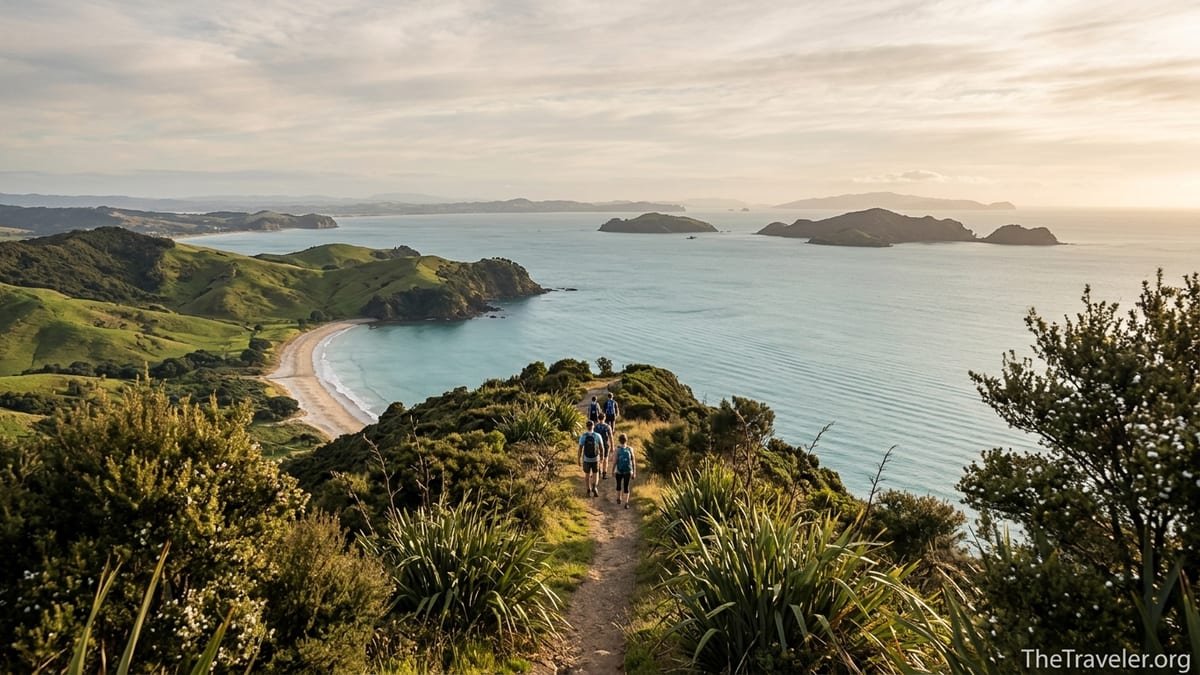
How to Choose the Right New Zealand Islands for You
New Zealand’s outlying islands are incredibly diverse. Waiheke Island feels like a Mediterranean wine escape only 40 minutes by ferry from Auckland, while the Subantarctic Islands are reached on multi-day expedition cruises into the Southern Ocean. Some work beautifully as half-day outings slotted into a city stay. Others justify building your whole itinerary around them.
For a first-time visit, it helps to think in terms of experiences rather than geography. Are you more excited by wine and long lunches, or by penguins and empty beaches? Do you want an easy day trip, or are you willing to commit multiple days, shared cabins and open-ocean swells for a once-in-a-lifetime wildlife encounter? This article groups New Zealand’s key visitable islands by the type of experience they offer, then explains how to get there, how long to stay and who they suit.
The focus is on Waiheke, Aotea Great Barrier, Stewart Island Rakiura, the Chatham Islands, Rangitoto, Kāpiti, Tiritiri Matangi and New Zealand’s Subantarctic Islands. All are realistic options for visitors, though some require more planning and budget than others. You will find real-world examples of ferry routes, flight times and typical tour styles to make it easier to picture how each one could fit into your own trip.
Because transport schedules and operators change regularly, always reconfirm details close to your travel dates. Ferries in particular can shift to different seasonal timetables, and small-plane services may adjust frequency depending on demand.
Wine, Food and Relaxed Living: Waiheke Island
Waiheke Island is New Zealand’s classic island escape for food and wine lovers, and one of the easiest add-ons to an Auckland stay. Regular passenger ferries run from Auckland’s downtown terminal across the Hauraki Gulf, with a direct sailing taking around 40 minutes depending on the operator. Services run from early morning to late evening on most days, which means you can leave the city after breakfast, spend a full day on the island and still be back in Auckland for dinner if you choose.
Once on Waiheke, most visitors head straight for the vineyards and coastal beaches. Well-known wineries such as Mudbrick and Cable Bay combine cellar-door tastings with serious restaurants and views back toward the Auckland skyline. Many wine tour companies sell half- or full-day itineraries that start with a mid-morning ferry from Auckland, then shuttle you between three or four vineyards before dropping you back at Matiatia Wharf for a late-afternoon sailing. Expect a structured day that might include a tasting flight at one estate, a lingering platter lunch at another and a quick swim at Oneroa or Onetangi Beach in the middle of summer.
Waiheke can be done as a day trip on a first-time visit, but an overnight stay gives you quieter evenings and access to restaurants once the last day-trippers have left. Boutique lodges, vineyard cottages and small hotels sit in the mid- to upper-price range compared with mainland options. If you are travelling on a tighter budget, plan a self-guided day trip instead: buy a return ferry ticket, use the island’s scheduled buses from Matiatia to reach Oneroa and Onetangi, and focus on one paid tasting combined with free beach time and short coastal walks.
This island is a priority for travellers who enjoy food, wine, art and a social atmosphere. It is less compelling if you are determined to avoid crowds or are mainly interested in mountain-style hiking. Families can make it work with beach time and casual cafes, but those travelling with very young children might find the cost of multiple vineyard visits adds up quickly compared with a simple picnic on a city beach.
Beaches, Dark Skies and Off-Grid Escapes: Aotea Great Barrier & Chatham Islands
If Waiheke is New Zealand’s sociable island of wine, Aotea Great Barrier Island feels like its unplugged cousin. Sitting further out in the Hauraki Gulf, Aotea is reached by small-plane flights from Auckland that typically take around 30 minutes, or by a vehicle and passenger ferry from the Auckland region that can take several hours each way. Services are less frequent than to Waiheke, and prices are noticeably higher, so this is not a spontaneous half-day outing. For most visitors, Aotea makes sense as a three- to five-night stay.
The island is partly off-grid, with many accommodations relying on solar power and rainwater. On arrival you will notice the difference: gravel roads, simple wooden baches and starry night skies. Officially recognised as a Dark Sky Sanctuary, Aotea is ideal if you want evenings under the Milky Way rather than late-night bars. Days are spent hiking coastal tracks, surfing at Medlands Beach, soaking in hot pools after walking to Kaitoke or exploring sheltered coves by kayak. There are a few local cafes and small stores, but you should not expect the density of restaurants or wine estates found on Waiheke. Travellers usually either hire a car or arrange transfers with their lodge in advance because there is no intensive public bus network.
For a step further into remote beach and community life, the Chatham Islands sit about 800 kilometres east of mainland New Zealand and are reached by scheduled flights from cities such as Auckland, Wellington and Christchurch, often on turboprop aircraft. Flight times are typically around two hours, sometimes a little more, and services run only on certain days. The Chathams are not practical as a day trip; most visitors stay at least four or five nights, often on package-style trips built around local accommodation and guided touring.
The Chathams suit travellers comfortable with changeable weather, basic but characterful accommodation and a strong sense of local culture. You might spend one day visiting windswept beaches where fossilised tree trunks are embedded in the rock, another learning about Moriori history, and another watching waves crash at basalt columns on the coast. Food is honest and seafood-heavy rather than fine dining. For a first-time visitor to New Zealand who wants to include the Chathams, it is wise to plan the rest of your itinerary around these flights to avoid missed connections if the weather disrupts services.
Hiking and Wild Landscapes: Rangitoto, Aotea Great Barrier and Stewart Island Rakiura
Hikers and walkers are spoiled for choice on New Zealand’s islands. At the easy-access end is Rangitoto Island, a young volcanic cone visible from Auckland’s waterfront. Passenger ferries from downtown Auckland usually take around 25 minutes, and most people visit on a half-day or full-day basis. There is no accommodation or shops on the island, so you bring your own water and food, hike to the summit through regenerating native forest and lava fields, explore the short side tracks to lava caves and return on an afternoon boat. Rangitoto is ideal for first-time visitors who want volcanic scenery and a defined half-day walk without leaving the orbit of Auckland.
Aotea Great Barrier, described earlier for its beaches and dark skies, is also one of the most rewarding island hiking destinations in the country. Multi-day tracks cross the central ridges, while shorter day walks climb to viewpoints or follow coastal headlands. Many first-time visitors choose a base such as Tryphena or Medlands and then drive to different trailheads. Because of the island’s size and topography, it suits reasonably fit travellers comfortable with hilly paths and self-reliance. If you mainly want short flat strolls, Aotea may feel like more effort than it is worth.
At the southern tip of the South Island lies Stewart Island Rakiura, often called New Zealand’s unofficial third island. You can reach the main settlement of Oban either by ferry from Bluff, a crossing that usually takes about one hour, or by small-plane flights from Invercargill that take around 20 minutes. Most travellers stay at least two or three nights, using Oban as a base for day hikes on sections of the Rakiura Track, coastal walks to bays like Horseshoe Bay, or boat trips across Paterson Inlet.
Rakiura appeals to hikers who like varied terrain and do not mind rain. The climate is maritime and changeable, so tracks can be muddy even in summer. In practical terms, that means packing good waterproof layers, gaiters if you have them and accepting that a planned long walk might shorten if the forecast deteriorates. The reward is a landscape of podocarp forest, quiet beaches and a real sense of being at the edge of New Zealand. For a first-time visitor with limited days, Rakiura is worth prioritising if you already know you enjoy walking trips and are visiting during the clearer months from roughly November to March.
Wildlife Encounters: Tiritiri Matangi, Kāpiti and Stewart Island
New Zealand’s offshore islands are central to its conservation story, and several are managed as open wildlife sanctuaries where visitors can experience birdlife that has disappeared from much of the mainland. Tiritiri Matangi in the Hauraki Gulf is a standout choice for first-timers. Regular ferries operate from Auckland or nearby Gulf Harbour on selected days, typically taking around 75 minutes from downtown. Visitor numbers are capped and you must bring your own lunch, but guided walks with volunteer rangers are available and highly recommended for understanding what you are seeing.
On Tiritiri Matangi you walk formed tracks through regenerating forest and open grassland listening for the calls of rare species like kokako, takahe and stitchbird. The walking itself is not difficult, and there are places to sit in the shade, so it suits reasonably active travellers from school-age children upward. Because ferries return in the afternoon and there is no overnight accommodation for general visitors, Tiritiri works as a structured day trip you can plug into an Auckland itinerary.
On the lower North Island’s west coast, Kāpiti Island offers a similar sanctuary experience with a slightly different feel. Access is tightly controlled via a small number of approved operators who run boat transfers from the mainland, often combined with guided walks or overnight stays in basic lodge-style accommodation or glamping tents. Crossing times are usually 15 to 20 minutes each way depending on the departure point and sea conditions. Many visitors make a day trip focused on walking gentle tracks, spotting kākā parrots and listening to the dawn or dusk chorus, while others stay overnight for the chance to see little spotted kiwi after dark on guided walks.
For travellers already planning to visit Wellington, Kāpiti Island is a logical wildlife add-on, though you need to book in advance and be flexible because trips can be cancelled in rough weather. Compared with Tiritiri Matangi, it involves more logistical planning and generally higher per-person costs, but offers the bonus of a kiwi-spotting experience without travelling as far south as Rakiura.
Stewart Island Rakiura itself is also one of New Zealand’s prime wildlife destinations. Evening kiwi-spotting excursions depart from Oban, taking visitors by vehicle and on foot to beaches where southern brown kiwi often forage. In Paterson Inlet, boats shuttle visitors to Ulva Island, another predator-free sanctuary where you can see native birds in low forest just a short walk from the jetty. For a first-time visitor already drawn to Rakiura’s hiking, these wildlife experiences are relatively easy to add, though they do depend on weather and, in the case of kiwi, a bit of luck and careful guiding.
Easy Day Trips from the Mainland: Waiheke, Rangitoto, Tiritiri Matangi
For travellers short on time, New Zealand’s islands can still feature through well-organised day trips that leave in the morning and return by late afternoon or evening. Waiheke Island is arguably the most convenient of these. Frequent ferries from Auckland allow considerable flexibility: you can aim for a mid-morning sailing, spend five or six hours visiting vineyards and beaches and then choose a late-afternoon or evening return. Wine tour companies and hop-on, hop-off bus services simplify logistics, meaning you rarely need to worry about driving or navigation.
Rangitoto Island delivers an entirely different mood on a similar schedule. Because there is no overnight accommodation and ferries are limited to specific departure and return times, your day has a clear structure. A typical visit might see you taking a morning ferry, spending an hour to an hour and a half walking steadily up to the crater rim, adding short side tracks to the lava caves, then returning to the wharf in time for an afternoon sailing. With sturdy footwear, sun protection and plenty of water, this is accessible to most reasonably active travellers, including families with older children.
Tiritiri Matangi, as described in the wildlife section, is an easy day trip that feels remote without requiring an overnight commitment. Because operator schedules can change between summer and winter, it is sensible to check operating days and book as soon as your Auckland dates are firm, especially in school holidays. A typical day involves a morning sailing, guided or self-guided walking, lunch at one of the picnic areas and an afternoon return. For many first-time visitors, it is the single most memorable nature experience within reach of Auckland without internal flights.
If you plan your first New Zealand itinerary around a few mainland bases, day trips to these three islands can stitch together a surprisingly rich set of experiences: wineries and beaches on Waiheke, volcanic hiking on Rangitoto and native birdlife on Tiritiri Matangi, all accessible within roughly an hour and a half of central Auckland’s waterfront.
Expedition-Style Adventures: Subantarctic Islands and Remote Rakiura
At the far end of the spectrum from easy day trips are the Subantarctic Islands: remote, wind-battered outposts in the Southern Ocean that are strictly protected nature reserves. New Zealand’s subantarctic group includes islands such as the Snares, Auckland Islands and Campbell Island. There is no regular public transport. Instead, a small number of specialist expedition cruise companies operate seasonal voyages, typically between November and February, that depart from New Zealand ports such as Bluff or Lyttelton. These trips usually last between 10 and 17 days, sometimes combining the Subantarctic Islands with New Zealand’s fiords or even Macquarie Island.
On these voyages, the ship acts as a moving base camp. You spend days at sea crossing open water, then make wet landings by inflatable boat to walk on designated shores, such as Enderby Island or Campbell Island’s boardwalks. Wildlife is the headline attraction: huge colonies of penguins, albatross wheeling overhead, sea lions sprawled on beaches and, in summer, hillsides covered in giant flowering megaherbs. Conditions can be cold, windy and wet even in the peak season. Cabins, meals and specialist guides are included, and prices sit in the high end of the travel spectrum, comparable to other polar or near-polar expedition cruises.
These Subantarctic expeditions make sense for experienced travellers with a strong interest in wildlife, photography or remote landscapes who are comfortable with several days at sea, shared social spaces and a structured daily programme. For a first-time visitor to New Zealand already committed to a long international flight, they can be a dramatic centrepiece of a trip, but they are not a casual add-on. Most people will plan a year or more ahead and may combine the expedition with time on the South Island before or after to ensure flexibility around flight connections.
Even on Stewart Island Rakiura, you can opt into a softer version of expedition-style travel. Small local operators run boat trips into the more remote arms of Paterson Inlet or to the outer islands when conditions permit. These are usually half- or full-day outings focused on birdlife, coastal scenery and the feeling of being far from roads. Accommodation on Rakiura ranges from simple motels and holiday homes to more comfortable lodges, but nothing is on the scale of big mainland resorts. For travellers who like the idea of expedition cruising but prefer to sleep on land, combining a Rakiura stay with several boat-based excursions can be a satisfying compromise.
The Takeaway
New Zealand’s smaller islands allow you to tailor your first visit far beyond the classic loop of Auckland, Rotorua and Queenstown. For relaxed wine and food, Waiheke Island is the obvious priority, easily reached by frequent ferries and well suited to a day trip or one- or two-night stay. If you lean toward hiking and wild coastlines, Aotea Great Barrier and Stewart Island Rakiura reward the extra travel time with dark skies, empty beaches and multi-day walking options. Wildlife enthusiasts can add sanctuaries such as Tiritiri Matangi and Kāpiti Island for close encounters with native birds, while the truly adventurous may look to the Subantarctic Islands for a once-in-a-lifetime expedition cruise.
When deciding which islands to include, be honest about how much time, budget and logistical complexity you want to take on in your first New Zealand trip. An itinerary that combines one or two easy-access islands with a single more remote destination will usually feel more satisfying than a frantic attempt to see them all. Build in spare time around flights and ferries in case of weather disruptions, pack with layers and waterproofs in mind and remember that on the country’s islands, part of the appeal lies in slowing down to the rhythm of local tides and bird calls.
Whichever mix you choose, New Zealand’s islands beyond the main North and South landmasses will show you versions of the country that city streets and highway viewpoints simply cannot. From a glass of syrah on a sunlit Waiheke terrace to the shrill call of a penguin on a damp Subantarctic beach, these experiences have a way of lingering long after your return flight has landed.
FAQ
Q1. Is Waiheke Island worth visiting on a short first-time trip to New Zealand?
Yes. Waiheke is one of the easiest islands to add to a first-time itinerary because ferries from central Auckland are frequent and the crossing is usually around 40 minutes each way. You can enjoy a full day of wine tasting and beaches without changing hotels, and many organised tours handle transport on the island for you.
Q2. How many nights should I spend on Aotea Great Barrier Island?
Most visitors find three to five nights works well. Because access involves a 30-minute small-plane flight or a much longer ferry and services are less frequent than to Waiheke, a single night rarely feels worthwhile. A longer stay lets you explore different beaches, tackle at least one solid day walk and experience the dark skies.
Q3. Can I visit Rangitoto Island as a simple half-day outing from Auckland?
Yes. Passenger ferries from downtown usually take about 25 minutes, and there is no overnight accommodation for general visitors. A common pattern is to take a morning ferry, hike to the summit and explore the lava fields, then return on an early- or mid-afternoon sailing, leaving time for other Auckland activities the same day.
Q4. Do I need to book Tiritiri Matangi and Kāpiti Island in advance?
It is strongly recommended. Both islands have controlled visitor numbers and rely on scheduled boats that can fill up, especially in the peak months from roughly December to March and during local school holidays. Booking early also gives you room to adjust plans if weather forces a change of day.
Q5. Is Stewart Island Rakiura suitable for families on a first visit?
Yes, provided your family is comfortable with simple accommodation, changeable weather and a focus on nature rather than big attractions. Short sections of the Rakiura Track, beach walks near Oban and boat trips to Ulva Island work well for school-age children. Very young kids may find the travel logistics and wet conditions more tiring.
Q6. Are the Chatham Islands a realistic option for a first-time visitor?
They can be, but only if you have enough time and flexibility. Flights from mainland cities are limited to certain days, and weather can cause delays. Most travellers stay at least four or five nights on package-style trips that include accommodation and local guiding. If your overall New Zealand stay is only two weeks, fitting in the Chathams will compress the rest of your itinerary.
Q7. How expensive are Subantarctic Islands expedition cruises?
Prices vary by operator, length and cabin type, but they are typically at the higher end of the travel spectrum, similar to other polar or near-polar expedition cruises. Fares usually include accommodation on the ship, meals, zodiac landings and guiding. Travellers should budget several thousand dollars per person at a minimum and book many months in advance.
Q8. Will I get seasick travelling to these islands?
It depends on the route and your own sensitivity. Short, sheltered ferries to places like Waiheke, Rangitoto and Tiritiri Matangi are usually manageable for most people. Crossings such as the Bluff to Stewart Island ferry and voyages to the Subantarctic Islands can be rough, and many travellers use seasickness medication or patches on those routes. If you are prone to motion sickness, talk to a doctor before your trip.
Q9. Do I need a car on islands like Waiheke, Aotea Great Barrier and Stewart Island?
On Waiheke, you can easily get around with buses, taxis and organised tours, so a car is optional. Aotea Great Barrier is spread out with limited public transport, so most visitors either hire a vehicle or arrange transfers with their accommodation. On Stewart Island, many visitors walk around Oban and use local shuttles or tour operators for longer distances, but car hire is limited and not essential.
Q10. Which island should I prioritise if I only have one spare day in my itinerary?
If you are based in Auckland, Waiheke is usually the most versatile choice for a single free day, offering a mix of scenery, food, wine and easy logistics. If you prefer nature and walking over wine, consider Tiritiri Matangi for wildlife or Rangitoto for volcanic hiking. From Wellington, a carefully planned day trip to Kāpiti Island is the most practical island option.