


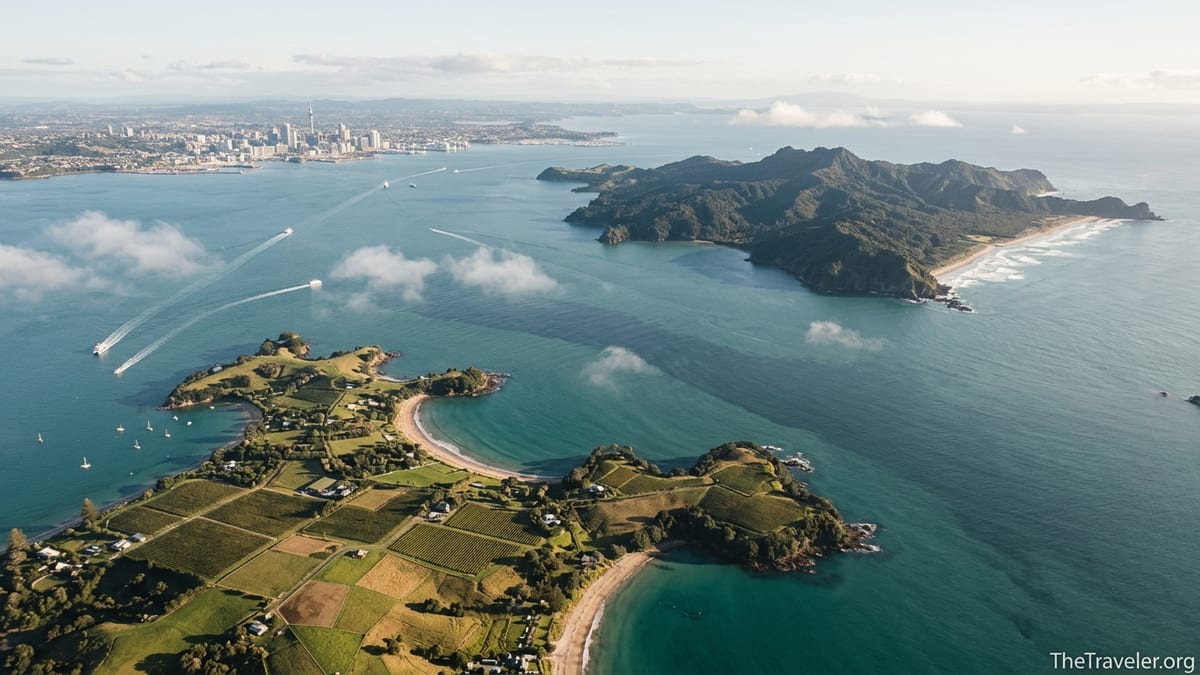
Looking out from Auckland’s waterfront, the Hauraki Gulf is dotted with islands that all promise escape. For most visitors with a few days to spare, the real choice quickly narrows to two big hitters: Waiheke Island and Great Barrier Island. Both offer beaches, bush walks and big skies, yet the experience on each could not be more different. One is almost an Auckland suburb with vineyards. The other still feels like the end of the road. Deciding between them is less about which is better and more about whether you want convenience or wilderness.
Getting There: Ferries, Flights and First Impressions
From central Auckland, Waiheke Island is a straightforward hop. Passenger ferries from the Downtown Ferry Terminal run frequently across the day, with a direct sailing to Matiatia taking around 40 minutes. Return adult tickets are typically priced in the range many locals treat as a commuter cost, and there are often off-peak or multi-trip deals. Most visitors simply walk on in the city, then step off at Matiatia and board a waiting bus or taxi. On a summer weekend morning, the process feels more like catching a suburban train than embarking on an island adventure.
Reaching Great Barrier Island is a very different prospect. The most common route is a small-plane flight from Auckland Airport or North Shore Aerodrome to Claris, operated by regional airlines such as Barrier Air. Typical flight times are about 30 minutes from Auckland, in 9 to 12‑seat aircraft where you can watch the pilot at work and see the Hauraki Gulf spread out below. Fares can start under the 200 NZD mark one way on special deals but are usually higher at peak holiday times, and numbers are limited, so advance booking is essential.
There is also a car and passenger ferry service from Auckland to Great Barrier, run by a vehicle ferry operator that departs from the city’s western wharves. Sailings are less frequent than the Waiheke passenger ferries and take much longer, generally several hours each way, with early-morning departures common. Travelers using this option tend to be those staying for at least several days, often bringing their own vehicle loaded with camping gear, surfboards or supplies that would be cumbersome or expensive on a plane.
Those first logistics set the tone. Waiheke feels spontaneous and accessible: a place you can decide to visit the night before. Great Barrier feels like a small expedition that needs planning and a willingness to commit both time and budget.
Trip Length: Easy Day Trip vs Multi-Day Escape
Waiheke is tailor‑made for day trippers and short breaks. A classic outing from Auckland might see you catch a mid‑morning ferry, join a wine tour or hop‑on hop‑off bus, enjoy a long lunch at a vineyard like Mudbrick or Cable Bay, then finish with a swim at Oneroa or Onetangi Beach before an evening ferry back to the city. Even with a full lunch, beach time and a stroll through Oneroa village, you can be back at your central Auckland hotel by dinner.
Overnight stays on Waiheke are equally straightforward. A two‑night weekend break allows time to spread things out: perhaps wineries and a coastal walk on Saturday, then a lazy Sunday focused on beaches like Palm Beach or a zip‑line adventure in the bush. Because ferries are frequent, you can leave Auckland after work on Friday, check into an Oneroa guesthouse before dark, and still be home in time on Sunday to unpack and rest before Monday.
Great Barrier Island rarely makes sense as a quick overnight. With a half‑day effectively consumed by travel in each direction, plus the cost of flights or the long ferry, most visitors opt for at least three nights, and many wish they had allowed four or five. The island rewards slow days: morning hikes on forest tracks, afternoons swimming at Medlands or Awana Beach, and evenings under some of the darkest skies in New Zealand. Squeezing that into 24 hours would feel rushed and misses the point of the place.
In practical terms, if you only have one spare day in your Auckland itinerary, Waiheke is the obvious choice. If you can devote a long weekend or more and are happy to travel further for a wilder experience, then Great Barrier starts to come into its own.
Accommodation: Polished Stays vs Off-Grid Hideaways
On Waiheke, accommodation spans everything from backpacker hostels near Oneroa to luxury clifftop villas with private chefs. Beachfront apartments line the shore at Onetangi and Palm Beach, while boutique hotels above Oneroa village combine sea views with easy access to restaurants and bars. Vineyard lodges at places like Mudbrick and Tantalus Estate cater to honeymooners and special‑occasion trips, often with on‑site fine dining and curated wine experiences.
Most Waiheke properties are connected to the grid, have reliable Wi‑Fi and offer mod‑cons such as air conditioning or heat pumps, espresso machines and streaming TVs. If you are traveling with children, multigenerational family groups or friends who prize comfort, it is easy to find three‑bedroom holiday homes with full kitchens and laundry facilities within a 5‑ to 10‑minute drive of beaches and the ferry.
Great Barrier’s accommodation scene is much smaller and more rustic. Many lodges, baches and campsites are off‑grid, relying on solar power, rainwater tanks and gas for cooking and hot water. In practice this can mean limited power for charging devices, no hairdryers, and thoughtful use of water, especially in summer. There are a few small lodge‑style properties near Tryphena or Medlands that provide comfortable beds, hearty meals and shared lounges, but you will not find the same density of high‑end hotels or polished apartment complexes as on Waiheke.
For some travelers, this is the entire appeal. A simple wooden cottage up a gravel road near Kaitoke or Awana, with a basic kitchen, an outdoor deck and a clear view to the stars, can feel infinitely more luxurious than the fanciest city hotel. For others, especially visitors used to urban conveniences, the reality of composting toilets, generator hum and limited mobile coverage can be a surprise. When weighing the two islands, be honest about how far off‑grid you actually want to go.
Food, Wine and Nightlife: Vineyard Playground vs Quiet Evenings
Waiheke is famous for its wine scene, and for good reason. The island is home to dozens of vineyards, many with cellar doors and restaurants. Places like Stonyridge, Tantalus Estate, Mudbrick and Cable Bay serve tastings of local Bordeaux‑style reds and syrah alongside multi‑course lunches. At Onetangi, beachfront spots such as Three Seven Two and Ki Māha pair seasonal menus with views straight out to the bay, making long lunches a near‑obligatory part of any visit.
Beyond the vineyards, Waiheke offers a surprisingly broad restaurant selection for its size. In Oneroa alone you might find an Italian bistro, a casual fish‑and‑chips joint, small cafes doing serious coffee, and a boutique hotel restaurant with an emphasis on local seafood. Surfdale and Ostend add bakeries, takeaways and eateries that serve both locals and visitors, so you can easily choose between high‑end dining and budget‑friendly options. In peak season, it pays to book winery restaurants in advance, especially for groups.
Nightlife on Waiheke has a sociable but low‑key feel. You might start with wine tasting, roll into sunset drinks at a vineyard bar overlooking the city skyline, then finish with cocktails in Oneroa before a short stroll or taxi back to your accommodation. While this is not a clubbing destination in the city sense, the mix of bars, live‑music evenings and late‑opening restaurants keeps things lively, particularly on summer weekends and public holidays.
Great Barrier Island, by contrast, is quiet after dark. There are a handful of cafes, general stores and lodge restaurants in settlements like Tryphena, Claris and Port FitzRoy, but they mostly keep daytime and early‑evening hours. Menus tend to be hearty and simple: think fresh fish and chips, burgers, pizzas and home‑baked treats, sometimes using produce grown on‑site. You might find a local bar where residents gather for a drink, but choice is limited, and places can close early outside of peak summer. For many visitors, evening entertainment is cooking in their own kitchen or having a communal meal at a lodge, then heading out to watch the Milky Way.
Beaches, Hiking and Nature: Accessible Coastlines vs Untamed Wilderness
Waiheke’s beaches are accessible and family‑friendly. Oneroa Beach is a gentle crescent just below the main village, ideal for a quick swim before or after lunch. Palm Beach offers clear water and soft sand with holiday homes on the hillside behind, while Onetangi stretches for over a kilometer, perfect for long walks, paddleboarding and watching the sunset from a beachfront bar. Many of these beaches are patrolled or at least well‑used in summer, and you can reach them via regular bus routes or short taxi rides.
Coastal walks on Waiheke, such as the track from Matiatia to Oneroa or the headlands around Church Bay, give panoramic views of the Hauraki Gulf without requiring serious hiking fitness. There are also bush walks through regenerating forest where you might spot native birdlife like tūī and kererū, but the scale is manageable. Visitors often combine a morning walk with an afternoon of wine tasting and a swim, all without leaving a compact section of the island.
Great Barrier’s natural environment is on another level. Much of the island feels wild, with long, exposed surf beaches like Medlands, Awana and Whangapoua that are virtually empty outside the main holiday weeks. These beaches are stunning but can have strong currents and changeable conditions, so swimming demands more care. Behind the coast, steep forested hills rise to peaks over 600 meters, cut by deep valleys and streams.
Hiking on Great Barrier can be as gentle or as demanding as you choose, but even short walks feel more remote. The climb to the summit of Hirakimatā (Mount Hobson) is a full‑day outing for many visitors, involving a series of steps and boardwalks through kauri forest and offering far‑reaching views at the top. Shorter tracks lead to secluded coves, waterfalls and hot springs, where you might not see another person for hours. If your idea of a perfect trip involves solitude, unsealed roads and long horizons, Great Barrier will speak to you more than Waiheke’s manicured vineyards.
Infrastructure, Transport and the Need for a Vehicle
On Waiheke, it is entirely possible to visit without a car. Public buses meet most ferries at Matiatia and run to key areas including Oneroa, Ostend, Palm Beach and Onetangi, using the same AT HOP card system as Auckland’s city buses. During the day services are frequent enough that you can treat them as hop‑on transport between beaches and villages. In addition, there are taxis, ride services, e‑bike rentals and organized tours that move visitors between wineries and viewpoints without anyone needing to drive.
Many short‑stay visitors simply walk off the ferry, buy a combined ferry‑plus‑bus package or a wine tour ticket, and let someone else handle the logistics. Roads are sealed and in good condition, and the distances are relatively short. If you do bring a vehicle over on the car ferry or hire one on the island, you gain flexibility for exploring more remote bays on the eastern side, but it is not essential to have a car for a first‑time visit focused on the main beaches and vineyards.
On Great Barrier Island, a vehicle is close to essential unless you plan a very focused, lodge‑based stay. Public transport is extremely limited, and while some accommodations offer transfers from the airfield or wharf, they generally do not provide on‑demand shuttles around the island. Most visitors either bring their own car on the vehicle ferry or book a rental 4WD or small car in advance, picking it up near Claris airport. Expect a network of narrow, often unsealed roads, with low speed limits and plenty of hills and bends.
The state of infrastructure explains much of Great Barrier’s charm and its challenges. There are no traffic lights and very few streetlights; mobile coverage can be patchy once you leave the main settlements; and power cuts, while not everyday events, are a reality that off‑grid systems are built to manage. If you want to wander between wineries without thinking about the drive back, Waiheke is better suited. If you are comfortable with gravel roads and want the freedom to explore secluded bays, a car on Great Barrier opens up the island.
Atmosphere, Off-Grid Conditions and Stargazing
Waiheke has an unmistakable holiday‑town energy. In summer, ferries arrive packed with day trippers carrying wine tour confirmations and beach bags. Oneroa’s main street hums with traffic, people queuing for gelato and visitors browsing galleries and boutique shops. Even in winter, cafes and restaurants keep regular hours, and commuters ride the early and late ferries much like they would a suburban train. You are away from the city, but you never entirely leave behind its conveniences.
There are quiet corners on Waiheke, especially on the eastern end or tucked inland among the vineyards, but you are rarely far from a bus stop or a cell signal. For most travelers this balance is ideal: enough infrastructure to make things easy, but still a slower pace than central Auckland. It also makes Waiheke a comfortable choice for first‑time visitors to New Zealand who want an island experience without worrying about self‑sufficiency.
Great Barrier Island offers a genuinely off‑grid sensation. The island has been recognized as an International Dark Sky Sanctuary, and on cloudless nights the stars are astonishing. Many accommodations provide blankets or deck chairs specifically for stargazing, and it is common for visitors to plan their evenings around the phases of the moon, booking trips to coincide with darker skies for maximum Milky Way views. With little light pollution and minimal road lighting, the night sky feels immersive in a way that catches even experienced travelers off guard.
Life on Great Barrier runs on island time. General stores might close earlier than you expect, there may be only one fuel station within a reasonable drive of your bach, and weather can influence everything from flight schedules to whether a remote track is advisable. Power is often generated on‑site through solar panels, meaning heavy electricity use is discouraged. For those who crave digital detox, this is bliss. For travelers who need to work remotely or stay connected, it can be a real constraint. When choosing between the islands, think carefully about your appetite for patchy signal, early nights, and the kind of darkness where you can see your own shadow by starlight.
The Takeaway
Choosing between Waiheke Island and Great Barrier Island is less about drawing up a pros‑and‑cons list and more about understanding your own travel style. Waiheke is the obvious pick if you value flexibility, creature comforts and the ability to drop an island day trip into a busy Auckland itinerary. With frequent 40‑minute ferries, reliable buses, plentiful accommodation and a serious food‑and‑wine scene, it suits couples on a romantic weekend, friends on a vineyard crawl, and families wanting an easy beach holiday without hiring a car.
Great Barrier Island, on the other hand, is for travelers willing to trade convenience for wilderness. Getting there requires more planning and budget, staying there usually means accepting off‑grid conditions, and moving around almost always involves driving your own vehicle over unsealed roads. In return you get near‑empty surf beaches, long bush walks where you may not see another person, and night skies that feel almost primeval. A three‑ to five‑day stay on Great Barrier can be one of the most memorable parts of a New Zealand trip, provided you embrace the slower rhythm.
If you are a first‑time visitor to Auckland with only one spare day, or you love dining, wine and soft‑adventure activities with minimal logistics, start with Waiheke. If you have already ticked off Waiheke or prefer solitude, self‑catering and big landscapes over busy tasting rooms, build several days on Great Barrier into your itinerary. Neither island is objectively better; each is simply a different answer to the question of what you want your Hauraki Gulf escape to feel like.
FAQ
Q1. Can I visit Waiheke Island as a same-day trip from Auckland?
Yes. Frequent ferries take around 40 minutes each way, so you can comfortably fit in a winery lunch, a beach swim and a stroll through Oneroa before returning to Auckland in the evening.
Q2. How many days should I spend on Great Barrier Island?
Most travelers find that three to five nights works well. Travel takes longer and the island rewards slow exploration, so anything less than two nights can feel rushed.
Q3. Do I need to book ferries and flights in advance?
For Waiheke, day ferries often have space outside peak holiday periods, though advance tickets are still wise on summer weekends. For Great Barrier, both flights and vehicle ferry spaces are limited and should be booked as early as possible, especially in school holidays.
Q4. Is it easy to get around Waiheke Island without a car?
Yes. Buses meet most ferries and run to main beaches and villages, and there are taxis, tours and e‑bike rentals. Many visitors spend a full day on Waiheke without needing a private vehicle.
Q5. Do I need a 4WD on Great Barrier Island?
A standard car is enough for most sealed and better‑maintained gravel roads, but a higher‑clearance vehicle or 4WD can be helpful if you plan to explore remoter bays or visit after heavy rain.
Q6. Which island is better for wine tasting and restaurants?
Waiheke is the clear winner for food and wine, with numerous vineyards offering tastings and long lunches, plus a good choice of cafes and restaurants in Oneroa and other villages.
Q7. Which island is better for hiking and wild beaches?
Great Barrier Island offers more remote hiking and wilder, less crowded beaches. Waiheke has beautiful but more accessible and developed beaches with easier coastal walks.
Q8. Will I have mobile coverage and Wi‑Fi on both islands?
Waiheke has generally good coverage and many accommodations offer reliable Wi‑Fi. On Great Barrier, coverage is patchy outside main settlements and many off‑grid stays have limited or no Wi‑Fi.
Q9. Is Great Barrier Island suitable for families with young children?
Yes, if parents are comfortable with off‑grid conditions, driving on narrow roads and planning ahead for supplies. For very young children or first‑time visitors, Waiheke’s easier logistics may be more relaxing.
Q10. If I have time for only one island, which should I choose?
Choose Waiheke if you want convenience, wineries and an easy day or weekend escape. Choose Great Barrier if you have several days, value solitude and are happy with a more rugged, less developed environment.