


Planning a South Island ski trip can feel like choosing between good and better. Queenstown, Wānaka and Methven all offer excellent snow, big mountain scenery and plenty of character, but each suits a slightly different style of traveler. This guide pulls together the latest information for the 2026 seasons to help you decide where to base yourself and which ski areas to ski: Coronet Peak, The Remarkables, Cardrona, Treble Cone and Mt Hutt, plus a few smaller club fields that reward adventurous skiers.
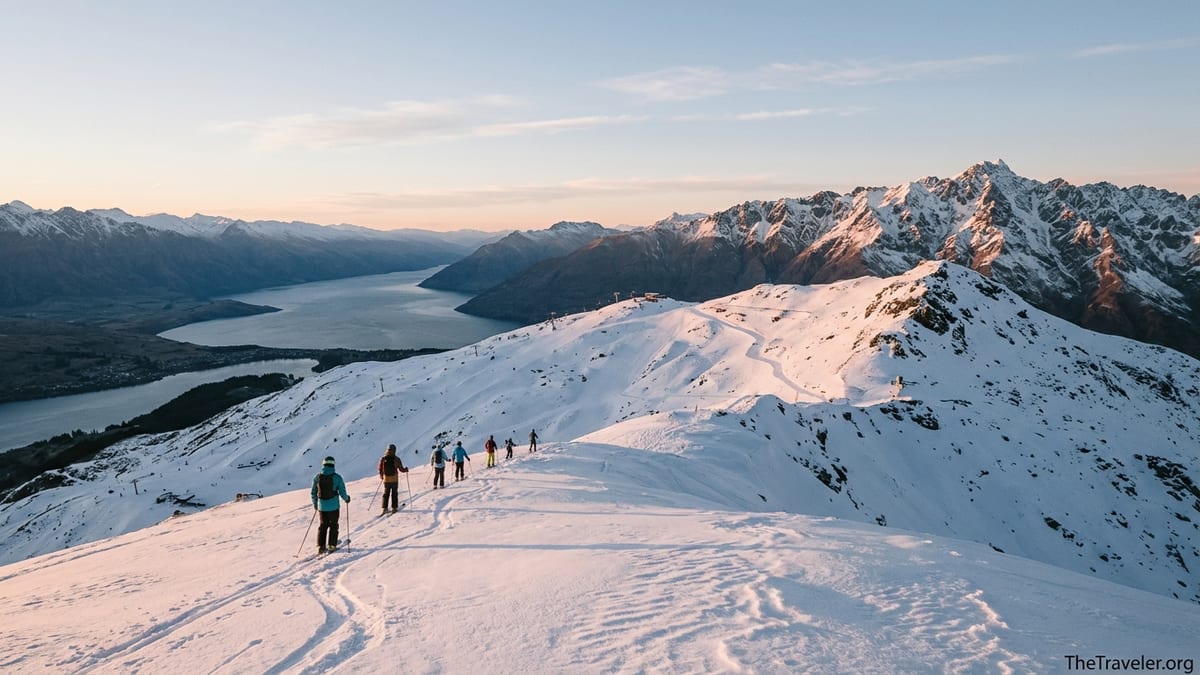
Understanding the South Island ski regions
The main South Island ski hubs are Queenstown, Wānaka and Methven. From Queenstown you access Coronet Peak and The Remarkables, both run by NZSki. Coronet Peak is the closest field to town at around a 20 minute drive, with an early opening date in 2026 thanks to a new snow factory and extensive snowmaking that allows limited terrain to open from late May and the full season to run roughly mid June to early October. The Remarkables sits higher in the range, about 45 minutes from town, with a typical season from mid June to mid October depending on snow.
Over the Crown Range from Queenstown, Wānaka serves Cardrona Alpine Resort and Treble Cone. Cardrona is one of New Zealand’s most popular all-round mountains, with a big, well developed beginner area, multiple chairlifts, and some of the country’s best terrain parks and pipes. It continues to see investment, including a recent terrain and lift expansion into Soho Basin, which makes Cardrona one of the largest commercial ski areas in the country. Treble Cone, by contrast, is famous for steep, long fall-line runs, large ungroomed faces and dramatic views over Lake Wānaka and Mount Aspiring. It has fewer lifts and a more advanced crowd.
Further north, Methven is the gateway to Mt Hutt, another NZSki mountain and traditionally one of the South Island’s most reliable areas for natural snowfall because of its altitude and position catching storms coming off the Southern Ocean. The mountain generally runs from mid June into October, subject to weather. Methven is quieter than Queenstown and Wānaka, with more of a local, rural New Zealand feel, but still offers good bars, cafes and ski-lodge style accommodation.
All three hubs can form part of a longer road trip. For example, a two-week itinerary might start in Christchurch, ski Mt Hutt from Methven for three or four days, then drive via the Lindis Pass to Wānaka for Cardrona and Treble Cone, and finish with a few days in Queenstown. However, each region works perfectly as a stand-alone week if you prefer to unpack once.
Season timing, snow reliability and when to go
The South Island ski season typically runs from early or mid June to early or mid October. In 2026, Coronet Peak lists a full season from roughly 13 June to 4 October, with a separate early season beginner zone from late May, while The Remarkables’ planned dates run from late June to mid October. Cardrona and Treble Cone usually aim for late June openings and late September or early October closures, although Treble Cone sometimes has a shorter window depending on snow. Mt Hutt traditionally opens in mid June and targets mid October if conditions allow. Actual opening and closing dates can shift year to year with storms, warm spells and wind, so always check specific dates before you book non-refundable flights and accommodation.
Snow reliability varies by aspect, altitude and snowmaking. Mt Hutt and The Remarkables are among the higher commercial South Island fields, which helps with natural coverage and cooler temperatures. Coronet Peak, although lower, has some of the most extensive snowmaking in New Zealand and a new snow factory that can produce snow even in marginal temperatures, which is why it often opens first. Cardrona has good snowmaking and benefits from a relatively broad plateau that holds snow well. Treble Cone relies more heavily on natural snowfall and can be sublime in a cold, snowy winter or patchy if storms track elsewhere.
If you are planning far in advance, July and August are the safest bets for coverage at all fields. Late June can deliver excellent early season conditions in good years, but it is more of a gamble, especially at Treble Cone and on the lower sections of Coronet Peak. September can offer brilliant spring skiing with softer snow, fewer crowds and cheaper accommodation, but you may encounter firm mornings and slushy afternoons, particularly at lower elevations. Families tied to school holidays often target the New Zealand July school break, which is typically the busiest period across all major fields.
Wind is a major factor in New Zealand skiing. Mt Hutt in particular is known for strong winds that can close lifts or even the entire mountain at short notice. A real-world example: it is common for visitors to Methven to lose one or two days to high winds each season, so flexible plans matter. Queenstown and Wānaka fields can also be affected, but because there are multiple mountains around each town, you sometimes have the option to switch fields if one side of the range is weathered out.
Coronet Peak vs The Remarkables: choosing in Queenstown
Coronet Peak and The Remarkables share a common lift pass through NZSki, and many visitors ski both in one trip. Coronet Peak is closest to Queenstown, has a modern base area, high speed lifts and extensive grooming, with a terrain mix that suits intermediates especially well. It also offers popular night skiing on selected evenings in peak season, which is rare in New Zealand and can be a highlight if you want to ski under lights then head back to town for dinner. The trade-off is that its lower altitude can mean more marginal snow on warm or rainy spells, and it can feel busy on weekends when locals flock up before and after work.
The Remarkables has a very different feel: higher, more open bowls, big alpine scenery and a sense of space. Around a third of its terrain is classified beginner, with a huge learner’s zone serviced by carpets and an easy progression to green and blue trails. At the same time, it is home to steep chutes, hike-to lines and multiple terrain parks, including a signature Burton Stash park. That combination makes The Remarkables attractive for families with mixed-ability skiers or groups where some want to lap parks and off-piste while others stay on groomers and in lessons. It is about a 45 minute drive on an alpine access road, partly unsealed and sometimes requiring chains.
In practical terms, a typical five-day Queenstown ski trip might see beginners spending three days at The Remarkables and two at Coronet Peak, especially if they take advantage of first-timer packages that bundle lift, rental and group lessons. Intermediates might reverse that, leaning into Coronet’s groomers, while advanced riders mix and match depending on conditions. Prices change year to year, but as an example, a 3-day multi-day lift pass bought online can often undercut single-day window prices, and rental plus lesson bundles for first-timers usually offer the best value for new skiers who do not own gear.
Because both mountains are on the same pass and use similar rental systems, you can rent in town from companies clustered around the Queenstown Snow Centre, pick up a free mountain shuttle from the same hub, and change your plan in the morning depending on which field is more appealing. Having this flexibility is a major advantage of basing in Queenstown compared with more remote, single-mountain destinations.
Cardrona vs Treble Cone: Wānaka’s dual mountains
Cardrona Alpine Resort is Wānaka’s all-rounder and, with its recent Soho Basin expansion, one of the biggest commercial ski areas in New Zealand by skiable terrain. It offers broad, rolling slopes rather than extreme steeps, multiple high speed lifts, and one of the strongest terrain park programs in the Southern Hemisphere, including a full-size superpipe and World Cup slopestyle course. At the same time, its beginner area at the base is one of the most forgiving in the region, with dedicated learner lifts and wide, gentle slopes that funnel back to the main building, making it easy to regroup with a family or group.
Treble Cone is almost the opposite in personality. Perched above Lake Wānaka, it is best known for long, sustained fall-line runs, expansive off-piste faces and powerful storm skiing when the snow arrives. Its Home Basin has a single high speed 6-seater and a smaller quad, and much of the skiing pitches steeper than the equivalent terrain at Cardrona. There is a small learner area close to the base, but most visitors are intermediate or advanced skiers and snowboarders looking for challenge. On a powder day, especially midweek, Treble Cone is where many local experts head first.
For mixed-ability groups staying in Wānaka, the modern solution is the combined Cardrona / Treble Cone pass, which lets you choose where to go each day. In practice, families and early intermediates often spend most of their time at Cardrona, where kids can be enrolled in ski school, teenagers hit the parks, and parents cruise groomers like Captain’s or explore the Soho side. Then, on a clear day with fresh snow and confident legs, the same group might send the stronger skiers to Treble Cone while learners take a rest day or stick with a lesson at Cardrona.
Access roads are a consideration. Cardrona’s road is unsealed for a long stretch and climbs steadily with tight corners, but is well maintained and heavily used by buses. Treble Cone’s access road is rougher, narrower and can feel intimidating to first-time alpine drivers, especially after fresh snow. If you are not comfortable with chains and steep gravel roads, booking a shuttle from Wānaka with a local operator is usually a better choice than driving yourself to Treble Cone on stormy days.
Mt Hutt and Methven: high, snowy and laid-back
Mt Hutt sits above the Canterbury Plains and is accessed from the farming town of Methven, around 90 minutes by road from Christchurch Airport. It has a reputation among New Zealanders for some of the country’s most consistent snow and a good variety of terrain, from mellow beginner slopes near the base building to long intermediate cruisers and steeper off-piste. Because it is high and exposed, when storms roll through, Mt Hutt can get hammered with snow, which is fantastic for powder days but also means frequent wind holds and occasional full-day closures.
For visitors, the experience is different from Queenstown or Wānaka. Methven is a low-key rural town without the big lakefront promenades or nightlife of the resort centers, but it does offer a friendly main street with pubs, cafes, ski shops and lodge-style accommodation that is usually more affordable than equivalent beds in Queenstown. Many Canterbury locals commute to Mt Hutt for day trips, but for travelers, staying in Methven lets you use the official Mt Hutt Ski Bus, which runs daily from town to the mountain and removes the need to drive the access road yourself.
Mt Hutt is also part of the NZSki family along with Coronet Peak and The Remarkables, and in most recent seasons the company has offered multi-mountain passes that combine all three. A very common real-world itinerary is for Australian visitors to fly into Christchurch, rent a car, spend three or four nights in Methven skiing Mt Hutt using the ski bus, then drive down to Queenstown and continue on the same pass at Coronet Peak and The Remarkables, all without needing to juggle separate ticket systems.
Snow reliability at Mt Hutt is generally strong compared with other commercial fields, but because the mountain is so exposed, many regulars build in at least one non-ski buffer day on a week-long trip to allow for wind closures. On those down days you can explore Rakaia Gorge, visit local hot pools, or simply relax in Methven’s cafes rather than sitting in a motel desperately refreshing the snow report.
Smaller and club fields: for adventurous skiers
Beyond the headline resorts, the South Island is dotted with small “club fields” such as Craigieburn, Broken River, Temple Basin and Porters in the Canterbury region, and Rainbow further north. These areas are typically run by ski clubs, have minimal lift infrastructure, often dominated by rope tows with nutcracker harnesses, and a culture that feels very different from commercial resorts. There are no big terrain parks, no gondolas and usually simple on-mountain buildings instead of large base villages, but in return you get uncrowded slopes, a strong sense of community and, in good conditions, excellent off-piste terrain.
For example, Craigieburn and Broken River are known for steep, treeless bowls with avalanche-controlled but largely ungroomed slopes that appeal strongly to advanced skiers with backcountry awareness. Temple Basin, accessed by a goods lift from the highway over Arthur’s Pass followed by a hike, offers rustic accommodation and a feeling of being properly in the mountains. These areas are not ideal for first-time skiers or families with young children, but they are a fantastic add-on for confident off-piste skiers who want something more adventurous than another day lapping chairlifts.
Logistically, club fields fit most naturally into a road trip that already includes Canterbury. You might, for instance, base in Springfield or Castle Hill Village to ski Porters as a warm-up, then tackle Craigieburn or Broken River on clear days, and finish with a couple of days at Mt Hutt. Chains are mandatory to carry, and you will usually be fitting them yourself on gravel roads, so this is best for confident drivers with some winter experience.
Because operations at club fields depend heavily on volunteer labor and natural snowfall, their opening dates and lift status can vary significantly season to season. Before committing to a detour, check in with their latest snow reports or social media. Even on a good day, terrain can be limited by avalanche control or visibility, so keep expectations flexible and treat visiting a club field as an adventure first and foremost.
Driving, chains and shuttle options
Most South Island ski areas are reached by steep alpine access roads that can be snowy, icy or muddy depending on recent weather. Rental cars typically require you to carry snow chains by law when heading to the mountains, and in practice, staff at the start of access roads may turn you around without them if conditions deteriorate. Many rental agencies in Queenstown, Wānaka and Christchurch offer chain hire at the counter, and some include them automatically in winter packages. Make sure you ask specifically, and practice fitting them in a car park before you need them in a storm.
For Coronet Peak and The Remarkables, the access roads are busy but well maintained. Coronet’s is fully sealed, which makes it more manageable on marginal days, while the final few kilometres to The Remarkables remain unsealed and can become rutted or muddy between storms. Both mountains operate official ski buses from the Queenstown Snow Centre, which are the safest option for nervous drivers or visitors unused to left-hand driving. On very busy days, particularly in school holidays, private cars can be turned away once car parks are full, while buses continue to run, so many locals simply default to using the bus on weekends.
Cardrona’s access road is mostly gravel and climbs steadily above the valley. Count on 35 to 45 minutes from Wānaka or a similar time from Queenstown via the Crown Range, depending on traffic and chain requirements. There are shuttle services from both towns, and some accommodation providers bundle transport, lift passes and rental into packages for Australian school holiday visitors. Treble Cone’s road is steeper and rougher; if a storm is rolling in and you are not confident with chains on gravel, a commercial shuttle from Wānaka is strongly recommended.
Mt Hutt’s access road is long, exposed and infamous when the wind and snow pick up. Many visitors choose to leave their rental cars in Methven or at designated park-and-ride points and take the official Mt Hutt Ski Bus, which is equipped for the conditions and removes the stress of driving. For club fields with rope tow access, shuttle options are more limited; you are generally driving yourself, and in some cases hiking with your gear. In all cases, build extra time into your morning to deal with slow-moving convoys, chain-fitting bays and weather delays.
If you prefer not to drive at all, it is possible to design a South Island ski holiday entirely with shuttles and buses. A realistic example would be to fly into Queenstown, stay in town, ski Coronet Peak and The Remarkables via their official buses, then transfer on a scheduled service to Wānaka and continue to Cardrona on daily shuttles. You could then return to Queenstown for your flight home, having never driven an access road yourself.
Comparing bases: Queenstown, Wānaka and Methven
Queenstown is the most international of the three main bases, with a busy airport, lakefront bars and restaurants, and a wide range of accommodation from backpacker hostels to luxury lakefront lodges. It is ideal if you want skiing to be part of a broader holiday that includes non-snow activities like jet boating, wine tasting in nearby Gibbston, or hiking on shoulder days. For families and mixed groups, this variety matters: if one day is blown out by wind or rain on the mountain, there is still plenty to do in town.
Wānaka is more relaxed and smaller than Queenstown but has grown into a sophisticated resort in its own right. The town sits on the lakeshore with views to peaks like Roys Peak and Black Peak, with a compact centre of cafes, restaurants and independent shops. It is generally a little quieter than Queenstown in the evenings, and many visitors choose to rent holiday homes or apartments on the fringes of town. Wānaka suits visitors who prioritize skiing and mountain time but still want a good choice of places to eat and drink at night.
Methven is the budget-friendly, low-key option. Accommodation here is typically cheaper on a per-night basis than equivalent properties in Queenstown or Wānaka, and the atmosphere is more like a New Zealand country town that happens to have a big ski hill up the road. You will find a handful of pubs, a craft brewery, gear hire shops and cafes, but no high-end shopping streets or lakefront promenades. This can be a positive if your focus is entirely on skiing at Mt Hutt and you prefer to spend your money on lift passes rather than nightlife.
All three bases can support a rental car-free holiday because they host ski shops, rental outlets and transport operators. However, self-driving increases your flexibility, particularly in Queenstown and Wānaka where you might want to ski different fields on different days. If you are comfortable driving in winter and happy to handle chains when needed, a car can make it easier to arrive early, snag good parking spots and move between supermarkets, restaurants and attractions without relying on timetables.
Which ski areas combine well on one trip
From a logistics point of view, the most straightforward combinations involve mountains that share pass products or lie on the same road corridor. Coronet Peak, The Remarkables and Mt Hutt are all operated by NZSki, and in recent years multi-mountain passes have allowed visitors to ski any of the three on a given day. That makes a Christchurch–Methven–Queenstown trip efficient: you can hire your skis in Christchurch, use them at Mt Hutt for several days, then drive to Queenstown and continue on the same pass without changing rental systems.
Cardrona and Treble Cone are jointly marketed and share products such as flexible dual-mountain passes. In practice, this means you can stay entirely in Wānaka and decide each morning whether to head to Cardrona or Treble Cone based on weather and snow conditions. On storm days with low visibility, Cardrona’s more sheltered terrain and defined trails often win; on bluebird days after a storm, advanced skiers gravitate to Treble Cone’s faces and gullies.
Queenstown and Wānaka are only about an hour apart via the Crown Range, so many visitors, especially those with rental cars, choose to day-trip between them. Staying in Queenstown but skiing Cardrona is common, as is a Wānaka base with one or two days at The Remarkables for a change of scenery. The main constraint is the additional driving time, which can mean early starts and late returns if you want to ski full days and still enjoy evenings in town.
Club fields combine most naturally with Canterbury-based trips. For example, an advanced skier might fly into Christchurch, hire a 4WD with chains, and spend eight or nine days sampling Porters, Broken River, Craigieburn and Temple Basin, with a couple of days at Mt Hutt as a weather backup. Because operations can be highly weather dependent, this kind of trip demands flexibility and a willingness to adjust your plan day by day.
The Takeaway
For most travelers, the choice on New Zealand’s South Island will come down to where to base and which commercial mountains to prioritize. Queenstown is best if you want lively nightlife, a wide restaurant scene, non-ski activities and easy access to both Coronet Peak and The Remarkables, which together offer excellent beginner options, strong intermediate terrain and some serious off-piste and park riding. Wānaka suits those who value a slightly quieter lake town feel and want the combination of Cardrona’s all-round friendliness and park scene with Treble Cone’s big, challenging freeride terrain. Methven and Mt Hutt are ideal for budget-conscious visitors and those chasing reliable snowfall and a more local vibe.
Season timing, snow reliability and transport are crucial planning factors. Aim for July or August for the best coverage across all fields, carry and know how to use snow chains if you drive, and consider shuttles or ski buses if you would rather leave access roads to professionals. If you have a rental car and some flexibility, combining regions can give you a taste of very different South Island ski cultures in a single trip.
However you structure your itinerary, it pays to match your chosen mountains to the ability mix in your group. The fields covered here all have distinct personalities, and choosing the right combination will make the difference between a good ski holiday and a great one.
FAQ
Q1. Which South Island ski field is best for absolute beginners?
Cardrona and The Remarkables are usually the most beginner-friendly, with large learner zones, multiple carpets, gentle green runs and well-organized first-timer packages that bundle lift, rental and lessons.
Q2. Where should families with mixed-ability skiers base themselves?
Queenstown and Wānaka both work well. Queenstown gives access to Coronet Peak and The Remarkables plus plenty of off-snow activities, while Wānaka offers Cardrona for learners and park riders and Treble Cone for advanced parents or older teens.
Q3. Do I really need snow chains for a South Island ski trip?
Yes, you should plan on carrying chains if you intend to drive to the ski fields. Conditions can change quickly, and staff may require chains to be fitted on certain sections of access roads after snow or refreezing overnight.
Q4. Can I ski Coronet Peak, The Remarkables and Mt Hutt on one pass?
In recent seasons NZSki has offered multi-mountain passes valid at all three fields, so many travelers ski Mt Hutt from Methven then continue their holiday in Queenstown using the same pass. Always check the latest pass products for your travel year.
Q5. Is it realistic to ski both Cardrona and Treble Cone in one week?
Yes. Many visitors base in Wānaka for a week and split their time between Cardrona and Treble Cone, choosing the mountain each day based on weather, snow conditions and the abilities in their group.
Q6. Which area is best for advanced skiers and snowboarders?
Treble Cone, The Remarkables and the Canterbury club fields such as Craigieburn and Broken River stand out for advanced riders, thanks to steeper terrain, off-piste bowls and challenging lines when coverage is good.
Q7. Are there good terrain parks for freestyle skiers and riders?
Cardrona is New Zealand’s park and pipe powerhouse, with multiple parks and a full-size superpipe, while The Remarkables offers several parks including a Burton Stash area. Coronet Peak also builds park features when snow allows.
Q8. When is the best time to avoid crowds?
Outside New Zealand and Australian school holidays you will generally find shorter lift lines and better parking. Late August and early September often strike a good balance between snow coverage, weather and crowd levels.
Q9. Can I ski without renting a car?
Yes. All major South Island fields discussed here have shuttle or ski bus services from their base towns. Many visitors stay in Queenstown or Wānaka and use official mountain buses every day instead of driving.
Q10. How many ski areas can I realistically combine in a 10-day trip?
Most travelers are happiest focusing on two regions in 10 days, for example Queenstown plus Wānaka, or Methven plus Queenstown. Trying to include every field in a single short trip usually means more time driving and less time skiing.