


The Poor Knights Islands Marine Reserve, sitting about 23 kilometres off Northland’s Tutukākā Coast, is often described as New Zealand’s finest marine playground. Warm currents, dramatic volcanic cliffs and strict protection combine to create clear water, abundant fish life and cathedral-like sea caves that draw divers from around the world. Whether you are an experienced scuba diver, trying your first introductory dive, or simply keen to snorkel and cruise, almost every trip starts from the small harbour of Tutukākā, just north of Whangārei.
Why the Poor Knights Islands Are Such a Big Deal
The Poor Knights Islands Marine Reserve protects the waters around the uninhabited Poor Knights archipelago off Northland’s east coast. Jacques Cousteau once rated the area among the world’s top dive sites, and Tourism New Zealand still highlights it as a flagship underwater experience for the country. The islands sit in the path of the East Auckland Current, which brings relatively warm, clear water and occasional subtropical visitors like manta rays and turtles that you would not usually expect this far south.
Because commercial fishing and recreational take are banned inside the reserve, marine life is noticeably more relaxed and abundant than along much of the exposed coast. Local operators regularly mention large schools of blue maomao, snapper and kingfish that will cruise right up to divers and snorkellers. Underwater, you will also see kelp forests, sponge gardens and vertical walls coated in jewel anemones, while above the surface the cliffs and arches reveal the islands’ volcanic past.
The other ingredient that makes the Poor Knights stand out is accessibility. Despite their wild look, they are reached by modern charter boats in about 45 minutes to 1 hour from Tutukākā Marina, and trips run year round, weather permitting. For most visitors staying in Tutukākā or Whangārei, it is an easy day trip with hotel pickup or short self-drive to the marina in time for an 8 am check in.
The reserve has also gained attention as a symbol of New Zealand’s marine conservation efforts. Department of Conservation materials and local tourism boards promote the area as a model of how strict protection can create thriving dive and snorkel sites that still support a local tourism economy in Tutukākā and the wider Whangārei district.
How Trips Work From Tutukākā
Tutukākā is the main departure point for Poor Knights trips. The harbour is about a 30 minute drive from Whangārei or around 2.5 hours from central Auckland, so many travellers choose to stay at least one night nearby rather than attempting a same-day return from Auckland. Most dive boats and scenic cruises depart from the Tutukākā Marina, where you will find a small hub of cafes, a dive shop, a bar-restaurant and accommodation options such as the Quality Hotel Oceans Tutukaka and various motels and lodges within a short drive.
Day trips typically run as full-day experiences. A common schedule has check in at the operator’s base around 8 am, departure from the marina by 8.30 or 9 am, and return between 3.30 and 4.30 pm. The boat ride to the islands usually takes less than an hour, depending on sea conditions. On the way, crew members give a safety briefing, fit you with gear, and explain the day’s plan. Many operators provide complimentary hot drinks and a simple lunch, but check your specific booking details because inclusions can vary from one company to another.
Well-known operators include large charter companies based directly on the marina as well as smaller outfits operating a single boat. A larger vessel can feel busier but often has more comfort features like indoor seating, hot showers and an upper viewing deck. Smaller boats may appeal to experienced divers who prefer fewer people and slightly more flexible site choices. For example, some Whangārei-based operators bring a small group out in a fast boat focused primarily on diving, while larger Tutukākā vessels balance divers, snorkellers and sightseeing guests.
When comparing options, pay attention to what is included: some dive day rates cover all equipment hire and guiding, while others assume you bring your own scuba gear and charge extra for tank and weight rental. Snorkel-focused cruises may include wetsuits, masks and kayaks in the base cost, which can make them good value for mixed-ability groups or families.
Diving, Snorkelling, Kayaking or Scenic Cruise: What to Choose
For certified scuba divers, a typical Poor Knights day trip includes two boat dives at different sites. Recent pricing from a major operator shows a ballpark of around NZD 300 to 380 per certified diver for the day, including tanks, weights, boat trip and divemaster guiding, with full gear hire adding a modest extra fee if you do not have your own. Expect maximum depths between about 18 and 30 metres depending on your certification, weather and the chosen site. Popular spots include Blue Maomao Arch, Rikoriko Cave and Nursery Cove, known for schooling fish, arches and caverns rather than extreme depth or technical profiles.
Introductory or “Discover Scuba” dives are aimed at complete beginners who are not yet certified. These are closely supervised experiences where an instructor remains with you, manages your equipment and keeps depth shallow, usually no more than 6 to 12 metres. Current rates in Tutukākā sit roughly in the NZD 450 to 500 range per person for a full-day boat trip including one intro dive, tuition, all gear and time for snorkelling. It is a higher price than a standard snorkel cruise, but for many travellers this is their first chance to breathe underwater in a world-class marine reserve and they see it as a once-in-a-lifetime splurge.
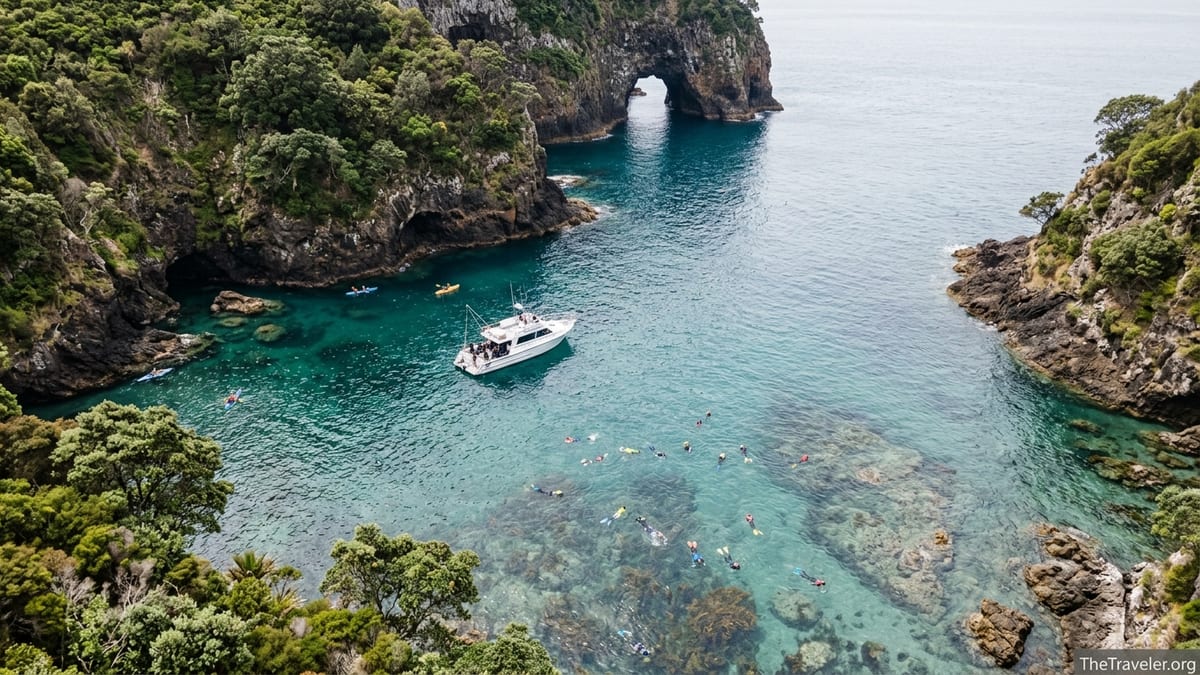
Snorkelling cruises are the most flexible and budget-friendly option for non-divers. A dedicated “perfect day” style trip might cost somewhere around NZD 235 to 260 per adult, with children discounted. These trips usually anchor in a sheltered bay where you can swim and snorkel directly from the back platform, join short guided snorkel tours, and use kayaks or stand up paddleboards provided on the boat. Because the Poor Knights have clear water and abundant surface-level life, confident swimmers get a rich experience without needing scuba certification.
Kayaking and scenic boat options appeal to visitors who prefer to stay on or near the surface. Many dive boats carry sit-on-top kayaks so guests can paddle beneath arches and into small sea caves when conditions are calm. Some operators also market purely scenic cruises that still include swimming and snorkelling but emphasise commentary, coastal geology and birdlife more than underwater depth. These can be ideal for older travellers, families with young children, or anyone prone to seasickness who wants a gentler experience and the option to stay dry on deck.
Equipment, Certification and Safety Basics
Dive operators out of Tutukākā provide full rental equipment for both certified and introductory divers, including wetsuits, BCDs, regulators, tanks, weights, masks and fins. Expect 5 mm or thicker two-piece wetsuits for most of the year, often with hoods available, because water temperatures around the Poor Knights generally range from about 15 to 22 degrees Celsius depending on season. Snorkellers are usually offered long wetsuits, masks, snorkels and open-heel fins, with the option to bring your own gear if you prefer.
To join a certified dive trip, you will need proof of certification from a recognised agency such as PADI, SSI or NAUI. Operators typically accept open water level as the minimum, though some sites or conditions may require advanced certification or proof of recent experience. If you have been out of the water for a year or more, consider booking a refresher session in Whangārei or at a local pool before your trip, or speak frankly with the dive shop about your comfort level so they can plan accordingly.
Introductory dives have no prior certification requirement but do include a medical questionnaire. People with conditions such as asthma, certain heart issues or recent surgery may require medical clearance, and in some cases will be restricted to snorkelling instead of diving. Children usually need to be at least 10 or 12 years old to participate in intro dives, depending on the operator’s policy, although younger kids are welcome to snorkel in a lifejacket with close supervision.
Safety standards on the main Tutukākā boats are generally high, with thorough briefings, mandatory buddy systems for divers and clear rules about not touching marine life or rock walls inside caves. Boats carry emergency oxygen, first aid kits and communication equipment. Still, sea conditions can change, and even strong swimmers should listen carefully to the crew’s instructions about currents, entry and exit points, and what to do if visibility drops or wind picks up during the day.
Marine Conditions, Seasonality and Weather Cancellations
The Poor Knights can be visited year round, but conditions change noticeably with the seasons. Summer and early autumn, roughly December through April, bring warmer water, more stable weather and longer days. During this time, water temperatures can reach the low 20s Celsius, and pelagic visitors such as stingrays and schooling trevally are more frequent. This is also the busiest period for charter boats, so advance booking is important, especially between Christmas and late January when New Zealand school holidays are in full swing.
Winter and spring see cooler water, sometimes around 15 to 16 degrees Celsius, but visibility can be excellent and the sites are quieter. For keen divers comfortable in thicker wetsuits or semi-dry suits, winter trips offer a more peaceful feel and the chance of dramatic underwater light on clear days. Operators continue running year round, but individual dates may be consolidated if guest numbers are low, so stay flexible with your schedule.
Because the islands are fully exposed to ocean swells and wind, trips are weather dependent. Northerly or easterly swells can make landings in certain bays uncomfortable or unsafe, and occasionally forced cancellations occur when conditions are judged unsuitable for safe snorkelling or diving. Boat companies usually confirm or cancel trips the afternoon before or early on the same morning, based on marine forecasts and their own experience.
When booking, read the cancellation policy carefully. A typical arrangement is that if the operator cancels due to weather, you receive a full refund or can transfer to another date. If you cancel within a defined window, often 24 to 48 hours before departure, you may forfeit part or all of your payment unless you can provide a medical certificate or the operator manages to resell your spot. Travel insurance that covers weather-related activity cancellations can be useful, particularly for visitors lining up Poor Knights dives as the highlight of a short Northland stay.
Why You Cannot Land on the Islands
Visitors are often surprised to learn that, although you can spend hours swimming, diving and cruising around the Poor Knights, you are not allowed to land on the islands themselves. This is not a suggestion but a strict legal protection. The islands have been designated as a nature reserve, administered by the Department of Conservation, and access is generally limited to scientific research, approved cultural visits and essential management work.
The main reasons are ecological and cultural. Ecologically, the islands are home to sensitive seabird colonies, rare plants and invertebrates that evolved without introduced predators. Human footsteps, even from well-meaning visitors, could bring seeds, rodents or diseases that would be extremely difficult to remove. Culturally, the islands hold significance to local Māori iwi, and the combination of tapu (sacred) status and conservation needs led to a decision that the best way to respect both is to keep the land itself off-limits to casual tourism.
For travellers, this means the experience is entirely boat and water based: you will view the steep cliffs, arches and blowholes from the deck, glide into sea caves in kayaks or zodiacs when conditions allow, and spend time in the sheltered bays but you will not step ashore for hikes or picnics. Some operators emphasise this in their briefings and use on-board commentary to share stories about the islands’ history and ecology so that guests still feel a connection to the land without setting foot on it.
Anyone thinking of hiring a private vessel from elsewhere in Northland should keep this rule in mind. Even if you own or charter a yacht, the prohibition on landing still applies, and the marine reserve regulations around fishing and anchoring are enforced. If in doubt, contact the Department of Conservation office in Whangārei before planning a private visit so you understand the latest restrictions and recommended anchoring zones.
Where to Stay: Tutukākā and Whangārei Bases
Most visitors choose between staying right in Tutukākā or basing themselves in Whangārei and day-tripping to the marina. Staying in Tutukākā gives you the easiest logistics. The Quality Hotel Oceans Tutukaka sits directly above the marina, and there are also apartments, a dive lodge, holiday homes and the family-friendly Tutukaka Holiday Park, located in a small valley a short drive from the harbour. These options suit travellers who want to roll out of bed, walk to the boat and enjoy a drink or dinner at the marina afterwards without needing to drive.
Whangārei, around half an hour away by car, offers a wider range of motels, hotels and guesthouses at generally lower prices, making it attractive for families and longer stays. Properties like Lupton Lodge and various motor lodges on the outskirts of town advertise themselves as convenient bases for divers, sometimes with drying areas for wetsuits and early breakfast options to suit a pre-dawn departure. From Whangārei you can self-drive to Tutukākā, join a small-group tour that includes transfers, or arrange a private shuttle if you prefer not to handle the winding coastal road yourself.
For travellers looping around Northland, it is common to spend one or two nights in or near Whangārei focused on the Poor Knights trip, then continue north to Paihia and the Bay of Islands, or west towards the Kauri Coast. This approach breaks up driving times and ensures you are not trying to combine a 2.5 hour drive from Auckland, an all-day boat trip and another long drive in a single stretch.
Booking accommodation ahead is particularly important in peak domestic holiday periods such as late December, January and Easter, when both coastal baches and central city motels can sell out. If your Poor Knights day is a fixed highlight of your itinerary, reserve your room in Tutukākā or Whangārei for at least the night before, and ideally the night after, to allow some buffer if weather forces you to adjust your dive date by a day.
Is It Worth It for Non‑Divers?
Non-divers sometimes hesitate to commit a whole day and a significant budget to a marine reserve they will experience only from the surface. In practice, many leave saying the Poor Knights day was the highlight of their North Island trip. The combination of dramatic cliffs, sea caves, birdlife and clear water makes the islands visually spectacular even if you never put your head underwater.
On a typical cruise, non-divers can snorkel in sheltered bays, paddle kayaks close to the rocks, float on noodles, or simply relax on deck with a coffee while watching others explore. Scenic passes through archways and into large caverns such as Rikoriko Cave give a strong sense of the islands’ scale without any need for scuba gear. Many operators offer commentary on the geology, Māori history and conservation story of the reserve, which adds depth for visitors more interested in culture and landscape than fish identification.
From a cost perspective, snorkel or “perfect day” cruises are noticeably cheaper than scuba packages. A family of four might pay for two adults and two children on a snorkel-focused trip at a total cost comparable to just two certified divers on a full equipment dive charter. If you value memorable nature experiences, this still represents good value, especially compared with urban attractions or short scenic flights in other parts of New Zealand.
The key question is how comfortable you and your companions are with boats and open water. If you strongly dislike being on the sea, the long day and possibility of swell might outweigh the scenery. However, if you are willing to spend a few hours on a stable catamaran or launch, can swim or are happy wearing a lifejacket close to the boat, and are curious about marine life, the Poor Knights experience from Tutukākā is easy to recommend even without a dive certification.
The Takeaway
Visiting the Poor Knights Islands from Tutukākā is one of the most rewarding marine experiences available in New Zealand. Whether you drop beneath the surface on a two‑tank dive, try an introductory scuba session, or simply float in the clear water with a mask and snorkel, you are entering a protected world where fish are plentiful and human impact is carefully managed.
Planning the trip takes some thought. You will need to choose between dive, snorkel and scenic options, check what equipment and meals are included, and be ready for weather‑dependent schedules. Understanding why you cannot land on the islands, what level of certification is required, and how accommodation in Tutukākā or Whangārei fits into a wider Northland itinerary will help you avoid surprises and get the most from your day.
For confident divers, the Poor Knights’ arches, caves and schooling fish justify detouring north from Auckland or making space in a longer New Zealand itinerary. For non‑divers, the same cliffs and caves seen from a boat, coupled with relaxed snorkelling and kayaking, make it more than just “tagging along” on someone else’s dive day. In either case, booking with a reputable Tutukākā operator and allowing a day on either side for travel or weather gives you the best chance of experiencing the reserve at its finest.
Northland has many beautiful beaches and bays, but the Poor Knights stand apart because you cannot stay there, build on them or fish their waters. You come for the day, immerse yourself in a flourishing marine reserve, and leave with nothing more than memories and a slightly salty wetsuit. That, in the end, is exactly the point.
FAQ
Q1. Do I need to be a certified diver to visit the Poor Knights Islands?
Certified dive trips require an open water certification or higher, but you can still visit the islands on snorkelling and scenic cruises, or join an introductory dive where no prior qualification is needed.
Q2. How long is the boat trip from Tutukākā to the Poor Knights?
The ride from Tutukākā Marina to the islands usually takes between 45 minutes and 1 hour each way, depending on sea conditions and the type of vessel.
Q3. What does a typical full‑day dive trip cost?
As a guide, certified divers can expect to pay roughly NZD 300 to 380 for a two‑dive day including tanks and guiding, with full gear hire and any transport from Whangārei adding to the total.
Q4. Is snorkelling at the Poor Knights suitable for children?
Yes, many trips welcome children, providing lifejackets, wetsuits and shallow snorkel areas. Age limits may apply for independent swimming or kayaking, so check with your chosen operator.
Q5. Why is landing on the Poor Knights Islands prohibited?
Landing is restricted because the islands are a protected nature reserve with sensitive wildlife and significant Māori cultural values, so tourism is limited to boat‑ and water‑based activities.
Q6. What is the best time of year to dive the Poor Knights?
Summer and early autumn offer warmer water and stable weather, while winter can bring excellent visibility and fewer crowds. Trips operate year round when sea conditions are safe.
Q7. Can I hire all my dive gear in Tutukākā?
Yes, major operators in Tutukākā provide full rental equipment, including wetsuits, BCDs, regulators, tanks, masks and fins, and can also supply snorkel gear for non‑divers.
Q8. Are trips ever cancelled due to bad weather?
Yes, departures are weather dependent, and operators will cancel or reschedule if swell, wind or visibility make conditions unsafe, usually offering a refund or alternative date.
Q9. Is it worth going to the Poor Knights if I only want a scenic cruise?
Many non‑divers find the trip worthwhile for the cliffs, arches, sea caves and birdlife alone, with optional swimming, snorkelling and kayaking adding to the experience.
Q10. Should I stay in Tutukākā or Whangārei for a Poor Knights trip?
Staying in Tutukākā puts you close to the marina and is most convenient, while Whangārei offers more accommodation choices and can work well if you have a car for the 30‑minute drive.