


The Bay of Islands is one of New Zealand’s classic on-the-water destinations, and the choice of cruises can feel overwhelming when you first stand on the Paihia or Russell waterfront. From fast Hole in the Rock runs to relaxed sailing days with long beach breaks, wildlife-focused trips and smaller-boat adventures, how you get out on the water will shape your whole Bay experience. This guide breaks down the main cruise types, departure points, durations and inclusions so you can pick the trip that fits your style, budget and energy levels.
Getting Oriented: Paihia vs Russell and the Main Cruise Types
Most Bay of Islands cruises depart from either Paihia or Russell, the two main townships facing each other across the inner bay. Paihia is the busier hub, with more accommodation and tour desks, and wharves where larger catamarans and fast boats load up in the morning. Russell, reached by car ferry from Opua or passenger ferry from Paihia, has a quieter, historic feel but shares many of the same departures; most major operators simply stop at both wharves on the way out.
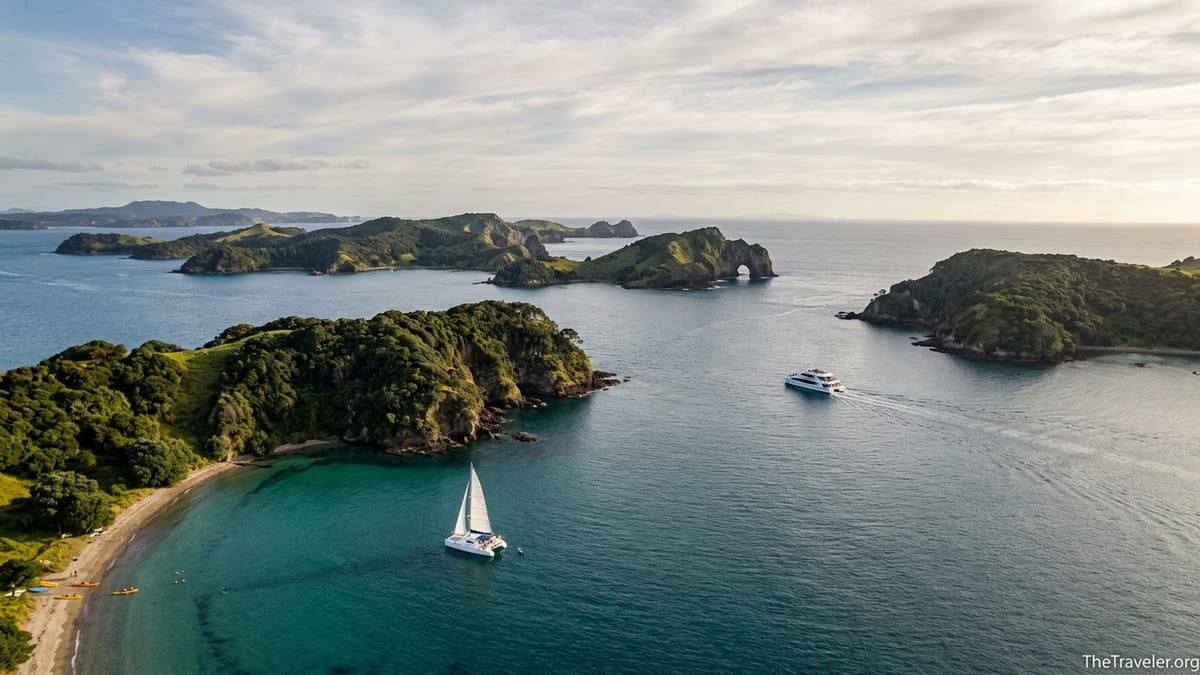
The classic sightseeing route heads out past the inner islands to Motu Kōkako, better known as the Hole in the Rock at Piercy Island, around 40 kilometres from Paihia. Standard Hole in the Rock cruises usually include island scenery, commentary and a chance to pass through the rock arch in calm conditions. Alongside these, you will find dedicated wildlife cruises that spend more time searching for dolphins and seabirds, sailing trips that prioritise time under sail and on the beach, mixed island-stop cruises that weave in short walks and swims, and smaller-boat excursions that cover similar areas at a more intimate scale.
For planning purposes, think in terms of duration and focus. Short fast-boat experiences can be as quick as 1.5 to 2 hours, ideal for cruise-ship passengers with limited time. Classic half-day Hole in the Rock trips generally run 3 to 4 hours. Day-sailing and full-day “Discover the Bay” style island cruises usually take 6 to 7 hours. Overnight adventure cruises add snorkelling, fishing and kayaking across roughly 22 hours on the water. Prices in 2026 commonly range from about 80 to 140 New Zealand dollars per adult for standard day trips, rising for overnight or small-group premium options.
Every style has its own sweet spot. First-time visitors often gravitate to Hole in the Rock or full-day island cruises that aim to show “the lot” in one booking. Families may prioritise boats with more deck space, toilets and indoor seating. Photographers might want slower schedules with room to frame shots. Active travellers and swimmers are usually happiest on sailing and island-stop cruises that allocate more time off the boat.
Hole in the Rock Cruises: The Classic First-Timer Experience
Hole in the Rock cruises are the iconic Bay of Islands outing and remain the most popular choice for first-time visitors. Large operators run purpose-built sightseeing catamarans from Paihia and Russell, heading through the islands, along the Cape Brett Peninsula and out to Motu Kōkako. In good conditions, skippers often nose the bow right up to the cliff face or, when the swell permits, steer through the natural rock arch itself before looping back toward the inner bay.
A typical modern Hole in the Rock itinerary is around three to four hours return from Paihia, with an additional forty minutes if you ride the ferry from Russell first. Many of these cruises include an island stop on the way back at Urupukapuka Island’s Otehei Bay, giving you around 60 to 90 minutes to swim from the sandy beach, walk up to viewpoints or have a snack at the waterfront cafe and bar. That combination of dramatic coastal scenery, the famous rock arch and an easy island break makes this style ideal if you want a single, efficient introduction to the Bay.
The boats themselves are generally larger catamarans with multiple levels, indoor and outdoor seating and onboard cafes selling coffee, snacks and usually a simple lunch. Commentary covers the Māori and European history of the area, from early trading and whaling to the Waitangi Treaty story. Marine life is frequently seen en route; bottlenose and common dolphins are the headline, but you might also spot penguins, gannets and, in the right season, occasional whales. Operators often advertise a “marine mammal guarantee,” offering a free return ticket if no dolphins or whales are seen, though this varies by company and season.
For most first-time visitors with a full day in the region, a Hole in the Rock cruise from Paihia with an Urupukapuka Island stop is the most straightforward pick. It is particularly good for those travelling without a car, as you can simply walk to Paihia Wharf from town accommodation. Russell departures suit travellers staying on that side of the bay or anyone wanting to combine a morning cruise with an afternoon wandering Russell’s historic streets, waterfront cafes and nearby viewpoints such as Flagstaff Hill.
Wildlife and Dolphin Cruises: Longer Encounters on the Water
Dedicated wildlife and dolphin cruises in the Bay of Islands take the standard sightseeing route and stretch the wildlife component into the main attraction. Instead of treating dolphins as a bonus, these tours plan generous time to search for and watch pods, working with local knowledge, radio calls between skippers and an understanding of where dolphins habitually feed or travel on a given tide. Common dolphins, which tend to be more acrobatic and travel in larger groups, are frequently seen, while bottlenose dolphins, larger but often in smaller pods, are another highlight.
On a typical modern itinerary, a dolphin eco-cruise might last around four hours, with departures from both Paihia and Russell. Some are fast catamarans capable of covering more ground, which increases the chances of sightings. Others operate single-hull vessels or sailing catamarans with a softer, quieter feel. In recent years, regulations around swimming with dolphins in New Zealand have tightened, and many Bay of Islands operators now focus on viewing only or restrict swimming to very specific conditions, so travellers should read the latest description carefully rather than assuming swimming is guaranteed.
Compared with standard Hole in the Rock runs, wildlife cruises typically trade off some time at the rock itself or reduce island stopovers to stay flexible for animal encounters. Many still visit Motu Kōkako or at least approach the outer bay but may skip passing through the arch if the swell is high and spend that time tracking a hunting pod instead. This makes them well suited to visitors for whom dolphins and seabirds are the main reason for going out, and less ideal for travellers who want a wide mix of scenery, walking and swimming.
Wildlife-focused cruises can work very well for families with school-age children and for photographers chasing behaviour shots such as dolphins riding the bow wave or gannets plunge-diving. The longer you spend on the water, the more natural moments you are likely to witness. For parents of younger children, it is worth checking boat facilities beforehand: look for vessels with indoor areas where kids can warm up after spray on deck, as well as toilets and easy staircases between viewing levels.
Sailing Trips: Slower Travel and More Beach Time
Sailing trips in the Bay of Islands swap engine noise for the snap of canvas and a slower, more rhythmic pace. Day-sailing catamarans and monohulls usually take smaller groups than the big sightseeing boats, often around a couple of dozen guests or fewer. They leave Paihia’s beachfront or wharf mid-morning and spend the day tacking between sheltered bays and islands before anchoring at a beach for several hours of exploring, swimming and lunch.
A common schedule runs for about six hours, with two to four hours anchored at an island depending on wind strength and the skipper’s route choice. Some operators favour scenic wildlife sanctuary islands like Motuarohia (Roberton Island) or parts of Urupukapuka, where short walking tracks lead up to viewpoints over turquoise shallows and forested headlands. Others choose quieter coves where guests can snorkel over kelp beds, paddle in provided kayaks or simply lie out on the sand. Lunch is often included, typically a freshly prepared picnic or simple buffet served on deck.
Because they are not racing to a fixed outer-bay target like the Hole in the Rock, sailing trips tend to feel more flexible and tailored to the day’s conditions. If the wind fills in nicely, you may spend long stretches under sail with the engine off, gliding past pods of dolphins or shags drying their wings on rocky islets. If the breeze is light, you might motor part of the way to maximise time at the island. Either way, these cruises suit travellers who value the feel of being out on the water as much as ticking off a single landmark.
Sailing is a strong fit for photographers who want clean, low-angle shots of islands and wildlife without the crowding of very large decks. It is also ideal for active travellers and couples who want to swim, snorkel and walk more than they sit in rows of seats. Families can absolutely enjoy sailing days, but parents of very young children should consider the open, less structured deck layout and the longer time between onshore facilities, and pack accordingly with warm layers, sun protection and snacks.
Island-Stop Cruises: Walking, Swimming and Scenery in One Day
Island-stop cruises are designed for travellers who want to stretch their legs rather than sit on a boat for the entire outing. These trips, usually departing from Paihia with pickups in Russell, focus on the inner islands of the bay, weaving between spots like Motuarohia (Roberton Island), Moturua and Urupukapuka. Over four and a half to eight hours on the water, boats will normally anchor at one or more islands, offload guests in tenders or directly onto wharves and allow time for walking tracks, beaches and panoramic viewpoints.
A typical half-day option might involve a three-hour scenic cruise with a one-hour stop on Roberton Island, where a short but steep track leads to a lookout over its twin lagoons and the wider bay. Full-day “Discover the Bay” style trips often add longer stops at Otehei Bay on Urupukapuka Island, including enough time to follow clifftop trails, hire a kayak from a beachfront base, or eat lunch at the casual cafe before reboarding.
While these cruises may not always venture all the way to Motu Kōkako, they often include commentary about ecological restoration projects such as Project Island Song, which has helped reintroduce native birdlife to pest-free islands. Travellers interested in conservation, birdwatching and varied coastal landscapes generally find this style very satisfying, as it shows more of the bay’s sheltered anchorages and hiking options rather than focusing on a single offshore rock formation.
Island-stop cruises are particularly good for families and travellers who know they get restless sitting in one place. Children can run on beaches and explore safe, clearly marked tracks, while adults enjoy views and photography opportunities from headland lookouts. The trade-off is that you may not see the Hole in the Rock itself unless you choose a route that explicitly includes it, so first-time visitors keen on that specific sight might combine an inner-island day with a shorter fast-boat run to the rock on another morning.
Smaller-Boat and Fast-Boat Excursions: Intimate or High-Energy Experiences
Alongside the big cats and sailing vessels, the Bay of Islands has a range of smaller-boat and fast-boat excursions that appeal to travellers seeking either a more intimate atmosphere or an adrenaline edge. Small wildlife boats and boutique day-cruise operators often take groups of a dozen or fewer, using lower-sided vessels that bring you closer to the water and into narrow coves that larger craft cannot enter. The trade-off is less space to move around and more exposure to wind and spray, which some travellers love and others tolerate.
Fast boats, including rigid inflatables and high-powered catamarans, are particularly common on shorter Hole in the Rock runs. A typical itinerary might be 1.5 to 2 hours from Paihia, sprinting out past the islands directly toward Motu Kōkako, looping around the cliffs, ducking into sea caves if the swell allows and returning along a slightly different route. These trips rarely include long island stops, though some operators build in a brief beach break or a photo pause at Cape Brett Lighthouse. They suit visitors on cruise-ship timeframes or anyone who enjoys the physical thrill of speed and sharp turns in ocean swells.
In practice, small-boat cruises often provide excellent wildlife viewing because you are closer to the surface and there are fewer people clustered at the rail. Dolphins surfing the bow wave feel almost within arm’s reach, and seabirds fly at eye level rather than below an upper deck. The flipside is that motion is more noticeable, so travellers who are prone to seasickness should seriously consider larger, more stable vessels or inner-bay itineraries instead.
These smaller and faster options are best for repeat visitors who have already taken a more comprehensive cruise, photographers who value proximity and flexibility over creature comforts, and adventurous travellers who want to maximise the time actually moving through the water rather than stopping at cafes or picnic spots. Families with younger children may find the pace and exposure a bit much, especially on windy days, although older kids and teenagers often rank these trips among their holiday highlights.
Matching Cruise Types to Different Travelers
Choosing the right Bay of Islands cruise comes down to your priorities and how much time you have. For first-time visitors who want a classic overview and a single booking that “does it all,” a three to four hour Hole in the Rock cruise with an Urupukapuka Island stop is hard to beat. Departing from Paihia makes logistics simple if you are staying in town, while Russell departures are a good choice if you prefer that village’s quieter character and want to walk its historic streets before or after your trip.
Families, especially with children under ten, usually do best on mid-sized or large boats with indoor seating, toilets and snack bars. Look for cruises described as family friendly or eco-cruises that include island time, so kids can burn off energy on beaches and short tracks instead of sitting the whole time. Island-stop cruises and relaxed sailing days are ideal here, provided you pack sun protection, spare clothes and simple activities for any travel lulls.
Photographers and keen wildlife watchers might prioritise either sailing trips or specialist wildlife cruises. Sailing boats provide lower perspectives on water level and quieter approaches to dolphins and seabirds, which can help with natural-feeling frames. Dedicated wildlife tours, often on medium-sized fast catamarans, increase your chances of spending long periods alongside pods or seabird flocks, though you may see fewer islands close-up or have shorter beach breaks.
Travellers who value swimming, walking and time off the boat above all else should gravitate toward day-sailing itineraries and inner-bay island-stop cruises. These options typically set aside two hours or more at beaches and walking tracks, giving you real time to settle in rather than a quick leg stretch. If you have two days in the region, a good combination is one Hole in the Rock cruise from Paihia or Russell to tick off the iconic sight, followed by a full day dedicated to sailing or exploring the inner islands on foot.
Practical Booking Tips, Timing and What’s Included
Most Bay of Islands cruises operate year-round, but schedules are fuller and seas warmer from November to March. In the peak summer months of late December and January, popular departures such as mid-morning Hole in the Rock cruises and small-group sailing trips can sell out days in advance, particularly during New Zealand school holidays. If you are visiting then and have fixed dates, advance booking is sensible. In shoulder seasons, it is often possible to book a day or two ahead after checking the weather forecast in nearby Paihia booking offices.
Typical inclusions depend on the cruise style. Standard sightseeing catamarans usually include commentary, basic tea or coffee on board and the cruise itself, with food, drinks and any gear hire at island cafes or beach bases paid separately. Sailing day trips frequently include lunch, sometimes with vegetarian options, as well as snorkelling gear and use of kayaks or paddleboards. Wildlife cruises may provide warm jackets or waterproofs on deck in cooler months, though packing your own layers is always wise.
When comparing prices, pay attention to parking and ferry costs if you are staying on one side of the bay but departing from the other. Many Russell-based travellers simply walk on to the passenger ferry to Paihia for early departures, then cruise out from there and return via Russell on the same ticket, effectively building a scenic mini-ferry ride into their day. Visitors driving in from elsewhere in Northland often choose Paihia as their base because of easier road access and a greater range of accommodation within walking distance of the wharf.
Seasickness is a consideration for some travellers, particularly on longer runs out to the Hole in the Rock in fresh northerly swells. If you are unsure, opt for a larger catamaran, sit near the middle of the boat where movement is reduced, and carry whatever motion-sickness remedies you normally use. Inner-bay island cruises and shorter crossings between Paihia and Russell or Urupukapuka Island tend to be gentler, which makes them a safer choice for anyone worried about rougher water.
The Takeaway
A Bay of Islands cruise is less about a single must-see landmark and more about how you prefer to spend your time on the water. The Hole in the Rock remains a striking sight and an understandable focus for first-time visitors, but the calm inner islands, wildlife-rich channels and sheltered beaches offer just as much reward for those who choose sailing or island-stop itineraries.
If you only have half a day, a three to four hour Hole in the Rock and island-stop cruise from Paihia or Russell gives a well-balanced snapshot of cliffs, open ocean and beach time. With a full day, consider a relaxed sailing trip or a “discover the bay” style cruise that builds in longer island walks and multiple swims. Wildlife enthusiasts should lean toward dedicated dolphin and eco-cruises, while thrill seekers and return visitors can add a fast-boat run or small-boat adventure for a different angle on familiar scenery.
By weighing up departure points, duration, boat size, wildlife focus and how much time you want on land versus at sea, you can match the Bay’s wide range of cruises to your own travel style. However you choose to go, plan a little flexibility around the weather, pack sun protection and layers, and leave room in your schedule for an unhurried meal on the waterfront afterward. The Bay of Islands is just as memorable from a wharfside cafe table as it is from a windswept upper deck.
FAQ
Q1. Is Paihia or Russell a better departure point for Bay of Islands cruises?
Paihia has more departures, tour desks and accommodation within walking distance of the wharf, which makes it the most convenient base for most visitors. Russell is quieter and more historic, and works well if you prefer a village atmosphere, but you may need to add a short ferry ride or check that your chosen cruise picks up from Russell Wharf.
Q2. How long does a typical Hole in the Rock cruise take?
Most standard Hole in the Rock sightseeing cruises run for about three to four hours return from Paihia, including the journey through the inner islands, time at Motu Kōkako and often a short stop at Urupukapuka Island. Fast-boat versions can be as short as 1.5 to 2 hours but usually skip longer island breaks.
Q3. Can I see dolphins on any Bay of Islands cruise?
Dolphins are frequently seen on many Bay of Islands cruises, especially those that head toward the outer bay, but sightings are never guaranteed. Dedicated wildlife and dolphin cruises give you the best chance because they structure their itineraries around searching for pods rather than fitting sightings around a fixed schedule.
Q4. Which cruise style is best for families with young children?
Mid-sized or large sightseeing and island-stop cruises from Paihia or Russell usually work best for families with younger children. These boats provide indoor seating, toilets and more space to move, and itineraries often include beach or island time where kids can run around. Very fast boats and long outer-bay runs can be tiring for smaller children, especially in windy conditions.
Q5. I want to swim and walk on islands more than sit on a boat. What should I book?
Look for full-day island-stop cruises or day-sailing trips that clearly advertise several hours at anchor or ashore. These itineraries typically include beach time, short walking tracks to viewpoints and sometimes snorkelling or kayaking, giving you ample time off the boat while still enjoying scenic cruising between stops.
Q6. Are sailing trips suitable for first-time visitors to the Bay of Islands?
Yes, sailing trips are an excellent choice for first-time visitors who value a relaxed pace and time on beaches. You may not always reach the Hole in the Rock on shorter sailing itineraries, but you will gain a strong sense of the inner bay’s islands, wildlife and sheltered coves, often with smaller groups and a more personal feel.
Q7. What should I bring on a Bay of Islands cruise?
Plan for changeable coastal weather by bringing sunblock, a hat, sunglasses and a light windproof layer even in summer. Comfortable walking shoes or sandals help on island tracks, and a swimsuit and towel are useful on cruises that include beach stops. A reusable water bottle and a camera or phone with plenty of battery are also worthwhile.
Q8. How far in advance should I book my cruise?
In peak summer from late December to January, it is wise to book popular departures such as mid-morning Hole in the Rock cruises and small-group sailing days several days ahead, especially over weekends and school holidays. In shoulder seasons and winter, you can often book a day or two in advance after checking the weather forecast, though small specialist trips may still fill quickly.
Q9. Will I get seasick on a Bay of Islands cruise?
Many cruises stay within the relatively sheltered inner bay, where conditions are usually gentle. Trips that go all the way to the Hole in the Rock can encounter more swell near the entrance, so travellers prone to motion sickness should consider larger catamarans, sit near the middle of the boat and take any remedies they normally use. Shorter inner-bay or island-hop cruises are generally easier on sensitive stomachs.
Q10. Is it worth doing more than one cruise if I have two days in the Bay of Islands?
If your budget allows, combining two different cruise styles over two days gives a richer experience. Many travellers enjoy a Hole in the Rock or full-bay sightseeing cruise on one day, then choose a slower-paced sailing or island-stop trip on the second day to focus on swimming, walking and quieter corners of the bay.