


Cape Reinga and the Far North are often sold as a single, heroic drive from Auckland or the Bay of Islands. In reality, the journey to Te Rerenga Wairua is far more rewarding when you slow down, plan your fuel and overnight stops, and treat Ninety Mile Beach with the caution it deserves. This driving guide focuses on the Far North section beyond the Bay of Islands, helping you link Kerikeri, Doubtless Bay and Mangonui, Kaitaia, Te Paki dunes and Cape Reinga, with the option to loop back via the wild west coast and Hokianga Harbour.
Understanding Distances and Driving Realities in the Far North
Maps can make the Far North look compact, but once you leave the Bay of Islands the driving feels slower and more remote. From Kerikeri to Kaitaia is roughly 1.5 hours in normal traffic, and from Kaitaia to Cape Reinga you should allow another 1.5 hours each way by sealed State Highway 1. That means even if you start from Kerikeri, a return run to the lighthouse with a stop at the Te Paki dunes can easily add up to six to eight hours of driving in a day.
The road surface is sealed all the way to the Cape Reinga car park, but there are long stretches with no passing lanes, limited mobile coverage and frequent roadworks or slow traffic behind trucks and campervans. If you are used to motorway driving around Auckland, average speeds in the Far North will feel lower, especially in winter or wet conditions. Build in extra time for unplanned photo stops at beaches like Rarawa or for quick detours off the main highway.
Many itineraries market Auckland to Cape Reinga as a single, iconic drive, yet the round trip from the city is close to 900 kilometres. In practice, most independent travellers who enjoy the journey either base themselves for at least one night in the Bay of Islands and another night in Doubtless Bay or Kaitaia, or they join a guided day tour from Paihia or Kerikeri that pushes on to the Far North while someone else handles the driving. Treating Cape Reinga as a long day trip from the Bay of Islands is possible, but it means around 10 to 12 hours out and back.
Because of the distances and reduced services, it pays to think about driving in segments. A common pattern is to drive from the Bay of Islands to Doubtless Bay or Mangonui for a night, continue to Kaitaia or Awanui for a second night, and then devote a full day to Cape Reinga and the Te Paki dunes before looping back via the east coast or Hokianga. This spreads the driving, gives you daylight hours at the beaches and reduces fatigue on unfamiliar roads.
Kerikeri and the Transition Beyond the Bay of Islands
Kerikeri sits at the northern edge of the Bay of Islands and makes a natural transition point between classic Bay attractions and the more sparsely populated Far North. Many travellers spend two or three nights here or in nearby Paihia, using that time to visit the Waitangi Treaty Grounds, take a Bay of Islands cruise, and explore Kerikeri’s historic precinct and waterfalls before pushing further north by car.
If you are driving your own vehicle or a rental, Kerikeri is a good place to check your fuel, stock up at a full-size supermarket and confirm road conditions. Beyond this point, petrol stations become less frequent, opening hours are shorter and some smaller outlets may close early on Sundays or public holidays. Filling the tank in Kerikeri or in the Bay of Islands before heading toward Doubtless Bay gives you flexibility later in the day when you may not feel like detouring in search of fuel.
Kerikeri also offers accommodation that breaks the journey to the Far North into manageable chunks. Typical midrange motels and apartment-style stays here might cost the equivalent of a few hundred New Zealand dollars per night in peak season, often with kitchens that let you self-cater. For budget travellers, simple campgrounds and holiday parks around Kerikeri provide powered sites for campervans and cabins with shared facilities, which can help keep costs down before you tackle higher fuel expenses further north.
From Kerikeri, you have a choice of continuing directly to Kaitaia via the inland route or detouring to Doubtless Bay and Mangonui on the east coast. The coastal route via State Highway 10 adds a little driving time but rewards you with sweeping views over Coopers Beach, Cable Bay and Taipa, and easy access to short coastal walks. If your schedule allows, this is the point where slowing down pays off, as you can spread the journey across one or two short driving days instead of a single push to Kaitaia.
Doubtless Bay, Mangonui and Onward to Kaitaia
Doubtless Bay is often the first place where travellers feel that they have truly left the Bay of Islands behind. The small town of Mangonui curves around a sheltered harbour and blends low-key holiday homes with a few cafés, galleries and a well-known fish and chip shop on the waterfront. Having lunch in Mangonui before pushing on north is a common pattern, particularly for those coming from Kerikeri or Paihia, and it offers a convenient break from driving.
East-coast beaches around Doubtless Bay are close enough to the highway for quick dips or walks. Coopers Beach has gentle waves and is popular with families; Cable Bay offers pinkish shells and rock pools at low tide; and Taipa sits near a campground that welcomes campervans. If you are touring in a motorhome, a night at a beachfront holiday park in this area gives you a relaxed break before the quieter Aupouri Peninsula farther north.
From Mangonui, the highway swings back inland to meet Kaitaia, the Far North’s main service town. Kaitaia itself is more functional than pretty, but it is an important base. Supermarkets, fuel stations, mechanics and pharmacies are concentrated here, and most Cape Reinga coach tours either start in Kaitaia or stop here briefly when departing from the Bay of Islands. If you plan to drive to the Cape under your own steam, make sure you arrive in Kaitaia with time to top up fuel, pick up snacks and check weather forecasts before heading further north or settling into local accommodation.
For many travellers, an overnight stop in or near Kaitaia significantly improves the Cape Reinga experience. Staying in town or at nearby Ahipara on the southern end of Ninety Mile Beach cuts down the driving on the day you go to the lighthouse and Te Paki dunes. It also gives you the option to join a full-day tour from Kaitaia that includes a run along Ninety Mile Beach while leaving your rental car safely off the sand, something that many visitors find less stressful than self-driving all the way to the top and back in one hit.
Te Paki Sand Dunes and Cape Reinga: How to Time Your Day
The stretch from Kaitaia to Cape Reinga is the heart of the Far North road trip. State Highway 1 narrows as it climbs the Aupouri Peninsula, passing small settlements such as Awanui, Houhora and Te Kao. Services along this section are sparse. Awanui offers fuel and a café at the junction of the highways; Pukenui and Houhora have small shops and one or two fuel pumps; and Waitiki Landing, roughly 20 to 25 minutes from the Cape Reinga car park, is widely treated as the last reliable stop for both food and fuel before the end of the road.
Te Paki Giant Sand Dunes lie just off the highway about 15 minutes south of Cape Reinga. The access road to the dunes is unsealed but usually navigable in a standard car at slow speeds. At the car park you will typically find local operators renting sandboards for a modest per-hour fee, along with toilets and a picnic area. Many travellers choose to visit the dunes either on the way up to the Cape in the late morning or around midday on the return journey, depending on weather and energy levels.
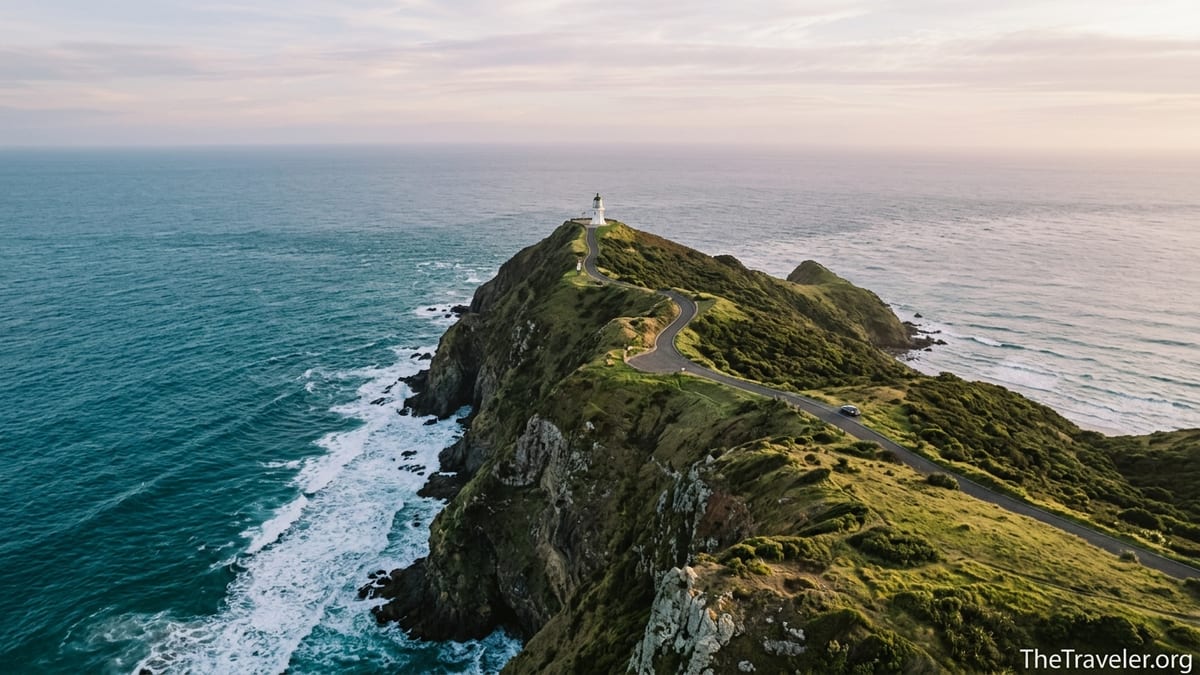
At Cape Reinga / Te Rerenga Wairua itself, allow at least 60 to 90 minutes for the walk from the car park to the lighthouse and back, time at the lookouts and moments of quiet reflection. The headland is a place of deep significance in Māori tradition, associated with departing spirits, and visitors are asked to treat it with respect. There are toilets at the car park but no food outlets or rubbish bins. It is considered more appropriate to eat your main meal at other stops along the route, such as picnic areas closer to Te Paki or beaches slightly further south.
Because the day is long and attractions are outdoors, timing matters. In summer, many travellers leave Kaitaia or Doubtless Bay early, reach Cape Reinga before the midday heat, and then enjoy the dunes in the afternoon before returning south. In winter, shorter daylight hours mean it is wise to depart even earlier so that you are not driving unfamiliar rural roads in darkness at the end of the day. In either season, keeping an eye on fuel levels and planning a final stop at Waitiki Landing or Awanui before dark can make the return leg feel more relaxed.
Why Ninety Mile Beach Is Not a Normal Rental‑Car Road
Ninety Mile Beach is officially designated as a public highway, which leads some visitors to assume it can be treated like any other sealed state highway. In practice, it is a long, exposed stretch of sand with soft sections, changing channels and an incoming tide that can trap unwary drivers. Every year, photographs appear in local media of vehicles buried to their axles or flooded by waves after drivers misjudge conditions near the Te Paki Stream or venture too close to the waterline.
Most major rental car and campervan companies in New Zealand treat Ninety Mile Beach as a prohibited road. Rental agreements typically exclude coverage for any damage incurred on the beach or on unsealed tracks leading to it. If you ignore these terms and become bogged or damaged, you may be responsible for the full recovery cost and repairs, which can easily exceed any basic insurance excess. Staff at depots in Auckland and the Bay of Islands often remind travellers of this policy when handing over keys, precisely because first-time visitors sometimes underestimate the risk.
Beyond contractual issues, beach driving in the Far North requires local knowledge about tides, recent storms and channels at stream mouths that change over time. Tour buses and specialist 4WD operators time their runs for low tide and often use Te Paki Stream as a natural ramp, driving along its shallow bed for several kilometres before reaching the hard-packed sand on the beach. Following their tracks in a private vehicle, especially a standard two-wheel-drive rental car, is far more hazardous because of quicksand patches, sudden drop-offs and deeper water than it might appear from the passenger seat of a coach.
For travellers who wish to experience Ninety Mile Beach safely, joining an organised tour from Kaitaia, Ahipara, Paihia or Kerikeri is the practical solution. A full-day coach tour typically includes a run along the beach at low tide, sandboarding at the Te Paki dunes and a visit to the Cape Reinga lighthouse, with commentary about local history and Māori traditions. This allows you to enjoy the drama of the coastline and the novelty of driving on the sand without risking your rental car or needing to interpret tide tables in an unfamiliar environment.
Fuel, Food and Overnight Stops That Improve the Trip
Because services thin out the further north you go, refuelling strategy is as important as choosing your scenic stops. For most travellers driving a conventional car, filling up in Kerikeri or the Bay of Islands before heading north, then topping up again in Kaitaia or Awanui, provides a comfortable buffer. Drivers of larger campervans or vehicles with smaller tanks often prefer to add another partial fill at Pukenui or Houhora to avoid running low near the tip of the Aupouri Peninsula.
Food options follow a similar pattern. In Kerikeri and Kaitaia you will find full-size supermarkets where you can stock up on picnic supplies, snacks and drinking water. Doubtless Bay and Mangonui have small grocery stores and several cafés that serve breakfast and lunch to travellers breaking their journey. Further north, Waitiki Landing provides one of the last reliable hot meals on the way to the Cape, along with coffee and basic pantry items. Planning a cool bag or small chilly bin with sandwiches, fruit and water means you are not dependent on finding an open café late in the day.
Well-chosen overnight stops can turn what might otherwise feel like a rushed tick-box drive into a rewarding journey. Many travellers report that spending one night in Doubtless Bay or Mangonui and another in or near Kaitaia creates a relaxed rhythm: a coastal evening overlooking the east coast, followed by a functional but handy base close to Cape Reinga. Those who prefer wilder surf beaches sometimes substitute Ahipara for Kaitaia, swapping a 15-minute inland drive for accommodation almost on the sand at the southern end of Ninety Mile Beach.
If your schedule allows, consider adding an extra night either pre- or post-Cape in the Bay of Islands or near Hokianga Harbour. This gives flexibility to shuffle your Cape Reinga day if the forecast looks poor, and it lets you enjoy activities such as a Bay of Islands cruise, a short hike in Waipoua Forest to view giant kauri, or a sunset walk along Omapere and Opononi beaches without feeling pressed to get back on the highway immediately.
Looping Back via Hokianga and the West Coast
Many road-trip itineraries present the Far North as a simple out-and-back along State Highway 1 between Auckland and Cape Reinga. Travellers who have a few extra days often find a loop that includes the west coast and Hokianga Harbour more satisfying. Instead of returning directly from Kaitaia to the Bay of Islands, you can drive south toward Ahipara, then continue on secondary roads toward the Hokianga region, eventually linking back to central Northland near Waipoua Forest.
The Hokianga route introduces a different character of landscape: rolling farmland, harbourside villages and views of huge sand dunes guarding the harbour mouth. Towns such as Omapere, Opononi and Rawene make natural overnight stops. The short vehicle ferry between Rawene and Kohukohu connects the southern and northern sides of the harbour, turning what might otherwise be a long inland drive into a scenic crossing. Travellers often park up on the waterfront in Rawene to enjoy a coffee before rolling onto the ferry for the 15 to 20 minute crossing.
Once across the harbour, you can continue south through Waipoua Forest, where short walks lead to famous kauri trees such as Tane Mahuta. Roads here are narrower and more winding than the main highway on the east coast, so driving times may be longer than they appear on a map, but traffic is usually light. For those heading back to Auckland, combining Hokianga, Waipoua Forest and the beaches near Dargaville or Baylys Beach creates a loop that feels very different from the east-coast journey up to the Bay of Islands.
Whether you choose to return via Hokianga or retrace your route along the east coast depends on your priorities. If you value shorter driving times and repeat visits to favourite beaches around Doubtless Bay and the Bay of Islands, the east-coast route will suit you. If you prefer variety and want to experience contrasts between sheltered bays, wild surf beaches and dense native forest, then the Hokianga loop is likely to be more memorable, provided you build in at least one or two additional nights.
The Takeaway
A Far North road trip that includes Cape Reinga, Te Paki dunes, Doubtless Bay and Kaitaia is less about conquering distance and more about pacing. Once you travel beyond the Bay of Islands, fuel stations, supermarkets and mobile coverage become rarer, yet rewarding beaches and viewpoints appear at regular intervals along relatively slow roads. Drawing a realistic daily driving limit and choosing overnight stops that match your interests will do more to shape your experience than any checklist of sights.
Ninety Mile Beach encapsulates the difference between brochure imagery and on-the-ground reality. While it is classified as a highway, most rental contracts forbid driving on it, and the shifting sands and tides have little in common with sealed asphalt. Experiencing the beach safely via a guided tour and keeping your own vehicle on the inland highway lets you enjoy the scenery without worrying about incoming waves or recovery trucks.
The decision to return via the same route or link to Hokianga depends on how much time you have and how comfortable you are with narrow, winding roads. With careful planning of fuel stops in places like Kerikeri, Kaitaia and Waitiki Landing, and by spreading the journey across at least a couple of nights north of the Bay of Islands, you can turn the drive to Cape Reinga from a long haul into a highlight of your time in New Zealand.
FAQ
Q1. How many days do I need for a Far North road trip that includes Cape Reinga?
Most travellers feel comfortable with at least three to four days beyond the Bay of Islands, which allows one day to reach Doubtless Bay or Kaitaia, one full day for Cape Reinga and the Te Paki dunes, and one or two days to explore either the east coast or Hokianga on the return.
Q2. Can I drive a normal rental car all the way to the Cape Reinga lighthouse?
Yes, the road is sealed from Kaitaia to the Cape Reinga car park and is suitable for standard two-wheel-drive rental cars, provided you drive cautiously and allow enough time for the 1.5 hour journey each way from Kaitaia.
Q3. Is it safe to take my rental car onto Ninety Mile Beach?
In most cases no. The beach surface is soft and tidal, many rental contracts specifically forbid driving on Ninety Mile Beach, and any damage or recovery costs may not be covered by insurance, so it is safer to join a guided tour for beach driving.
Q4. Where should I refuel before heading to Cape Reinga?
Most drivers fill up in Kerikeri or the Bay of Islands before heading north, then top up again in Kaitaia or Awanui. On the Aupouri Peninsula, small fuel stops exist in places like Pukenui and Waitiki Landing, which is commonly treated as the last reliable petrol station before the Cape.
Q5. Do I need to book accommodation in advance in places like Mangonui and Kaitaia?
Booking ahead is highly recommended in peak summer, school holidays and long weekends, especially for waterfront motels and holiday parks in Doubtless Bay and limited motel options in Kaitaia, which also serve local business travellers.
Q6. How long does it take to visit the Te Paki Giant Sand Dunes?
Most visitors spend between one and two hours at the dunes, including hiring a sandboard, walking up the slopes and taking breaks. You should also allow extra time for the short unsealed access road between the highway and the car park.
Q7. Is Cape Reinga suitable as a day trip from the Bay of Islands?
It is possible as a long day trip, but it involves many hours of driving. Travellers who want a more relaxed experience often either join a full-day coach tour from Paihia or Kerikeri, or they break the journey with an overnight stay around Doubtless Bay or Kaitaia.
Q8. Should I return via the same route or loop through Hokianga?
If you are short on time or prefer less complex driving, returning via the same east-coast route is simpler. If you have an extra day or two and want variety, looping back via Ahipara, Hokianga Harbour and Waipoua Forest adds different scenery and small towns to your trip.
Q9. Are there food and toilet facilities at Cape Reinga?
There are public toilets at the Cape Reinga car park, but no cafés, shops or rubbish bins. Travellers usually bring their own water and snacks and plan main meals at places like Waitiki Landing, Kaitaia or Doubtless Bay.
Q10. Do I need special permits to visit Cape Reinga or Ninety Mile Beach?
You do not need permits to visit Cape Reinga, the lighthouse walk or the main viewpoints, and pedestrian access to Ninety Mile Beach is generally free. If you plan to join a coach tour or sandboarding session, you simply book and pay the operator directly.