


Planning a trip to New Zealand now requires a little more prep than simply booking a flight to Auckland. Between the New Zealand Electronic Travel Authority (NZeTA), visa waiver rules, standard Visitor Visas and the New Zealand Traveller Declaration, it can be confusing to know what applies to you. This guide walks you through each step before departure, with concrete examples and a strong reminder to always check requirements based on your passport, not what happened to a friend from another country.
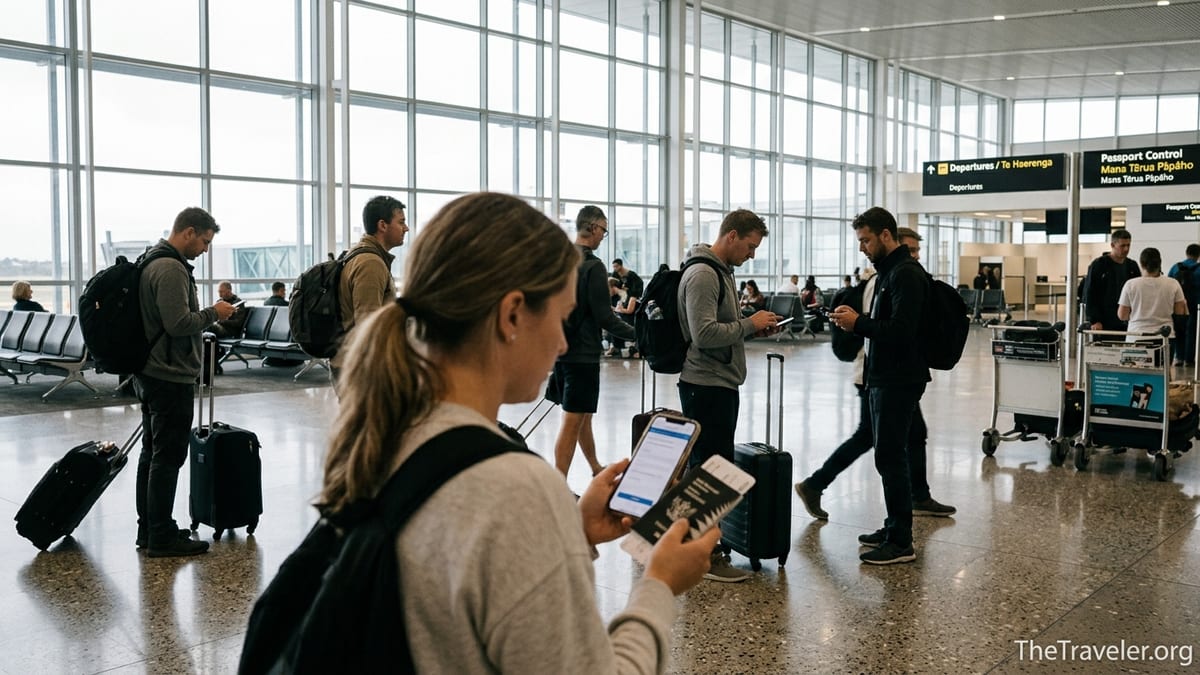
Understanding NZeTA, Visa Waiver Status and Visitor Visas
New Zealand now uses a tiered system for short stays. Some nationalities can travel under visa waiver rules, but most of these travellers must still obtain an NZeTA before they board a plane or cruise ship. Others need to apply for a full Visitor Visa in advance. On top of that, almost everyone must complete a New Zealand Traveller Declaration before arrival. Each piece has a different purpose, cost and processing time.
Think of it this way: if you hold a passport from a country such as the United States, Germany or Japan, you are typically classed as a visa waiver visitor. You do not need to apply for a traditional visa label, but you do need an NZeTA approval linked to your passport before check in, and you must complete the Traveller Declaration. If you hold a passport from India, South Africa or the Philippines, you usually need to apply for a Visitor Visa in advance, receive that visa in your passport or electronically, and then still complete the Traveller Declaration before you land.
Australian citizens are one notable exception. They usually do not need a visa or an NZeTA to visit and can be granted a resident class visa on arrival if they meet entry requirements. However, Australian permanent residents who travel on a non Australian passport are usually treated differently and often require an NZeTA. This is why you should never assume that what applies to one person on your flight applies to you.
Who Normally Needs an NZeTA and Who Is Exempt
The NZeTA is required for most travellers who come from visa waiver countries, as well as some transit passengers passing through Auckland International Airport. For example, a Canadian tourist flying Vancouver to Auckland for a three week road trip typically must apply for an NZeTA in advance, pay the associated fee and the International Visitor Conservation and Tourism Levy where applicable, then show the airline their approval before boarding.
In contrast, some groups are exempt from needing an NZeTA. Australian citizens are a headline example and usually do not need one when entering New Zealand for tourism or to live and work. Citizens of New Zealand obviously do not need an NZeTA to return home, although they still complete the Traveller Declaration. Certain crew members, such as airline and cruise ship crew, and some diplomatic or official travellers may have separate arrangements. These exemptions are specific, and details can change, so you should always confirm on official immigration channels instead of relying on informal advice.
Transit passengers are another category to pay attention to. If, for instance, you are a British national flying London to Santiago with a same day transit at Auckland, you may still need an NZeTA even though you never leave the airport. On the other hand, some nationalities require a specific transit visa instead. Requirements depend on the passport you hold, your itinerary and how you are ticketed, which again underscores the importance of checking your own situation on Immigration New Zealand’s official website.
Visitor Visa: When Visa Waiver or NZeTA Is Not Enough
Travellers from countries that are not on New Zealand’s visa waiver list generally need to obtain a Visitor Visa before they travel. For example, a tourist from India planning a two week stay in Queenstown to ski at The Remarkables will normally need to complete an online Visitor Visa application, provide documents such as bank statements and employment letters, pay a visa fee and wait for a decision before they can board their flight.
Even travellers from visa waiver countries might need a Visitor Visa if their plans fall outside the conditions of a standard visa waiver stay. A common scenario is duration. Visa waiver visitors are often limited to short stays, such as up to three months per visit for many nationalities, or up to six months for some like the United Kingdom, within a set period. If a US digital nomad wants to spend nine consecutive months in New Zealand working remotely for a foreign employer, they are unlikely to qualify for a simple visa waiver stay and should look closely at an appropriate visa, such as a long stay Visitor Visa or a different category recommended by Immigration New Zealand.
Another example is purpose. If a visitor from France plans to enrol in a four month English language course in Auckland, or carry out paid employment on a film production in Wellington, a standard visa waiver visit with an NZeTA will not be enough. They will need to apply for the correct visa type, possibly a student or work visa, with conditions that match their activities. Applying only for an NZeTA in these cases can lead to being denied boarding or refused entry on arrival.
Passport Validity, Onward Travel and Proof of Funds
Regardless of whether you are travelling under a visa waiver with an NZeTA or on a Visitor Visa, your passport must be valid for the required minimum period. In practice, many airlines expect your passport to be valid for at least three months beyond the date you plan to leave New Zealand. For example, if you are a Japanese traveller scheduled to depart Auckland on 15 January, it is prudent to hold a passport valid until at least mid April to avoid issues at check in.
Onward travel evidence is another key requirement for most short term visitors. This typically means a paid ticket out of New Zealand to a country you are allowed to enter. A concrete example would be a German backpacker arriving into Christchurch with a confirmed ticket onward to Sydney four weeks later on a low cost airline. Open dated tickets, standby listings or vague verbal plans to buy a ticket later are usually not accepted. Border and airline staff want to see proof that you intend and are able to leave within the period allowed by your visa or visa waiver conditions.
New Zealand authorities also expect visitors to have enough funds to support themselves without working illegally or requiring public assistance. This does not usually involve carrying cash at the border. Instead, you might be asked to show recent bank statements, a credit card with sufficient limit, or a letter from a sponsor if someone else is covering your expenses. As an example, a couple from Singapore staying for two weeks in Auckland and Rotorua might carry printouts of online bank statements showing savings comfortably above the cost of their flights, accommodation and activities.
The New Zealand Traveller Declaration Explained
The New Zealand Traveller Declaration, often referred to as the NZTD, has replaced the old paper Passenger Arrival Card for most travellers. It collects information for customs, immigration and biosecurity before you arrive. According to New Zealand Customs and the official Traveller Declaration site, everyone travelling into New Zealand must now complete a declaration, including New Zealand citizens and people who already hold a visa or NZeTA.
You can usually complete the declaration online or via an official mobile app before you travel. For air travellers, the earliest you can submit your declaration is typically 24 hours before you start your trip to New Zealand. For instance, if you are flying Los Angeles to Auckland with a same day connection in Fiji, you can often begin the declaration 24 hours before your first flight leaves Los Angeles, not just the final leg. Sea travellers, including cruise passengers, generally submit the form within 24 hours of departing their last foreign port before New Zealand.
It is free to complete the New Zealand Traveller Declaration. You will be asked about your passport, contact details in New Zealand, travel history for the last 30 days and any items you are bringing that could affect biosecurity, such as hiking boots with soil on them or food products. Once submitted, your declaration is digitally linked to your passport and checked at eGates or by a border officer on arrival. If you do not complete it in advance, you may be required to complete a paper version at the airport, which can slow your arrival process.
Fees, Processing Times and the International Visitor Conservation and Tourism Levy
The NZeTA is not free. Travellers normally pay an application fee, with a different price if you apply through the mobile app compared with some other channels. In addition to the NZeTA fee, most international visitors who are not New Zealand citizens or Australian citizens pay the International Visitor Conservation and Tourism Levy, often abbreviated as IVL, at the same time. This levy contributes to tourism infrastructure and conservation projects across the country, such as maintaining popular walking tracks in national parks and upgrading visitor facilities in places like Fiordland and Tongariro.
Processing times for an NZeTA are often quick, sometimes within minutes, but Immigration New Zealand advises travellers to apply well before departure. Real world experiences vary. Some travellers report same day approvals, while others are asked for further information or experience delays around peak travel seasons such as December and January. A pragmatic approach is to apply for your NZeTA as soon as you have your passport details and tentative travel dates finalised, rather than leaving it until the night before your flight.
Visitor Visas usually take longer to process than NZeTAs because they often require more documentation and case by case assessment. For example, an applicant from China planning an extended family holiday that includes stays in Auckland, Rotorua and Queenstown might be asked to upload accommodation bookings, detailed itineraries and evidence of funds. Processing can range from a few weeks to longer during busy periods. Since fees, forms and processing times can change, you should always confirm the latest information on Immigration New Zealand’s official channels instead of relying on old blog posts or commercial visa agency sites.
Step by Step Pre Departure Checklist
Step one is to confirm what you personally need, based on the passport you will present at the border and the reason for your trip. Do not assume that all tourists follow the same path. For example, a US citizen visiting for 10 days of wine touring in Hawke’s Bay and Marlborough usually needs an NZeTA plus IVL and a Traveller Declaration. A Brazilian citizen visiting friends in Wellington for the same 10 days may need to apply for a Visitor Visa instead, plus the Traveller Declaration, with different fees and processing times.
Step two is to check that your passport, flights and accommodation line up with entry rules. Ensure your passport has enough validity past your intended departure date, book a return or onward ticket and keep documentation that shows where you will stay, even if that is an email from a friend confirming you will stay at their home in Dunedin. Having these documents ready makes it easier to answer questions from check in staff and border officers.
Step three is to complete your NZeTA or Visitor Visa application through official Immigration New Zealand channels only. Avoid third party visa sellers that advertise through social media or search engines and charge high service fees for basic applications. Use them only if you consciously choose to pay for additional help. Once your NZeTA or visa is approved, keep a digital and printed copy of your confirmation, even though it is usually stored electronically against your passport.
Step four is to finish your New Zealand Traveller Declaration within the allowed timeframe before your trip. Many travellers now treat it like an online check in task and complete it the day before departure using the official website or app. Double check that the details on your declaration, such as your passport number and flight information, match your actual booking. On arrival, follow airport signage for eGates or manual passport control, have your passport and any supporting documents ready, and be prepared to answer questions about your stay.
Why You Must Check Requirements by Nationality and Use Official Sources
New Zealand’s entry system is nationality specific and can change over time. Two friends on the same flight into Auckland can have totally different requirements. A concrete example is a couple where one partner is an Irish citizen and the other is a citizen of Pakistan. The Irish partner might travel under the visa waiver scheme, needing an NZeTA and IVL but no full Visitor Visa, while the Pakistani partner generally needs a Visitor Visa that must be approved before travel. If the couple assumes their experience will be identical, one partner risks being denied boarding at the departure airport.
Online, a number of commercial visa and travel document companies offer to process NZeTAs and New Zealand visas for a fee higher than the official government charge. Some provide legitimate services, but many are unnecessary for travellers who are comfortable with basic online forms. More importantly, unofficial sites sometimes present outdated or oversimplified information. For the most accurate and current rules, including whether your passport country is visa waiver eligible, what evidence you must carry and how long you can stay, always rely on Immigration New Zealand and New Zealand Customs Service as your primary reference.
A practical strategy is to check your status on Immigration New Zealand’s official website when you first start planning your trip, then check again before you apply, and once more shortly before you travel in case any rules have changed. This approach helps you avoid surprises, such as transit visa requirements if your airline changes your routing, or new biosecurity declarations added to the Traveller Declaration. If in doubt, contact official helplines listed by Immigration New Zealand or New Zealand Customs rather than relying on information from travel forums or social media groups.
The Takeaway
Travel into New Zealand in 2026 is straightforward if you understand how the moving parts fit together. If you are from a visa waiver country, you will usually need an NZeTA and the International Visitor Conservation and Tourism Levy, plus the free New Zealand Traveller Declaration. If you are not from a visa waiver country or your plans fall outside standard conditions, you will most likely need a Visitor Visa as well as the Traveller Declaration. Australian citizens are a major exception to the NZeTA requirement, but they still need to meet entry rules and may also need to complete the Traveller Declaration depending on how they travel.
The key is to treat your nationality, travel history and trip purpose as unique. Start early, use official government tools to check your status, and keep digital copies of all approvals and declarations handy when you travel. By following a clear pre departure checklist and avoiding assumptions based on other people’s experiences, you can focus less on paperwork and more on planning the parts of your New Zealand journey that really matter, such as hiking in Abel Tasman, exploring Auckland’s waterfront or tasting coffee in Wellington’s laneways.
FAQ
Q1. What is the difference between an NZeTA and a Visitor Visa?
An NZeTA is an electronic travel authority used mainly by travellers from visa waiver countries for short visits, while a Visitor Visa is a more formal visa that usually involves submitting supporting documents and is required for many non waiver nationalities or for longer or more complex stays.
Q2. Do Australian citizens need an NZeTA to visit New Zealand?
In most cases Australian citizens do not need an NZeTA or Visitor Visa to enter New Zealand and can be granted a resident class visa on arrival if they meet entry requirements, although they should still check official guidance before travel.
Q3. How far in advance should I apply for my NZeTA?
Although many NZeTA applications are processed quickly, it is sensible to apply as soon as your travel plans are firm, ideally several days or weeks before departure rather than waiting until just before your flight.
Q4. Do I still need the New Zealand Traveller Declaration if I already have an NZeTA or Visitor Visa?
Yes, most travellers must complete the New Zealand Traveller Declaration even if they hold an approved NZeTA or Visitor Visa, because it collects additional customs and biosecurity information that is not covered by the visa process.
Q5. What counts as proof of onward travel from New Zealand?
Acceptable proof of onward travel is usually a confirmed ticket out of New Zealand, such as a paid flight to Australia or another country you can enter, dated within the period you are allowed to stay.
Q6. How long must my passport be valid for when visiting New Zealand?
Requirements can vary, but a common rule is that your passport should be valid for at least three months beyond the date you intend to leave New Zealand, and some airlines may insist on this before allowing you to board.
Q7. Who has to pay the International Visitor Conservation and Tourism Levy?
The levy is generally paid by most international visitors who are not New Zealand or Australian citizens when they apply for an NZeTA or certain visas, and the funds support tourism infrastructure and conservation projects.
Q8. I am transiting through Auckland Airport, do I need an NZeTA?
Some transit passengers, including many from visa waiver countries, do need an NZeTA even if they do not leave the airport, while others may require a specific transit visa, so you must check based on your passport and route.
Q9. Can I use a third party website to get my NZeTA?
While some commercial sites offer NZeTA services, the safest and most cost effective option is usually to apply directly through official New Zealand government channels so you pay only the official fee and get the latest information.
Q10. What happens if I arrive without completing the New Zealand Traveller Declaration?
If you have not completed the declaration before arrival you may be asked to fill in a paper version or complete it on site, which can delay your processing and may cause inconvenience at the border.