


Seasons shape everything about a New Zealand trip. The same Milford Road that feels carefree in February can demand snow chains and nerves of steel in July. A Great Walk that books out a year ahead for a January departure might be half empty in April. Campervan prices can swing from eye watering at Christmas to surprisingly affordable in May. To plan the right trip, you need more than a temperature chart. You need to know what it actually feels like to be on the road, on the trail or on the ski slopes in each season.
How New Zealand’s Seasons Really Work for Travelers
In New Zealand, seasons are opposite to the northern hemisphere: summer runs from December to February, autumn from March to May, winter from June to August and spring from September to November. Tourism New Zealand describes summer as the busiest period, autumn as a lower crowd option and winter as the main snow sports season, and that matches what you see on the ground in most popular regions.
Peak travel demand lines up with school holidays and long, warm days. November to March is when Milford Sound day cruises fill up daily, Queenstown’s lakefront bars buzz late into the evening and coastal areas like the Bay of Islands and Abel Tasman feel lively and busy. Campgrounds near hotspots such as Wanaka’s lakefront or Tongariro National Park often put up “full” signs on January weekends.
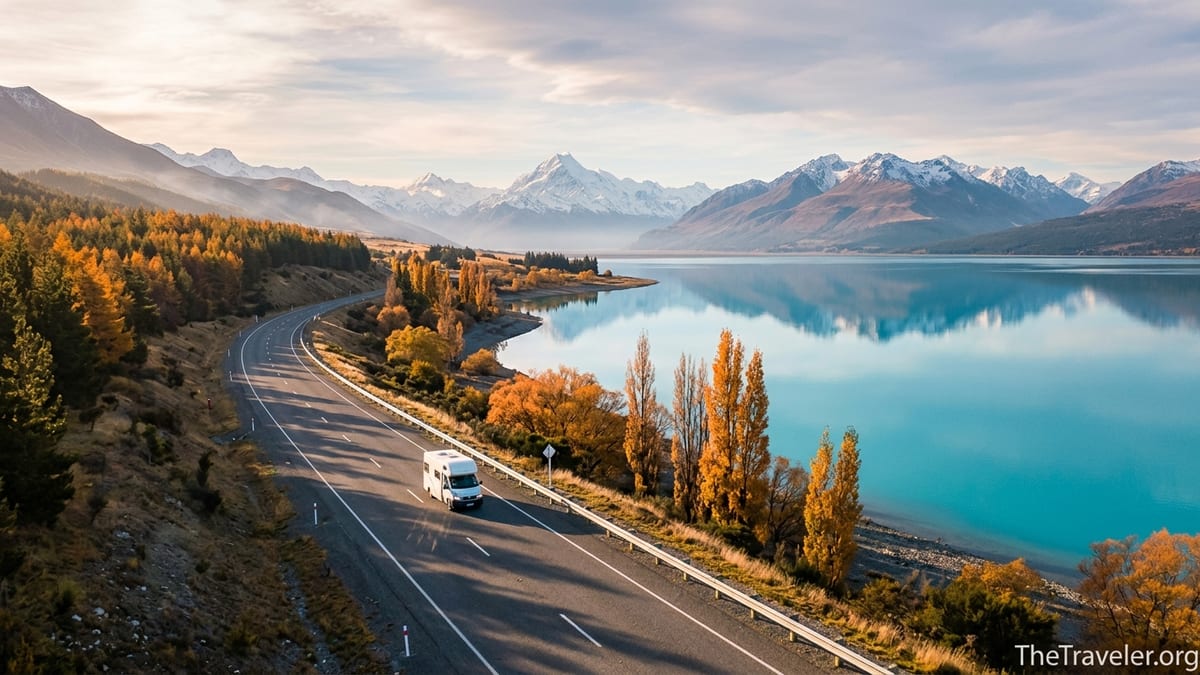
Outside that peak window, the country feels very different. In April you can drive State Highway 8 through the Mackenzie Country past Lake Tekapo and Lake Pukaki and sometimes stop at lookouts completely alone. In July, a weekday afternoon at Cathedral Cove on the Coromandel Peninsula can feel almost private, while ski towns hum with a concentrated winter crowd.
The key for planning is to match your priorities to the seasonal trade offs: daylight versus prices, warmth versus quiet, and busy attractions versus open roads. The rest of this guide breaks that down for road trips, hiking, skiing, wildlife, beaches and anyone chasing smaller crowds or lower costs.
Summer: Big Road Trips, Great Walks and Busy Hotspots
Summer in New Zealand, from December to February, is road trip dream season. Daylight can stretch towards 10 pm at the height of summer in the South Island, which means you can leave Lake Tekapo after a late lunch, take your time over Lindis Pass and still roll into Wanaka before dark. Mountain passes like Arthur’s Pass and Haast Pass are usually clear of snow, and the long days make it easier to cover distance without rushing.
This is also when iconic drives feel their most relaxed. The coastal sections of State Highway 6 between Westport, Punakaiki and Greymouth are at their best in settled summer weather, and the long, empty straights between Te Anau and Milford Sound can be a scenic cruise instead of a cautious crawl. That said, this is the busiest period on the roads: you will share viewpoints with a lot of other rental cars and campervans, especially between Christmas and mid February.
For hiking, summer is prime time. The official Great Walks season typically runs through the southern spring and summer into early autumn, with full hut services on tracks like the Milford, Routeburn, Kepler and Abel Tasman Coast. Popular walks such as the Milford Track are often booked solid for peak summer dates many months in advance, and hut prices are highest in season. On a January Kepler Track departure, you can expect full bunkrooms, wardens on site and a very social atmosphere on the trail.
The trade off is crowds and cost. Tourism New Zealand notes that summer is the most popular time to visit, and that shows up in pricing. Campervan hire companies often treat mid December to late February as high season, with daily rates for a 2 berth van commonly several times higher than in winter. Holiday parks in hotspots like Queenstown and Franz Josef can charge premium rates and require advance reservations. If you want hot beach days in the Bay of Islands or Coromandel, classic alpine views around Aoraki Mount Cook and access to most activities with the least weather disruption, summer is the safest bet, as long as you are comfortable planning and booking early.
Autumn: Shoulder Season Sweet Spot for Fewer Crowds
Autumn, from March to May, is often the local favorite for road trips and hiking. The heat eases, school holidays end and prices start to soften. Around late March and April, travel companies that charge peak summer rates often move into shoulder season pricing, which can noticeably reduce daily campervan and car hire costs while still giving you good driving conditions.
On the ground, you feel the difference most clearly in classic South Island regions. Drive from Queenstown to Arrowtown in mid April and the hillsides are a patchwork of gold and red, with crisp mornings that sharpen into clear, blue sky afternoons. The Southern Lakes region is busy enough to keep restaurants and tours running, but you can often walk into a lakeside cafe in Wanaka without a reservation. On State Highway 6 over the Crown Range, you are more likely to find a free car park at the lookout than in January.
Hiking in autumn balances stability and space. The Great Walks are still in season for much of March and April, with hut facilities and marked tracks in place, but demand eases compared with the New Year peak. You might still find some fully booked dates on marquee tracks, yet cancellations appear more frequently and lesser known routes such as the Rakiura Track on Stewart Island or the Whanganui Journey tend to have better availability. Outside the Great Walks, popular day hikes like Roys Peak near Wanaka or the Hooker Valley Track near Mount Cook are still popular but show noticeably thinner crowds on weekdays.
The main trade offs in autumn are shorter daylight and cooler nights. In the South Island, sunset in April can be around 6 pm, which means less time to drive scenic routes after late starts. Alpine passes remain mostly snow free through April most years, but early winter fronts can bring dustings of snow to the Lindis and Crown Range by May. For many travelers, especially those focused on photography, quieter trails and turning leaves easily outweigh those compromises.
Winter: Snow Roads, Ski Fields and a Different Kind of Quiet
Winter in New Zealand, from June to August, is snow sports season and a very different experience on the road. In the South Island, mountain highways such as the Lindis Pass between Omarama and Wanaka, the road from Queenstown to Milford Sound and the approaches to Arthur’s Pass can see snow, frost and black ice. Rental companies may require you to carry snow chains on certain routes, and early morning starts often mean scraping ice from windshields and driving cautiously until the sun has warmed the tarmac.
If you are comfortable with winter driving, the rewards can be huge. Arrive at Lake Pukaki on a still July afternoon and you might see Aoraki Mount Cook powdered in fresh snow, mirrored in glassy water with barely another car in the lay by. On the West Coast, stormy days roll in with dramatic surf and low cloud pouring over the passes, but when clear weather follows, the glaciers around Franz Josef and Fox can look especially sharp against the winter sky.
Winter is also when ski regions come alive. Queenstown and Wānaka become hubs for Coronet Peak, The Remarkables, Cardrona and Treble Cone, while further north Mount Hutt near Methven and the North Island’s Mount Ruapehu fields draw their own crowds. Slopes are busiest in July school holidays and on weekends, but midweek you may find shorter lift queues and available lodge beds even at popular mountains. In ski towns, accommodation and some campervan rates increase relative to the rest of winter, reflecting that concentrated demand.
Beyond the ski fields, winter is the quietest time for many classic tourist spots. Boat trips on Milford Sound and Doubtful Sound run year round, but in July you can often find a seat on deck without jostling for rail space. The downside is shorter days and cold, damp weather especially in the South Island. Some Department of Conservation campsites and smaller tour operators reduce hours or close. Many Great Walks switch to their off season status, which means no wardens in huts, fewer safety facilities and snow and avalanche risk on alpine sections. These tracks are suitable only for experienced, well equipped parties in winter, so casual hikers should focus on lower level day walks instead.
Spring: Rising Daylight and Flexible Shoulder Season Trips
Spring, from September to November, is a transitional season that rewards flexible travelers. As winter storms taper off, days stretch longer and lambs and wildflowers appear in farm country from Canterbury to the Waikato. Visitor numbers start building again by late October, but most areas are still quieter than in high summer, and many operators continue shoulder season pricing, especially in September.
On the road, you can expect a bit of everything. The South Island’s alpine passes can still see late snowfalls in September, so it pays to check road conditions before crossing the Lewis, Arthur’s or Haast passes. By October, serious snow problems are less common, but you may still drive through banks of old snow beside the highway around Burkes Pass or the Desert Road in the central North Island. In return, you get longer daylight than winter and often some of the clearest visibility of the year after cold fronts sweep the air clean.
For hiking, spring divides into two phases. Early spring is shoulder or off season for many Great Walks, and alpine tracks can hold snow and ice above the bushline. Local hikers often shift to lower elevation trails around places like Nelson Lakes, the Catlins or the Waitakere Ranges near Auckland, or focus on coastal walks in Abel Tasman National Park and the Coromandel where conditions are milder. By late October and November, hut services ramp up for the official summer Great Walks season, and bookings for the first weeks can still be easier to secure than for the Christmas and New Year window.
Spring is also a strong choice for general outdoor trips. In October in Northland you might be swimming at Paihia while alpine regions still look wintry. Kayak outfitters in Abel Tasman start running more regular trips again, and dolphin and whale watching tours in Kaikōura operate with more settled seas than mid winter. Weather remains changeable, and you should plan for four seasons in a day, but crowd levels, pricing and daylight often hit a comfortable middle ground.
How Season Changes Roads, Walks, Prices and Daylight
Seasonality in New Zealand is not just about weather. It directly affects how you move around, what you can book and what you will pay. On South Island mountain roads, summer typically means dry tarmac, plenty of daylight and lower risk, though heavy rain can still trigger slips on routes like the Milford Road or the West Coast between Fox Glacier and Haast. In winter, that same Milford Road can require chain fitting stations to be used and sometimes closes temporarily for avalanche control, which can rewrite a carefully planned itinerary overnight.
Great Walk availability swings with the calendar. During the peak season, tracks such as the Milford, Routeburn and Kepler offer full hut services but are intensely competitive to book. You might find that an early March or early December start has better availability than mid January while still offering high season weather. Outside the main season, hut fees drop on some tracks, but you lose wardens, bridges may be removed and river crossings, snow and avalanche danger increase. For most international visitors, the serviced season from late spring to early autumn is the safer and more comfortable choice.
Prices follow the same curve. Campervan rental companies describe high, shoulder and low seasons with daily rates that reflect demand. A simple 2 berth camper hired for a week in high summer might cost several times more than a similar rental in May or September. Accommodation follows similar patterns: alpine lodges in Queenstown, Wanaka and Tekapo charge winter premiums for ski season and summer premiums for peak holiday weeks, while small town motels in places like Oamaru or Whanganui can remain affordable year round and especially reasonable in May and June.
Daylight plays a practical role in planning. In January you can comfortably drive from Christchurch to Hokitika over Arthur’s Pass in a single day with time for walks and photo stops. In late June, attempting the same drive after a late morning brunch could have you arriving in Hokitika in the dark, on potentially wet or icy roads. On multi day road trips, this means planning shorter winter driving days and accepting longer, lazier evenings in a lodge or campervan compared with back to back 10 hour summer driving and sightseeing days.
Seasonal Recommendations by Travel Style
For classic road trips, summer and the two shoulder seasons stand out. If you want the least weather stress on long routes like a full South Island loop from Christchurch through Tekapo, Queenstown, the West Coast and back, aim for late November to March. Shoulder season months like October and April can be even better for experienced drivers, especially on South Island back roads and coastal routes, because traffic is lighter and parking in small scenic lay bys is easier. Winter road trips can be rewarding, but are best for confident drivers who understand snow and ice and are prepared for occasional weather related delays.
For hiking, late spring and autumn are often ideal. Early December or March can combine open Great Walk services, reasonable temperatures and slightly lower hut occupancy than the peak of the school holiday period. If you are comfortable carrying extra layers and accepting a small chance of early or late snow, late November and April open up some very quiet days on big name tracks and excellent conditions on lower level hikes in places like the Catlins and the Marlborough Sounds. Summer remains unbeatable for first time visitors who want the least complicated weather and the widest range of tracks open without technical gear.
For skiing, winter is non negotiable. Late July and August usually offer the most reliable snow at New Zealand ski areas. If you want the full experience around Queenstown, Wanaka or Mount Ruapehu, plan for those months and book lift passes, rental cars and accommodation early, especially if your trip includes New Zealand school holidays. Shoulder weeks in June and September can be cheaper and quieter but come with more variable snow cover, so flexibility to chase the best conditions between mountains helps.
For beaches, North Island summers and shoulder seasons shine. Regions like Northland, the Coromandel Peninsula and the Bay of Plenty offer their warmest swimming and sunbathing days from late December to February. If you prefer less crowded sands, aim for late November to mid December or March, when water is still pleasant but holiday crowds have not yet arrived or have just gone home. South Island beaches such as Kaiteriteri in Abel Tasman and New Brighton near Christchurch can be beautiful in summer too, but the water is cooler and breezy days are more common.
Wildlife, Crowds and Budget Across the Year
New Zealand’s wildlife experiences are also seasonal. Winter and early spring can be outstanding for marine life on the South Island’s east coast. In Kaikōura, sperm whale watching tours operate year round, but clear, cool winter days often bring particularly crisp light for photography, and winter is also a good season for seeing migrating humpbacks offshore. Down in Dunedin and the Otago Peninsula, yellow eyed penguin and royal albatross viewing operates to strict conservation rules, but cooler months can feel more atmospheric with rough seas and moody skies.
Birdlife and forest walks are appealing year round, but conditions shift. In Fiordland, copious rainfall keeps waterfalls flowing through every season, yet heavy summer visitation means more crowded boat decks at Milford Sound. Visit in shoulder months like May or September and you may share a viewing platform with only a handful of other people, at the cost of cooler temperatures and a greater chance of rain showers passing through while you are outside.
Crowd levels and prices are closely tied. Travelers prioritizing lower prices or smaller crowds generally have three good options. The first is to travel in autumn, especially from mid April to late May, when accommodation and campervan rates typically drop, ski prices have not yet risen and the landscape, especially in the South Island, is rich with color. The second is to come in late spring, from mid October to late November, when long days return but peak season has not fully hit. The third is a true winter trip outside school holidays, if you are comfortable with colder conditions and occasional road disruptions.
At the high end of demand, expect school holiday peaks around late December and January, and again in July for ski season. In practical terms, this means booking Milford Sound cruises, Queenstown adventure activities like jet boating or bungy jumping, and iconic rail journeys such as the TranzAlpine several weeks or months ahead if your dates fall in these windows. In quieter seasons, many travelers report being able to decide on activities a day or two before without missing out.
The Takeaway
There is no single best time to visit New Zealand. Instead, there is a best time for your style of trip. If you crave long, warm days and want everything open, a summer itinerary that loops between beaches and alpine lakes makes sense, as long as you accept crowds and higher prices. If you prefer quieter roads, easier parking and golden hillsides, aim for autumn and shape your days around shorter daylight.
Winter belongs to skiers, snowboarders and anyone who loves crisp air and snow capped peaks, but demands more care with mountain roads and hiking choices. Spring offers a flexible middle ground with rising temperatures, blossom and lambs in the fields and a mix of winter’s clarity and summer’s energy. As you plan, think less about chasing a single perfect month and more about picking a season whose compromises fit the way you like to travel. New Zealand will reward you in any of them, just in different ways.
FAQ
Q1: What is the best month for a New Zealand road trip if I want good weather and fewer crowds?
Many travelers find March or November ideal, with mostly stable weather, decent daylight and noticeably fewer summer holiday crowds compared with January.
Q2: When should I book a Great Walk like the Milford or Routeburn Track?
If you want peak season dates between December and February, plan to book as soon as bookings open for that season and have flexible start dates ready. For March, April or early December, you may find more availability but should still book several months in advance.
Q3: Is it safe to drive the South Island in winter?
It can be safe if you are confident driving in snow and ice, carry chains when required and are willing to change plans around road closures or heavy weather. If you are not used to winter driving, consider focusing on lower altitude routes or traveling in shoulder seasons instead.
Q4: Which season is cheapest for campervan hire in New Zealand?
Rates are generally lowest in late autumn and winter, especially May, June and parts of August, outside school holidays. Shoulder months like April, September and October usually sit between winter deals and peak summer pricing.
Q5: Can I still hike in winter if I am not an experienced alpine tramper?
Yes, but you should stick to well graded low level tracks and day walks near towns, and avoid alpine Great Walk sections that can have snow, ice and avalanche risk. Local visitor centres can advise on suitable options for conditions.
Q6: When is the best time to ski in New Zealand?
Late July and August usually offer the most reliable snow at major ski fields near Queenstown, Wanaka, Methven and Mount Ruapehu. June and September can be quieter and cheaper but more variable for snow cover.
Q7: Which season is best for beaches and swimming?
North Island beaches are warmest and most reliable for swimming from late December to February. For fewer people but still pleasant water, early December and March are good compromises, especially in Northland and the Bay of Plenty.
Q8: I want wildlife and scenery more than sunbathing. When should I visit?
Autumn and winter are excellent for dramatic coastal scenery and marine life, especially on the South Island’s east coast around Kaikōura and Otago. You will trade some warmth for moody light, rough seas and very photogenic conditions.
Q9: How far in advance do I need to book accommodation in peak season?
For Christmas to mid February, it is wise to book popular hotspots like Queenstown, Wanaka, Abel Tasman and the Bay of Islands several months ahead, especially if you want specific properties or lakefront rooms. In shoulder seasons, a few weeks is often enough.
Q10: If my top priority is smaller crowds, which month should I avoid?
If you want to avoid crowds as much as possible, try not to visit in January. It combines local school holidays, international peak season and the highest demand for popular road trip routes, beaches and Great Walks.