


New Zealand’s Great Walks are on many hikers’ bucket lists, but choosing the right track and securing a bed in a hut during the busy summer season can be confusing. With 11 official Great Walk experiences and demand for peak-season huts regularly reaching capacity, a bit of homework before bookings open can be the difference between walking your dream track and missing out. This guide focuses on helping you decide which Great Walk suits you, how the Department of Conservation (DOC) booking system works, and what first-time multi-day hikers should know before committing.
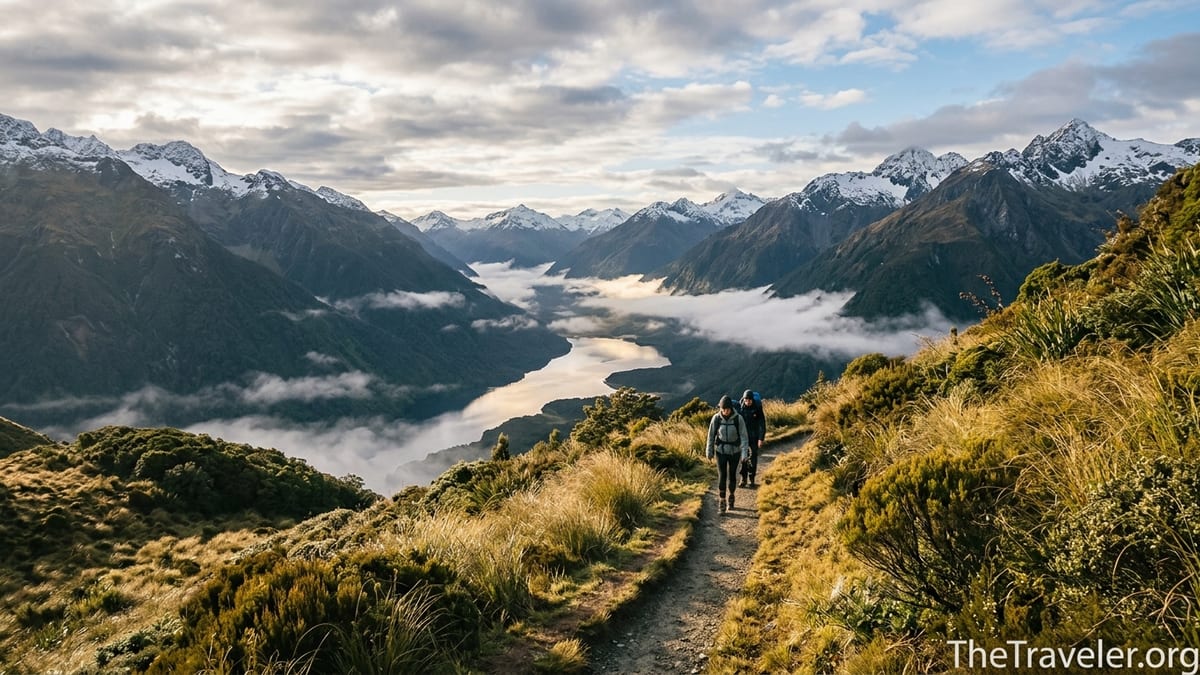
Understanding New Zealand’s 11 Great Walks
DOC currently promotes 11 Great Walk experiences across Aotearoa New Zealand. These include classic alpine tracks such as the Milford, Routeburn and Kepler in Fiordland, coastal journeys like the Abel Tasman Coast Track, forest and mountain traverses such as the Heaphy and Paparoa, the volcanic Tongariro Northern Circuit, and remote experiences on the Rakiura Track and the Tuatapere Hump Ridge Track. Together they form a network of well-formed, well-marked multi-day hikes with pre-booked huts and campsites, designed to be more accessible than rough backcountry routes while still offering serious wilderness immersion.
The Great Walks are not all alike. Some, such as Abel Tasman and Rakiura, have relatively gentle gradients and options to shorten or lengthen your itinerary using water taxis or side tracks. Others, including Milford, Kepler and Tongariro, involve steep climbs, exposure to alpine weather and longer days. Distances also vary considerably: Abel Tasman can be walked in anything from two to five days depending on how you break up the coastal sections, while the Heaphy typically takes four to six days and the Hump Ridge is commonly planned as a three-day circuit with substantial elevation gain.
DOC’s booking data for recent seasons shows that Great Walk huts run at high occupancy, especially on marquee tracks like Milford, Kepler, Abel Tasman and Routeburn in the main summer season from late October to April. In practice this means that if you want a bed in a hut on a popular track in January or February, you generally need to be ready to book within minutes of reservations opening or rely on cancellations later. Campsites tend to be a little easier to secure, but they also fill over peak dates, particularly on family-friendly tracks and around public holidays.
International visitors should understand that Great Walks are deliberately managed at a higher standard than most New Zealand tramping tracks. Tracks are usually benched and well drained, bridges span major river crossings, and huts are equipped with bunks, mattresses, heating and gas cookers in season. This level of infrastructure comes with higher fees and stricter booking rules than you might find on more basic backcountry routes, but it also means first-time multi-day hikers can enjoy big landscapes without needing mountaineering experience.
Scenery & Atmosphere: How the Tracks Feel Different
If your main question is “which Great Walk is the most beautiful,” the honest answer is that it depends on the kind of scenery you crave. The Milford Track is often described as one of the world’s finest walks for its deep glacial valleys, sheer granite walls and countless waterfalls. A typical day sees you following the Clinton River under towering cliffs, then climbing over Mackinnon Pass with views into the Arthur Valley. In heavy rain, side streams turn into hundreds of waterfalls, creating a dramatic Fiordland atmosphere that some hikers rate as the highlight of their entire trip.
The Routeburn Track, shorter but more varied, blends beech forest, alpine tarns and sweeping ridgelines with big views towards the Darran Mountains. Staying at Routeburn Falls Hut or Lake Mackenzie Hut gives you front-row seats to Fiordland’s changing moods, from pink dawn light on the peaks to mist swirling across alpine basins. Kepler offers yet another flavour of Fiordland: a long ridge walk high above Lake Te Anau, with Luxmore Hut perched just above the bushline and a famous section of tops walking between Luxmore and Iris Burn that can be sublime in clear weather yet feels wild and exposed in a storm.
For a gentler introduction to New Zealand landscapes, Abel Tasman Coast Track offers golden sand beaches, turquoise bays and regenerating coastal forest in the Nelson Tasman region. The atmosphere here is more holiday than hardship: you might combine hiking with swims, sea kayaking and water-taxi transfers. Families often book short sections, such as a night at Anchorage Hut followed by a second night at Bark Bay or Tonga Quarry campsite, effectively turning the walk into a beach-hopping holiday.
Further west, the Paparoa Track crosses lush West Coast rainforest and limestone country with expansive views of the Tasman Sea. Designed partly for both hikers and mountain bikers (on certain days and sections), it feels newer and slightly more engineered than older tracks, with long benched sidles and modern huts. The Heaphy Track, which links Golden Bay and the West Coast, offers an almost “best of” sampler: tussocky alpine tops, dense Nikau palm forests and a final section along wild coastline often pounded by surf. Rakiura on Stewart Island delivers quiet, birdlife and a sense of remoteness, while the Tongariro Northern Circuit circles active volcanoes, passes emerald lakes and frequently walks through wind-sculpted volcanic “desert.”
Difficulty, Length & Suitability for First-Time Multi-Day Hikers
Difficulty on Great Walks is driven less by technical challenges than by distance, weather exposure and how much weight you carry. Tracks themselves are generally well benched with bridges over major rivers and boardwalks in especially boggy sections. For a reasonably fit first-time multi-day hiker carrying a 10 to 12 kilogram pack, Abel Tasman, Rakiura and most sections of the Heaphy tend to be the most approachable. They have moderate daily distances, less extreme elevation gain and good options to break days into shorter segments.
In contrast, Milford, Routeburn and Kepler demand more in terms of fitness and comfort in steep, exposed terrain. On Milford, the climb to Mackinnon Pass is a sustained ascent that can feel punishing with a full pack, especially in poor weather. Kepler has a big first day from the lakeside car park to Luxmore Hut with around a thousand metres of vertical gain. On Routeburn, the section across Harris Saddle and along the exposed tops can be daunting if wind or rain is severe. These tracks are still within reach for many first-time hikers, but you should be comfortable walking 5 to 8 hours a day with sustained climbs and potentially strong winds.
Tongariro Northern Circuit sits somewhere in the middle. The volcanic terrain is not technically difficult, but weather can be unstable and the exposed crossing between Mangatepopo and Emerald Lakes is notorious for strong winds and sudden cloud. Many people know the Tongariro Alpine Crossing as a one-day hike; the Great Walk circuit spreads the highlights over two to four days, which can be more manageable, but you still need warm layers, waterproofs and the ability to handle cold snaps even in midsummer.
The Paparoa and Hump Ridge tracks demand fitness more than technical skill. Paparoa involves sustained sidling climbs and long days, but the tread is wide and well graded. Hump Ridge involves significant elevation gain on the first day, including sections of boardwalk and steep staircases to reach lodge-style accommodation high above the coast. If you have already done easier Great Walks or long day hikes and know how your body copes with back-to-back big days, these can be excellent next steps. Pure beginners who are unsure of their fitness are often better served starting with Abel Tasman, Rakiura or a shorter section of the Heaphy.
Huts versus Campsites: Comfort, Cost & Experience
On most Great Walks you can choose between staying in huts or at designated campsites. Great Walk huts are among the most comfortable in New Zealand’s public backcountry system, with mattresses on bunks, communal dining areas, heating (often wood or gas burners), water supply and gas cookers provided in season. You bring your own sleeping bag, food and cooking equipment apart from the stove. For many international visitors, the hut experience is a highlight in itself: evenings spent sharing meals with hikers from around the world, swapping route stories and weather forecasts with the resident ranger.
Campsites are cheaper, but the gap between hut and campsite pricing is smaller on Great Walks than on standard backcountry tracks, especially because international visitors typically pay a higher fee than New Zealand residents for both options on the most popular Great Walks. Many campsites have basic kitchen shelters, toilets and water but no heating, which means you are much more exposed to weather. On Abel Tasman, for example, a summer night at a beachside campsite can be idyllic in calm weather but quite uncomfortable in a gale or prolonged rain, whereas huts provide more shelter and social atmosphere.
Real-world booking patterns show most people gravitate toward huts, especially on demanding tracks such as Milford, Routeburn, Kepler and Tongariro. On those routes, hut spaces over peak summer can be almost entirely allocated within minutes of bookings opening, while campsites fill more slowly. A common strategy for budget-conscious hikers is to mix and match, staying in huts on the wettest or most exposed nights and camping on lower, more sheltered sections. For instance, on the Heaphy you might book huts for the alpine Perry Saddle and James Mackay nights, then camp near the coast to save money and enjoy closer proximity to the beach.
One important practical detail is that you must stay only at the hut or campsite named on your booking. On Great Walks you cannot simply arrive and hope to find a spare bunk, as overall capacity is tightly managed for safety and environmental reasons. DOC rangers do regular checks, and people found staying without bookings or in the wrong place may be asked to move or could face penalties. For first-time visitors used to less regulated systems elsewhere, this is a crucial mindset shift: think of your hut reservation more like a hotel booking than a casual backcountry shelter.
Transport Logistics & Access: Getting On and Off the Tracks
Transport logistics can be straightforward or surprisingly complex depending on the track. Abel Tasman, Routeburn, Heaphy, Paparoa and Hump Ridge are all “through” tracks with different start and end points, so you need to arrange transport, shuttles or water taxis. For example, someone walking the Routeburn from the Queenstown side might take a shuttle from Queenstown to Routeburn Shelter, walk through to The Divide on the Milford Road over three days, then catch a bus back to Te Anau or Queenstown. Because shuttle seats often sell out around public holidays, it is sensible to book transport at the same time as your huts.
Milford Track requires an even tighter transport plan because there is no road access to either end. You typically take a boat from Te Anau Downs to Glade Wharf at the start, then another boat from Sandfly Point to Milford Sound at the finish. Many hikers book a combined package with a transport provider that includes both boat legs and bus transfers from Te Anau or Queenstown. On a practical level, this means your walking dates must sync not only with hut availability but also with available boat sailings, which can sell out in the middle of summer.
Other tracks are loops or near-loops, which simplifies logistics. The Kepler Track begins and ends near Te Anau, and many people simply walk from town along the lakeshore to the official trailhead and hitch or take a shuttle back at the end. Rakiura largely begins and ends near Oban on Stewart Island, with easy walking from town to the trailhead. Tongariro Northern Circuit uses shared sections with the day-walk Tongariro Alpine Crossing; most people park in a designated car park or take a shuttle from National Park Village or Whakapapa Village, but there are restrictions on roadside parking near the popular start for the one-day crossing, so you must follow current DOC guidance.
In recent seasons, West Coast tracks such as Paparoa have proven sensitive to weather-related road and track closures. Heavy rain, slips or storm damage can temporarily close sections of track or access roads. When planning, build in some flexibility so that if DOC announces a short-notice closure you can pivot to another walk or rebook dates. Having travel insurance that covers weather disruptions and non-refundable hut bookings can save significant money if a storm forces a last-minute cancellation.
DOC Booking System, Pricing & Why Planning Ahead Matters
DOC operates a central online booking system for Great Walk huts and campsites. For each summer season, bookings open on staggered dates, typically in May, for stays from 1 July to 30 June the following year. In recent years DOC has upgraded the system to handle high demand, introducing features such as a virtual lobby so that when bookings open for a popular track like Milford or Kepler, thousands of users are placed in a digital queue rather than overwhelming the server at once. Expect peak booking dates for marquee walks to feel a bit like trying to buy tickets for a major concert.
New Zealand citizens and people ordinarily resident in New Zealand pay a lower “resident” rate for many Great Walk huts and campsites, while international visitors usually pay a higher fee on the busiest tracks. On historically oversubscribed walks such as Milford, Routeburn, Kepler and Abel Tasman, international hut prices have in the past been around double the resident rate, and price adjustments are periodically made. All prices are listed in New Zealand dollars and include goods and services tax. The goal of the pricing structure is partly to reflect the real cost of maintaining high-standard infrastructure in remote national parks and to help manage demand from domestic and international hikers.
Recent DOC visitor insights show that Great Walk hut bookings across the network reach high occupancy over the core summer months of December, January and February, with well over half of hut nights booked and some tracks running at more than 90 percent occupancy in that period. In practical terms, this means that on booking-opening day the most desirable dates on Milford, Kepler, Routeburn and Abel Tasman can disappear within minutes. For example, hikers aiming to walk Milford over New Year often report that the entire Christmas to mid-January period is fully booked by the end of the first hour after reservations open.
Because of this demand, planning ahead is crucial. If you know you want to walk a particular track in a specific window, create your DOC online account in advance, log in before bookings open, and have a couple of backup date ranges and configurations ready. For instance, if you cannot secure Luxmore Hut on the Kepler for your preferred first night, you might pivot to starting a day earlier or later, or choosing the opposite direction around the loop if that is permitted in the current season. It is also wise to coordinate with your hiking partners beforehand so you are all available to commit and pay when the booking goes through, as partial bookings that later need changing can be difficult to adjust during high-demand periods.
Choosing the Right Great Walk for You: Practical Scenarios
For many travelers the hardest part of planning is simply deciding which Great Walk fits their time, fitness and broader itinerary. If you have only one spare window of three or four days on a South Island road trip and are relatively new to multi-day hiking, Abel Tasman or a partial Kepler loop often make sense. A common Abel Tasman plan is to take a morning water taxi from Marahau to a mid-coast bay, walk back over two or three days staying at one hut and one campsite, and finish with a late-afternoon pick-up at the trailhead. This allows plenty of time for swims and leisurely breaks, and if the weather turns, water taxis can sometimes adjust pick-up points.
More experienced hikers wanting iconic alpine scenery in a compact format often choose the Routeburn. With two or three nights you can stay at Routeburn Falls and Lake Mackenzie huts, giving you long but manageable days and maximal time along the high sections. Many international visitors combine it with day hikes to Ben Lomond near Queenstown or Roys Peak near Wānaka, building an itinerary that samples multiple mountain landscapes without committing to very long multi-day epics.
If solitude and wildlife appeal more than headline views, Rakiura and the less-known parts of the Heaphy can be ideal. On Rakiura, many hikers report hearing kiwi calling at night near huts or campsites, and the dense forest and quieter trails foster a slower pace. A realistic three-day plan might have you staying at Port William Hut and North Arm Hut, walking six or so hours each day with time for side trips and beach exploration. On the Heaphy, staying at coastal huts such as Heaphy Hut or Gouland Downs often feels more relaxed than the alpine sections, and outside holiday peaks you may find fewer people than on Fiordland or Abel Tasman tracks.
Consider also how a Great Walk fits your overall season. In early or late season, when alpine routes can still have snow or icy sections, coastal or low-elevation tracks like Abel Tasman, Rakiura, Heaphy and some parts of Paparoa are often safer and more comfortable. In the height of summer, when crowds and heat can be intense on coastal routes, an alpine walk like Kepler or Tongariro might offer cooler temperatures and, depending on the year, slightly less pressure on certain dates. Flexibility in your travel dates and willingness to walk a Great Walk that is not the most famous can dramatically improve your chances of getting bookings.
The Takeaway
New Zealand’s Great Walks offer a rare combination of wilderness, comfort and accessibility, but that mix comes with high demand and a few logistical hoops. Treat your planning like you would a major international trip: decide early what kind of scenery and level of challenge you want, understand the hut versus campsite trade-offs, and map out transport and weather windows well before bookings open. A little preparation pays off many times over when you are standing on Mackinnon Pass in clear morning light or watching the sun set behind the Tasman Sea from a West Coast hut veranda.
For first-time multi-day hikers, choosing a slightly easier track and traveling just outside the busiest holiday weeks can turn a stressful rush into a relaxed, confidence-building adventure. For seasoned trampers, exploring less-hyped Great Walks or revisiting favourites in shoulder season may deliver quieter huts and a stronger sense of connection with place. In all cases, checking the latest DOC information on track conditions, prices and booking rules just before you commit will ensure your plans reflect current realities rather than last year’s assumptions.
Whichever Great Walk you choose, remember that you are sharing fragile environments and popular facilities with thousands of others. Traveling light, packing out rubbish, following hut etiquette and respecting rangers’ advice all help keep these tracks special. With realistic expectations and thoughtful planning, New Zealand’s Great Walks can be the highlight of your trip, not just another item to tick off a list.
FAQ
Q1. Which New Zealand Great Walk is best for first-time multi-day hikers?
Abel Tasman Coast Track and Rakiura are often recommended for beginners because they have gentler gradients, flexible itineraries and options to shorten days using water taxis or by choosing closer-spaced huts and campsites.
Q2. How far in advance should I book Great Walk huts?
For popular tracks like Milford, Routeburn, Kepler and Abel Tasman in peak season, be ready to book as soon as reservations open, typically in May for the following summer. Less busy tracks and off-peak dates may still have spaces closer to your trip, but counting on last-minute availability is risky.
Q3. Do international visitors pay more for Great Walk huts than New Zealand residents?
Yes, on many of the most popular Great Walks international visitors pay higher hut and campsite fees than New Zealand residents. The exact price difference varies by track and season and is published in New Zealand dollars on the DOC booking system.
Q4. Are the Great Walk tracks suitable for children?
Some Great Walks are family friendly, especially shorter sections of Abel Tasman, Rakiura and the Heaphy where days can be kept to three to five hours. Alpine tracks like Milford, Kepler and Tongariro can be suitable for older, experienced children, but only if they are used to long days and changeable mountain weather.
Q5. What happens if bad weather closes a Great Walk after I have booked?
If DOC closes a track or hut for safety reasons, they usually contact affected booking holders with options such as refunds, date changes or alternative arrangements. The exact options depend on the situation, which is why travel insurance that covers such disruptions is advisable, especially for international visitors.
Q6. Can I camp anywhere along a Great Walk instead of using official campsites?
No. On official Great Walks you must stay only at designated, bookable huts and campsites. Wild camping is not allowed, partly to protect sensitive environments and partly to ensure rescue services know roughly where people are located in an emergency.
Q7. Do I need a guide to walk a Great Walk?
No, most hikers walk Great Walks independently using DOC huts and campsites. However, guided options are available on some tracks, including Milford, Routeburn and Abel Tasman, and can be a good choice if you prefer additional support, equipment and logistics handled for you.
Q8. What fitness level is required for Milford, Routeburn and Kepler?
You should be capable of walking five to eight hours a day with a loaded pack over multiple days, including sustained climbs and descents. Regular hill walking or stair training before your trip helps, and people who comfortably complete long day hikes at home generally adapt well to these tracks.
Q9. Are there cooking facilities in Great Walk huts?
Most Great Walk huts provide gas cookers during the main season, but you must bring your own pots, pans and utensils. In shoulder or winter seasons gas may not be supplied, so always check the latest hut information and consider carrying a lightweight stove as a backup.
Q10. How do I choose between staying in huts or campsites?
Huts offer more comfort, warmth and social interaction but cost more and book out faster. Campsites are cheaper and can feel more secluded but expose you to weather and require carrying a tent. Many hikers mix both, using huts on the most exposed nights and camping where conditions are milder.