


Moutohorā, also known as Whale Island, sits just off the coast of Whakatāne in New Zealand’s Bay of Plenty. It is one of the country’s most strictly protected wildlife sanctuaries, and visiting is only possible on an approved guided tour with a valid permit. For travellers, that protection means very limited numbers, close encounters with native wildlife and a rare chance to step ashore on a pest free island and dig your toes into a naturally heated geothermal beach.
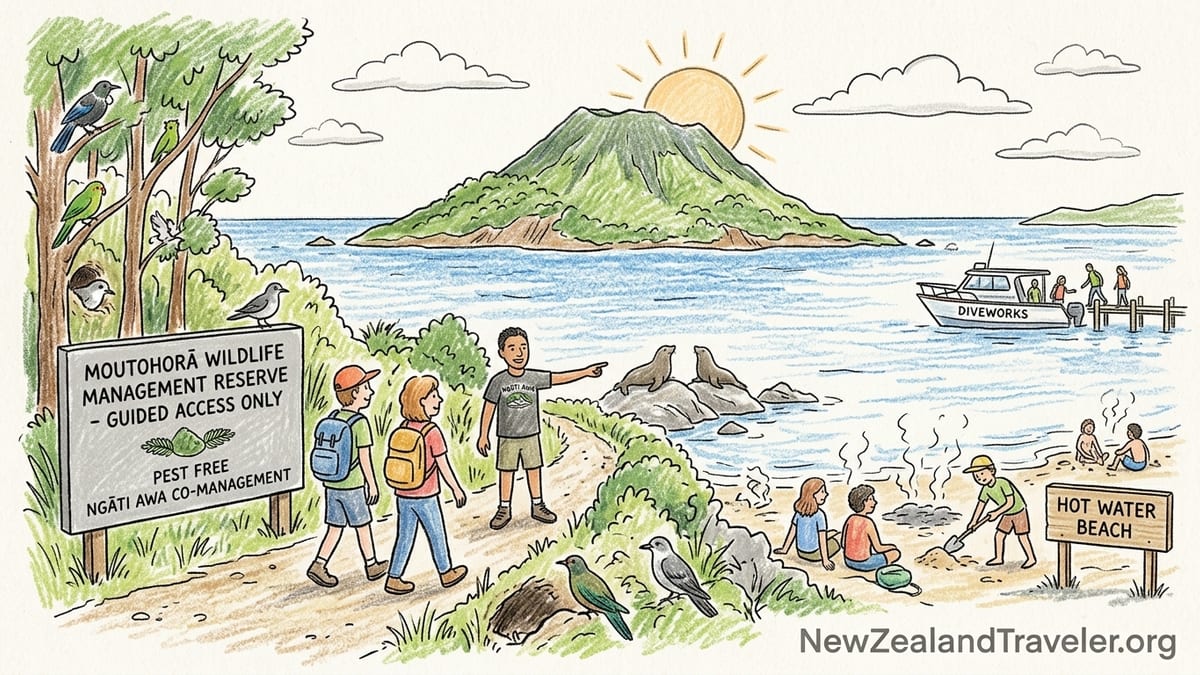
Why Moutohorā Is Protected and How Access Works
Moutohorā is a wildlife management reserve, co-managed with Ngāti Awa, and recognised for its significant breeding colonies of seabirds, coastal forest and important cultural sites. Public access is tightly controlled to protect these values. Independent landings by private boat are not permitted for ordinary visitors. Instead, everyone going ashore must either hold a specific permit from the Department of Conservation or be part of a guided party run by a concessioned tour operator. In practice, that means most travellers will experience Moutohorā on an organised tour from Whakatāne rather than trying to arrange anything on their own.
The island’s pest free status depends on strict biosecurity rules that tour operators help to enforce. Bags may be inspected, and you will usually be asked to check footwear and clothing for seeds, soil and insects before boarding in Whakatāne. This is not a formality. Moutohorā has been painstakingly cleared of introduced predators and weeds, and one stray rat or invading plant can undermine years of restoration work. Travellers who have visited other sanctuary islands such as Tiritiri Matangi or Kapiti will find the approach familiar, but here numbers are even more limited and commercial operators work to small group sizes.
The island is also subject to seasonal fire restrictions and cultural protocols. During periods of high fire danger, access can be suspended altogether, and operators may adjust walking routes around archaeological sites, burial grounds and sensitive habitats. That is another reason that trying to reach the island independently is not realistic for a short term visitor. Joining a local, permitted operator is the only practical and respectful way to go.
Tour Options from Whakatāne and What They Include
From Whakatāne, visitors typically have two main styles of Moutohorā experience to choose from. The first is a combined boat and island landing tour that includes time ashore with a guide, a short network of walking tracks and a swim or soak at the geothermal beach. The second is a more boat focused wildlife cruise that circles the island, looking for marine life such as dolphins and seasonal whales, with commentary on the island from the water. Many operators blend these elements, but your balance of time on the island versus time at sea will vary by company and by departure.
Diveworks Charters, a long standing Whakatāne operator, is a good example of a combined tour. Their around Moutohorā experience typically runs for about four hours and includes the mandatory landing permit fee in the advertised ticket. Adult pricing at the time of writing sits around NZ$140 for the guided walk option, with family and child rates usually available. That price reflects the cost of the boat trip, guiding, Department of Conservation concession fees and island landing charge, which visitors would have to pay separately if they were able to arrange private access.
Alongside operators such as Diveworks, local iwi based providers focus specifically on Moutohorā with a cultural lens. These trips tend to emphasise stories of Ngāti Awa, the island’s significance in local whakapapa, and the long process of ecological recovery. It is common for guides to weave together natural history and cultural perspectives rather than treating wildlife viewing as a separate activity. When comparing tours, look at how much time is promised ashore, whether a geothermal beach visit is included, and the overall trip length from departure to return to Whakatāne.
Boats, Group Size and On Water Experience
The style of boat you travel on has a real impact on how your Moutohorā trip feels. Diveworks uses a purpose built charter vessel designed for coastal conditions around Whale Island. It offers outdoor viewing decks for watching seabirds and marine mammals, along with covered areas that provide shelter on cooler Bay of Plenty days. Group sizes are typically modest compared with large city harbour cruises, which helps keep landings manageable and gives the crew time to reinforce biosecurity checks and safety briefings.
Other Whakatāne operators use similar small to mid sized boats, often rigid hull vessels or stable launches with open sides. The crossing from Whakatāne to Moutohorā usually takes around 45 minutes to an hour each way, depending on sea conditions and the specific route. On calm summer mornings the ride can feel like a leisurely coastal cruise past Wairaka, the river bar and the volcanic silhouettes further offshore. In stronger winds, swells can build and the trip becomes more adventurous. Motion sickness tablets may be worth considering if you are prone to seasickness.
On the way out and back, crews keep an eye out for common dolphins, occasional orca and seasonal whales further offshore. While some marketing materials refer to “whale watching,” sighting rates are not on the same level as dedicated operations in places like Kaikōura. Tour operators are careful to manage expectations, positioning any whale encounter as a bonus rather than a guarantee. In practice, many trips focus on coastal birdlife and the experience of reaching a closed sanctuary island, with any marine mammal encounters treated as an added highlight.
Guided Landings, Walking Difficulty and Geothermal Beach Time
Once the boat is secured at the island landing point, your group will disembark in stages and gather with a guide for a safety briefing and orientation. Landing is normally via a jetty or directly onto a rocky shore or sandy section, depending on tide and sea state. Dry feet can generally be maintained, but it is wise to wear footwear that can cope with getting wet. A moderate level of agility is needed to step between boat and wharf; crew are on hand to assist less confident travellers.
Guided walks on Moutohorā are short to moderate in length. Most itineraries cover a few kilometres over 60 to 90 minutes, with frequent stops to point out nesting seabirds, regenerating forest, and views back towards the Whakatāne coastline. Tracks can be steep in places, with uneven surfaces, loose scoria and steps. The terrain is not suitable for standard wheelchairs or mobility scooters, and those with limited mobility should talk to their chosen operator well in advance to see what is realistically achievable. For most moderately fit travellers, including older visitors comfortable with hills, the walks are described as manageable rather than strenuous.
A key highlight of many tours is a visit to a small geothermal beach where hot water seeps up through the sand. Here, guests are often invited to dig shallow pools near the tide line and feel the warmth mix with cool seawater. It is a more intimate and less commercial version of the experience found at places like Hot Water Beach on the Coromandel Peninsula. Time at the geothermal area is typically 30 to 45 minutes, shared between soaking, swimming if conditions allow, and simply sitting quietly while guides share stories of the island’s volcanic past. Operators will set clear boundaries about where it is safe to dig and swim, taking into account tides and surf.
Wildlife Viewing: What You Are Likely to See
The real draw of Moutohorā is its wildlife. The island supports large breeding colonies of grey faced petrels, little blue penguins and various shearwaters, along with coastal shorebirds such as northern New Zealand dotterels and variable oystercatchers. While many seabirds are most active at dusk and after dark, evidence of their presence is visible during the day in the form of burrows, calls from underground and occasional birds returning to nest sites. Guides will often pause beside marked burrows to describe life cycles and the role that predator control has played in returning seabirds to the island in large numbers.
In the regenerating forest, keen eyed visitors may spot red crowned kākāriki darting between branches, tūī feeding on flowering trees and curious fantails following groups along the track to catch disturbed insects. Moutohorā also provides habitat for reptiles such as tuatara and several lizard species. Tuatara are famously elusive, and while some guided parties are lucky enough to see them basking near monitored sites, no operator can promise a sighting. Instead, guides typically explain how translocations and careful habitat management have allowed these ancient reptiles to re establish on the island.
Around the rocky shoreline, New Zealand fur seals haul out to rest, particularly during winter and early spring. On the boat approach you may see them lounging on rocks or porpoising through the water. Further offshore, dolphins and occasional whales share the wider Bay of Plenty. Encounter rates vary widely with season and sea conditions, so most Moutohorā trips present marine mammals as a possibility rather than a central guarantee. The focus remains firmly on the island itself and its role as a sanctuary.
Trip Length, Seasonality and Weather Cancellations
A typical guided Moutohorā tour from Whakatāne runs for around four hours dock to dock. That timing usually breaks down to about one hour each way on the boat and roughly two hours around the island, split between walking, geothermal beach time and quiet stops for wildlife viewing and photographs. Longer itineraries may extend the land component or spend more time searching for marine life on the way there and back. Morning departures are common, offering calmer seas and leaving the afternoon free to explore Whakatāne or nearby Ohope Beach.
Moutohorā can be visited year round, but conditions and wildlife experiences change with the seasons. Spring and early summer bring intense seabird activity and fresh growth in the forest. Mid summer offers warmer sea temperatures and more comfortable swimming at the geothermal beach, though strong afternoon sea breezes are common. Autumn and winter departures can be crisp and atmospheric, and are often when fur seal numbers on the rocks are most obvious. Regardless of season, the island is fully exposed to the open Pacific, so forecasts play a large role in whether a trip can operate on any given day.
All reputable operators build weather cancellation clauses into their booking conditions. Diveworks, for example, clearly states that all tours are subject to suitable sea and weather conditions, with the skipper holding final discretion to cancel or turn back in the interests of safety. If conditions are marginal, operators may shift departures earlier in the day, adjust the balance between time at sea and time ashore, or run a coastal alternative. Travellers should be prepared for short notice changes, particularly during winter or unsettled periods. Flexible onward plans and a willingness to reschedule by a day or two can make the difference between missing out and finding a workable window.
Pricing, Inclusions and How to Choose a Tour
Recent pricing for a four hour Moutohorā trip with a guided island landing from Whakatāne typically sits around NZ$140 per adult with Diveworks, including the mandatory Department of Conservation landing fee. Child and family rates are often discounted, and some operators offer reduced pricing for locals or off peak departures. It is wise to treat any figure as indicative rather than fixed, because fuel costs, concession charges and demand can all shift over time. When budgeting, remember that the island component is a premium experience with low group numbers and significant conservation overheads built into the ticket price.
Most tours include return boat transport, guiding on the island, biosecurity screening, island permits and use of basic gear such as spades for geothermal pool digging. Some also provide hot drinks, light snacks or simple picnic style lunches. Snorkelling gear may or may not be included, depending on whether the operator routinely encourages swimming at the island. If getting in the water is important to you, confirm what is provided at the time of booking and whether bringing your own wetsuit is recommended in cooler months.
When comparing operators, consider a few practical factors. Check maximum group size both on the boat and ashore. Smaller groups usually mean more time with guides, easier wildlife spotting and a quieter island experience, albeit sometimes at a slightly higher per person price. Look carefully at cancellation and refund policies in case weather forces a change. Finally, think about the tone you prefer. Some tours foreground cultural storytelling and conservation, while others lean more heavily into sightseeing and photo stops. Reading recent traveller feedback and asking direct questions when you enquire will help you match an operator to your expectations.
The Takeaway
Visiting Moutohorā from Whakatāne is not a casual beach excursion. It is an invitation into one of New Zealand’s most tightly protected island sanctuaries, where access is only granted through approved tours and every landing is shaped by conservation priorities and cultural respect. That restriction is precisely what makes the experience special. Instead of crowds and infrastructure, you find a small group setting, regenerating forest alive with birds, and a remote geothermal beach where the only sounds are waves and seabird calls.
For travellers willing to work with the island on its own terms, a four hour guided trip offers a concentrated slice of coastal Aotearoa: boat time on the open Pacific, walking tracks that climb to sweeping views, close up lessons in seabird ecology and the chance, if conditions play along, to sink your hands into warm volcanic sand. Pricing around NZ$140 per adult for a guided landing that includes the mandatory permit is a fair reflection of the island’s rarity and the costs of keeping it pest free. Add flexible timing for potential weather cancellations, sensible footwear and a curiosity about how people and wildlife can share a small volcanic island, and you will be well prepared for one of the Bay of Plenty’s most rewarding and quietly powerful experiences.
FAQ
Q1. Can I visit Moutohorā Whale Island on my own by private boat?
Independent visits by ordinary members of the public are not allowed. Access to Moutohorā is restricted to people holding specific Department of Conservation permits or joining approved guided tours operated by concession holders from Whakatāne.
Q2. How long does a typical Moutohorā tour from Whakatāne take?
Most combined boat and island landing tours run for about four hours dock to dock. That usually includes around one hour each way on the boat and roughly two hours exploring the island on foot and relaxing at the geothermal beach.
Q3. How much should I expect to pay for a guided island landing?
As a guide, recent adult pricing for a four hour guided trip with Diveworks that includes the mandatory island landing fee has been around NZ$140 per person. Exact prices can change, so always check current rates when you book.
Q4. How difficult are the walks on Moutohorā?
The walks are short to moderate but can be steep and uneven in places, with scoria, steps and some narrow sections. Most reasonably fit visitors find them manageable, but they are not suitable for standard wheelchairs or those who struggle with hills and uneven ground.
Q5. What kind of wildlife am I likely to see?
On a typical trip you can expect to encounter seabird colonies, forest birds such as kākāriki and tūī, coastal species like oystercatchers, and New Zealand fur seals around the rocks. Tuatara and whales are possible but never guaranteed.
Q6. Do tours always include the geothermal beach?
Many, but not all, guided landings include time at a small geothermal beach where you can dig warm pools in the sand and, conditions permitting, paddle or swim. Check the specific itinerary for your chosen operator to confirm that this stop is planned.
Q7. What happens if bad weather is forecast on the day of my tour?
All tours are subject to sea and weather conditions. Skippers have the final say on whether it is safe to depart or land on the island. If conditions are unsuitable, operators will usually cancel, reschedule or offer an alternative, often with a refund or credit according to their policy.
Q8. What should I wear and bring for a Moutohorā trip?
Plan for changeable coastal weather: sturdy closed toe shoes, a warm layer, windproof jacket, hat, sunscreen and a refillable water bottle. If you hope to swim, bring swimwear and a towel, and consider a light wetsuit outside mid summer.
Q9. Are children welcome on Moutohorā tours?
Yes, many tours are family friendly and offer child pricing. However, children need to be able to manage boat travel, follow instructions for biosecurity and safety, and cope with short, sometimes steep walks. Families with very young children should discuss suitability with the operator.
Q10. How far in advance should I book a Moutohorā tour?
Numbers on each departure are limited by permits and boat capacity, so it is wise to book at least several days ahead in quieter periods and longer in peak summer or holiday seasons. Last minute seats are sometimes available, but cannot be relied on.