


The Bay of Plenty was made for classic Kiwi camping. Long, surf‑washed beaches, family friendly towns and a big choice of seaside holiday parks make it one of New Zealand’s strongest regions for motorhomes, caravans and cabin stays. From Pāpāmoa’s golden dunes to the long sweep of Waihī Beach and the twin delights of Ōhope and Ōhiwa, there is a park to suit almost every style and budget.
Holiday parks and camping culture in the Bay of Plenty
Holiday parks are a core part of how people travel this coast. Tourism Bay of Plenty actively promotes regional holiday parks and campgrounds, reflecting the reality that many New Zealanders would rather park a caravan or book a simple beach cabin than stay in a hotel. Across the region you will find a mix of traditional family campgrounds, TOP 10‑branded parks, Tasman Holiday Parks and independent operators offering everything from powered sites and simple cabins to beachfront villas and glamping tents.
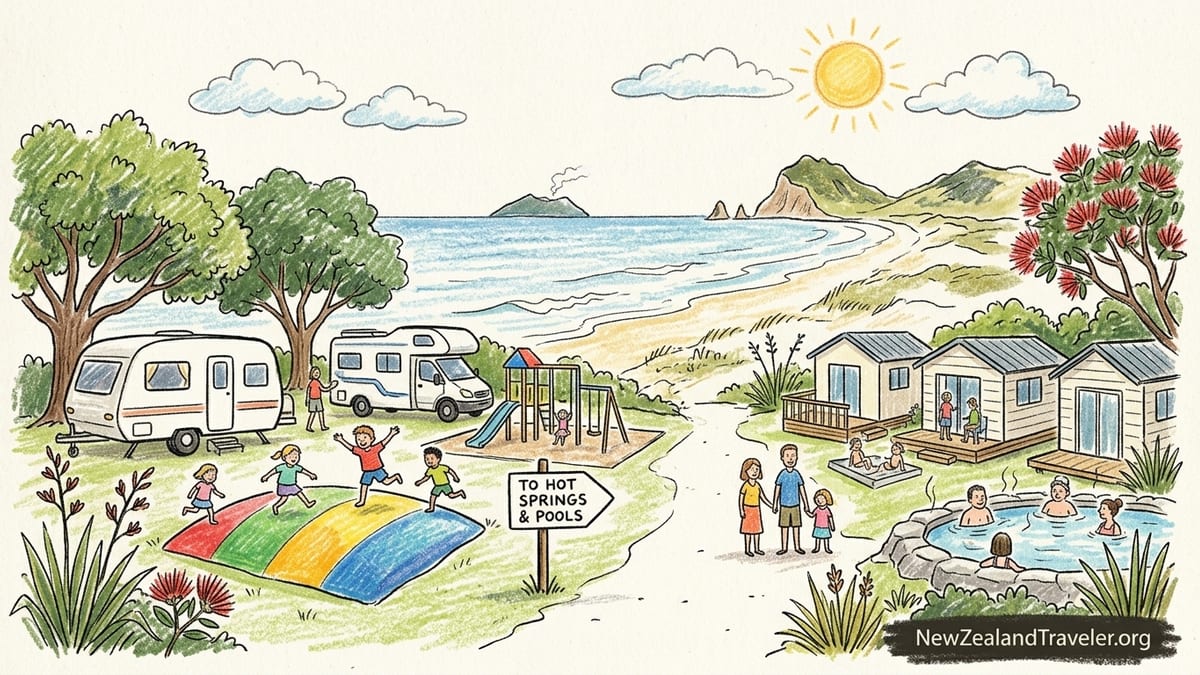
Most Bay of Plenty parks are designed with road‑trippers in mind. Expect flat, campervan‑friendly sites, shared kitchens and barbecues, laundries and hot showers. Many have on‑site playgrounds, jumping pillows and summer kids’ programmes. Increasingly, operators are adding resort‑style extras such as heated pools or slides, while a few, such as Athenree Hot Springs & Holiday Park near Waihī Beach, pair camping with natural mineral pools.
Pet policies and shoulder‑season specials are also a big part of the picture. Several parks welcome dogs outside the peak Christmas to Waitangi period, often with clear rules about leads and designated dog areas. Mid‑week or stay‑three‑pay‑two style offers are common in cooler months, making powered sites and cabins more accessible for longer stays.
When comparing options, it helps to think in terms of what matters most to your group: absolute beachfront access, the quality of the pool or playground, the range of cabins and villas, or the flexibility to travel with pets. The following sections focus on the main holiday‑park hubs on this stretch of coast and how they compare.
Pāpāmoa Beach: family parks on the surf coast
Pāpāmoa sits just south of Mount Maunganui and shares the same long, surf‑friendly beach, but with a more relaxed, residential feel. Here, Pacific Park in Pāpāmoa offers a good example of the local holiday‑park model. It combines powered and non‑powered sites with a spread of accommodation, from basic cabins to villas and motel‑style units. Facilities include a hot pool, communal kitchens and barbecue areas, with easy walking access over the dunes to the beach.
Powered sites around Pāpāmoa are generally level and suitable for caravans and larger campervans, with many sites laid out in tree‑lined rows rather than tight urban grids. This makes it easier to manoeuvre motorhomes and set up awnings. Pacific Park also markets itself as pet friendly, although conditions and seasonal restrictions apply, which is typical of the wider Bay of Plenty where dogs are often allowed outside the peak summer school‑holiday window.
Cabins and villas in Pāpāmoa holiday parks tend to suit families who want the beach setting but do not own a caravan. Expect simple but clean interiors with small verandas or decks, often sleeping four to six people. Beach access is the key attraction: children can walk to the sand without crossing major roads, and the Pāpāmoa Hills Regional Park is a short drive inland for half‑day hikes with coastal views.
For travellers comparing Pāpāmoa with Mount Maunganui, the main trade‑off is ambience. Pāpāmoa parks feel more spacious and suburban, with good supermarkets and local cafes nearby, while Mount Maunganui has historically offered tighter, in‑town camping right under the mountain. With the Mount Maunganui Beachside Holiday Park currently closed due to the 2026 landslide, Pāpāmoa provides a practical alternative for those wanting to stay close to Tauranga’s beaches.
Waihī Beach & Athenree: surf, hot pools and family‑friendly sites
At the northern edge of the Bay of Plenty, Waihī Beach is one of the region’s classic summer towns, stretching for kilometres along a gentle surf beach. Several holiday parks serve this area, from beach‑front campgrounds on the Bowentown headland to inland options that swap the surf for hot springs. Bowen‑style beachfront parks typically offer powered caravan and RV sites just behind the dunes, with small amenity blocks so you never have to walk far for a shower or toilet from your camper.
Beachfront powered sites near Waihī Beach are especially popular with caravan owners who want to park within earshot of the waves. Many sites come with a small concrete pad and grassy area, giving enough space for an awning, outdoor chairs and a surfboard rack. Pet policies vary; some Waihī‑area parks allow dogs year‑round on lead, while others restrict pets during the busiest summer weeks and school holidays. It is worth checking individual policies carefully if you are travelling with a dog.
Athenree Hot Springs & Holiday Park, just behind the northern end of Tauranga Harbour, offers a different twist on the coastal holiday‑park experience. Alongside spacious powered and non‑powered sites suitable for campervans, it features standard and deluxe cabins, chalets and two‑bedroom motel units. The standout, however, is the dual geothermal mineral pools, with one larger family pool in the low‑30s Celsius and a smaller adults’ pool close to spa temperature. For many travellers, this makes Athenree a comfortable base in cooler months when daily beach swims are less appealing.
Families often split their time between the surf at nearby Waihī Beach and soak sessions back at Athenree at the end of the day. The park has won recent national holiday‑park awards, which shows in the attention to detail around facilities and guest services. For campervans, the flat layout, easy access from State Highway 2 and generous turning circles reduce stress after a long driving day. If you are choosing between a pure beachfront site and a hot‑pool park like Athenree, the decision often comes down to whether your group prioritises saltwater or soaking.
Ōhope Beach & Ōhiwa: twin hubs for coastal camping
On the Eastern Bay of Plenty coast, Ōhope and nearby Ōhiwa form a double act: Ōhope faces the open ocean with a long, family‑friendly surf beach, while Ōhiwa looks back across a shallow harbour and sandspit with views toward Whakaari White Island. Both have well‑developed holiday‑park options. Ōhope Beach TOP 10 Holiday Park sits beside the sand at the western end of the beach, with a large range of powered sites, cabins and premium units, plus a pool complex and waterslides that make it feel part campground, part mini resort.
Ōhope’s powered sites are arranged in several zones, some closer to the beach and others nearer the pool or playground. Large motorhomes and fifth‑wheelers are a common sight in summer, and the internal roads are designed to handle bigger rigs. The park offers everything from basic cabins right through to modern units with sea views and decks. A central playground, jumping pillow and games room keep children busy on non‑beach days, and a well‑equipped communal kitchen and barbecue area cater to tent campers who prefer to travel light.
Across the harbour, Tasman Holiday Parks Ōhiwa offers a quieter, more natural setting. The park has tent and caravan sites, park motels and cabins, some with panoramic views over the harbour and out to sea. A key point of difference is that Ōhiwa is explicitly pet friendly, which makes it a strong option for travellers touring with dogs, especially outside the busiest public holiday periods. The combination of powered sites, self‑contained units and access to walking tracks and paddling spots suits couples and families who prefer a more low‑key, nature‑oriented stay.
Comparing Ōhope and Ōhiwa, beach access and atmosphere are the main contrasts. Ōhope TOP 10 offers classic surf‑beach camping with more on‑site entertainment, perfect for school‑age kids who never tire of slides and pools. Ōhiwa feels more like a coastal hideaway, with starry skies, bird calls and easy harbour access for kayaks. Campervan travellers who want clear harbour views and pet flexibility often gravitate to Ōhiwa, while larger family groups may favour Ōhope for its water park‑style facilities.
Mount Maunganui: current situation and nearby alternatives
Mount Maunganui has long been one of New Zealand’s most iconic camping destinations, thanks to its headland mountain, white‑sand surf beach and dense cluster of cafes and bars. Historically, the Mount Maunganui Beachside Holiday Park sat in a prime location at the base of Mauao, offering powered sites, cabins and direct access to both the ocean beach and Pilot Bay. This changed dramatically in January 2026, when a major landslide from Mauao struck the campground area, leading to multiple fatalities and extensive damage.
As of early September 2026, Tauranga City Council information confirms that Mount Maunganui Beachside Holiday Park remains closed until further notice while geotechnical assessments and recovery works continue around the Mauao Recreation Reserve. Temporary safety measures, such as debris protection structures and exclusion zones at the base of the mountain, remain in place. Travellers should not plan on staying at the Beachside Holiday Park and should regard any references to it as operating as out of date unless the council announces a formal reopening.
For visitors who still want to base themselves near Mount Maunganui, the practical approach is to book into nearby Pāpāmoa holiday parks or look for commercial campgrounds and motor‑camp style parks elsewhere around Tauranga and the wider Bay of Plenty. These alternatives typically offer powered sites and cabins with good road connections into the Mount, allowing you to spend days on the beach or walking the base track, then retreat to a safer, fully operating park at night. Parking a self‑contained campervan in designated freedom‑camping spots is another option, although local bylaws around overnight parking and self‑containment certificates must be checked carefully.
When comparing Mount Maunganui‑area alternatives, focus on how you plan to move around. Campervan travellers often prefer parks with easy access to main roads and generous turning spaces, then use bikes or public buses to avoid peak summer congestion at the Mount. Families looking for pools and playgrounds tend to lean toward larger parks at Pāpāmoa or Ōhope, while surfers may opt for Waihī Beach or Pāpāmoa, where it is easier to reach multiple breaks without navigating city traffic.
Powered sites, cabins and campervan suitability across the coast
Across Pāpāmoa, Waihī Beach, Ōhope, Ōhiwa and Athenree, powered sites are the backbone of most holiday parks. These are typically set on grass with some gravel or concrete hardstanding, supplied with standard 16‑amp or 32‑amp outlets suitable for caravans and campervans. Many parks offer a mix of standard and larger sites, so owners of long wheelbase motorhomes or vehicles towing boats should request bigger pitches at the time of booking. In peak summer, powered sites can sell out months in advance, especially those closest to the beach or amenities.
Cabins and villas fill the gap for travellers who want a campsite atmosphere without towing gear. At Ōhope Beach TOP 10, for example, options range from simple cabins that share communal facilities to self‑contained units with kitchens and bathrooms. Tasman Holiday Parks Ōhiwa offers similar variety, while Athenree adds chalet‑style accommodation and motel units that appeal to older couples. Pricing varies with season and specification, but in shoulder months it is often possible to book a basic cabin for only moderately more than a powered site, especially when factoring in the cost and time of transporting camping equipment.
From a campervan‑suitability perspective, most of these parks are well adapted to motorhomes. Internal roads are sealed or compacted, and entranceways are wide enough for large vehicles. Facilities such as dump stations, water fill‑up points and laundry blocks are standard. The main differences lie in layout and ambience: Ōhope and some Waihī Beach parks feel more resort‑like with denser site configurations, while Athenree and Ōhiwa lean toward a greener, more spacious feel with mature trees and gardened sites.
If you are renting a campervan for the first time, choosing a TOP 10 or nationally recognised brand park for your first nights can be reassuring, as staff are used to helping guests plug in for the first time and navigate communal facilities. Once you are comfortable, more low‑key independent parks like those around Ōhiwa or Bowentown can offer a quieter, more natural experience with equally good access to the sand.
Beach access, pools, playgrounds and pet policies
Beach access is the defining feature of most Bay of Plenty holiday parks, but how it works in practice varies. At Pāpāmoa and Ōhope, many parks sit directly behind the dune line, with short internal paths leading to the sand. At some Waihī Beach and Bowentown parks, sites are perched just behind low banks above the beach, so you can hear the surf from your camper at night. Ōhiwa’s harbour‑side position offers calmer waters for paddling and stand‑up paddleboarding rather than surf breaks, while Athenree guests typically drive a short distance to reach the open ocean.
Pools and water play areas are a major point of difference between parks. Ōhope Beach TOP 10 has an outdoor pool complex with slides and shallow areas designed for children, turning non‑beach days into mini water‑park sessions. Pāpāmoa’s Pacific Park and similar properties offer hot pools and simple swimming pools that extend the swimming season into cooler evenings. Athenree Hot Springs & Holiday Park goes further, with purpose‑built geothermal mineral pools that attract visitors year‑round, including in the middle of winter when the beach can be windswept.
Playgrounds range from basic swings and climbing frames to full‑scale zones with jumping pillows, pedal carts and organised summer activity programmes. Larger, more commercially branded parks tend to offer the most extensive play facilities, while smaller harbour‑side or rural parks may trade breadth of equipment for a more natural setting where children can explore trees, estuaries and rock pools.
Pet policies are increasingly important for domestic travellers. In this region, it is common for parks to welcome dogs outside peak dates, then tighten restrictions during late December and January. Tasman Holiday Parks Ōhiwa advertises itself as pet friendly, which couples well with nearby dog‑friendly stretches of coast. Many Waihī Beach and Athenree‑area parks also allow dogs by prior arrangement in off‑peak periods. Always confirm conditions at the time of booking, including whether pets are allowed in cabins or only on campsites, as rules can be strict and penalties for breaches significant.
The Takeaway
Bay of Plenty’s holiday parks are some of the strongest in New Zealand, combining classic surf beaches and sheltered harbours with well‑run campgrounds tailored to caravans, campervans and families. Pāpāmoa is a practical choice close to Tauranga, pairing family‑oriented parks and pet‑friendly options with easy surf access. Waihī Beach and Bowentown deliver long beaches and traditional camping, while Athenree adds award‑winning hot pools that transform a simple powered site or cabin into a year‑round retreat.
In the Eastern Bay, Ōhope and Ōhiwa offer contrasting but complementary experiences, from resort‑style beachfront camping with slides and pools to quieter harbour‑side parks with big views and pet‑friendly policies. Throughout the region, you can choose between powered sites, simple cabins, modern villas and glamping‑style options, often within a short walk of the sand.
With Mount Maunganui Beachside Holiday Park closed following the 2026 landslide, travellers who once stayed under Mauao are rediscovering these alternatives. By focusing on what matters most to your trip powered‑site quality, beach access, pool and playground facilities, pet rules and campervan convenience you can match each bay to your travel style, whether that means chasing surf, soaking in hot pools or watching the sun go down from a quiet harbour‑side deck.
FAQ
Q1. Is the Mount Maunganui Beachside Holiday Park open in 2026?
As of early September 2026, Mount Maunganui Beachside Holiday Park remains closed following the January 2026 landslide, and travellers should not plan on staying there.
Q2. Which Bay of Plenty holiday parks are best for powered campervan sites?
Ōhope Beach TOP 10, Tasman Holiday Parks Ōhiwa, Athenree Hot Springs & Holiday Park and larger Waihī Beach parks all offer numerous level powered sites suitable for campervans and caravans.
Q3. Where can I camp close to the beach with good playgrounds and pools for kids?
Ōhope Beach TOP 10 is a standout for families, combining absolute beachfront camping with a pool complex, waterslides, playgrounds and organised summer activities.
Q4. Are there holiday parks with hot pools in the Bay of Plenty?
Yes. Athenree Hot Springs & Holiday Park pairs powered sites and cabins with geothermal mineral pools, while several Pāpāmoa parks offer smaller hot pools or spa‑style facilities.
Q5. Which holiday parks are more suitable for a quiet, nature‑focused stay?
Tasman Holiday Parks Ōhiwa and some Bowentown and Athenree‑area parks offer calmer, more natural settings, with harbour or estuary views, birdlife and darker night skies.
Q6. Can I bring my dog to Bay of Plenty holiday parks?
Many parks, including Tasman Holiday Parks Ōhiwa and several Waihī Beach and Athenree options, allow dogs outside peak summer dates, usually with advance approval and clear rules.
Q7. Do I need to book powered sites in advance for summer?
Yes. Popular parks at Waihī Beach, Ōhope and Pāpāmoa routinely book out powered sites over Christmas and New Year, so advance reservations are strongly recommended.
Q8. Are there cabins or villas for travellers who do not own camping gear?
Most major parks offer a range of cabins and self‑contained units, from simple shared‑facility cabins to modern villas and motels at places like Ōhope, Ōhiwa, Pāpāmoa and Athenree.
Q9. How do Bay of Plenty holiday parks compare for first‑time campervan renters?
TOP 10 and larger branded parks at Ōhope and Ōhope‑adjacent areas are especially user friendly, with clear layouts, dump stations and staff who regularly assist first‑time motorhome guests.
Q10. Is it better to base in one park or move between several along the coast?
Many travellers combine two or three parks, for example starting at Pāpāmoa or Waihī Beach, then adding Ōhope or Ōhiwa, to experience both surf and harbour settings within a single trip.