


Tauranga’s wide blue harbour and easy access to the open Pacific make it one of New Zealand’s most rewarding places to see wild dolphins, seabirds and seasonal marine visitors like orca and whales. Several Department of Conservation permitted operators work these waters, but the experiences they offer are quite different. This guide compares Dolphin Seafaris, Bay Explorer and other licensed marine operators so you can choose the right Tauranga dolphin or wildlife cruise for your travel style, budget and family.
Tauranga’s Marine Mammal Scene and Permitted Operators
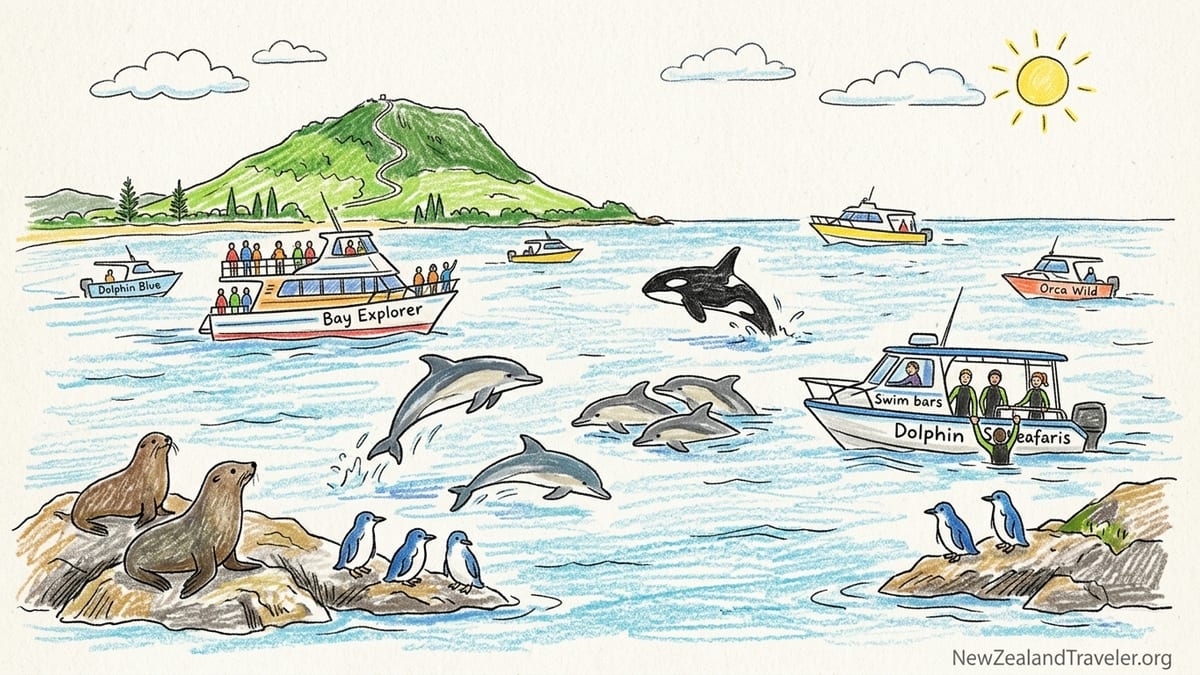
Tauranga sits at the edge of one of New Zealand’s busiest marine corridors, with common dolphins, occasional bottlenose pods, orca, short-beaked common dolphins, New Zealand fur seals and little blue penguins regularly moving along the Bay of Plenty coastline. Because these are protected species, only operators with Department of Conservation marine mammal permits are allowed to run commercial viewing and swim trips. Current DOC listings for the Tauranga region include Dolphin Seafaris, Bay Explorer, Dolphin Blue, Orca Wild Adventures, Seatrek and Moutohorā Island Sanctuary Tours, among others. Each focuses on slightly different styles of cruise, from dedicated dolphin swimming to broader nature and island experiences.
For visitors, this means you have a real choice. If your dream is slipping quietly into the water near a pod of wild dolphins, you will likely gravitate to Dolphin Seafaris or similar swim-focused operators such as Dolphin Blue or Orca Wild Adventures. If you prefer to stay dry but want a broad wildlife and scenic experience, Bay Explorer’s half‑day dolphin and wildlife cruise is designed around viewing rather than in‑water encounters. Other Tauranga permit holders generally offer harbour cruises, nature trips to offshore islands or charter options where marine mammal viewing is part of a wider day out rather than the sole focus.
All of these operators work within DOC’s Marine Mammal Protection Regulations, which set minimum approach distances, speed limits around animals and rules about how many boats can interact with a pod at any one time. That framework is important context when comparing tours: operators cannot simply “guarantee” swims or close encounters, and responsible companies will be upfront about the role of weather, sea conditions and animal behaviour in shaping each trip.
Before you book, it is worth deciding what matters most to you: the chance to swim, the comfort of the boat, a shorter or longer day, child suitability, or flexible cancellation and rebooking policies. Tauranga’s operators differ on all of these points, and understanding those differences will help you choose the cruise that feels like money well spent rather than a rushed compromise.
Dolphin Seafaris: Seasonal Swim Specialist
Dolphin Seafaris has built its reputation around one thing: the chance to get in the water near wild dolphins during Tauranga’s warm months. Operating from Tauranga Bridge Marina, the company runs daily wildlife tours to watch and, when conditions and regulations allow, swim with dolphins in the Bay of Plenty. Trips run seasonally from roughly November through late April or May, aligning with calmer seas and sea temperatures that are more comfortable for swimmers. Adult prices are typically in the mid‑hundreds of New Zealand dollars, with child tickets slightly cheaper, reflecting the specialist nature of the tour and the equipment provided.
The vessel is a spacious, relatively fast powerboat fitted with swim bars at the stern. Instead of free‑swimming far from the boat, guests hold onto these bars while the skipper positions the vessel so that dolphins can choose to approach. Wetsuits, masks and snorkels are included, and hot drinks and light snacks are usually part of the package. On a good day this can mean spending repeated intervals in the water as a pod of common dolphins porpoises around and beneath you, a highlight for confident swimmers and wildlife enthusiasts.
Dolphin Seafaris frames every outing as a wildlife tour first and a swim opportunity second. Even in peak summer, DOC rules and the behaviour of the animals may mean that swimming is not possible, particularly if there are calves present or the pod is travelling quickly. The company is explicit that it cannot guarantee swims, only opportunities when conditions are right. To soften the risk of a quiet day, Dolphin Seafaris offers a free return voucher for guests if no dolphins are found at all, valid for around a year and subject to availability. That policy rewards visitors who can linger in Tauranga or return within a year, though it does not help much if you are on a tight itinerary or visiting from overseas.
Cancellations are strongly linked to weather and sea state, as offshore swell can make swimming uncomfortable and unsafe. The operator typically confirms departures the evening before and applies a non‑refundable window of about 48 hours prior to sailing for guest cancellations, in line with many marine tours. Families should also consider that while Dolphin Seafaris markets itself as family friendly, open ocean swims with wild animals and potentially cool water can be tiring and confronting for younger children. It suits older kids and teens who are strong swimmers, comfortable in the sea and eager for an adventurous morning offshore.
Bay Explorer: Half‑Day Dolphin and Wildlife Viewing
Bay Explorer is Tauranga’s flagship dolphin and wildlife viewing operator, focusing on comfortable half‑day cruises rather than in‑water swims. Departing from the waterfront opposite Tauranga’s central city, the Bay Explorer vessel is an 18‑metre boat with large open decks, shaded seating and a licensed bar. Its dolphin and wildlife cruise typically leaves around 10 am, returning between 2 and 3 pm, which fits well with cruise ship port calls and self‑drive travellers who want time left in the day for Mount Maunganui’s beaches or a walk around Mauao.
The experience is framed as an eco‑cruise with a broad wildlife focus. Depending on the day and season, you might view common dolphins bow‑riding the hull, little blue penguins rafting at the surface, New Zealand fur seals hauled out on rocky islands, and a variety of seabirds such as gannets, shearwaters and terns. On rarer days, orca pods, migrating whales or sunfish pass through the bay, and the skipper will usually divert to view them when possible. Commentary is delivered by a crew that often includes marine biologists, helping guests understand behaviour, identification and local conservation stories rather than simply ticking species off a list.
Bay Explorer’s season for public dolphin and wildlife cruises runs through the warmer part of the year, approximately October to April, operating seven days a week when conditions permit. Outside those months the vessel tends to focus on private charters, functions and harbour cruises rather than daily wildlife departures. Pricing for the half‑day cruise has recently sat in the mid‑range for New Zealand coastal tours, with adult fares around the high‑hundreds of dollars and discounted child rates, though specials and online promotions can lower the cost for families booking early or mid‑week.
Because Bay Explorer does not offer swimming, the entire design of the trip prioritises comfort and accessibility. Wide decks and indoor seating make it easier for people with mobility concerns, very young children or older grandparents to enjoy the journey. Seasickness can still be an issue in swell, but the half‑day length and sheltered harbour departure reduce fatigue compared with full‑day expeditions. Importantly, Bay Explorer is open about the unpredictability of marine sightings. The operator advertises a high success rate but, recognising that wild animals do not work on schedule, it offers a free second cruise if no marine mammals are seen at all, a generous policy for travellers with flexible timelines.
Other Tauranga Marine Operators: Dolphin Blue, Orca Wild and More
Beyond Dolphin Seafaris and Bay Explorer, several other DOC‑permitted operators in the Tauranga region round out the dolphin and wildlife offering. Dolphin Blue runs dolphin watching and, when conditions allow, swimming experiences from Tauranga, similar in concept to Dolphin Seafaris but with its own vessel, crew and style of guiding. Their trips also showcase the wider marine life of the Bay of Plenty, from seabirds and penguins to the occasional whale, so guests are not solely focused on dolphins. For travellers comparing options, Dolphin Blue can be a useful alternative if one operator is fully booked or if you are staying near their preferred departure point.
Orca Wild Adventures, as the name suggests, leans into the Bay of Plenty’s reputation as an orca corridor. While no operator can promise orca on demand, some companies design itineraries around the areas and seasons where these apex predators most often appear, and combine that search with chances to view and sometimes swim near dolphins when conditions allow. Trips with an orca focus tend to attract wildlife fans who are comfortable accepting a lower probability of a specific animal in exchange for the thrill of a rarer encounter if it does occur.
Other Tauranga permit holders such as Seatrek and Moutohorā Island Sanctuary Tours generally frame their experiences around harbour cruising or visits to protected island reserves. Marine mammals may feature, but often as part of a wider nature or cultural itinerary rather than the headline drawcard. For example, a day trip to Moutohorā might involve time ashore on a pest‑free island sanctuary, learning about local geology and birdlife, with the chance of spotting dolphins or seals along the way. These trips suit visitors who want a more varied day of landscapes and walking mixed with opportunistic wildlife viewing.
When weighing these operators against Dolphin Seafaris and Bay Explorer, the key is to be honest about your priorities. If swimming with dolphins is non‑negotiable and your travel dates fall in peak summer, then booking with a specialist swim operator and planning a buffer day for weather rebooking makes sense. If your main goal is to enjoy a relaxed family outing with a strong chance of seeing a range of animals from a comfortable deck, then a boat like Bay Explorer or a scenic island cruise is more appropriate. In all cases, focusing on permitted, DOC‑listed businesses helps ensure that your money supports operators who have met conservation and safety standards.
Trip Length, Wildlife Focus and Onboard Comfort
Trip length is one of the most obvious differences between Tauranga operators. Dolphin Seafaris, Dolphin Blue and similar swim‑oriented tours usually run for a half to three‑quarters of a day, often in the 4 to 5 hour range from check‑in to return. That allows time to locate dolphin pods, assess conditions for swimming and give guests multiple opportunities in the water while still returning by mid‑afternoon. Bay Explorer’s dolphin and wildlife cruise is also a half‑day experience, typically departing mid‑morning and returning early afternoon, whereas some island and harbour cruises may run shorter, around three hours, with less time in the open ocean.
Wildlife focus also varies in subtle but important ways. Swim operators have dolphins as their headline species, and the day is structured around finding pods that are behaviourally suitable for in‑water experiences. Crew may spend longer searching or moving between areas to locate the right animals, which can be exciting for guests who enjoy the sense of a live search but tiring for those expecting constant action. Viewing‑oriented boats like Bay Explorer cast a wider net, with crew scanning for any interesting marine life, from schooling fish and seabirds to rare visitors like turtles and sharks. For photographers and naturalists, this can mean more varied subjects and a less pressured atmosphere if dolphins are not immediately present.
Onboard comfort is another dividing line. Bay Explorer’s 18‑metre vessel is purpose‑built for viewing, with 360‑degree observation decks, shaded seating and an indoor cabin where passengers can retreat from wind and spray. A licensed bar and food options add to the experience, and the open layout makes it easy to move around to follow the action. By contrast, swim‑focused boats often have more compact layouts optimised for quick access to the water, with gear storage, swim platforms and rails taking up deck space. They are perfectly adequate for the job but feel more like expedition vessels than floating lounges, which is worth considering if you are travelling with elderly relatives or very young children.
Real‑world reviews from recent seasons highlight how these differences feel on the day. Travellers who loved Dolphin Seafaris often mention the thrill of “eye‑to‑eye” moments in the water and the adrenaline rush of holding the swim bar while dolphins weave through the bow wave. Guests praising Bay Explorer frequently talk about the relaxed social atmosphere on deck, the ability to spread out with a coffee or a cold drink, and the pleasure of simply watching pods play alongside the boat without the pressure of changing into wetsuits. Both styles are valid; your ideal choice comes down to whether you want an active, wetsuit‑on adventure or a more laid‑back wildlife cruise with creature comforts.
Swimming vs Viewing, Seasons and Child Suitability
The most important decision for many visitors is whether to choose a swimming or a viewing‑only trip. Swimming with wild dolphins off Tauranga is an unforgettable experience, but it is physically demanding and conditional on animal behaviour and sea conditions. Swim operators like Dolphin Seafaris and Dolphin Blue provide all gear and safety briefings, yet they still expect guests to be confident in open water with the ability to climb ladders and cope with chop and spray. Regulations also restrict swimming around certain species and situations, such as when very young calves are present, so even on a trip branded as a “swim,” you might ultimately stay on the boat if the pod’s behaviour is not suitable.
Viewing‑only trips like Bay Explorer’s dolphin and wildlife cruise remove that uncertainty around getting in the water. Everyone on board can enjoy the same experience regardless of swimming ability or confidence, and the day’s rhythm is slower and more inclusive. For many families, particularly those travelling with children under ten or older relatives, this style of cruise offers the best balance of excitement and comfort. Kids can move around the deck, lean on the railings under supervision and enjoy spotting wildlife without the pressure to don a wetsuit or mask.
Seasonality is another key factor. Tauranga’s main dolphin and wildlife cruise season runs from spring through early autumn, roughly October to April. Dolphin Seafaris typically operates its swim tours from November to late April or May, when water temperatures are warmer and daylight is longer. Bay Explorer’s public dolphin and wildlife departures usually align with this period, while private charters and harbour cruises may run year‑round. Touring in the shoulder seasons of October–November and March–April often brings calmer seas and fewer crowds, though sea temperatures for swimmers will be cooler at the edges of the season.
Child suitability depends on both the operator and your individual child. Swim tours usually have minimum age or height guidelines and may recommend that only strong, confident swimmers participate in the in‑water component. Families sometimes choose to keep younger kids on deck watching while older siblings or parents enter the water. Viewing‑only cruises are more flexible: Bay Explorer, for example, welcomes children and offers reduced child fares, and the half‑day length is manageable for most school‑age kids. Regardless of tour type, parents should plan for strong sun, bring warm layers even in summer and consider seasickness medication for children prone to motion sickness, as Tauranga’s offshore waters can be choppy.
Prices, Cancellation Policies and No‑Dolphin Guarantees
Pricing across Tauranga’s dolphin and wildlife cruises sits in a broadly similar band, but there are meaningful differences. Swim‑focused operators like Dolphin Seafaris often charge a little more than viewing‑only cruises, reflecting the additional gear, staff and time required to manage safe in‑water encounters. Recent adult prices for a summer swim tour have sat around the mid‑hundreds of dollars, with reduced rates for children and sometimes family packages or affiliation discounts through campgrounds and local accommodation partners. Viewing‑only cruises such as Bay Explorer’s half‑day trip offer adult fares in a comparable range, with child tickets often priced at around half to two‑thirds of the adult rate depending on the promotion.
Cancellation and refund policies deserve close reading before you confirm a booking, especially if you are coordinating with a cruise ship schedule or a tight road trip. Both Dolphin Seafaris and Bay Explorer operate on a weather‑dependent basis. If the skipper judges sea conditions unsafe or unsuitable, the company will typically first try to rebook you for another day. If that is not possible, they may offer full refunds. When it comes to customer‑initiated cancellations, a 48‑hour non‑refundable period before departure is common, though exact cut‑offs and fees can vary by operator and booking channel. Travellers using third‑party booking sites should also check whether those platforms apply their own cancellation rules on top of the operator’s policy.
An area where Tauranga’s leading operators have become more generous in recent years is “no‑dolphin days.” Both Dolphin Seafaris and Bay Explorer publicly acknowledge that, despite experienced skippers and a high encounter rate, there are days when dolphins or other marine mammals simply do not appear. To manage guest expectations and maintain goodwill, Dolphin Seafaris offers a free return voucher valid for about a year if no dolphins are found at all on your trip, while Bay Explorer promotes a similar policy of a complimentary second cruise if there are no marine mammals sightings. These offers are subject to availability and do not apply if you simply choose not to travel on another day, but they still represent a meaningful safety net for visitors with flexible travel plans.
Ultimately, no operator can guarantee wild animals on a specific day, and companies that acknowledge this clearly in their pre‑departure briefings are often the most trustworthy. When comparing tour descriptions, pay attention to language: promises of “opportunities” and “high chances” tend to be more honest than absolute guarantees. If an operator offers discount pricing on last‑minute departures after a run of quiet days, that can be an opportunity for budget‑minded travellers willing to roll the dice, provided you understand that the ocean, not the marketing, sets the final agenda.
How to Choose the Right Tauranga Dolphin or Wildlife Cruise
Choosing between Dolphin Seafaris, Bay Explorer and Tauranga’s other permitted operators starts with a candid look at your priorities and constraints. If swimming with wild dolphins is at the very top of your wish list, then a summer booking with Dolphin Seafaris, Dolphin Blue or a similar swim‑focused operator is the logical first step. Build a buffer into your itinerary so you can accept a weather postponement or use a free return voucher if your first attempt coincides with a no‑dolphin day. Budget for the higher swim ticket price and check age and swimming ability guidelines carefully if you are travelling with children.
If comfort, accessibility and a relaxed schedule matter more than getting in the water, Bay Explorer’s half‑day dolphin and wildlife cruise or an island‑focused nature trip is likely to feel more rewarding. The 10 am to early‑afternoon window works well if you are driving from Rotorua or Hobbiton for the day, or if you are docked on a cruise ship and want to be back ashore with time to wander Tauranga’s waterfront cafes. Look for operators that offer indoor seating, shaded decks and the option to purchase food and drinks on board if you prefer not to self‑cater.
Travel timing also plays a role. Visitors arriving in the shoulder months of October or April will find more limited schedules and a higher chance of weather disruptions, but also smaller crowds and potentially lower prices. In mid‑summer, from late December through February, demand spikes, especially on cruise ship days, so booking ahead is essential regardless of operator. Families may find it easier to secure child‑friendly seating and space on deck by choosing mid‑week departures rather than weekends.
Finally, do not underestimate the value of operator philosophy. Read recent guest reviews for clues about how crews interact with wildlife, how they respond on days when animals are scarce and how they handle vulnerable passengers like nervous swimmers or seasick children. In Tauranga, as in other marine tourism hubs, the best operators combine excitement with humility, reminding guests that they are visitors in the animals’ world and modelling respectful behaviours that leave the Bay of Plenty’s marine life undisturbed for future generations.
FAQ
Q1. Can I swim with dolphins on every Tauranga dolphin cruise?
Not every Tauranga operator offers swimming. Dolphin Seafaris and some similar companies provide structured swim opportunities in summer, while Bay Explorer and many harbour or island cruises focus on viewing only. Even on swim‑branded trips, getting in the water depends on DOC regulations, sea conditions and the behaviour of the dolphins on the day.
Q2. What is the best time of year to see dolphins in Tauranga?
Dolphins can be seen year‑round in the Bay of Plenty, but most dedicated dolphin cruises operate between about October and April when seas are generally calmer and water temperatures are more comfortable. Summer months from December to February bring the most frequent departures and the warmest conditions for those planning to swim.
Q3. How long do Tauranga dolphin and wildlife cruises usually last?
Most dolphin and wildlife trips from Tauranga run for half a day. Bay Explorer’s dolphin and wildlife cruise typically departs around 10 am and returns between 2 and 3 pm, while swim‑focused tours such as Dolphin Seafaris generally operate in a similar 4 to 5 hour window to allow time to find suitable pods and manage multiple swim or viewing sessions.
Q4. Are Tauranga dolphin cruises suitable for young children?
Viewing‑only cruises like Bay Explorer are generally well suited to families with young children thanks to indoor seating, shaded decks and a relaxed pace. Swim tours, including Dolphin Seafaris, often recommend that only confident swimmers join the in‑water component and may have age or height guidelines. Younger kids can usually remain on deck with an adult enjoying the wildlife from the boat.
Q5. What happens if we do not see any dolphins on our trip?
Responsible Tauranga operators are upfront that sightings are not guaranteed. Dolphin Seafaris offers a free return voucher if no dolphins are found at all on your tour, valid for a future trip, while Bay Explorer promotes a complimentary second cruise if there are no marine mammal sightings. These policies usually rely on you being able to rebook on another day and do not cover guest‑initiated cancellations.
Q6. Do I need to be a strong swimmer to join a Tauranga dolphin cruise?
You do not need to swim at all to enjoy viewing‑only cruises, which are suitable for non‑swimmers and those with limited mobility. To participate in swim tours like Dolphin Seafaris or Dolphin Blue, you should be a confident swimmer in open water, comfortable wearing a wetsuit and able to climb ladders in potentially choppy conditions. Operators provide safety briefings and gear but cannot substitute for basic water confidence.
Q7. How much do dolphin and wildlife cruises from Tauranga cost?
Prices vary by operator and season, but as a guide, recent adult fares for half‑day dolphin or wildlife cruises typically sit in the low to mid‑hundreds of New Zealand dollars, with reduced child rates. Swim‑focused tours often cost slightly more than viewing‑only trips because of the extra equipment and staff. Promotions, family packages and mid‑week discounts can sometimes reduce the overall cost.
Q8. Can cruises still operate in bad weather or rough seas?
All Tauranga dolphin and wildlife cruises are weather dependent. Skippers monitor wind, swell and visibility closely and will cancel or postpone trips when conditions are unsafe or unsuitable, particularly for swim tours that require guests to enter the water. If the operator cancels due to weather, you will usually be offered a new date or a refund; guest cancellations are subject to each company’s policy.
Q9. How do Tauranga operators protect dolphins and other marine life?
Permitted Tauranga operators work under New Zealand’s Marine Mammal Protection Regulations, which set minimum approach distances, speed limits around animals and rules on how many boats can interact with a pod. Companies like Dolphin Seafaris and Bay Explorer train their crews to minimise disturbance, avoid sudden changes of direction near animals and limit the time spent with any one group of dolphins or whales.
Q10. Should I book my Tauranga dolphin cruise in advance?
Advance booking is highly recommended, especially between late December and February and on days when cruise ships are in port. Swim tours have limited capacity due to gear and safety requirements, and popular viewing cruises like Bay Explorer often fill several days ahead. Booking early also allows you to choose a departure that fits your itinerary and gives more flexibility to reschedule if weather or no‑dolphin policies come into play.