


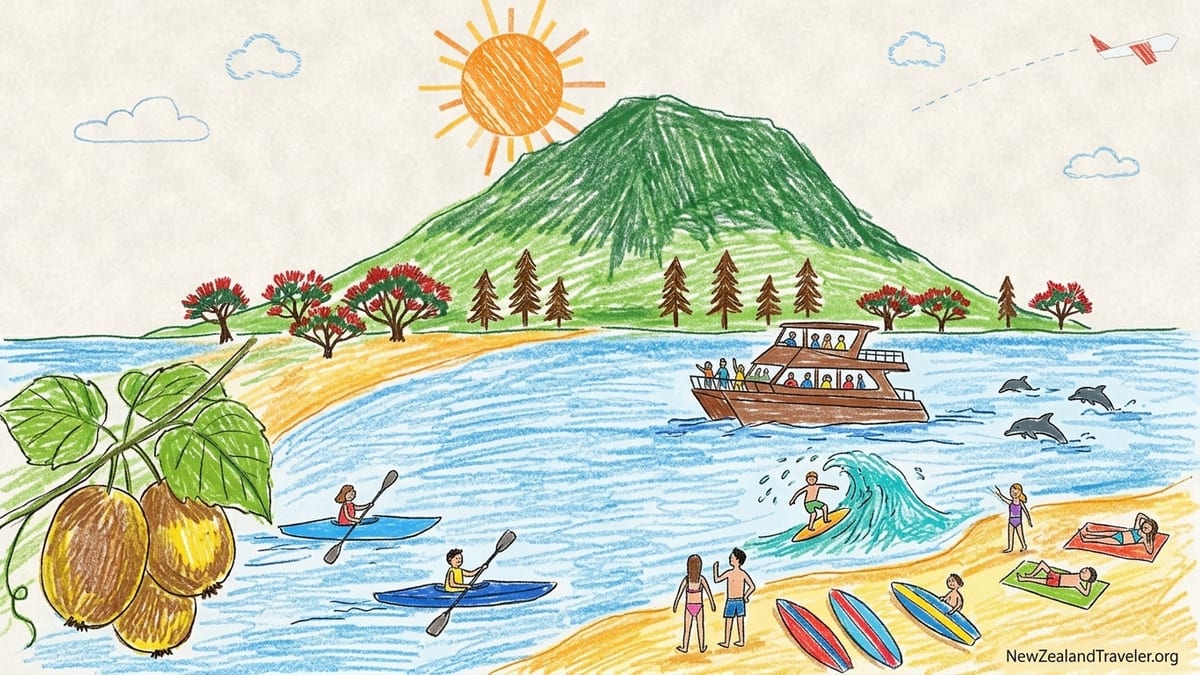
The Bay of Plenty lives up to its name with a huge range of water, wildlife, cultural and food experiences clustered around Tauranga, Mount Maunganui and Whakatāne. Current Tourism Bay of Plenty itineraries lean heavily into dolphin and wildlife cruises, glowworm kayaking, surf lessons, Māori cultural encounters, scenic flights and orchard tours, and for good reason. This is one of New Zealand’s easiest regions to build a holiday around guided activities that feel special yet still fit into a relaxed beach break.
How to Choose the Right Bay of Plenty Tour for You
Planning a Bay of Plenty itinerary starts with deciding how active and independent you want to be. Some experiences, such as walking around Mount Maunganui or swimming at Ōhope Beach, are simple to do on your own with a rental car and basic fitness. Others, including dolphin cruises off Tauranga and excursions to offshore islands like Moutohorā, are only possible with a licensed operator that holds marine and conservation permits.
Tourism Bay of Plenty trade programmes currently promote a core set of bookable hero experiences: dolphin and wildlife cruises from Tauranga, glowworm kayaking with specialist outfitters, beginner friendly surf lessons at local beaches, small group Māori cultural tours, horticultural and orchard visits, Moutohorā Island wildlife trips from Whakatāne and scenic flights to or around Whakaari / White Island. These are the activities that consistently deliver high guest satisfaction and that travel trade partners build into multi day Bay of Plenty packages.
A practical way to plan is to lock in one or two guided signature experiences for each full day in the region, then fill the gaps with self guided walks, swims and food stops. For example, you might book a Tauranga dolphin cruise one day, an evening glowworm kayak the next and a Moutohorā wildlife trip plus orchard tour in Whakatāne on day three. With this approach, you balance the reliability and storytelling of local guides with the freedom to explore at your own pace.
Cost is another factor. Signature guided activities typically range from about NZD 120 to 250 per adult depending on season and inclusions, while self guided experiences often only require fuel, parking or a modest entry fee. For many visitors, mixing a couple of higher value wildlife or cultural tours with cheaper, independent beach time provides the best use of both budget and time.
Tauranga Dolphin & Wildlife Cruises
Dolphin and wildlife cruises are a flagship Bay of Plenty experience and one that you cannot realistically replicate without a specialist operator. From Tauranga Bridge Marina, companies such as Bay Explorer and Dolphin Seafaris run half day and full day trips into the open bay in search of common dolphins, occasional orca and other marine life between roughly November and May, when sea conditions and wildlife movements are most favourable. These boats are set up with multiple viewing decks, marine radios, safety gear and experienced skippers who understand local conditions.
A typical dolphin and wildlife cruise lasts around five to six hours and costs in the region of NZD 160 to 220 per adult, with family pricing and occasional seasonal specials for advance bookings. Guests usually check in at the marina early in the morning, board a catamaran or similar vessel and cruise past Mauao and the harbour entrance before heading out into the wider bay. Operators provide commentary about local history, marine reserves and the role of the Port of Tauranga while crew members scan for bird activity that often signals dolphin pods.
Seeing dolphins is never guaranteed, and reputable Tauranga operators are careful to set expectations, emphasising that their cruises are wildlife encounters rather than theme park shows. In practice, many summer departures do find large pods of common dolphins that bow ride, surf the wake and sometimes interact playfully alongside the boat. At times, guests may have the option to enter the water on floating lines when conditions, regulations and animal behaviour allow, although this is always at the skipper’s discretion.
For independent travellers, it is not practical to charter a private boat or attempt to locate dolphins with a kayak or small rental craft. Safety, biosecurity rules and distance offshore mean that booking an established dolphin and wildlife cruise is the only realistic and responsible option. If your schedule is flexible, consider choosing a calm, settled weather window and visiting outside peak public holiday periods to enjoy more space on deck and better viewing angles.
Glowworm Kayaking Under the Stars
Evening glowworm kayaking has become one of the Bay of Plenty’s most distinctive tours, and is heavily promoted in Tourism Bay of Plenty’s “experiences under the stars” itineraries. Waimarino Kayak Tours, based just outside Tauranga, offers guided sunset and night trips on Lake McLaren and nearby waterways where guests paddle through calm gorges or into narrow canyons lined with thousands of tiny bioluminescent glowworms. These tours typically last three to three and a half hours from check in to return and are designed to suit beginners as well as confident paddlers.
A standard evening glowworm tour often starts in the late afternoon with a safety briefing, paddle technique overview and an easy warm up paddle as the light softens. Many departures time the outward journey to coincide with golden hour so you can photograph the lake and bush before darkness falls. Once fully dark, the group gathers at the entrance to a canyon or cave to drift quietly while guides explain the glowworm life cycle, share Māori legends associated with the night sky and local landmarks, and encourage guests to switch off headlamps to let their eyes adjust.
Expect to pay roughly NZD 160 to 200 per adult depending on the operator, lake and season, with higher prices for small group or private departures. Inclusions often cover all equipment, wetsuits or spray decks if needed, a hot drink or snack and transfers from a central Tauranga meeting point in some cases. Many visitors note that this tour feels more intimate than the large scale glowworm cave attractions found elsewhere in New Zealand because the groups are smaller and you can get very close to the glowworms reflected in the still water.
Kayakers with their own gear sometimes explore Bay of Plenty lakes independently, but finding safe and accessible glowworm sites at night requires detailed local knowledge and careful navigation. For most travellers, especially those unfamiliar with the area or night paddling, booking a commercial glowworm kayaking trip is strongly recommended. You gain not only safety and logistics but also cultural context and storytelling that would be difficult to replicate alone.
Surf Lessons & Self Guided Beach Time
The Bay of Plenty coastline from Waihī Beach through Mount Maunganui and Papamoa to Ōhope is lined with surf breaks that cater to everyone from first timers to experienced longboarders. Because many beaches have gentle sand bottom waves and relatively warm water in summer, surf lessons are a popular addition to standard trade itineraries. Licensed surf schools operate at hot spots such as Mount Maunganui Main Beach and Ōhope, offering two to three hour beginner lessons and multi day packages that include board and wetsuit hire.
First time surfers can expect to pay somewhere in the region of NZD 80 to 120 for a group lesson, which usually covers basic ocean safety, reading waves, paddling technique and standing up with the help of a qualified instructor. Private lessons cost more but offer faster progression and are a good option for families or travellers short on time. Reputable operators are accredited through Surfing New Zealand or similar bodies, and they monitor rips, swell and sandbanks daily to choose the safest spot for the conditions.
Once you have the basics, it becomes easy to continue on your own. Board and wetsuit rental is widely available around Mount Maunganui and other main beaches, with hourly and full day rates. Confident swimmers may simply hire a soft top board, check local surf reports and head out between the flags near lifeguard patrols. Independent beach time is effectively free apart from parking and equipment hire, making it a flexible option for free days between more structured tours.
It is worth noting that some spots along the Bay of Plenty coast have strong currents and shifting sandbars. Visitors unfamiliar with New Zealand surf conditions should treat lessons as an essential first step, especially if travelling with children. After that initial instruction, surfing becomes one of the easiest activities in the region to enjoy without ongoing guided support.
Māori Cultural Experiences & Storytelling Journeys
Bay of Plenty tourism trade material increasingly highlights Māori led experiences that weave together history, language, food and landscape. Around Tauranga, operators such as Travel Ed and local marae based hosts create half day and full day tours that might include visits to historic sites like The Elms | Te Papa Tauranga, guided walks on Mauao focusing on traditional navigation and stories, or shared meals built around local kaimoana and seasonal produce. These experiences are generally not accessible on a self guided basis because they rely on personal relationships, protocol and access to community spaces.
Prices vary, but visitors can expect to invest roughly NZD 150 to 300 per person for small group cultural experiences that include transport, kai and hosted activities. Many trade focused itineraries build these tours into wider Bay of Plenty circuits, pairing a morning dolphin cruise from Tauranga with an afternoon walking and storytelling experience, or combining a lake based glowworm paddle with a hāngī style dinner and kapa haka performance.
Self guided travellers can still engage with Māori heritage in the region by visiting public sites, reading interpretive panels and following sculpture trails. Walking around Mauao independently, for example, offers views over Tauranga Moana and a sense of the maunga’s significance even without a guide. However, the depth of understanding and cultural connection that comes from spending time with local hosts is difficult to achieve alone. For visitors who value immersive, people focused travel, booking at least one Māori led experience in the Bay of Plenty is strongly recommended.
When comparing options, look for tours that are clearly described as locally owned or iwi affiliated, that limit group sizes and that allow plenty of time for conversation rather than rushing between photo stops. These are signs that the experience has been designed with manaakitanga and authenticity at its core rather than simply adding a cultural veneer to standard sightseeing.
Horticultural & Food Tours in Kiwifruit Country
The Bay of Plenty is synonymous with kiwifruit and avocado orchards, and modern trade itineraries increasingly showcase “orchard to plate” food stories alongside the region’s beaches. Around Te Puke, Katikati and the rural fringes of Tauranga, visitors can join guided horticultural tours that explain how kiwifruit vines are trained and harvested, how packhouses work and how changing climate patterns are affecting local growers. Some operators offer tastings of different kiwifruit varieties, short walks through demonstration orchards and the chance to purchase fresh fruit and locally made products.
Guided orchard experiences typically run for one and a half to three hours and might cost in the ballpark of NZD 60 to 120 per adult, sometimes including transport from a central pick up point. For cruise ship passengers docking in Tauranga, these visits are often bundled into half day shore excursions that combine a kiwifruit or avocado orchard stop with a viewpoint over the harbour or quick visit to Mount Maunganui. The commentary focuses on the role horticulture plays in the Bay of Plenty economy and on how export brands have shaped local communities.
Independent travellers with a rental car can visit roadside fruit stalls, farmers’ markets and some orchards that maintain retail outlets without joining a formal tour. Seasonal markets in Tauranga and surrounding towns showcase produce, cheeses, honey and baked goods from the wider region, providing an easy way to sample local flavours on a modest budget. However, access behind the scenes into working orchards and packhouses is generally limited to bookable tours due to food safety and biosecurity requirements.
Combining a horticultural tour with a waterfront lunch in Tauranga or dinner in Mount Maunganui creates a strong food focused day that balances structured learning with relaxed self guided time. Many travellers choose to pair this with a glowworm kayak or evening beach walk, making the most of the region’s long summer twilights.
Moutohorā Wildlife Trips & Whakaari Scenic Flights
On the eastern side of the Bay of Plenty, Whakatāne functions as a launch point for some of the region’s most memorable wildlife and scenic flight experiences. Moutohorā / Whale Island, located roughly nine kilometres off the coast, is a predator free wildlife management reserve that is only accessible with approved concessionaire guides. Department of Conservation rules strictly limit private access, so joining a commercial tour is the only practical way for most travellers to visit this sanctuary of rare birds, reptiles and coastal forest.
Operators based in Whakatāne run half day Moutohorā trips that usually combine a marine wildlife cruise with a guided walk on the island itself. A typical excursion might last around four hours, including time to look for dolphins and seabirds en route, land at a sheltered bay, stroll to viewpoints with commentary on conservation projects and, conditions allowing, enjoy a short soak in warm sand or shallow geothermal springs at Sulphur Bay. Prices are commonly in the range of NZD 160 to 230 per adult depending on season, vessel type and inclusions.
Whakaari / White Island, an active volcano offshore from Whakatāne, has not been accessible for landings since the tragic 2019 eruption. However, scenic flights over and around the island are again included in some trade oriented itineraries, operated by licensed helicopter and fixed wing companies that comply with current aviation and safety guidelines. These flights, often priced from several hundred dollars per person, offer aerial views of steaming vents, crater lakes and the wider Bay of Plenty coastline without landing on the island.
Because both Moutohorā excursions and Whakaari scenic flights involve significant safety, regulatory and environmental considerations, they are firmly in the “guided only” category. Independent boaters and pilots cannot simply visit these sites at will. Travellers who value close up wildlife encounters, conservation stories and dramatic landscapes often plan at least one night in Whakatāne or Ōhope specifically to access these signature experiences while allowing buffer time in case of weather related cancellations.
Harbour Cruises & Easy Independent Experiences
Not every visitor wants a long day offshore or a late night kayak. Tauranga’s sheltered harbour, with its mix of port infrastructure, moored yachts and mangrove lined inlets, provides a gentler way to get on the water. Short harbour cruises of 60 to 180 minutes depart from central wharves and the marina, showcasing views back to Mauao, waterfront suburbs and birdlife. Some operators focus on commentary rich sightseeing, while others combine a harbour loop with wine tasting, barbecue dinners or evening music.
These shorter cruises are often priced below the region’s marquee dolphin and island trips, making them a good option for families with younger children or travellers prone to seasickness. Because the harbour is sheltered, departures can operate in a wider range of conditions, though tours may still be rescheduled for strong winds or heavy rain. For those keen to stay even closer to shore, stand up paddleboard and kayak rentals are available near sheltered bays, with staff offering advice on tide times and safe paddling routes that do not conflict with shipping lanes.
Alongside these guided harbour options, the Bay of Plenty excels at simple, low cost independent experiences. Walking the base track around Mauao, climbing to the summit for sunrise or sunset, picnicking at Pilot Bay, swimming at Ōhope Beach or exploring coastal reserves near Pukehina and Waihī Beach all require minimal planning beyond checking local weather and packing appropriate clothing. These activities pair well with more structured tours, allowing you to shape each day according to your energy levels.
When planning, treat guided harbour cruises, dolphin trips, glowworm kayaking, surf lessons, cultural tours, horticultural visits, Moutohorā excursions and Whakaari scenic flights as the paid “anchor” experiences in your itinerary. Around them, layer self guided walks, swims, café stops and scenic drives. The result is an itinerary that feels rich and varied without being over scheduled.
FAQ
Q1. Do I need to book Bay of Plenty dolphin and glowworm tours in advance?
It is strongly advisable to book key tours such as Tauranga dolphin cruises, evening glowworm kayaking and Moutohorā trips in advance, especially between December and March and during New Zealand school holidays. Last minute spaces sometimes appear, but popular departures and small group tours often sell out days or weeks ahead.
Q2. Which Bay of Plenty activities absolutely require a guide or commercial operator?
You should book a licensed operator for dolphin and wildlife cruises from Tauranga, glowworm kayaking tours at night, Māori cultural experiences, orchard and packhouse visits, Moutohorā wildlife trips and any Whakaari or coastline scenic flights. These products involve specialist equipment, safety procedures, land or water access permissions and local knowledge that visitors cannot reasonably replicate on their own.
Q3. What can I comfortably do on my own without a guide?
Independent travellers can easily enjoy beach time and swimming at locations like Mount Maunganui, Papamoa and Ōhope, walk the Mauao base track and summit, explore local cafés and markets, visit public lookouts and drive between coastal towns. After an initial lesson, many guests also hire surfboards or paddleboards and continue practising unguided in patrolled areas.
Q4. How much should I budget per person for guided activities in the Bay of Plenty?
As an approximate guide, allow around NZD 160 to 220 for a dolphin and wildlife cruise, NZD 160 to 200 for an evening glowworm kayak trip, NZD 80 to 120 for a group surf lesson, NZD 60 to 120 for horticultural tours and NZD 160 to 230 for a Moutohorā wildlife excursion. Scenic flights over Whakaari and the coastline are typically more expensive and may start from several hundred dollars per person.
Q5. Is glowworm kayaking suitable for beginners or non swimmers?
Most glowworm kayak operators design their tours for beginners and provide stable boats, buoyancy aids and basic instruction, so you do not need previous experience. However, it is important to disclose any concerns about swimming, mobility or anxiety when booking so the operator can advise whether the tour is suitable and what support they can offer.
Q6. When is the best time of year for dolphin cruises and outdoor tours?
Peak season for marine wildlife and water based tours in the Bay of Plenty generally runs from late spring through early autumn, roughly November to April, when sea temperatures are warmer and daylight hours are long. Some operators run reduced schedules or pause certain products in winter, so it is worth checking current timetables before you travel if visiting between May and October.
Q7. Can children join dolphin cruises, glowworm kayaking and surf lessons?
Many Bay of Plenty tour operators welcome children but apply minimum age or height requirements for safety. Dolphin cruises often allow younger children accompanied by adults, while glowworm kayak tours and surf lessons may set minimum ages around eight to ten years depending on conditions. Always check specific age policies, life jacket rules and family pricing when making a booking.
Q8. Are Moutohorā Island and Whakaari / White Island open for independent hiking?
No. Moutohorā / Whale Island is a protected wildlife reserve with tightly controlled access, and visitors must join guided tours run by authorised concessionaires. Landings on Whakaari are currently not available to the public, and visitors experience the volcano only via approved scenic flights that do not land on the island.
Q9. Do I need a car to enjoy Bay of Plenty tours, or can I rely on transfers?
A rental car gives you maximum flexibility to combine guided tours with self guided beach time and short drives between towns. However, many key experiences, including dolphin cruises, glowworm kayaking and some horticultural and cultural tours, offer central meeting points and, in some cases, limited transfers from Tauranga or Whakatāne. Travellers relying on public transport should pay close attention to pick up locations and timings.
Q10. How should I plan my Bay of Plenty itinerary to balance guided tours and downtime?
A balanced approach is to schedule one main guided experience most days, such as a morning dolphin cruise or evening glowworm paddle, then leave the rest of the day open for beaches, short walks and relaxed meals. Allow at least one buffer day for weather dependent tours, particularly if you are booking Moutohorā wildlife trips or scenic flights that can be affected by wind and sea conditions.