


Milford Sound and Doubtful Sound are the twin icons of Fiordland, and for many South Island itineraries there is only time and budget for one. Both deliver towering cliffs, waterfalls and moody skies, but the experiences on the water and the logistics of getting there are very different. This guide uses current 2026 information to compare them side by side so you can make a confident, real-world booking decision.
The Big Picture: Two Very Different Fiordland Experiences
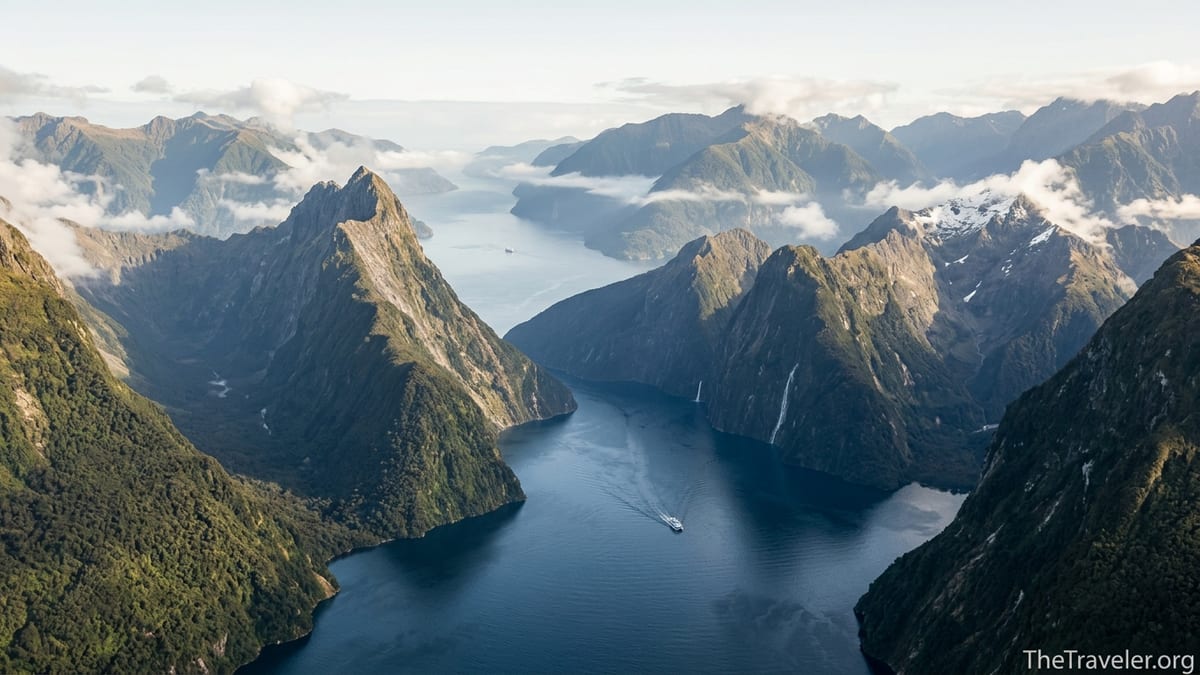
Milford Sound is New Zealand’s postcard fiord: sheer rock walls, the sharp pyramid of Mitre Peak rising almost straight from the water, and cruise boats gliding under curtains of spray from Stirling and Bowen Falls. It is compact, intensely dramatic and busy, with tour buses and rental cars arriving all day via the scenic Milford Road from Te Anau and Queenstown.
Doubtful Sound feels like stepping off the grid. It is longer, broader and more remote, with multiple side arms and a sense of wilderness that builds with every stage of the journey: road to Manapouri, boat across Lake Manapouri, coach over Wilmot Pass, then finally the fiord itself. On the water you are likely to see just one other vessel, usually operated by RealNZ, and long stretches of near silence.
In practical terms, Milford tends to be the first fiord most visitors see, and it works well as a classic bucket list day trip from Queenstown or Te Anau. Doubtful is more of a deep-dive wilderness experience that rewards travelers who can spare a full day or an overnight, and who do not mind paying more to avoid crowds.
If you have two or more days in Fiordland, many recent visitors report that doing both is ideal: Milford for the iconic scenery and road journey, Doubtful for wildlife, quiet and scale. But if you must choose, the comparison below will clarify which is better for your priorities.
Scenery & Scale: Iconic Drama vs Immersive Wilderness
Milford Sound delivers instant, concentrated drama. As you leave the terminal at Piopiotahi, Mitre Peak dominates the view and the fiord narrows into a dark corridor of cliffs. Standard nature cruises of around two hours run almost the full 16 kilometer length of the fiord to where it opens towards the Tasman Sea, often nosing under waterfalls and close to rock walls streaked with greenery. On a bright day the contrast of black rock, white water and deep-green forest is almost theatrical.
Doubtful Sound trades the single “wow” moment of Mitre Peak for a more layered, expansive landscape. The main fiord stretches for roughly 40 kilometers, with long, branching arms like Hall Arm and Crooked Arm. Cruises spend three hours or more on the water, moving through wide basins ringed by rounded peaks rather than vertical walls. On misty or rainy days, dozens of temporary waterfalls appear, and the sense is less of a corridor and more of a drowned mountain range extending in all directions.
For many photographers, Milford is the stronger choice if you want guaranteed poster images in almost any weather: the composition is built in, with Mitre Peak, Bowen Falls and the narrow channel serving as natural focal points. Doubtful, on the other hand, rewards patience and a wide lens. You get sweeping, layered ridgelines, low cloud hanging in bands across the slopes, and plenty of space to play with negative space and reflections.
In terms of “feeling small,” both fiords deliver, but in different ways. On Milford, the steepness of the walls and the proximity of other boats emphasize the vertical scale. In Doubtful, the wide expanses of water and long vistas emphasize horizontal distance and isolation. Travelers who compare both often describe Milford as visually sharper and more dramatic, Doubtful as more enveloping and meditative.
Wildlife, Atmosphere & Crowds on the Water
Both fiords sit within Fiordland National Park and share similar wildlife, including New Zealand fur seals hauled out on rock stacks near the Tasman Sea, occasional pods of bottlenose dolphins and, more rarely, Fiordland crested penguins in season. In practice, Doubtful Sound now has a reputation for more consistent wildlife sightings, in part because boat traffic is limited and vessels can linger quietly in different arms without jostling for space.
On a typical Milford Sound day cruise, you might share the water with several other large vessels and smaller nature or photography boats, especially in peak months from November to March and during midday departure windows. Operators like Southern Discoveries, RealNZ and Mitre Peak Cruises often run multiple sailings per day from the Milford terminal. The atmosphere is energetic, occasionally crowded at the railings, and you may have to move around the deck to avoid other passengers in your shots.
Doubtful Sound cruises usually see one main day boat on the water at a time, plus occasional overnight vessels. Because access is controlled by the Lake Manapouri and Wilmot Pass logistics, departures are fewer and passenger numbers per sailing are lower compared with Milford’s combined daily throughput. The result is a noticeably quieter, more contemplative experience. People spread out along the railings, guides encourage silence while the engines idle, and natural sounds like waterfalls and bird calls are easier to hear.
If avoiding crowds is a high priority, Doubtful almost always wins. Milford can still feel uncrowded if you choose early-morning or late-afternoon nature cruises, or smaller-vessel operators that cap numbers, but it will rarely feel as remote as Doubtful. For social travelers who enjoy chatting with other visitors and do not mind a busier boat, Milford’s atmosphere can actually be a plus.
Getting There: Road to Milford vs Lake & Pass to Doubtful
Milford Sound is the only South Island fiord you can reach directly by road. Most visitors base in Queenstown or Te Anau. From Queenstown, it is around 290 kilometers each way to Milford via Te Anau, with coach tours typically taking five to six hours in each direction including scenic stops. From Te Anau, the drive on State Highway 94 is about 120 kilometers, usually two to two and a half hours with photo breaks at Eglinton Valley, Mirror Lakes, and the Homer Tunnel area.
You can self-drive to Milford and join a cruise booked directly with an operator, or you can book a coach-and-cruise package from Queenstown or Te Anau. Current 2026 listings for small-group coach and cruise days from Queenstown often include hotel pickups, commentary along the Milford Road, and a two to two and a half hour nature cruise before returning late evening.
Doubtful Sound has no road access to the fiord itself. To reach it you first travel by road to Manapouri, around 20 minutes south of Te Anau or roughly two hours from Queenstown. From Manapouri’s Pearl Harbour, a 45-minute boat crosses Lake Manapouri to West Arm. From there, a coach takes about 45 minutes over Wilmot Pass, a remote, steep road built to service the Manapōuri Power Station. Only after this sequence do you board your Doubtful Sound vessel at Deep Cove.
Tour operators package these legs into single tickets, so you do not book each segment separately. From Queenstown, a Doubtful Sound day trip typically involves a pickup around 7 am and return between 7 and 9 pm, with around eight to ten hours of total travel and three hours or so on the fiord. From Te Anau or Manapouri, total tour times are usually closer to seven to eight hours. Travelers with motion sickness should keep in mind the mix of boat and bus segments, though operators provide indoor seating and stable catamarans to minimize discomfort.
Cruise Styles, Durations & Real-World Costs
Milford Sound offers the widest range of cruise styles and price points. As of the 2026 season, basic sightseeing cruises booked directly at the Milford terminal or online often start in the region of 85 to 120 New Zealand dollars per adult for a one and a half to two hour sailing from Milford itself, without transport. More premium nature cruises, with smaller boats, naturalist commentary and more time spent near waterfalls and wildlife, tend to sit in the 120 to 180 dollar range ex Milford.
Coach and cruise packages from Queenstown are significantly more expensive because of the five to six hours of driving each way. Current small-group coach and cruise days commonly fall around 250 to 320 dollars per adult, depending on group size, bus quality and inclusions like lunch or additional stops. From Te Anau, where drive times are shorter, combined coach and cruise pricing is usually lower than ex Queenstown options for similar boat products.
Doubtful Sound cruises are structurally more expensive because they bundle multiple transport legs and limit daily passenger numbers. A standard wilderness day trip from Manapouri that includes the Lake Manapouri cruise, Wilmot Pass coach and approximately three hours on Doubtful Sound typically runs in the 295 to 380 dollar range per adult in 2026, with seasonal variations. From Queenstown, where road transfers add cost and time, expect rates above 400 dollars per person for a full-day package.
Overnight options change the calculus further. Milford has occasional overnight cruises, but departures and vessel choice are more limited and often seasonal, with prices commonly running to several hundred dollars per person, including cabin accommodation and meals. Doubtful Sound is more strongly associated with overnight cruising, with purpose-built vessels offering twin-share cabins, buffet-style meals and kayaking or tender boat excursions. Prices for Doubtful overnight sailings are usually substantially higher than day trips, often in the high hundreds of dollars per person, and they sell out well in advance for peak months. Travelers frequently describe these overnights as a highlight of their entire New Zealand trip, particularly when bioluminescence, clear stars or extended dolphin encounters line up with the weather.
Total Time Investment & Itinerary Fit
From a time-planning perspective, Milford is more flexible. If you are already in Te Anau, a self-driven return trip to Milford with a midday cruise can be done in five to seven hours door to door, leaving room for short walks like the Chasm or Mirror Lakes along the way. From Queenstown, a Milford day trip is a very long day of 12 to 13 hours, but it remains feasible as a single headline excursion within a three or four night Queenstown stay.
Doubtful Sound demands more time per minute spent on the water. Even if you stay in Te Anau or Manapouri, you should plan on the better part of a full day for a wilderness cruise: morning check-in at Pearl Harbour, Lake Manapouri crossing, Wilmot Pass transfer, three hours on the fiord itself, and the entire journey in reverse. If you come from Queenstown and return there the same day, you will be in for a similar, or slightly longer, overall day than a Queenstown to Milford coach and cruise.
Because of that extra commitment, Doubtful Sound fits best into itineraries that already include at least one or two nights in Te Anau or Manapouri. Many travelers now structure Fiordland as a three-night block: arrive Te Anau, drive to Milford the next day for a cruise and road stops, then devote a full following day to Doubtful Sound. Others choose either Milford or Doubtful and free up time for hikes like the Key Summit Track or segments of the Kepler Track instead.
If your South Island trip is short and you are piecing together day trips from Queenstown, Milford is usually the more efficient use of time. If Fiordland is a central focus of your itinerary and you are happy to slow down around Te Anau, Doubtful becomes much more attractive.
Comfort, Weather & Seasonal Considerations
Fiordland is famously wet, and both Milford and Doubtful Sound receive high rainfall across the year. Rather than trying to avoid rain entirely, it is more realistic to plan for it and treat it as part of the experience. On rainy days, both fiords come alive with temporary waterfalls, mist and low cloud, and many travelers end up preferring their wet-weather cruises to the blue-sky days.
Milford can feel rougher on very windy days near the Tasman Sea, especially on smaller boats that venture all the way out to the heads. Doubtful’s wider basins and sheltered arms often provide calmer conditions once you reach the fiord, but remember that you also have two additional boat crossings on Lake Manapouri where weather can be felt. In winter, shorter daylight hours mean cooler, moodier conditions in both fiords and the possibility of snow on surrounding peaks, which can be stunning in photographs.
In summer high season, the main comfort difference is crowds. Milford’s terminal, parking areas and viewing points along the road can feel congested from late morning to mid-afternoon. Booking the earliest or latest cruise of the day, or traveling in shoulder seasons like October or April, helps mitigate this. Doubtful’s structured logistics naturally limit how many people are on each tour, so even in summer it rarely feels crowded in the same way, though popular dates for overnight cruises can still sell out months ahead.
For travelers prone to seasickness, both fiords are usually manageable since most of the cruise time is in sheltered waters. If you are sensitive, choose larger, more stable catamarans, sit near the middle of the vessel, and consider taking motion sickness precautions before departure, especially for the Lake Manapouri crossing and any section that approaches open sea.
Who Should Choose Which Fiord?
For first-time visitors to New Zealand, Milford Sound is generally the better first fiord. It is easier to reach by road via Te Anau, commonly visited on a day trip from Queenstown, and supported by multiple cruise operators across a range of price points. You will see the classic scenes that appear in brochures, from Mitre Peak to Stirling Falls, and you can combine the boat with memorable stops along the Milford Road. If you decide to add Doubtful later, so much the better, but you will not feel that you missed the country’s headline fiord.
Photographers who love strong, graphic compositions and iconic subjects should also lean toward Milford, especially if they only have time for one cruise. Sunrise and sunset light on Mitre Peak, the play of low cloud around the pyramidal peaks, and the tight framing of boats dwarfed by vertical walls are all easier to capture here. That said, landscape photographers who prefer wide, layered vistas and moody minimalism often end up falling harder for Doubtful’s broad basins and misty arms, particularly on longer overnight itineraries where there is more time to work different angles.
Wildlife-focused travelers, or those who care most about a quiet, immersive atmosphere, will usually get more out of Doubtful Sound. The lower daily boat traffic, longer cruise time and multiple arms create more opportunities to linger with dolphins, seals or penguins without rushing. The structured silence moments, when engines are cut and guides invite everyone to stand quietly, are often singled out in recent reviews as a highlight.
For people with limited time or a tighter budget, Milford is the pragmatic choice. A self-drive day from Te Anau with a reasonably priced nature cruise is one of the best value high-impact experiences in the country. If you are traveling with kids or family members who are not excited about very early departures and long transports, the simpler Milford logistics will also feel more manageable than a Doubtful day starting and ending in Queenstown.
The Takeaway
If you picture New Zealand’s South Island and see a single sharp peak rising from dark water, you are thinking of Milford Sound. It is the easier fiord to reach, the more affordable to cruise, and the one that fits most smoothly into classic Queenstown and Te Anau itineraries. For many visitors, especially on their first trip, a well-timed Milford road-and-cruise day delivers everything they hoped Fiordland would be.
Doubtful Sound, by contrast, is all about depth: more steps to get there, more time on the water, more space, and more quiet. It costs more and demands a longer day, but rewards that investment with a stronger sense of wilderness and a higher chance of a tranquil, uncrowded experience. Overnight cruises here, while expensive, are frequently described as the single most memorable night of a New Zealand journey.
For photographers, the decision hinges on style: Milford for bold, instantly recognizable scenes and easy compositions, Doubtful for subtle, expansive landscapes that reward patience. For wildlife lovers and travelers prioritizing remoteness and atmosphere, Doubtful has a clear edge. For anyone short on time or money, or simply wanting to tick off the country’s most iconic fiord, Milford remains the smart default.
If you can, though, plan Fiordland so you do not have to choose. Drive the Milford Road from Te Anau for a classic day cruise beneath Mitre Peak, then devote another day or an overnight to crossing Lake Manapouri and gliding deep into Doubtful Sound’s arms. Experiencing both sides of Fiordland’s character – the instantly famous and the quietly remote – is what turns a South Island trip into something you will remember for decades.
FAQ
Q1. Is Milford Sound or Doubtful Sound better for a first-time visitor?
Milford Sound is usually better for first-timers because it is easier to reach by road via Te Anau, commonly visited from Queenstown, and offers the most iconic, instantly recognizable fiord scenery.
Q2. Which fiord is more expensive to visit?
Doubtful Sound is generally more expensive, as day trips bundle the Lake Manapouri boat, Wilmot Pass coach and a longer fiord cruise, while Milford offers cheaper ex-Milford cruises and more varied price points.
Q3. How long does a Milford Sound day trip from Queenstown take?
A typical Milford Sound coach and cruise from Queenstown takes around 12 to 13 hours door to door, with five to six hours of scenic driving each way and a two to two and a half hour cruise.
Q4. How long does a Doubtful Sound day trip from Queenstown take?
A Doubtful Sound day trip from Queenstown usually runs around 12 to 13 hours, including road transfers to Manapouri, the Lake Manapouri crossing, Wilmot Pass coach and about three hours on the fiord.
Q5. Which destination is better if I am on a tight budget?
If you have a limited budget, Milford Sound is the better choice. Ex-Milford cruises are significantly cheaper than Doubtful day trips, and even coach-and-cruise packages from Queenstown often undercut Doubtful’s prices.
Q6. Which fiord offers better wildlife viewing?
Both fiords have seals, dolphins and seasonal penguins, but Doubtful Sound often offers better overall wildlife viewing thanks to longer cruise times, quieter conditions and fewer boats on the water.
Q7. Is it worth doing an overnight cruise, and if so, where?
Overnight cruises are widely considered worth the cost if your budget allows. Doubtful Sound is particularly renowned for its overnights, which combine wilderness, stargazing and extended time for wildlife and photography.
Q8. Can I self-drive to both Milford and Doubtful Sound?
You can self-drive to Milford Sound via the road from Te Anau, but you cannot drive to Doubtful Sound itself. For Doubtful you must join an organized trip that includes the Lake Manapouri boat and Wilmot Pass transfer.
Q9. Which fiord should I choose if I have only one day in Fiordland?
If you only have one day in Fiordland, Milford Sound is usually the more efficient and cost-effective option, especially if you are starting from Queenstown or want to combine the cruise with scenic road stops.
Q10. Which is better if I prioritize remoteness and avoiding crowds?
Doubtful Sound is better for remoteness and low crowd levels. Access is controlled through organized tours, there are fewer daily departures, and you are likely to see far fewer boats and people than in Milford.