


I’ve done Martinborough as a DIY day trip from Wellington before: a hire car, a nominated driver, a strict head count of tasting pours, and the constant little mental math of “Are we still OK to drive?” This time, I booked a guided Wellington-to-Martinborough wine day specifically to answer one question honestly: what does a tour add beyond the tastings themselves?
Booking, pickup zones, and what I chose
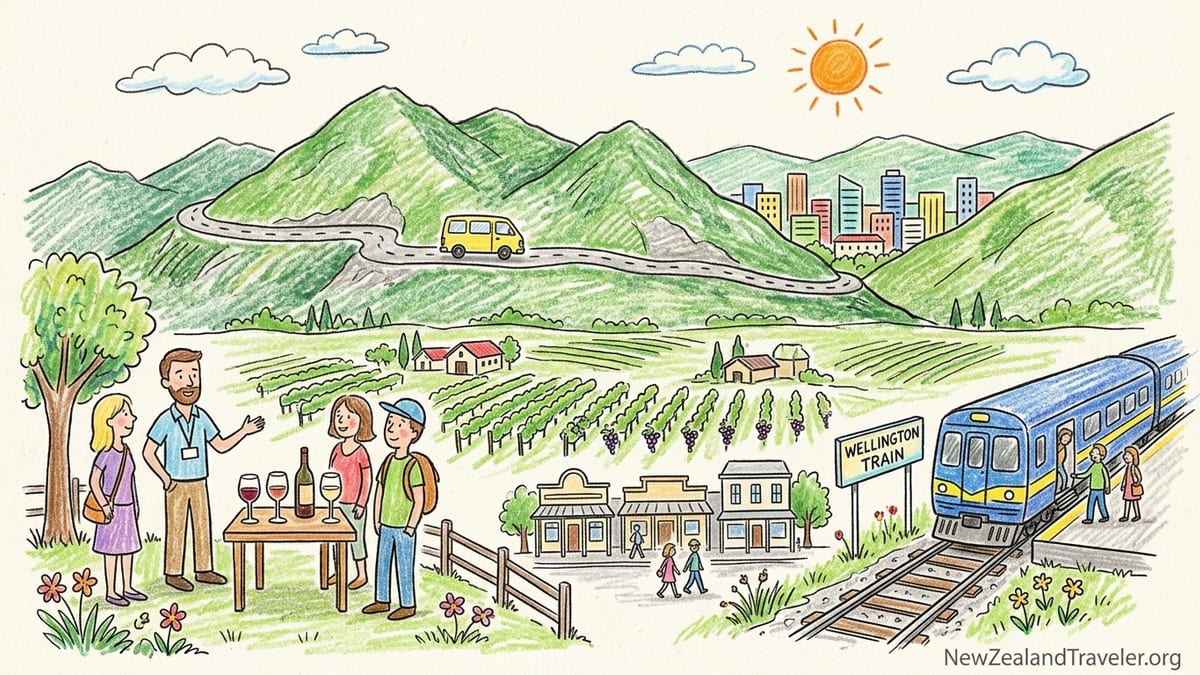
I booked Martinborough Guided Tours’ “Classic Wine Day” because the logistics are unusually clear for a wine region day trip. The tour is built around a Wellington pickup window (rather than a single minute), three winery tastings included in the ticket price, a lunch stop where you buy your own food, a short wander in Greytown, and then a handoff to the Wairarapa train line for the ride back into Wellington.
Pickup matters in Wellington, because not every operator will swing through every suburb. For this day, the pickup zone was Wellington CBD hotels within the set collection window (the company publishes a 9:15am to 9:45am pickup window for Wellington hotels), with an alternative meet-up if you prefer to start in Martinborough. That window format sounds small, but it’s a real quality-of-life improvement: instead of hovering in a lobby at 9:27am and worrying you missed the van, you’re told up front it’s a rolling collection.
I stayed in the central city and opted for hotel pickup, which meant no morning train platform scramble and no guessing whether I’d chosen the “right” taxi stand. If you’re not in the CBD, this is where you should slow down and read terms before you click Book: some operators advertise pickup from selected central hotels, the visitor i-SITE area, or cruise terminal zones, while others keep pickups to core CBD only. In my case, being in the central city made the day start with coffee in hand rather than map-in-hand.
Before confirming, I also checked cancellation terms because weather, wind, and road conditions are not theoretical on the Remutaka Range. Policies vary a lot by operator: some offer full refunds if you cancel at least 24 hours before departure, while other experiences require more notice or hold a deposit. If you’re travelling in shoulder season, flexible cancellation is not a luxury feature, it’s trip insurance.
Departure time, first impressions, and the Remutaka Range drive
My pickup happened within the published morning window, and the first thing I noticed was how quickly the “city” feeling falls away once you’re out of the CBD. The route heads through the Hutt Valley, then climbs into the Remutaka Range. If you’ve never driven it yourself, the hill road can be a concentration test: it’s scenic, it can be windy, and it demands attention. As a passenger, it becomes what it should be: a rolling, panoramic prelude to a wine day.
The vehicle was a modern small-group van rather than a big coach. That’s not just a comfort detail. In a smaller vehicle, you actually hear the guide, you don’t lose time loading and unloading 40 people, and the day keeps moving without feeling rushed. The seats were comfortable enough for the hill section, and I appreciated the little practicalities: good air conditioning, room for day bags, and no one wedged into a back corner for hours.
We paused at viewpoints on the way over, including a stop around the Remutaka summit area that made the drive feel like part of the experience rather than a commute. It also served a practical purpose: a short walk, fresh air, and a mental reset before the first tasting. On a self-drive day, you often skip these stops because you’re watching the clock and thinking about winery opening hours.
As we dropped into Wairarapa, the scenery shifted from hill country to open valley. The guide’s commentary made the landscape legible: why the region feels so different from Wellington despite being close, why Martinborough developed as a wine village, and how small distances between cellar doors change the rhythm of a tasting day.
The group size, the guide, and why the tone matters
Our group felt deliberately small. That matters in Martinborough because tastings are often hosted in intimate cellar door rooms, and it’s easier to stay on good terms with staff when you arrive as a tidy group instead of a wall of people. It also changes the social side: you can chat with fellow travellers without committing to an all-day forced-fun dynamic.
The guide set expectations early: three winery tastings were included; lunch would be a stop where we’d buy our own; water would be available; and the day would finish with a train connection back to Wellington rather than a long late-afternoon drive in traffic. That last point is a big deal. The best part of a guided wine day is not being “safe.” It’s not having to spend the final hour of the afternoon switching your brain back into driving mode right when the wines have started to blur into one long, warm glow.
I also appreciated the pacing discipline. In Martinborough, it’s easy to try to do too much: add an extra cellar door, squeeze in an olive oil tasting, chase one more Pinot Noir recommendation. A good guide protects you from your own ambition. The day had enough structure to keep us on schedule, and enough flexibility to feel unhurried once we arrived.
One more subtle benefit: the guide acted as a buffer. When you’re self-driving, you’re the one negotiating the awkward bits like “Do we have time?” or “Can we fit six people in without a booking?” On a guided tour, those questions are handled quietly and professionally, which leaves you free to focus on what you came for: tasting and learning.
The exact wineries we visited, and how the tastings were run
We visited three Martinborough wineries, with tasting fees included as part of the day’s ticket. The three-stop structure is, in my view, the sweet spot for a day trip from Wellington: enough variety to understand the region, but not so much that you’re speed-drinking.
Our first winery stop set the tone with a hosted cellar door tasting: a short introduction, a guided flight, and time for questions. The pours were measured, consistent, and paced like a conversation rather than a transaction. I’m deliberately describing the style rather than pretending I can guarantee the same staff member, lineup, or exact pour list for every future departure. In Martinborough, availability and staffing can vary by day and season, and most reputable operators acknowledge that winery lineups can change.
The second stop leaned more into comparative tasting. This is where the guided format started to pay dividends: the guide encouraged us to taste with intention rather than just preference, talking through what to notice between similar varietals across different producers. If you’re used to doing tastings alone, you’ll recognize the difference immediately. Alone, you taste and decide what you like. In a guided group, you taste and start to understand why you like it.
The third winery stop was the most relaxed. By then, people had warmed up, questions got better, and the group dynamic had settled into that pleasant wine-tour equilibrium: talkative but not loud, curious but not demanding. It also helped that the day wasn’t a marathon. Three tastings let the experience stay enjoyable without tipping into palate fatigue.
Across the three stops, the format stayed consistent: we tasted in cellar door spaces, learned about what was in the glass, and had time to purchase bottles if we wanted. If you’re hoping to target a specific “must-visit” cellar door, my advice is simple: ask before booking whether a particular winery is likely, and be prepared for substitutions. The region’s cellar doors sometimes have private events, seasonal hours, or limited capacity, and a good operator will plan around that rather than force a subpar experience.
Lunch, water, and how the day stayed comfortable
Lunch was a planned stop, but it wasn’t included in the ticket. That setup worked well for our group because it let people spend according to appetite and budget rather than locking everyone into a fixed set menu. In practical terms, it meant you could do anything from a light platter to a full sit-down meal, depending on the venue and what you felt like after two tastings.
What I valued most was how the guide handled the “in-between” needs that can derail a self-planned day: water reminders, timing bathroom breaks, and making sure no one was rushing a meal because someone else wanted to squeeze in another cellar door. Water was available during the day, and it was treated as part of the experience, not an optional add-on you have to request like a nuisance.
Pacing also included sober pacing. This is where guided tours quietly outperform self-driving. When you self-drive, the group tends to split: the designated driver stays cautious and slightly left out, while everyone else pushes for “one more.” On a guided day, everyone gets to participate equally, and the guide can gently keep the tasting tempo sensible. You end up tasting better, not just more.
After lunch, we weren’t hustled straight into another tasting. We had a brief reset that made the afternoon feel like a second act rather than a continuation of the morning. That small breathing space kept the day from becoming a blur of glassware and shop counters.
Greytown break, train handoff, and returning to Wellington
Instead of driving straight back over the hill, the day finished with time in Greytown followed by a drop at Woodside Station for the train back to Wellington. That detail is more than a cute itinerary flourish. It’s a structural decision that turns the return leg into decompression time.
Greytown gave the day a change of texture: a chance to stretch the legs, grab a coffee, and shift gears from tasting mode to “small town afternoon” mode. If you’ve ever tried to self-drive Martinborough and then fight the late-afternoon return traffic toward Wellington, you know that the day can end in a slightly frazzled mood. Here, the end felt calmer and more intentional.
At the station, the guide handled the timing, which removed another subtle stress point. Connecting to a specific train departure can feel tight if you’re doing it alone and you’re not sure about travel times. With the tour, the schedule was built around that connection, so we arrived with enough buffer to feel relaxed.
The train ride back into Wellington was, honestly, the perfect ending. After a wine day, you don’t want to be the person staring at the road, calculating corners, and wondering whether the group pushed your comfort level. You want to look out the window, chat softly, maybe scroll through photos of vineyard rows and tasting rooms, and let the day settle. Rolling into Wellington by rail felt safer, easier, and more civilized than a tired late drive over the range.
The Takeaway
A guided Wellington-to-Martinborough wine day added two things I can’t replicate by self-driving: equal participation and a genuinely relaxing finish. Equal participation means no one is stuck being the responsible one while everyone else tastes freely. A relaxing finish means your last hour isn’t spent forcing your brain back into “drive carefully over the hill” mode. Even if you trust your driving, it’s simply not the mood you want after a tasting day.
Compared with cycling, the guided day is easier and more weather-proof, especially if you’re short on time. Cycling in Martinborough is wonderful, and local operators do offer self-guided and guided options among cellar doors, but cycling is still effort and still logistics. On a guided van-and-train day, you trade the romantic vineyard ride for convenience and safety, and for many visitors that’s the right trade, particularly when you’re sampling alcohol across multiple stops.
The biggest surprise was how much the structure improved the tasting itself. Three tastings, properly paced, with water, lunch breathing room, and a plan for the return, felt more like a curated wine day than a checklist. In other words: less hustle, better tasting.
Finally, I understand why WellingtonNZ encourages wine-focused visitors to consider staying in Martinborough rather than driving back. If wine is the priority, an overnight turns a day trip into a real escape: you can spread tastings across two half-days, book a long winery lunch without watching the clock, and enjoy dinner in the village without a return-drive deadline. But if you only have one day, this guided format is the closest thing to the overnight feeling I’ve found, because it removes the hardest part of the DIY plan: getting home after drinking.
FAQ
Q1. How long is a Wellington to Martinborough guided wine tour day?
Most Wellington-based day trips run as a full day. Some providers also sell shorter options around 5.5 hours, while others structure a roughly eight-hour day that finishes with a train return to Wellington.
Q2. Where do Wellington pickups usually happen?
Common pickup points include Wellington CBD hotels and central meeting points near the visitor i-SITE and convention centre area. Some tours also offer pickup at the cruise terminal on cruise days or set meeting points like Wellington Railway Station.
Q3. How many wineries do guided day tours typically visit?
A common format is three wineries with tastings included. Some Martinborough-based operators can run longer itineraries that visit more vineyards, especially for private or full-day touring that starts in the Wairarapa.
Q4. Are tasting fees included, or do you pay at each cellar door?
It depends on the operator and product. Many guided day tours bundle tasting fees into the ticket price for the included winery stops, while other experiences may exclude tastings or treat them as pay-as-you-go.
Q5. Is lunch included on a guided Martinborough day tour?
Some tours include a vineyard lunch, but many popular small-group day trips make lunch an at-your-own-expense stop so guests can choose what and how much to eat.
Q6. Do tours provide water during the day?
Quality operators typically make water available and encourage guests to hydrate between tastings. It’s still smart to bring your own bottle, especially in warmer months.
Q7. What are common cancellation terms for wine day tours?
Policies vary. Some operators refund in full with at least 24 hours’ notice, while others require more notice or keep booking fees or deposits. Always check the specific policy at checkout before confirming.
Q8. Is it better to self-drive to Martinborough or take a guided tour?
If you’re planning to taste at multiple wineries, a guided tour removes the need for a designated driver and avoids the uncomfortable question of driving after drinking. Self-driving can work for a more food-and-scenery focused day where tastings are minimal and tightly managed.
Q9. Can you do Martinborough by bike instead of a guided van tour?
Yes. Martinborough is known for easy winery-to-winery cycling, and local operators offer both guided and self-guided cycling options. It’s best on good-weather days and when you’re comfortable riding after small tastings.
Q10. Is staying overnight in Martinborough worth it?
If wine is a main reason for your trip, an overnight can transform the experience: more time, less rushing, and no return-drive deadline. It also lets you enjoy dinner in the village and a slower start the next morning.