


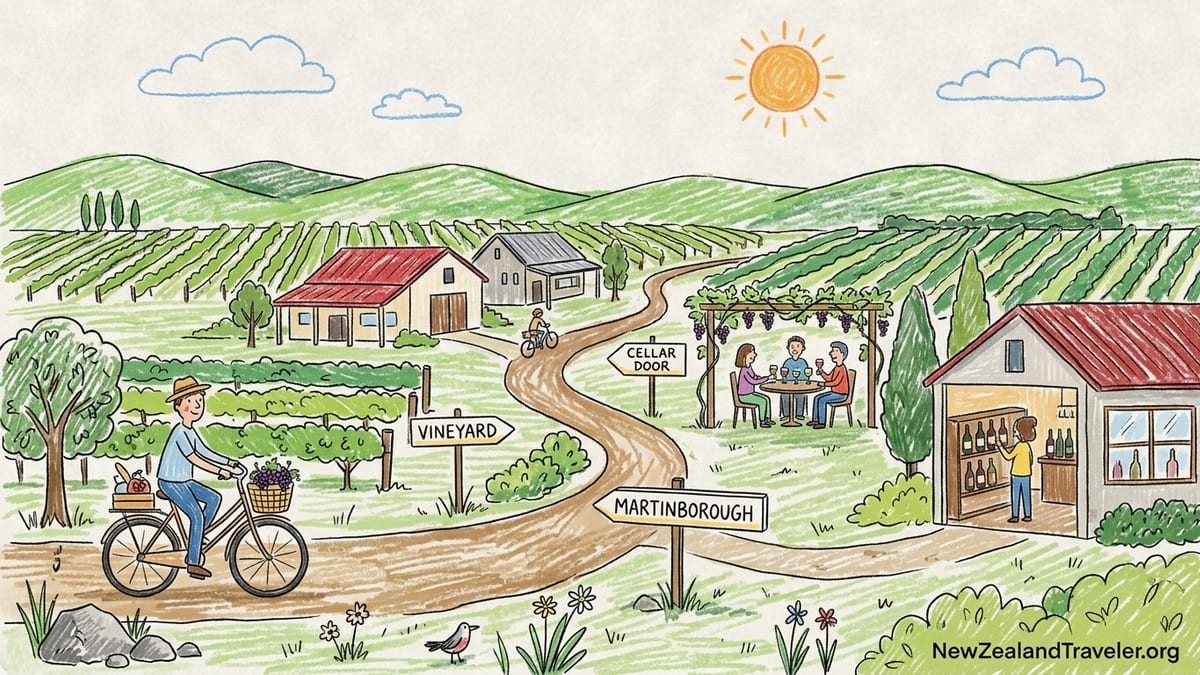
Martinborough is the rare wine town where the day can unfold at bicycle speed: a flat grid of streets, a compact village center, and cellar doors scattered along quiet lanes just outside the square. WellingtonNZ currently describes it as a compact village with around 20 cellar doors, and its current winery guide spotlights names like The Runholder, Poppies, Tirohana, Luna, Palliser, and Nga Waka. That compactness is exactly what makes the place unforgettable when you travel by taste instead of reputation: you remember the crunch of gravel under your tyres, the smell of barrel halls, the way a host pours a second splash because you asked a real question, and the one Pinot Noir that makes you stop talking mid-sip.
Before You Taste: The Martinborough Rhythm (And How I Move Through It)
When I return to Martinborough, I plan the day around how I want it to feel, not how many wineries I can tick off. If I want a focused tasting day, I book one serious appointment and keep the rest light. If I want a relaxed afternoon, I cycle and stop where the welcome is warm and the food is built for lingering. Martinborough makes both styles easy because many cellar doors sit close enough to string together without a car, but a few of the most rigorous tasting rooms are better reached by driving or booking ahead.
My default is a morning arrival into the village, a quick coffee near the square, then a bike hire and a loop that keeps me out of traffic and off tight schedules. On days when I’m chasing a structured flight or a specific producer, I drive and commit to one address at a time so I’m not constantly checking the clock. Either way, I try to keep tastings to a pace where I can actually remember what I loved, because Martinborough Pinot Noir can be subtle, and the best bottles deserve attention.
One important note before we get into the cellar doors themselves: some venues in this region run on seasonal hours, appointment-only systems, or set tasting formats. If you have one winery you care deeply about, treat it like a reservation dinner, not a casual drop-in. I’ve learned the hard way that Martinborough rewards intention.
The Runholder: The Best First Stop When You Want Options
I reached The Runholder by bike from Martinborough village, an easy pedal that felt deliberately designed for visitors: straight roads, vineyard edges, and that sense of moving through a working landscape rather than just driving past it. WellingtonNZ’s current Wairarapa winery guide highlights The Runholder, and it makes sense as a modern “one-stop” base because it brings together wine and gin in one place and is set up for people arriving in different modes: cyclists, drivers, and groups trying to please everyone.
The tasting format here is refreshingly practical: self-guided wine and gin tasting trays rather than a formal seated, host-led lecture. That matters if you’re traveling with mixed levels of wine interest, because you can keep it casual without sacrificing quality. The flight that sticks in my mind focused on Te Kairanga labels, including their Runholder and John Martin bottlings in Chardonnay and Pinot Noir, poured in a way that encourages side-by-side comparison. I spent a generous hour here because the space invites you to slow down and because you’re not rushed through a script.
Staff interaction felt efficient but friendly: the kind of service that leaves room for your own preferences. When I asked for guidance, I didn’t get a generic “this one is popular” answer. Instead, I got a quick, useful steer on how to taste the Pinot Noir pair as a contrast, and I appreciated that the team let the wines do most of the talking. The wine that genuinely stood out for me was one of the Pinot Noirs in that Runholder versus John Martin comparison, because the difference in texture and spice felt obvious even without a long explanation.
Best for: first-time visitors who want an easy on-ramp, groups with varied tastes, and anyone who likes to pair a proper Pinot tasting with the option of a gin experience in the same stop.
Poppies Martinborough: The Cellar Door Where Lunch Becomes the Memory
I drove to Poppies on the day I wanted lunch to anchor the itinerary, because once you sit down here, the right move is to stay a while. WellingtonNZ’s current guide highlights Poppies, and it’s the kind of place where that recommendation translates into a real traveler payoff: you arrive to a welcoming tasting room atmosphere, then realize you can comfortably make it your midday base without feeling like you’re blocking a bar stool.
My tasting experience at Poppies is tied to a specific moment: being guided through a lineup that included styles you actually want in Martinborough, not just a token white before the reds. At Poppies, their own event listings make it clear that their tastings naturally feature a spread like Rosé, Pinot Gris, Pinot Noir, Syrah, and Tempranillo. I’ve tasted through a similar arc here, and what made it memorable was the way the host talked about the wines as if they were meant to be enjoyed at a table, not just assessed and scored. It felt personal in tone, more like hospitality than a seminar.
For food, I ordered a lunch designed for sharing so the wine could keep pace, and I remember the pacing more than any single “dish of the day”: plates arriving steadily, glasses refreshed at the right moment, and staff who seemed practiced at reading whether you wanted more information or less. I stayed roughly two hours, long enough for the afternoon light to shift and for the Pinot Noir to go from “tasting sample” to “this is a bottle I’d happily buy.”
The wine that stood out was a Pinot Noir that felt unmistakably Martinborough in its savory edge, the kind of red that makes you want food, not just a tasting note. Poppies, for me, is less about chasing the rarest pour and more about the complete experience: you taste, you eat, you exhale, and you leave with a clear sense of what you enjoyed.
Best for: lunch, relaxed tasting with a meal, and travelers who want warmth and generosity in the experience rather than a strict, technical format.
Palliser Estate: A Serious Tasting Day That Still Feels Welcoming
I drove to Palliser Estate when I wanted a structured, “let’s pay attention” kind of visit. WellingtonNZ’s current guide highlights Palliser, and it’s a cornerstone stop if you want Martinborough with a slightly more expansive, polished cellar-door operation. Palliser’s own booking guidance recommends reserving tastings or lunch, particularly on weekends, which matches the vibe: this is a place that can get busy, and the best experience comes when you treat it like a planned appointment rather than a pop-in.
My most vivid memory at Palliser is the way staff guided the tasting with just enough context to sharpen what I was sensing in the glass. The format I encountered leaned toward hosted, paced pours rather than a tray you manage yourself. When you’re tasting Pinot Noir, that pacing matters, because the wine changes quickly in the glass, and a host who knows when to pause can help you catch the shift from bright fruit to spice and earth.
I stayed around 60 to 90 minutes, long enough to feel like I’d properly tasted rather than sampled. The wine that stood out for me was a Pinot Noir poured with the confidence of a house that has done this for a long time: not showy, but controlled, with the kind of structure that makes you think about cellaring even if you’re traveling with a suitcase and a baggage limit.
Best for: serious tasting with guidance, Pinot Noir-focused travelers, and anyone who prefers a more formal cellar-door cadence without losing warmth.
Nga Waka: The Best “Modern Martinborough” Cellar Door For a Focused Flight
I visited Nga Waka after their newer cellar door era, and it felt like the region leaning confidently into a contemporary hospitality style. I drove here, partly because I wanted the freedom to spend time without worrying about weather turning on a bike ride. Nga Waka’s cellar door is on Kitchener Street in town, which makes it convenient, but the experience itself is what stayed with me: a guided tasting focus that frames the wines through place and people rather than just varietals.
On the day I visited, I did a guided tasting that emphasized current releases, and the staff were the kind who can be both friendly and precise. There’s also the option to drop in for a walk-in style tasting of the full lineup, and I like that dual approach because it serves both the spontaneous traveler and the planner. I spent about an hour, and the best part was the sense that the host was responding to what I was tasting, not just working through a memorized set of descriptors.
What made Nga Waka feel distinct was the way the tasting connected wines to vineyard identity. Even if you don’t memorize names of blocks or soils, you can feel the intent when a winery treats Martinborough as a set of nuanced sites rather than a single flavor profile. Pinot Noir featured naturally in my tasting, but I also remember being surprised by how compelling the whites were when poured with equal seriousness.
The standout wine for me was a Pinot Noir that balanced perfume with savory depth, the kind of glass that makes you slow down and stop scanning the room. It felt less like “a regional postcard” and more like a specific voice.
Best for: travelers who want a modern, guided experience, people who like the story of place, and anyone wanting a focused flight that still feels relaxed.
Schubert: The Small, Cozy Tasting That Rewards Pinot Noir Curiosity
I drove out to Schubert because I wanted a quieter, more intimate cellar door, the kind where a tasting feels like a conversation. Schubert’s own cellar door information emphasizes a guided selection with staff introducing visitors to their history, organic vineyard practices, and winemaking techniques. The setup matched that promise. The room felt cozy rather than grand, and that intimacy changed the energy: you listen more carefully, you ask more questions, and you taste more thoughtfully.
Here, the tasting format was guided and deliberate. Schubert notes a nominal NZ$15 charge for a full tasting, waived with bottle purchase, and I actually like seeing a clear fee structure at smaller places because it sets expectations and keeps the focus on people who genuinely want to taste. I spent roughly 45 minutes to an hour, and it never felt rushed.
Staff interaction was the highlight: friendly, knowledgeable, and willing to go past surface-level notes. I remember asking a question about what “organic practices” meant in their specific context and getting an answer that felt grounded in day-to-day decisions rather than marketing language. Pinot Noir was central to my visit, and the standout wine was one that felt both lifted and structured, with a savory undercurrent that made it feel built for food.
Best for: serious tasters who like quiet focus, Pinot Noir travelers who want a more personal experience, and visitors who prefer a guided conversation over a bustling bar.
Places I Researched (But Didn’t Visit This Time): Ata Rangi, Escarpment, Luna, Tirohana
I’m careful about not turning “I’ve heard it’s great” into a recommendation. There are cellar doors in Martinborough that are genuinely famous, and they appear in official guides and regional roundups for a reason, but if I didn’t taste there on this trip, I won’t pretend I did. Still, these are worth knowing about because they shape how many people plan a Martinborough weekend, and their published visitor information gives you a realistic idea of what to expect.
Ata Rangi is one I researched closely but did not visit on this run. Their own cellar door notes emphasize knowledge-sharing and tasting, with no food offering on site. That makes it a strong candidate when your priority is a serious tasting rather than lunch, and it’s also a useful planning cue: eat elsewhere before or after so you can stay focused on the wine without getting hungry halfway through a flight.
Escarpment is another top-tier name I researched but didn’t personally revisit this time. Their tasting room is located on Te Muna Road, a short drive from the village, and their booking information signals a more appointment-driven, structured experience. If your Martinborough dream day is “one deeply focused tasting and then one long lunch,” Escarpment often fits into the “deeply focused” slot.
Luna Estate and Tirohana Estate both sit in the category of “plan for the meal as much as the pour.” WellingtonNZ’s current guide highlights both. Luna’s cellar door messaging leans welcoming, whether you’re stopping by briefly or settling in, while Tirohana positions itself as a boutique vineyard with an on-site restaurant and tasting, open seven days a week. Tirohana also publicly lists a simple $5 tasting experience for three wines, with the fee waived when you buy bottles, which is useful for travelers who want clarity before they arrive.
Best for: Ata Rangi for tasting-only purists, Escarpment for appointment-level serious wine travelers, and Luna or Tirohana for visitors who want wine and food in one place without juggling logistics.
The Takeaway
If you want Martinborough in its most memorable form, don’t build your day around brand names. Build it around experiences: one place where you taste seriously, one place where you eat well, and one place where you can be spontaneous. For me, that usually looks like a focused flight at Palliser or Nga Waka, a long lunch at Poppies, and a flexible first stop like The Runholder that works whether you’re cycling, herding a group, or just arriving slightly late and still wanting a great glass.
The cellar doors I still remember aren’t the ones with the most hype. They’re the ones where a specific pour made me pause, where the host treated questions with respect, and where the setting matched the wine. In Martinborough, Pinot Noir earns its reputation not through grand statements but through small, repeated moments: a perfume that opens in the glass, a savory finish that begs for food, and the quiet confidence of a place that knows exactly what it is.
If you’re traveling with first-timers, start with convenience and comfort, then add one serious tasting as the “anchor.” If you’re traveling as a Pinot Noir devotee, reverse that: lock in the serious tasting first, then let lunch and casual stops fill the rest of the day. Either way, leave space in the schedule, because the best glass is often the one you weren’t rushing to drink.
FAQ
Q1. Is Martinborough easy to explore without a car?
Yes. The village is compact and many cellar doors are close enough to reach by walking or cycling, especially those near the town center.
Q2. Which cellar door is best for first-time visitors who want variety?
The Runholder is a strong first stop because it offers flexible, self-guided tasting trays and a mix of wine and gin options in one venue.
Q3. Where should I go if I want lunch to be the centerpiece?
Poppies is a great choice if you want a long, unrushed lunch where wine tasting naturally folds into the meal.
Q4. Which cellar door felt most “serious” for tasting Pinot Noir?
Palliser Estate is a strong pick for a more structured tasting day, especially if you book ahead and want guided pacing.
Q5. Is there a modern, guided tasting experience in the village itself?
Nga Waka offers guided tastings and also welcomes walk-ins for tastings of current releases, making it an easy in-town option.
Q6. Are tasting fees common in Martinborough?
They vary by cellar door. For example, Schubert lists a NZ$15 tasting charge that is waived if you purchase bottles.
Q7. Can I rely on walk-ins, or should I book?
For popular venues and weekends, booking is the safer choice. Some wineries explicitly recommend reserving tastings or lunch to avoid missing out.
Q8. Which places should I prioritize if I’m cycling?
Choose venues close to the village and those with flexible formats. The Runholder is well-suited to cyclists, and in-town options like Nga Waka reduce travel friction.
Q9. Are there notable wineries that don’t offer food?
Yes. Ata Rangi notes that its cellar door focuses on tasting and does not have a food offering, so plan meals elsewhere.
Q10. What’s the best way to structure a one-day Martinborough itinerary?
Anchor the day with one serious tasting, choose one winery for a long lunch, and leave time for a casual stop where you can simply order a glass and relax.