


Just an hour north of Wellington, predator-free Kāpiti Island offers one of New Zealand’s most rewarding wildlife experiences, from easy day walks alive with birdsong to unforgettable overnight kiwi-spotting adventures. In 2026, visitors can choose between self-guided ferry trips, fully guided day tours and all-inclusive overnight stays, all departing by boat from Paraparaumu Beach. This guide explains how access works, what to expect from each style of trip, typical prices and how to decide how much to spend for the experience you want.
Understanding Kāpiti Island and How Access Works
Kāpiti Island is a protected nature reserve, carefully managed to safeguard rare native birds and regenerating forest. Visitor numbers are capped each day and overnight stays are only possible at a single privately operated lodge at the northern end of the island. Independent walking is allowed on designated tracks, but all access must be arranged in advance with a licensed operator who coordinates your permits and boat transport.
In 2026, Kāpiti Island Nature Tours is the primary operator handling most public trips, including self-guided eco-experience ferries, classic guided day tours and overnight kiwi-spotting packages. Boats run from the Kapiti Boating Club area on Paraparaumu Beach, crossing the Rauoterangi Channel to either the southern landing at Rangatira or the northern landing at Waiorua Bay. On most itineraries, your chosen tour type determines which part of the island you visit and how long you can stay.
Because numbers are controlled and weather often dictates sailings, you cannot simply turn up at Paraparaumu Beach and expect to board a boat. Bookings are essential, and operators will confirm sailing status on the morning of departure. On days with strong winds or large swells, the crossing is sometimes delayed, rescheduled or cancelled, so it is wise to keep surrounding travel plans flexible, especially in winter and early spring.
All options, from the cheapest self-guided ticket to the most comprehensive overnight stay, include your Department of Conservation permit, return ferry and safety briefing. The key differences lie in whether you have a guide for part or all of the day, how deeply you tap into Māori cultural narratives, whether meals are included and whether you stay after dark for kiwi spotting.
Boat Departures From Paraparaumu Beach
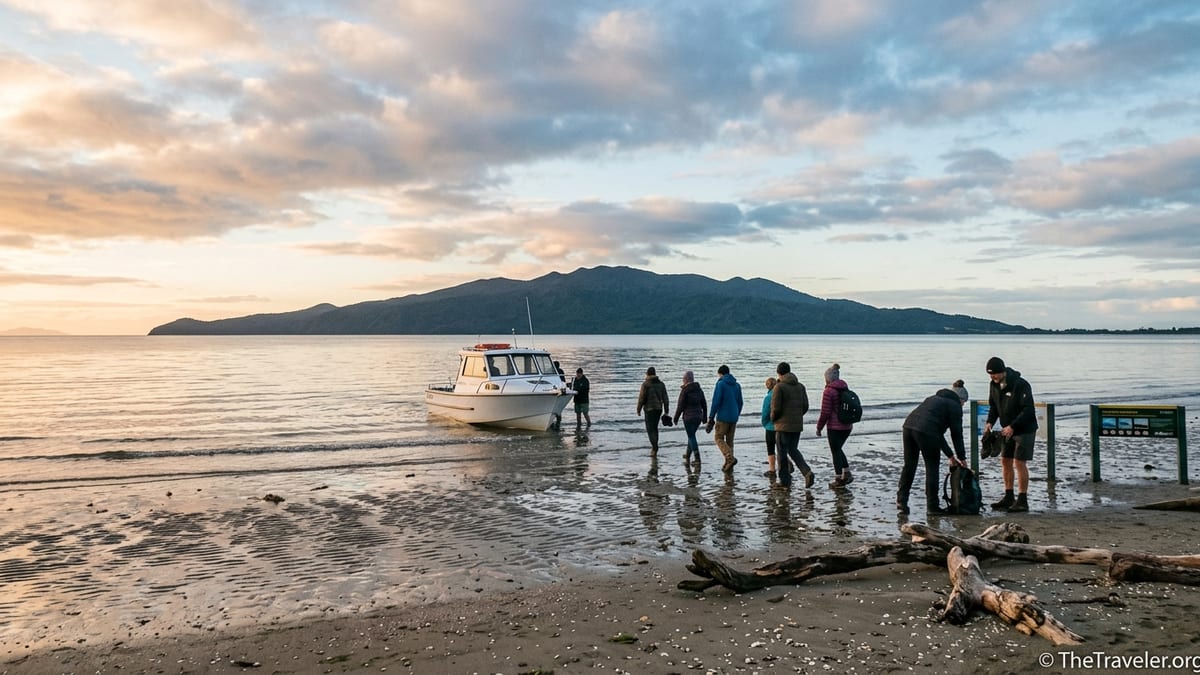
All standard Kāpiti Island trips begin at Paraparaumu Beach, about a 45 to 60 minute drive from central Wellington. Check-in is usually at or near the Kapiti Boating Club building, where you meet staff, sign in, receive your access permit and complete biosecurity checks before walking across the sand to board the boat. Departure times vary with tides and weather, but common morning sailings for day trips tend to be between 8.30 am and 10.00 am, with returns mid- to late afternoon.
The crossing itself typically takes around 20 minutes, although swell and wind can stretch this a little. Boats are small to medium-sized purpose-built vessels rather than large ferries, so you will feel movement on choppy days. Visitors prone to seasickness may want to take precautions and keep valuables in dry bags. On calm, clear days, the ride is scenic, with views back to the Kāpiti Coast and occasionally dolphins in the Kapiti Marine Reserve.
For overnight tours, your outward crossing is usually similar in timing to day visitors, but your return is the following afternoon, giving you roughly two full days on the island. Operators often adjust sailing times slightly to match tides at the beach and the shallow approaches to the island landings. If you have onward transport, such as an evening flight from Wellington, it is sensible to allow a generous buffer of several hours in case sea conditions slow down or disrupt the schedule.
Most tour prices include the boat transfer as part of a package, so you will not normally book separate ferry tickets. When comparing offers online, check whether your quoted price covers return transport, Department of Conservation fees and GST, as this makes it easier to compare self-guided, guided and overnight options on a like-for-like basis.
Biosecurity Requirements and Preparing to Land
Because Kāpiti Island is predator free, biosecurity is taken extremely seriously. Before boarding at Paraparaumu Beach, staff will ask you to check your bags and clothing for seeds, soil and stowaway insects or rodents. There are usually brushes and disinfectant stations so you can clean the soles of your shoes and the treads of walking poles or tripod feet. Soft-sided daypacks are easier to inspect than large hard suitcases, which are not recommended for island visits.
Visitors are asked to pack food in secure containers, avoid bringing raw fruit with exposed pips and ensure that all zips and pockets are fully closed on the boat. If you are staying overnight, your operator will usually transfer luggage separately and may ask you to limit bag size and weight. Tents and camping gear are not needed, as overnight accommodation is fully provided at the lodge or glamping tents.
To support conservation, you should also avoid bringing any non-essential single-use plastics, such as loose plastic bags that could blow away. Rubbish facilities on the island are minimal and visitors are asked to carry out whatever they bring in. Biosecurity rules are updated periodically in response to threats such as invasive insects or avian diseases, so always read any pre-departure information your tour company sends, especially around footwear cleaning and food restrictions.
While the checks may feel meticulous, they are a crucial part of why Kāpiti remains a safe refuge for species like kākā, takahē, little spotted kiwi and hihi. Arriving with clean gear not only protects the ecosystem, it ensures that boarding and disembarking run smoothly and you spend more time walking and wildlife watching rather than having items re-checked.
Walking Options and What the Tracks Are Really Like
Kāpiti Island’s walking tracks range from gentle coastal and forest strolls to sustained climbs to the 521-metre summit of Tūteremoana. On Rangatira, the most popular landing for day visitors, you can choose from easier forest loops suitable for most reasonable fitness levels or tackle steeper tracks up toward the ridgeline. The Department of Conservation describes most main routes as easy to moderate, but you should still be prepared for uneven, sometimes muddy terrain and sections of sustained uphill walking.
Self-guided day trippers typically have around five to six hours on the island. Many spend the first part of the day on a gradual climb through regenerating coastal forest, pausing at viewpoints and listening for kākāriki and kōkako, then return via an alternative track or sidetracks that pass historic sites such as the old Rangatira homestead and early conservation buildings. Others prefer shorter walks and long breaks at picnic tables near the landing, letting the birds come to them.
On guided day tours, your guide will usually set a pace and choose a route that matches the group, often making a partial ascent toward the summit and then looping back through different habitat zones to maximise wildlife encounters. They will interpret what you are seeing, from young rimu and tawa seedlings to older kohekohe groves, and explain how pest eradication has allowed the forest to regenerate. Along the way they will help you identify calls and find well-camouflaged birds you might otherwise miss.
Overnight guests often split their walking over two days. On day one, you may explore coastal and lowland forest near the lodge, leaving the summit or longer circuits for the following morning. Because you are not racing to catch an afternoon ferry, you can take more breaks, wait quietly at forest clearings and explore side tracks that day visitors sometimes skip. Sturdy walking shoes or light hiking boots, a waterproof layer and at least one warm mid-layer are advisable in all seasons.
Birdlife Highlights: What You’re Likely to See
Kāpiti Island is celebrated for its density and variety of native birds. Even on a short self-guided visit, most travellers report seeing or hearing tūī, kākā, kererū, fantail, robin and saddleback at close range. Because predators such as stoats and rats have been removed, many species are unusually bold, and it is common to watch kākā gliding between trees or tūī disputing territories just a few metres from the track.
Little spotted kiwi are the island’s star attraction, but as strictly nocturnal birds, they are almost never seen on daytime trips. Their presence is often marked instead by probing tracks in soft soil or the occasional call at dusk if you are still on the island late in the day. Other specials that birders hope to encounter include hihi (stitchbird), kōkako and red-crowned parakeet, all of which are easier to detect if you know their calls or have a guide pointing them out.
For photographers, the combination of bird density and relatively open forest makes Kāpiti rewarding. On bright days, light filtering through the canopy can create high contrast, so a lens capable of handling mixed shade is useful. Even on a basic smartphone, though, you can often capture close views of kererū perched in kōwhai or kākā chewing on supplejack vines near feeding stations around the lodge and picnic areas.
Because Kāpiti’s birdlife is sensitive to disturbance, drones are not permitted, and visitors are asked to keep noise levels moderate and avoid playback of recorded bird calls. Sticking to marked tracks and giving wildlife right of way ensures birds maintain their natural behaviours, increasing everyone’s chances of memorable encounters throughout the day and into the evening for those staying overnight.
Māori Cultural Interpretation and Local Storytelling
Kāpiti Island holds deep cultural significance for local Māori, particularly Ngāti Toa Rangatira and related iwi with historical connections to the island. Many tours are Māori owned and operated, and guides weave ancestral stories, traditional place names and whakapapa into their interpretation of the landscape. Rather than presenting the island purely as a wildlife reserve, they frame it as a living cultural landscape shaped by centuries of occupation, conflict, gardening, fishing and kaitiakitanga.
On guided day tours, it is common to begin with a mihi or short welcome, followed by an introduction to the island’s history, from early Māori settlement and fortified pā sites to the transition into a government-managed sanctuary. Guides may point out old cultivations or terraces barely visible in the undergrowth, explaining how people once lived alongside the forest and sea. They will also discuss modern conservation as a continuation of traditional guardianship, rather than a separate, purely scientific project.
Overnight experiences deepen this cultural layer. Many packages include shared meals where guides and hosts tell stories about their family connections to the island, explain the meanings of local place names and answer questions about contemporary Māori life. Some evenings might feature waiata or informal discussions about the challenges and successes of predator eradication and species translocations, giving visitors a sense of how community, culture and ecology intersect on Kāpiti.
Even on a self-guided visit, you will encounter interpretive panels and historic sites that reference Māori history, but the nuance and personal connection provided by local guides is one of the major value-adds of booking a guided or overnight package. For travellers interested in more than just scenery and bird lists, this cultural context can be a deciding factor when weighing up how much to invest in their island experience.
Comparing Self-Guided Day Trips, Guided Tours and Overnight Stays
In 2026, visitors can broadly choose between three Kāpiti Island experiences: a self-guided day trip using the eco-ferry option, a classic guided day tour with lunch and commentary, or a fully hosted overnight package that includes kiwi spotting at night. Prices vary with season and accommodation type, but recent examples give a useful sense of the ranges.
Self-guided day trips are the most economical option. Typical package prices advertised by operators are often in the region of the equivalent of a modest half-day excursion elsewhere in New Zealand, covering your return ferry, access permit and a basic orientation briefing on arrival. Once on the island, you walk the tracks at your own pace, bring your own food and interpret the landscape using maps and signage. For independent travellers comfortable reading track markers and bird guides, this keeps costs down while still delivering the core experience of a predator-free sanctuary.
Guided day tours sit in the middle of the price spectrum. A representative 2026 offering includes ferry transfers, a full-day guided walk, interpretation on flora, fauna and Māori history, plus morning tea and lunch. Prices tend to be noticeably higher than self-guided trips but still within typical budgets for visitors who are already investing in activities such as whale watching or wine tours elsewhere in New Zealand. The extra cost buys you expert eyes and ears, structured storytelling and a more sociable day shared with a small group.
Overnight kiwi-spotting experiences are the premium option. Recent package examples include two days of island access, return ferry transport, accommodation in a cabin or safari-style glamping tent, all meals prepared by an on-site chef and a guided night walk to search for little spotted kiwi in the wild. Adult prices are substantially higher than day trips, often several times the self-guided rate, although some operators offer discounted child rates and occasionally off-peak specials. This is the choice for travellers who value immersive wildlife experiences, comfortable beds and not having to think about logistics once they step on the boat.
Why Staying Overnight Transforms the Kiwi-Spotting Experience
While any visit to Kāpiti Island is memorable, staying overnight significantly changes what you can experience. Little spotted kiwi are strictly nocturnal and shy; seeing them reliably requires being out on the tracks well after dark, moving quietly with guides who know their territories and behaviour. Overnight tours are designed around this, with early evening briefings, late meals if needed and a carefully paced night walk tailored to conditions.
On a typical overnight kiwi-spotting tour, you might leave the lodge after dusk with a small group, red-filtered torches and a guide with a deep understanding of the birds’ movements. The group listens for calls and rustling in the undergrowth, scanning for the distinctive shape of a kiwi as it probes for invertebrates. Because Kāpiti holds a significant portion of the world’s little spotted kiwi population, your chances of a sighting on a well-run tour are generally high, though never guaranteed.
Beyond the kiwi, the overnight experience offers something day trips cannot: the soundscape of a predator-free forest at night and the slow, unhurried rhythm of waking up on the island. Dawn choruses can be exceptionally loud, with kākā, tūī and bellbirds starting well before sunrise. With a second day on the island, you can revisit favourite spots in changing light, attempt summit walks you skipped the previous afternoon or simply sit on the beach watching shags and gannets over the Kapiti Marine Reserve.
For many visitors, the decision to pay for an overnight stay comes down to priorities. If seeing kiwi in the wild is a once-in-a-lifetime goal, the additional cost is often easy to justify, especially when compared to the expense of reaching more remote kiwi hotspots elsewhere in the country. If you are primarily interested in general birdlife and scenic walking, a well-timed day tour may feel perfectly sufficient.
How to Choose the Right Option for Your Budget and Travel Style
Choosing between self-guided, guided and overnight experiences on Kāpiti Island is less about right or wrong and more about matching your budget and interests to what each option offers. A useful way to think about it is to separate essentials from enhancements. The essentials are simple: a safe boat ride, a valid permit and enough time on the island to walk a track or two and enjoy the birdlife. Enhancements include expert guiding, meals, cultural storytelling and the chance to be on the island at night.
If you are travelling on a tight budget but still want to experience a predator-free sanctuary close to Wellington, a self-guided day trip is a strong choice. Bring your own packed lunch from a supermarket or café in Paraparaumu, carry a reusable water bottle and aim to catch one of the longer daytime sailings so you get maximum hours on the island. Invest instead in a good bird guide app or pocket-sized field guide to help with identification.
If you can stretch your budget a little and value context, a guided day tour often represents the best balance of cost and depth. You will come away with a clearer understanding of the island’s history and ecology, and many travellers find that guides dramatically increase the number of species they can confidently identify. This option suits visitors short on time who want to make a single, high-quality day count, such as those passing through Wellington on a road trip or cruise.
For travellers planning New Zealand as a once-in-a-lifetime journey, or for bird enthusiasts and photographers whose main goal is kiwi, the overnight package is worth serious consideration. When weighed against the overall cost of international flights, rental cars and other activities, the price of one night on Kāpiti can be seen as the keystone experience of a North Island itinerary. Booking several months ahead, especially for spring and autumn dates, gives you the best chance of securing preferred room types and taking advantage of any seasonal specials.
The Takeaway
Kāpiti Island’s controlled access and limited accommodation mean that every visit feels special, whether you spend a single self-guided day on the tracks or invest in a fully hosted overnight kiwi-spotting adventure. In 2026, travellers can choose from a clear spectrum of options: affordable independent day trips for flexible walkers, guided tours that add rich layers of ecological and cultural storytelling, and immersive overnight stays that maximise wildlife encounters before and after dark.
All trips begin on the sand at Paraparaumu Beach and share the same foundations: strict biosecurity, a short but exposed sea crossing and hours spent in a rare, predator-free forest alive with birdlife. From there, how much more you experience depends largely on how much you are willing to spend and how deeply you want to engage with the island’s stories. For some, the satisfaction of hearing tūī and watching kākā from a picnic table will be enough. For others, the memory that endures will be the scrape of kiwi feet in the dark and the quiet voice of a guide whispering that one of New Zealand’s rarest birds is right there beside the track.
Whatever you choose, planning ahead, respecting biosecurity rules and leaving space in your itinerary for weather changes will greatly increase your chances of a smooth, rewarding visit. With thoughtful preparation and realistic expectations, Kāpiti Island can easily become the highlight of a North Island trip, offering a rare combination of accessible wilderness, rich Māori heritage and some of the best opportunities in the world to meet New Zealand’s native wildlife on its own terms.
FAQ
Q1. Do I need to book Kāpiti Island tours in advance?
Yes. Visitor numbers are capped and all trips require permits and boat transfers, so you should book ahead, especially for weekends, holidays and overnight stays.
Q2. Where do boats to Kāpiti Island depart from?
Boats for standard tours depart from the Kapiti Boating Club area on Paraparaumu Beach. You will receive exact check-in instructions from your operator after booking.
Q3. What is the cheapest way to visit Kāpiti Island?
The most economical option is a self-guided day trip that includes only the ferry and access permit. You bring your own food and explore the walking tracks independently.
Q4. How fit do I need to be for the walks?
There are easy coastal and forest walks suitable for most visitors with moderate fitness, plus steeper tracks to the summit for those comfortable with sustained uphill walking.
Q5. Can I see kiwi on a day trip?
It is very unlikely. Little spotted kiwi on Kāpiti are nocturnal, so meaningful sightings almost always occur on guided night walks included in overnight tours.
Q6. What should I wear and bring for a visit?
Wear sturdy walking shoes, layered clothing, a waterproof jacket and sun protection. Bring water, snacks or lunch for day trips and a small backpack that is easy to inspect.
Q7. Are children welcome on Kāpiti Island tours?
Yes. Many operators accept families and offer reduced rates for children. Check age limits and suitability of specific tours, especially for longer walks and night kiwi-spotting.
Q8. Is there mobile phone coverage on the island?
Coverage is patchy but generally available in some areas, particularly higher points. You should not rely on it for navigation and should treat the visit as partially off-grid.
Q9. Can I stay overnight independently or camp on Kāpiti Island?
No. Independent camping is not allowed. Overnight stays are only available through authorised operators at the island lodge and associated accommodation.
Q10. What happens if bad weather cancels the boat?
If sea conditions are unsafe, operators may delay or cancel sailings. You will usually be offered an alternative date or a refund according to the company’s cancellation policy.