


The islands of Auckland’s Hauraki Gulf sit so close on the horizon that it is tempting to treat them all as one easy hop from the city. In reality, each island has its own rhythm, transport pattern and style of experience, from Waiheke’s wineries and swimming beaches to the volcanic cone of Rangitoto, the bird sanctuaries of Tiritiri Matangi and Rotoroa, and the wild backcountry of Great Barrier Island. This guide focuses on what is realistically possible from central Auckland, how to sequence ferries, and when an island deserves its own multi day trip rather than being squeezed into a single day.
Understanding Auckland’s Hauraki Gulf Ferry Hub
For most visitors, island hopping in the Hauraki Gulf starts at the Downtown Ferry Terminal on Quay Street in central Auckland. This is where regular passenger ferries depart for Waiheke and Rangitoto, and where seasonal or scheduled services leave for wildlife sanctuaries such as Tiritiri Matangi. Nearby Viaduct Harbour is the usual departure point for Rotoroa Island on services operated by tourism companies rather than everyday commuter ferries. In practice, that means you can walk from a city hotel to almost all island departures within 10 to 15 minutes.
Ferries to the closer islands such as Waiheke and Rangitoto typically take 25 to 50 minutes depending on the route and vessel. Operators such as Fullers360 and Island Direct run multiple daily services to Waiheke in particular, while conservation focused islands like Tiritiri Matangi and Rotoroa usually see one return sailing on the days they operate. Schedules change between summer and winter and can be heavily adjusted on public holidays, so treat times mentioned here as general guidance and always confirm the current timetable when you plan a specific date.
Another practical detail is that some ferries are walk up while others require advance booking. Waiheke ferries usually run on a turn up and go model outside peak holiday periods, although popular mid morning sailings can be very busy in January. In contrast, Tiritiri Matangi and Rotoroa are managed as limited capacity wildlife sanctuaries, and visitors are expected to pre book a seat on the ferry as well as any guided walks they wish to join. Great Barrier Island is further again and reached either by small plane or a long distance ferry, almost always with pre booked tickets.
Because ferry timetables to the smaller islands tend to be fixed around conservation needs and daylight, you should think of Auckland island hopping as a series of full day excursions from the city, rather than a hop on hop off loop where you bounce between several islands in one day. The realistic exception is Rangitoto and Motutapu, which are joined by a causeway and often explored together on foot as part of the same outing.
Waiheke Island: Wine, Beaches and Easy First Step
Waiheke is the simplest and most flexible Hauraki Gulf day trip from Auckland. Fast passenger ferries depart throughout the day from the Downtown Ferry Terminal to Matiatia Bay on Waiheke, with crossing times often around 40 minutes. On a typical weekday outside the deepest off season you can expect departures roughly every hour in each direction, increasing in frequency at commuter peaks and during summer holidays. Tickets are usually sold at staffed counters and through operator apps, and walk up passengers are commonly accepted, though you may have to queue at popular times.
Once on Waiheke, the island’s public bus network meets the ferries and connects Matiatia with key beach settlements such as Oneroa, Onetangi and Palm Beach. Many first time visitors spend their day riding the bus to a couple of beaches, strolling the coastal trails, and dropping into well known vineyards such as Mudbrick or Cable Bay, both of which are a short taxi or shuttle ride from the ferry. Tours are another straightforward option: small group wine tasting circuits, hop on hop off sightseeing buses in peak season, and guided e bike tours all operate on regular timetables geared to the ferry arrivals.
Because Waiheke’s ferries are frequent and its local transport is well developed, it is realistic to visit for half a day or linger into the evening for dinner and a sunset glass of syrah before catching a late return sailing. Accommodation ranges from simple backpacker hostels to luxury clifftop lodges, so adding an overnight stay is easy if you want more time for vineyards and swimming. In an Auckland based island hopping plan, Waiheke usually makes sense either as your first day trip or as a relaxed final day after more strenuous hikes on other islands.
Trying to combine Waiheke with another island such as Rangitoto on the same calendar day is rarely enjoyable. You would spend most of your time moving between wharves and watching departure boards instead of actually tasting wine or walking beaches. For most travelers, Waiheke deserves one dedicated day, especially in summer when queues form for mid afternoon sailings back to the city.
Rangitoto and Motutapu: Exploring Auckland’s Youngest Volcano
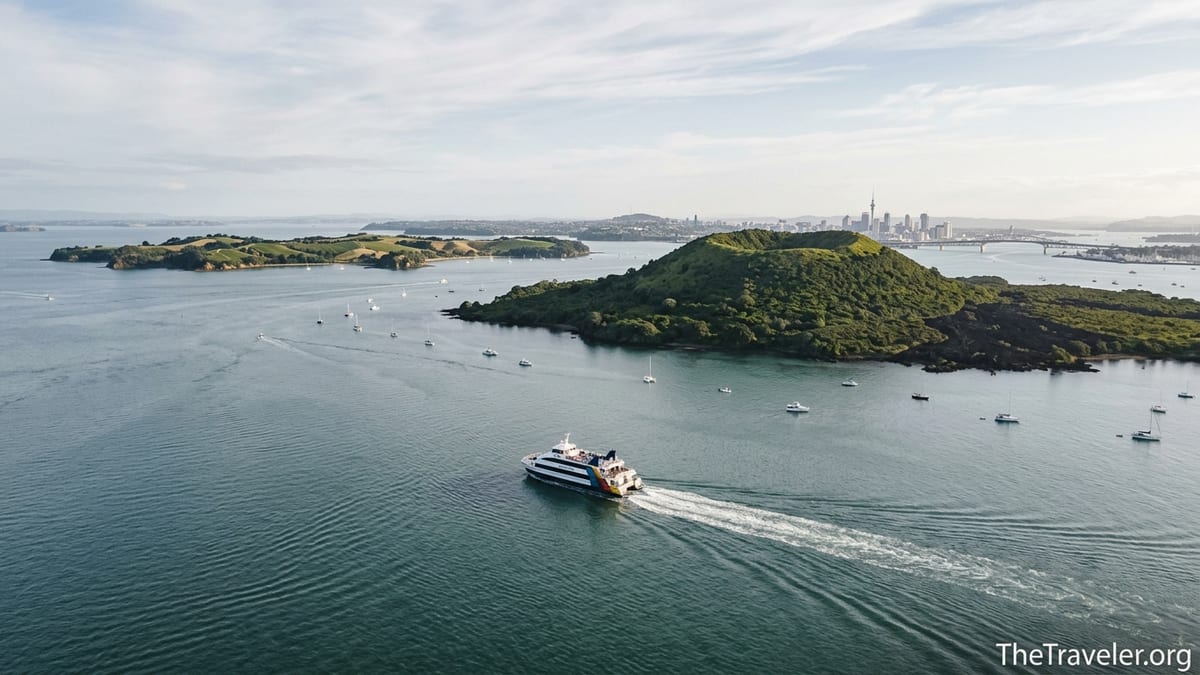
Rangitoto Island is the dark, symmetrical volcanic cone that dominates the eastern skyline from downtown Auckland. Ferries take around 25 minutes from the city to Rangitoto Wharf, often with a brief stop at Devonport. Services do not run as late or as frequently as Waiheke sailings, and in winter there may be only one or two departures each way, typically mid morning out and mid or late afternoon back. That gives you a fixed window of around four to six hours to explore, which is enough to walk from the wharf to the summit through the lava fields, detour to the historic bach settlement or lava caves, and return at a steady pace.
Rangitoto is managed as a conservation area without cafes, shops or permanent accommodation. Visitors must bring their own food, water and weather layers, just as they would for a half day hike in the Waitakere Ranges. The summit track is well formed but can feel exposed in summer heat because the young lava landscape offers little shade. Some operators offer a tractor drawn road train tour that runs from the wharf to within a short walk of the summit, which is useful for travelers who find the full ascent difficult. Tickets for these tours usually need to be purchased in advance or immediately on arrival and are tied to the ferry times.
Motutapu Island, immediately behind Rangitoto, is linked by a land bridge and shares the same ferry landing at Rangitoto Wharf. If you are fit and organised, you can hike from the wharf across to Motutapu and into its rolling pasture and coastal bays. This is a quieter landscape of open farmland and regenerating bush, with historic sites including World War II gun emplacements. A realistic combined Rangitoto and Motutapu day trip involves taking the first ferry out of Auckland, walking to the summit, then continuing into Motutapu for a couple of hours before retracing your route to catch the last ferry home.
Because ferry times are tightly constrained and there are no services linking Rangitoto directly to other islands, it is not sensible to plan Rangitoto as a stop on the way to Waiheke or Tiritiri Matangi. Treat it as a self contained hiking day and check the most recent timetable a week or two before you travel in case there have been seasonal changes or maintenance adjustments. In windy conditions, sailings to Rangitoto can be cancelled more readily than the larger Waiheke boats, so having a flexible backup plan to visit a mainland walk or museum is wise.
Tiritiri Matangi and Rotoroa: Wildlife Sanctuaries on Island Time
Tiritiri Matangi and Rotoroa offer some of the most rewarding wildlife experiences in the Hauraki Gulf, but their remoteness and conservation focus mean that planning is more rigid than for Waiheke or Rangitoto. Both islands are predator free sanctuaries where native birds such as takahe, saddleback and kokako thrive, and both protect habitats that are carefully managed by conservation authorities and volunteer groups. Visitor numbers are controlled and most people arrive and leave on the same ferry, creating a clearly defined day trip pattern.
Ferries to Tiritiri Matangi typically depart from the Downtown Ferry Terminal on selected days, such as several times a week in summer and less frequently in winter. Crossing time is usually around 75 minutes, sometimes with a brief stop at Gulf Harbour on the Whangaparaoa Peninsula. Operators often offer a combined ferry and guided walk ticket, with volunteer guides meeting the boat at the island’s jetty and leading groups through forest and coastal tracks while pointing out bird calls and explaining the island’s restoration story. Because many departures run at or near capacity in peak season, especially for tour groups, pre booking several weeks ahead is strongly advised.
Rotoroa Island sees fewer visitors and has a more retreat like feel, with open sandy beaches, sculpture, walking tracks and a small museum outlining its history as a former addiction treatment centre. Ferries from central Auckland usually depart from Viaduct Harbour rather than the main commuter terminal and can take approximately 75 minutes. Some services operate only on weekends or certain weekdays in summer, and there may be long gaps between sailings, so it is vital to check the current operating calendar. Many visitors arrive on the morning boat, spend five to six hours walking between coves such as Ladies Bay and Men’s Bay, swimming and picnicking, then return on the mid or late afternoon sailing.
Because Tiritiri Matangi and Rotoroa ferries often run once a day in each direction, it is not realistically possible to combine either sanctuary with another island on the same day using scheduled public services. Private charters are technically an option for groups with generous budgets, but most independent travelers will be working within the standard timetables. If you are building a three or four day Auckland based island itinerary, a common pattern is to spend one day on Waiheke, one on Rangitoto and Motutapu, and one on either Tiritiri Matangi or Rotoroa, choosing between them based on how strongly you prioritise close up bird encounters versus quieter beaches and art.
Great Barrier Island: A Separate, Multi Day Escape
Great Barrier Island, often referred to by its Maori name Aotea, sits far beyond the inner Hauraki Gulf islands and should not be treated as just another Auckland day trip. It lies roughly 100 kilometres from the city, and even the fastest practical routes take hours each way. Travelers usually reach Great Barrier by small plane from Auckland Airport or North Shore airfield in around 30 minutes, or by long distance ferry in four and a half to six hours depending on sea conditions. Services do not run every day of the week, and sailings may be adjusted outside the busy summer period, so checking current schedules and booking ahead is essential.
Because of the journey time and the scale of the island itself, Great Barrier works best as a multi day adventure. Many visitors plan three to five nights, renting a small car or booking transfers to reach accommodation in villages such as Tryphena, Claris or Medlands. The island rewards this slower pace with white sand surf beaches, extensive tramping tracks in the forested interior, natural hot springs and night skies that are dark sky sanctuary quality. Trying to visit for a single day would see you spend almost all your time in transit and almost none actually walking the tracks or swimming the bays.
In an island hopping context, Great Barrier belongs at the end of your Auckland stay or as the first leg of a wider North Island trip, not as an add on squeezed between short city based excursions. You might, for example, spend three days in central Auckland visiting museums and dining, add two or three day trips to Waiheke, Rangitoto and a sanctuary island, then fly out to Great Barrier for a four night unplugged retreat. Because grocery stores, fuel stations and cafes on the island operate on limited hours and stocks can fluctuate, it is wise to book accommodation with kitchen facilities and check whether your host offers airport or wharf transfers.
Costs on Great Barrier also tend to be higher than on the inner gulf islands because everything from building materials to food must be shipped or flown in. Ferry and flight tickets are usually priced more like regional air travel than like a commuter ferry to Waiheke. If your budget only allows one or two Hauraki Gulf experiences, you may prefer to focus on the closer islands where day trips from Auckland keep costs down. Great Barrier is best saved for travelers who have both the time and resources to enjoy it properly.
Building a Realistic Auckland Island Hopping Itinerary
Designing an island hopping plan from Auckland starts with being honest about how early you want to start, how much you enjoy walking, and whether you prefer wine and restaurants or wildlife and quiet beaches. A realistic three day sequence for many visitors is to start with Waiheke for a full, unhurried day of vineyards and coast, then tackle Rangitoto and Motutapu for a more energetic hiking day, and finally visit either Tiritiri Matangi or Rotoroa for a conservation focused experience. Each of these days begins and ends in Auckland city, lets you dine in town at night, and keeps travel times manageable.
For example, on a summer Tuesday you might catch a mid morning ferry to Waiheke, arriving in time for lunch in Oneroa and an afternoon tasting at at least two vineyards before dinner overlooking the bay. On Wednesday you could take the first sailing to Rangitoto, hike to the summit with a picnic lunch, optionally continue into Motutapu, and return on the mid afternoon boat, leaving you back in the city by late afternoon. Thursday might be your wildlife day, with an early departure to Tiritiri Matangi, guided walk through the forest, time on Hobbs Beach, and a structured return that has you back at the Downtown Ferry Terminal between 4 pm and 5 pm.
If you have five or six days in Auckland, you can stretch this pattern, adding a second day on Waiheke for coastal walking and swimming or using the extra time for a slower Rotoroa visit. Great Barrier then becomes a second phase of your holiday, tagged on either before or after your city stay. One practical approach is to spend four or five nights in Auckland with three or four island day trips, then fly to Great Barrier for another four nights, using one full day there for a major tramp such as the Windy Canyon and Mount Hobson track and another for a gentler beach and hot springs loop.
Attempting to catch an early flight or ferry to Great Barrier, spend several hours exploring, then rush back to Auckland on the same date is not recommended. Not only are you at the mercy of weather disruptions and limited daily services, but you risk missing your connection and losing a significant portion of your travel investment. Instead, treat each island as its own experience tier: inner gulf day trip islands like Waiheke and Rangitoto, sanctuary islands like Tiritiri Matangi and Rotoroa that require tighter booking and planning, and outer gulf destinations like Great Barrier that demand multiple days.
From Wine and Beaches to Volcanoes and Wildlife Sanctuaries
Part of the appeal of Hauraki Gulf island hopping is how quickly the character of your day can change even though all the boats leave from the same stretch of Auckland waterfront. Waiheke offers a social, food and wine oriented experience, where you might move from tasting room to bistro to sandy cove, chatting with locals and fellow visitors. Cellar doors serve platters of local cheese and olives, beachfront cafes pour chilled sauvignon blanc alongside fish and chips, and the main decision is whether you prefer the buzz of Oneroa or the quieter stretch of Onetangi.
Rangitoto and Motutapu, by contrast, are about the landscape itself. On Rangitoto you will walk on crunchy, black scoria, with twisted pohutukawa roots gripping the rocks and views back to the Auckland skyline reminding you that this young volcano erupted just a few hundred years ago. Motutapu’s grassy hills and sheltered bays feel almost pastoral, with sheep dotted on slopes and old farm buildings marking earlier human occupation. The lack of shops and cafes means your picnic lunch and water bottle become part of the adventure rather than an afterthought.
On Tiritiri Matangi and Rotoroa, human activity is directed towards restoration and interpretation. Guided walks on Tiritiri might pause every few metres to listen for a particular birdsong or to look for a banded kokako feeding in the canopy. On Rotoroa, sculptures and signage explain both natural and social history, from Maori settlement to the island’s decades as a rehabilitation community. Visitors are expected to respect boardwalks, stick to marked tracks and follow biosecurity procedures such as checking your bags for seeds or pests before boarding.
Great Barrier Island stands apart again, offering a sense of remoteness that inner gulf islands simply cannot match. Here, a typical day might start with driving a gravel road to a trailhead, hiking through dense forest to a viewpoint above a long surf beach, soaking in hot springs on the way back, then cooking dinner at your bach while the sky fills with more stars than you will see from urban Auckland. There are cafes and community hubs, but they are scattered and low key rather than concentrated around a single ferry wharf. Island hopping here becomes less about ticking off destinations and more about sinking into a different pace of life for several days at a time.
The Takeaway
Planning Hauraki Gulf island hopping from Auckland is less about cramming as many names as possible into a short stay and more about matching each island’s character and logistics to the time you have. Waiheke works as a flexible, almost spur of the moment outing with late ferries and plenty of food and wine options. Rangitoto and Motutapu reward early starts and sturdy shoes, while Tiritiri Matangi and Rotoroa demand advance bookings and a willingness to follow conservation rules in exchange for close encounters with wildlife and peaceful beaches.
Great Barrier Island, in contrast, should be ring fenced as a stand alone mini break of at least several days reached by pre booked flight or long distance ferry. Treating it as interchangeable with inner gulf islands leads to unrealistic itineraries and frustratingly rushed days. Instead, build a layered plan: day trips to the closer islands anchored by central Auckland nights, followed by a deeper immersion on Great Barrier if time and budget allow.
With realistic expectations about travel times, ferry schedules and the on the ground experience, Auckland’s island hopping becomes a highlight rather than a logistical headache. You will taste wine with a city skyline in the distance one day, walk on fresh volcanic rock the next, listen for rare birds in predator free forest the day after, and, if you venture further, fall asleep on Great Barrier to the sound of surf and morepork calls rather than traffic. The gulf’s islands are close together on the map, but their experiences are richly varied when you give each the time it deserves.
FAQ
Q1. Can I visit more than one Hauraki Gulf island in a single day from Auckland?
It is technically possible but rarely practical using public ferries. Most travelers focus on one island per day, with the common exception of combining Rangitoto and Motutapu on the same outing because they are connected by land.
Q2. Do I need to book ferries in advance for Waiheke Island?
Outside peak holiday periods you can usually buy Waiheke tickets on the day at the Downtown Ferry Terminal, but it is sensible to book ahead or use an operator app for busy summer weekends and mid morning sailings.
Q3. How far in advance should I book Tiritiri Matangi or Rotoroa Island?
For Tiritiri Matangi and Rotoroa, booking several weeks in advance for summer and school holidays is wise because there are often only one or two sailings per operating day and numbers are capped to protect wildlife.
Q4. Is Great Barrier Island a realistic day trip from Auckland?
No. Travel times by ferry or plane and the size of the island mean Great Barrier is best visited for at least three to four days, with overnight accommodation booked in advance.
Q5. Which island is best if I mainly want vineyards and good food?
Waiheke is the clear choice for wine and dining, with a cluster of well known vineyards, tasting rooms and restaurants within a short drive or bus ride of the main ferry terminal at Matiatia Bay.
Q6. What should I bring for a day on Rangitoto and Motutapu?
Bring sturdy walking shoes, sun protection, plenty of water, snacks or lunch, and a light jacket. There are no shops or cafes on these islands, so you must be self sufficient for the duration of your visit.
Q7. Are there guided tours available on the islands?
Yes. Waiheke offers wine and sightseeing tours, Rangitoto has guided summit trips and vehicle tours, and Tiritiri Matangi often features volunteer led nature walks included in combined ferry and tour tickets.
Q8. Where do the ferries depart from in central Auckland?
Most ferries to Waiheke, Rangitoto and Tiritiri Matangi leave from the Downtown Ferry Terminal on Quay Street, while some Rotoroa Island services depart from nearby Viaduct Harbour. Always check your ticket for the exact pier.
Q9. Can I stay overnight on the smaller islands?
Waiheke and Great Barrier have extensive accommodation, and Rotoroa offers limited places to stay. Options on Tiritiri Matangi and Motutapu are restricted and typically must be booked well ahead or are reserved for certain groups.
Q10. What happens if the weather is bad on the day of my island trip?
Strong winds or rough seas can lead to altered or cancelled sailings, especially to smaller islands. Operators will usually offer rebooking or refunds where appropriate, so checking forecasts and having a flexible backup plan is helpful.