


Collingwood has a way of making you feel like you’ve already reached the end of the road, in the best possible sense. The tiny main street sits beside the broad, silty mouth of the Aorere River, and beyond it lies Golden Bay’s wild north: wind, sand, and that hooked sliver of land called Farewell Spit. You can see the beginning of the Spit on your own, but to travel its long, tapering body to the lighthouse and beyond you need to go with an authorized operator. That’s the point of the Farewell Spit Eco Tour, and on a tide-shaped morning I joined one of their 4WD buses to ride the beach all the way to the end of the bay and back.
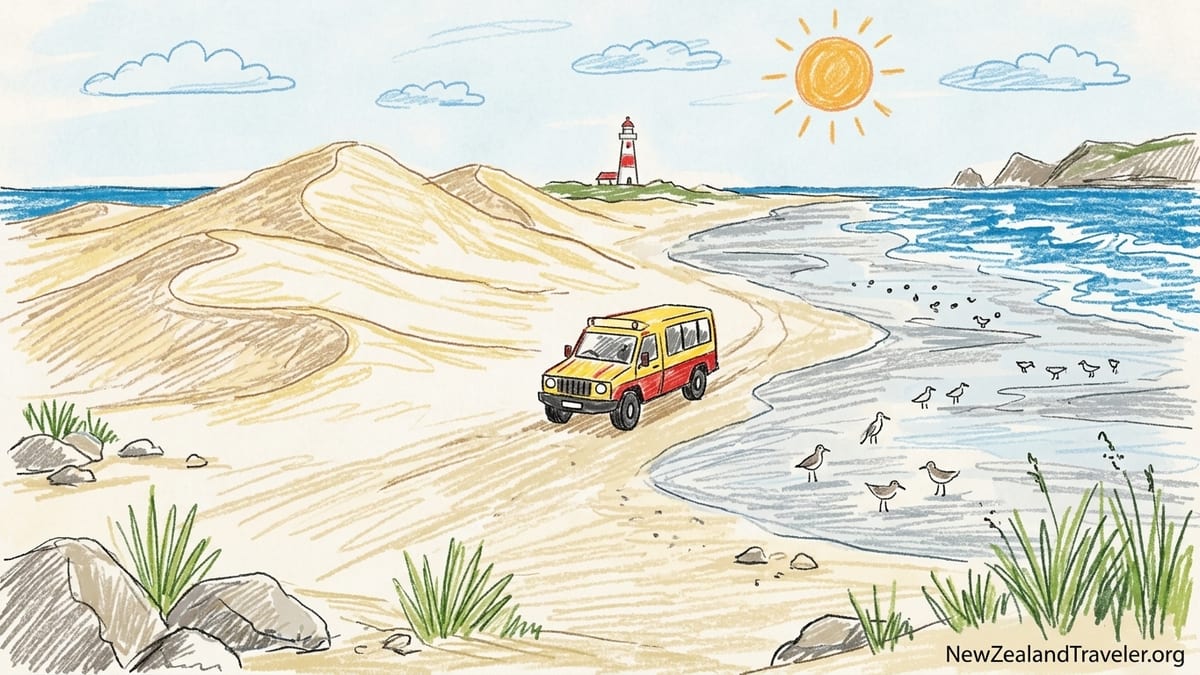
Starting in Collingwood: Check-In, First Impressions, and the Reality of a Tide-Timed Day
I began in Collingwood with that slightly nervous feeling you get before any tide-dependent trip: you can be organized, early, fully caffeinated and still at the mercy of the sea. Farewell Spit Eco Tours runs departures based on tide and daylight, and that is not marketing talk. The company posts day-by-day departure times on its timetable pages, and you quickly understand why when you look at how wildly the start times shift through the month.
Check-in felt refreshingly old-school in the best way: a quick confirmation, a few practical reminders, and a clear sense that the day’s rhythm would be set by conditions on the beach. Even before boarding, the language was consistent: this is a nature reserve first, an attraction second. The guide was friendly but direct about the rules, especially around where you can walk, what you must not disturb, and why the tour keeps people on a tight leash in such a sensitive place.
Collingwood itself makes a fitting launch point. It’s small, quiet, and close enough to the Spit that you can watch weather move in real time. One minute the sky is wide and pale; the next it’s scudding clouds racing inland. It was already breezy on the street, and I’d barely left town.
The 4WD Bus, Group Size, and What Six and a Half Hours On Sand Actually Feels Like
The vehicle is not a generic minibus with chunky tires. It’s a purpose-built 4WD tour bus designed for soft sand and long, low-stress hours on the move. The ride quality matters because you spend a lot of the day seated. Even on a calm run, you feel the beach’s corrugations and the subtle sideways pull of the camber. On rougher patches, the bus shimmies and thumps enough that you’ll be glad you packed light and kept your camera secure.
Group size on these tours typically feels like a small coach load rather than an intimate safari. On my day, it was big enough that you had that easy social anonymity but still small enough that the guide could keep everyone together at stops without turning it into a cattle drive. You learn quickly that Farewell Spit is not a place for wandering off, not because someone wants to ruin your fun, but because the environment is fragile and the hazards are real.
Six-plus hours in a vehicle is a commitment. I felt it most in the middle stretch, when the scenery becomes hypnotic: pale sand to one side, tidal flats and distant hills to the other, and wind that never quite stops pushing at the windows. The tour breaks it up with regular stops, but there is no pretending it’s a short hop. It’s an expedition day, and your body registers it as one.
Comfort-wise, the bus made it manageable. I wouldn’t call it luxury, but it is the right tool for the job: elevated seating for views, decent climate control, and a steady pace that prioritizes safety on a constantly changing beach. If you are prone to motion sickness, I would plan ahead with whatever you normally use, because beach driving has its own rhythm of sway and vibration.
Into the Reserve: Beach Driving, Tide Conditions, and the Moment the World Turns to Sand
The transition from road to sand is the moment your brain recalibrates. One minute you’re thinking in terms of lanes and intersections, and the next the “road” is a broad beach where the guide reads the surface like a map. Tide conditions drive everything. The timing determines where you can travel, how wide the firm sand strip will be, and whether you’ll take a more direct beach route or use alternative lines where the sand is safer.
As we rolled out onto the beach, the sense of space expanded dramatically. The Spit’s scale is hard to grasp from photos. It’s long, low, and deceptively minimal, yet it holds entire ecosystems in its hollows and margins. On the day I went, the wind was strong enough to blur the surface of the sand in little streamers, and the sky had that fast-moving, changeable look that makes you keep one hand on your jacket zipper.
Driving on the beach also makes you appreciate why access is controlled. This is not a casual self-drive outing. The guide was clearly choosing lines to avoid soft patches and to respect sensitive zones, and the bus moved with the cautious confidence of someone who has done it hundreds of times. You can feel how the environment is both simple and unforgiving: sand, tide, wind, and a long way from help if anything goes wrong.
There’s also a psychological shift. Once you’re committed out along the Spit, you’re committed. There’s no quick detour, no easy early exit. The end of Golden Bay starts to feel like a place you earn with time and weather rather than a place you simply arrive at.
Dunes, Wader Country, and Birdlife I Actually Saw From the Stops
One of the most memorable parts of the day was getting out of the bus and feeling the wind unfiltered. On top of the beach driving, the tour includes stops where you can climb low dunes and look both ways: ocean-facing surf on one side, and the calmer, shallower waters and tidal flats on the other. That two-sided perspective is what makes Farewell Spit feel like a living boundary rather than a single strip of sand.
Birdlife is the headline here, and it’s not presented as a zoo exhibit. It’s more like being taken to a huge, working dining room where waders and shorebirds are busy with the day’s serious business. The species you see can vary by season and tide, but on my trip the guide pointed out waders on the flats and helped people get their binoculars on moving groups. I saw banded dotterels near the beach margins, variable oystercatchers probing at the wet edge, and gulls using the wind like a conveyor belt. Out on the tidal plain, the guide indicated feeding areas where bar-tailed godwits and other migratory waders are often observed, and even when birds were distant the sheer number of shapes on the flats made it feel like the place was humming.
What surprised me was how much the wind shapes what you notice. In calmer places you might focus on color and call. Here, you often see birds as silhouettes leaning into gusts, or as flurries lifting and settling like ash. The guide’s commentary made a difference because without it, the untrained eye can reduce everything to “lots of birds.” With it, you start to understand feeding behaviors and why those exposed flats matter so much.
I also appreciated that the tour didn’t try to promise specific sightings. It framed wildlife as genuinely wild. The reward is not checking off a list; it’s watching a protected landscape operate on its own terms. That felt honest, and it kept expectations in the right place.
The Lighthouse Stop: History, Wind, and a Surprisingly Human Pause for Tea
Reaching the lighthouse area feels like arriving at an outpost rather than a viewpoint. The structures sit exposed, with very little to interrupt the wind. The lighthouse itself is the icon everyone recognizes, but the surrounding buildings and the sense of isolation are what landed for me. Standing there, you understand why tours come with strict rules: this is a sanctuary and a working heritage site, and it feels far away from everything.
This is also where the tour’s pacing pays off. After a long stretch in the vehicle, the lighthouse stop gives you time on foot, time to look, and time to reset. The wind, at least on my day, was relentless. It wasn’t painful, but it was persistent enough that conversation became half-shouted and photos required a steady stance.
Refreshments were served in the old lighthouse keeper’s residence, which turned out to be one of the warmest moments of the day. There’s something grounding about holding a hot drink in your hands while sand and weather press at the windows. On tours like this, food is rarely memorable, but here the simple rhythm of a muffin and a hot drink felt like the right kind of hospitality: practical, warming, and timed exactly when you need it.
The guide’s storytelling also sharpened at the lighthouse. It wasn’t a scripted performance, more a blend of local history, environmental context, and “this is what changes week to week out here.” In a place where the land itself moves, permanence comes mostly from routine. The stop made that clear.
Gannets, Cape Farewell, and What Requires a Licensed Operator (Versus What You Can Do Yourself)
It’s important to be clear about access, because Farewell Spit can look deceptively “open” from a distance. The Department of Conservation currently permits the public to explore the base of Farewell Spit on foot and to visit Pūponga Farm Park, but general public access farther along the Spit is restricted unless you have a permit or you travel with a licensed tour operator. In other words: you can get a taste of the landscape independently, but you cannot simply drive or wander your way to the lighthouse.
What you can do independently at Pūponga is genuinely worthwhile. Pūponga Farm Park is a DOC-managed farm park at the base of the Spit, and you can visit it without booking a tour, as long as it’s open and you follow farm rules. In practical terms, that means formed roads, respecting gates, staying out of restricted paddocks, and leaving no trace. It’s also your gateway to other northern Golden Bay experiences, including the road access points that lead you toward walks like Cape Farewell and the route toward Wharariki Beach. If you’re traveling with your own vehicle, Pūponga makes a sensible do-it-yourself day even if you skip the Spit tour.
What requires an authorized operator is the part most people dream of: traveling deep into Farewell Spit Nature Reserve, driving the long beach to the lighthouse area, and continuing farther where applicable. The standard Farewell Spit Eco Tour is widely listed as a 6.5-hour experience, and current pricing published by third-party booking platforms and local accommodation partners shows NZ$210 for adults for the standard tour, with a gannet-colony variation listed at NZ$230. Because schedules and fares can change, and because departures are tide-dependent, all prices and times should be rechecked at publication and again at booking.
About the gannet variation specifically: the company promotes a gannet colony beyond the lighthouse as a key highlight, and whether you reach it depends on the specific tour you book and the day’s conditions. Even on the standard day, the guide talked about how the Spit’s patterns shift, how wildlife is affected by wind and season, and why not every day plays out identically. That variability is part of what you are paying for: expertise in navigating a restricted, changeable environment without damaging it.
For travelers comparing experiences, I’d put it this way. Pūponga and the base of the Spit are a great independent sampler, especially if you’re short on time or traveling on a tight budget. The tour is for the traveler who wants the deep access, the lighthouse stop, the long beach run, and the context that turns a strip of sand into a story you can actually understand.
The Takeaway
By the time we rolled back into Collingwood, I felt two things at once: satisfied, and slightly sand-blasted. The tour is not a quick scenic cruise. It’s a long day on a moving edge of land, where the best moments are often quiet ones: a group of birds working the flats, the bus tracking a safe line on wet sand, the sudden view from a dune when you realize how thin the Spit really is.
What stood out most was how physical the place feels. The wind isn’t background ambience; it’s a constant presence. The sand isn’t a pretty foreground; it’s the road, the hazard, the landscape, and the reason access is controlled. If you go expecting a gentle sightseeing loop, you might be surprised by the endurance aspect. If you go expecting a true coastal journey with real conditions, the day delivers.
I also came away appreciating the split between independent and guided travel here. Pūponga Farm Park and the base of Farewell Spit are accessible, and they offer enough to fill a rewarding half-day with walks and big views. But the essence of “the end of Golden Bay” experience, the lighthouse, the deeper reserve, and the far reach of sand, is inseparable from licensed access and tide-literate driving.
If you’re the kind of traveler who likes learning a place while moving through it, not just photographing it from a car park, Farewell Spit Eco Tours feels like the right way to do it. Just go in knowing you’ll spend a lot of time seated, a lot of time in wind, and a lot of time in one of New Zealand’s most unusual protected landscapes.
FAQ
Q1. Can you visit Farewell Spit without a tour?
Yes, you can explore the base of Farewell Spit on foot and you can visit Pūponga Farm Park, but access farther along the Spit is restricted unless you have a permit or use a licensed operator.
Q2. Where does the Farewell Spit Eco Tour depart from?
The standard Farewell Spit tour departs from Collingwood, and the operator publishes tide-timed departure schedules that can vary widely by date.
Q3. How long is the standard Farewell Spit Eco Tour?
It is widely listed as a 6.5-hour tour; allow extra time around departure for check-in and day-of timing adjustments tied to the tide.
Q4. How much does Farewell Spit Eco Tours cost?
Current published pricing lists NZ$210 for the standard 6.5-hour tour for adults and NZ$230 for the gannet-colony variation, but you should recheck prices and any seasonal conditions at booking and at publication.
Q5. Why are tour times tide-dependent?
The tour travels along the beach, and the safe driving corridor changes with the tide, weather, and sand conditions, so start times are set to match usable beach access and daylight.
Q6. What is the vehicle like on the tour?
Expect a purpose-built 4WD tour bus designed for soft sand and long distances, with elevated seating for views and a ride that still feels like beach driving.
Q7. What wildlife can you see on the Farewell Spit tour?
Birdlife is the main focus, especially waders and shorebirds on the tidal flats; sightings vary by season and conditions, and some tours also target the gannet colony beyond the lighthouse.
Q8. What food or refreshments are typically included?
Refreshments are commonly described as a hot drink and a muffin served during the lighthouse-area stop, offering a warming break during the long day.
Q9. What can you do independently at Pūponga Farm Park?
You can visit the DOC-managed farm park and enjoy the permitted areas and walks, following farm rules like staying on formed roads, respecting gates, and not disturbing stock or wildlife.
Q10. Is Farewell Spit suitable if you don’t love long tours?
It depends on your travel style. The experience is rewarding but involves six-plus hours with significant time in the vehicle, so it suits travelers comfortable with a long, tide-shaped day.