


New Zealand’s South Island, or Te Waipounamu, looks compact on a map. In reality it is a vast, sparsely populated landscape of alpine peaks, fiords, glaciers, vineyards and empty coastline linked by slow, winding highways. For first-time visitors, the biggest challenge is not deciding what to see, but choosing a realistic route and understanding how far apart the highlights really are. This guide focuses on that practical puzzle, while introducing the island’s key regions and how they fit together into one unforgettable trip.
How the South Island Fits Together
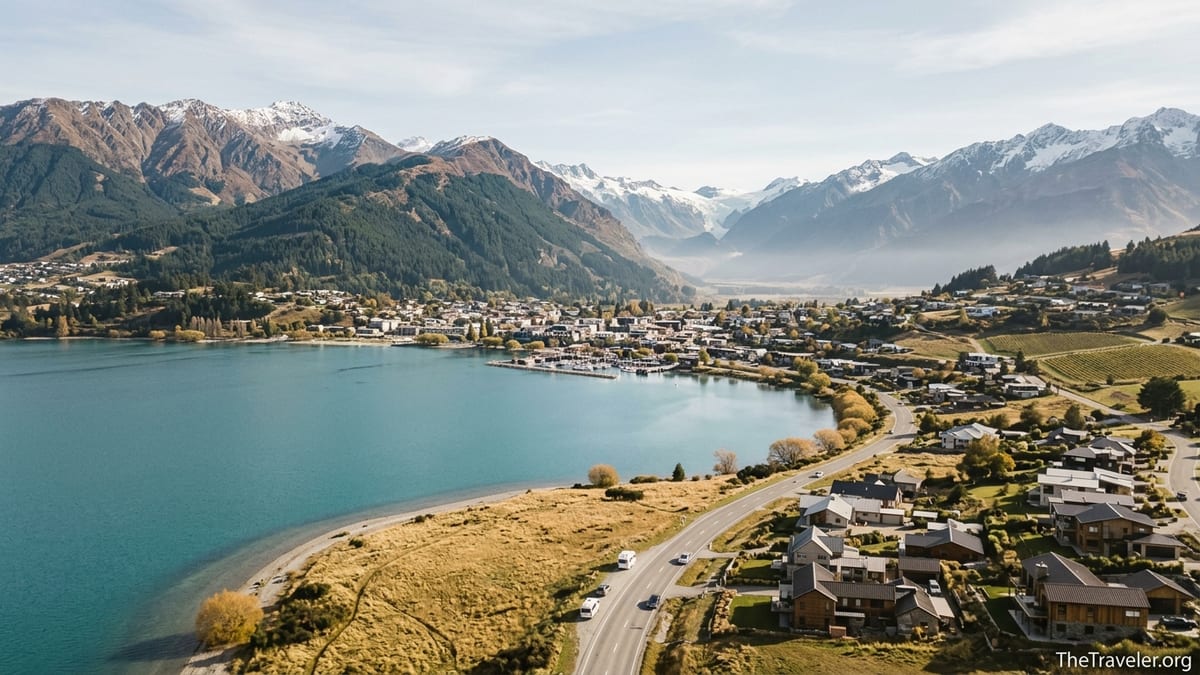
Te Waipounamu is shaped like a long, tilted kite. On the east coast, Christchurch, Kaikōura, Marlborough and Dunedin feel open and settled, anchored by farmland, wine country and university life. The spine of the Southern Alps runs down the middle, rising to Aoraki/Mount Cook and feeding glaciers that tumble toward the wild West Coast. In the southwest, Fiordland is a wet, forested corner carved into deep fiords, while Queenstown and Wānaka sit in a dry inland basin ringed by ski fields and lakes. At the very top, Nelson and Abel Tasman offer a softer, golden-sand finale.
Distances look short but driving is slow. A typical New Zealand state highway is one lane each way with plenty of curves, one‑lane bridges and occasional roadworks. For example, Queenstown to Te Anau is around 170 kilometres and still takes about two hours of steady driving, while Queenstown to Milford Sound is roughly 4 hours each way by car even though it is only about 290 kilometres. Coach operators routinely allow 4 to 5 hours for that same trip because of weather, photo stops and traffic. Planning with a baseline of 70 to 80 kilometres per hour rather than motorway speeds gives a much more realistic picture.
Because travel days absorb more time than many visitors expect, a smart South Island itinerary revolves around a handful of bases. First-time travellers typically choose Christchurch plus two or three of the following hubs: Queenstown/Wānaka for adventure and alpine scenery, Te Anau for Fiordland, Aoraki/Mount Cook or Lake Tekapo for the Southern Alps, Franz Josef or Fox Glacier for the West Coast, Nelson or Motueka for Abel Tasman, and either Blenheim for Marlborough wine or Dunedin for wildlife and local culture.
Think of the island as three complementary themes that your route should combine: the Southern Alps and glaciers, the fiords and native rainforest, and at least one coastal or wine region. A classic two‑week loop from Christchurch can include all three: across Arthur’s Pass to the West Coast glaciers, over Haast Pass to Wānaka and Queenstown, down to Te Anau and Milford Sound, then back via Aoraki/Mount Cook and Lake Tekapo.
Choosing the Right Route for Your Timeframe
Time is the decisive factor in South Island planning. With 7 days you can comfortably explore Christchurch plus either a Queenstown–Fiordland axis or a West Coast–Aoraki/Mount Cook combination. With 10 to 14 days, you can tackle a full loop and still build in time for a fiord cruise, a glacier walk and a day walk in a national park. Trying to “do everything” in under 10 days usually means rushing past experiences you have flown around the world to enjoy.
Most international flights arrive into Christchurch or Queenstown. A popular one‑way route for a 10‑day trip is Christchurch to Queenstown via Lake Tekapo, Aoraki/Mount Cook and Wānaka. Christchurch to Tekapo is about 225 kilometres, often taking close to 3 hours with a coffee stop in Geraldine. Tekapo to Aoraki/Mount Cook Village is around 100 kilometres, usually 1.5 hours along Lake Pukaki’s shoreline. From there, continuing to Wānaka and Queenstown turns the trip into a scenic arc along the Southern Alps rather than a back‑track.
The alternative is a West Coast loop. From Christchurch, crossing Arthur’s Pass to Hokitika or Greymouth takes around 3 to 3.5 hours of mountain driving. Hokitika to Franz Josef is about 1.5 hours, then Franz Josef to Fox Glacier another half an hour. From Fox Glacier to Wānaka you should allow a little over 3 hours of wheel time, not counting breaks at the Haast Pass waterfalls and lookouts. This route strings together alpine passes, rainforest, glaciers and lakes in a single drive, which is why many rental campervan companies promote it as the “great South Island loop.”
If your priority is sunshine, beaches and wine, consider starting or finishing in Nelson or Blenheim instead. The ferry from Wellington arrives at Picton, and from there it is around 30 minutes to Blenheim or about 1.5 to 2 hours to Nelson by road. A 7‑day northern loop could include Marlborough wineries, Abel Tasman National Park and a side trip to Kaikōura for whale watching, without going anywhere near Queenstown. This works particularly well in winter, when alpine roads can be affected by snow and ice while Nelson and Marlborough often remain comparatively mild and bright.
Christchurch and the Central South Island
Christchurch is the main gateway city, with the South Island’s largest airport and a full range of rental cars and campervans. It is worth spending at least a day here to recover from jet lag and get a feel for contemporary New Zealand life. The compact city centre mixes new glass‑and‑timber architecture with restored heritage buildings, and the Ōtākaro Avon River winds through the Botanic Gardens and out toward the sea. Staying in the city centre or near Hagley Park means you can walk almost everywhere and easily pick up supplies at a supermarket before heading inland.
From Christchurch, two main corridors lead into the Southern Alps. State Highway 1 tracks the east coast, while State Highway 73 climbs through the foothills to Arthur’s Pass and on to the West Coast. For itineraries that focus on lakes and mountains rather than rainforest, visitors usually head south instead, following the Inland Scenic Route or SH1 toward Tekapo and Aoraki/Mount Cook. The drive from Christchurch to Lake Tekapo, around 3 hours, passes through small agricultural service towns such as Rakaia, Ashburton and Geraldine where you can refuel the car, grab coffee and stock up on groceries. Petrol prices in 2026 often sit around 3 New Zealand dollars per litre, so filling up in larger centres where there is competition can save money on a long trip.
Lake Tekapo itself is a natural overnight stop. The tiny settlement has lakeside motels, holiday parks and a handful of cafes and restaurants. It also anchors the Aoraki Mackenzie International Dark Sky Reserve. On clear nights, stargazing tours use telescopes at dedicated observatories, or you can simply walk to the lakefront and look up at the Milky Way. Continuing deeper into the Alps, Aoraki/Mount Cook Village sits roughly one hour and a half beyond Tekapo at the end of a no‑exit valley road. Plan at least one night, ideally two, because short walks such as the Hooker Valley Track deliver classic glacier views that often depend on weather windows.
South of Tekapo and Mount Cook, the highway system fans toward Wānaka and Queenstown. Tekapo to Wānaka, via Omarama and Lindis Pass, is typically around 3 to 3.5 hours’ driving. The scenery changes from turquoise lakes and glaciated peaks to tawny hills and braided rivers. Staying one night in Wānaka before continuing over the Crown Range to Queenstown gives you a gentle, visually impressive transition into the adventure capital, rather than arriving after a tiring marathon driving day.
Queenstown, Wānaka and the Adventure Heartland
Queenstown and Wānaka sit in a ring of mountains and lakes that defines the South Island in the global imagination. They are also where many visitors underestimate how quickly days fill up. Between jet boat rides, lake cruises, winery lunches in Gibbston, short hikes like Queenstown Hill or the Mount Iron track, and simply sitting in a cafe watching the lake, three or four nights disappear easily. For a first trip, aim for at least three nights in Queenstown and one or two in Wānaka rather than treating them as drive‑through stops.
Queenstown Airport handles frequent domestic and trans‑Tasman flights, so you can both start and end a trip here. The town itself is compact and walkable, with a dense mix of hotels, hostels and serviced apartments. Parking can be tight in the centre, so many visitors choose accommodation within walking distance of the lakefront and leave the car parked except for day trips. Wānaka, about an hour and a bit away via Cromwell, feels more relaxed. It has a smaller centre, broad lakefront lawns and easy access to Mount Aspiring National Park. Staying there for a night or two lets you sample a different side of the region, with farm‑to‑table restaurants and quieter walking tracks.
Adventure activities are spread between the two towns. Bungy jumping and jet boating largely cluster around Queenstown, where operators run shuttles from central booking offices to the Kawarau Bridge, Shotover River and other sites, meaning you do not have to drive yourself if you are nervous about mountain roads. Scenic flights to Fiordland depart from both Queenstown and Wānaka, while ski fields such as Coronet Peak, The Remarkables, Treble Cone and Cardrona are accessed from winter bases in these towns. That concentration of options is why Queenstown works so well as a hub for 4 to 5 nights, especially for travellers who prefer unpacking once.
For winery enthusiasts, the Gibbston Valley and Cromwell Basin offer cellar doors within an hour’s drive of central Queenstown. Many operators run half‑ or full‑day wine tours by minibus, visiting two or three vineyards and including a platter lunch. This is a practical way to experience Central Otago’s pinot noir and riesling without worrying about drinking and driving on unfamiliar roads. If you have a car and choose to self‑drive, you can stay in Cromwell or Bannockburn for a night, which places you among vineyards and short cycling trails that link cellar doors along old river terraces.
Fiordland, Milford Sound and Southland
Fiordland is where New Zealand’s alpine drama meets heavy rainfall and ancient rainforest. Te Anau, on the shore of Lake Te Anau, is the practical base for exploring it. Christchurch to Te Anau is roughly 650 kilometres, usually at least 8 hours of driving, so most travellers sensibly approach from Queenstown instead. From Queenstown, allow at least 2 hours to reach Te Anau, and then a further 2.5 to 3 hours from Te Anau to Milford Sound along State Highway 94. Tour companies that run coach‑and‑cruise packages from Queenstown commonly schedule 12‑ to 13‑hour days, which underlines how ambitious it is to attempt a Milford there‑and‑back drive in a standard rental car.
Te Anau works well as a 2‑ or 3‑night base. Day one might be a glowworm cave cruise or a lakeside walk, day two a full‑day coach and cruise to Milford Sound, and day three a shorter hike on part of the Kepler or Routeburn tracks. Leaving the car parked and letting a professional driver handle the Milford Road is especially attractive in winter and spring, when avalanches and black ice can affect the alpine sections. Tour coaches include commentary and photo stops at places like Mirror Lakes and the Homer Tunnel, so the journey becomes part of the experience rather than a stressful obligation.
Further south, Invercargill and the Catlins represent the quieter edge of the island. These areas reward travellers with extra time and a taste for remote coastlines. From Te Anau to Invercargill is around 2.5 hours’ drive, and from Invercargill to Dunedin via the Catlins you should allow at least 4.5 to 5 hours without stopping. In practice, wildlife encounters with sea lions, penguins and dolphins, plus short walks to waterfalls and sea caves, stretch that into a full day. Accommodation in small coastal settlements such as Curio Bay or Kaka Point tends to be holiday homes and small lodges rather than large hotels, so booking ahead in peak months is wise.
Fiordland is also home to several of New Zealand’s Great Walks. The Milford Track, Kepler Track and Routeburn Track all pass through Fiordland National Park. Great Walk season typically runs from late October to late April, with advanced bookings essential. During shoulder seasons, heavy rain, snow and avalanche risk can close sections or delay openings, so anyone planning a multi‑day hike should monitor Department of Conservation alerts in the months leading up to their trip and build flexibility into their itinerary. For many first‑time visitors, sampling a half‑day or full‑day section as an out‑and‑back walk from Te Anau or The Divide offers the experience without the logistical complexity of hut bookings and water taxi transfers.
Glaciers, the West Coast and Abel Tasman
The West Coast is the opposite of motorway New Zealand. Between Westport in the north and Haast in the south, a single road threads between surf beaches, limestone cliffs, nikau palms and temperate rainforest. Traffic volumes are light, petrol stations can be far apart and phone coverage is patchy. Hokitika to Franz Josef is about 1.5 hours, Franz Josef to Fox Glacier about 30 minutes, and Fox Glacier to Haast just over 2.5 hours of driving. From Haast to Wānaka, another 2 hours plus, the road climbs over Haast Pass, where waterfalls and short walks to river gorges give plenty of excuses to stretch your legs.
Franz Josef and Fox Glacier are compact villages serving their respective glaciers. They have motels, backpacker hostels and a few mid‑range hotels, along with cafes and small supermarkets. In recent years, glacier retreats and landslides have limited direct walking access to the ice from the valley floors, so most travellers now experience the glaciers via scenic helicopter flights and guided heli‑hikes that land higher on the ice. These tours are weather dependent. Staying two nights in either Franz Josef or Fox Glacier improves the odds of catching a clear window. Many operators schedule early morning departures, when winds tend to be calmer and cloud ceilings higher.
North of Greymouth, the highway swings inland through the Buller Gorge before emerging near Nelson and the sheltered bays of Tasman Bay. Nelson, Motueka and Kaiteriteri form the main bases for Abel Tasman National Park. The park’s famous Coast Track runs for about 60 kilometres between Mārahau and Wainui Inlet, threading past golden beaches and granite headlands. It is one of New Zealand’s Great Walks and is popular with both day walkers and multi‑day hikers. Because water taxis operate from Mārahau and Kaiteriteri, many visitors book a boat north along the coast then walk back to a pick‑up beach, experiencing a slice of the track without carrying overnight gear or arranging hut bookings.
If you are building a route that combines West Coast glaciers with Abel Tasman, plan at least 2 nights on the Coast and 2 nights near Nelson or Motueka. Franz Josef to Nelson is a full day’s drive, commonly 6 to 7 hours including breaks and fuel stops, so trying to squeeze Abel Tasman into a single overnight usually leads to frustration. Those extra nights give you room for a full‑day or half‑day coastal walk, a kayak trip with a local operator, and an unhurried afternoon at a vineyard or craft brewery on the return to Nelson.
Marlborough, Kaikōura and Dunedin
On the northeastern shoulder of the island, Marlborough and Kaikōura add wine and wildlife to a South Island journey. Blenheim is the main base for Marlborough’s sauvignon blanc and chardonnay vineyards, with cellar doors and winery restaurants sprinkled through the Wairau and Awatere valleys. Many travellers stay in Blenheim township or at a vineyard cottage for 2 to 3 nights, using bicycles or guided minivans to visit 3 or 4 wineries a day. Ferry passengers arriving by sea from the North Island disembark at Picton, then either head 30 minutes south to Blenheim or follow the Queen Charlotte Drive toward Nelson.
Kaikōura lies about 2 hours north of Christchurch and around 1.5 to 2 hours south of Blenheim by coastal highway. It sits between the Pacific Ocean and the Seaward Kaikōura Range, which means snow‑tipped peaks often form a backdrop to whale watching tours. Sperm whale encounters operate year‑round, joined seasonally by humpback and other species. Smaller operators offer dusky dolphin swims and albatross viewing trips. Because tours are weather dependent and can sell out in high season, most visitors allow 2 nights in Kaikōura, booking a morning marine tour on one day and keeping the second day flexible as a backup.
Dunedin, further south on the east coast, blends Victorian architecture with a youthful university culture. It is also the gateway to the Otago Peninsula, where yellow‑eyed penguins, royal albatross and sea lions can be seen at relatively close range on guided tours. From Queenstown to Dunedin via Cromwell and Alexandra, expect around 4 hours of driving across Central Otago’s dry hills. Many travellers split this with a lunch stop in Clyde or Alexandra, or detour through the fruit stalls near Cromwell. Dunedin to Christchurch adds another 4.5 to 5 hours along SH1, which makes Dunedin a logical last major stop on an anticlockwise loop before returning to Christchurch for a flight.
If you have 14 days or more, weaving Marlborough, Kaikōura and Dunedin into a wider loop adds wine, wildlife and distinctive local character to the classic mountains‑and‑fiords circuit. With less time, you may need to prioritise. For example, a 10‑day trip might sensibly choose either Marlborough and Abel Tasman at the top of the island or Dunedin and the Catlins at the bottom, but not both, to avoid turning the holiday into an endless series of one‑night stops.
How Long to Spend and Where to Base Yourself
For first‑time visitors, a realistic minimum for the South Island is 10 days, with 12 to 14 days far more comfortable. A common pattern is 2 nights in Christchurch, 2 in Tekapo or Aoraki/Mount Cook, 3 to 4 in Queenstown and Wānaka combined, 2 to 3 in Te Anau for Fiordland, and 2 on the West Coast or in Abel Tasman. Stretch that to two full weeks and you can add Kaikōura or Marlborough at the start or end, or include Dunedin and the Otago Peninsula without feeling rushed.
Basing yourself strategically reduces packing and unpacking and gives flexibility in mixed weather. Queenstown is an obvious multi‑night base; from there, you can take a coach trip to Milford Sound, drive to Glenorchy for short walks, join a wine tour to Gibbston or simply enjoy lakefront cafes and the Skyline gondola. Te Anau is the best base for Fiordland, especially if you plan to walk sections of the Kepler Track or take an overnight cruise on Doubtful Sound. On the West Coast, Franz Josef or Fox Glacier can each serve as an overnight base, with many travellers choosing Franz Josef for its slightly larger selection of restaurants and hot pools.
In the northern South Island, Nelson and Motueka both work as hubs for Abel Tasman. Nelson offers a small city feel with galleries and dining, while Motueka and nearby Kaiteriteri sit closer to the park’s main water taxi departures. Staying in Motueka or Kaiteriteri is convenient if you want to be on the first boat of the day into the park. In wine regions, Blenheim and Cromwell are practical bases that place you within a 15‑ to 30‑minute drive of multiple vineyards, reducing time on the road and making it easy to join local cycling or minivan tours.
Because driving days can be long, building in non‑driving days makes a tangible difference to how the trip feels. For example, a day in Aoraki/Mount Cook with only short walks and an evening star‑gazing session, or a rest day in Abel Tasman with nothing more planned than a beach picnic, resets energy levels between more intense days in Fiordland or Queenstown. Travellers with children or older relatives will especially appreciate this slower rhythm, as will anyone sensitive to long hours in cars or campervans.
FAQ
Q1. How many days do I really need for a first South Island trip?
For a first visit focused on highlights, aim for at least 10 days on the ground, with 12 to 14 days giving a more relaxed loop that includes fiords, glaciers and at least one wine or coastal region.
Q2. Is it better to drive or join tours around the South Island?
Self‑driving offers maximum flexibility and is ideal for families or photographers, but organised tours work well for sections like Milford Sound or glacier heli‑hikes where weather, parking and alpine roads can be stressful for first‑time visitors.
Q3. How far apart are Queenstown and Milford Sound, really?
It is roughly 4 hours’ drive one way from Queenstown to Milford Sound in good conditions, so most travellers take a coach‑and‑cruise from Queenstown or base in Te Anau to shorten the daily travel time.
Q4. Should I visit both Franz Josef and Fox Glacier?
The glaciers are close together and offer similar experiences, so for a first trip it is usually enough to base yourself in either Franz Josef or Fox Glacier for two nights and choose one heli‑hike or scenic flight, keeping a backup time slot in case of bad weather.
Q5. How do Abel Tasman and Fiordland compare for hiking?
Abel Tasman offers gentle coastal walking and beach sections with water taxi access, while Fiordland’s tracks pass through steep, wetter alpine and rainforest terrain; many travellers enjoy sampling an easy day walk in each rather than committing to multiple multi‑day hikes.
Q6. When is the best time of year to visit the South Island?
Late spring and early autumn often offer a good balance of daylight, stable weather and fewer crowds, but conditions vary by region, and winter visits can be rewarding around Queenstown, Wānaka and Tekapo for snow and stargazing if you are comfortable with colder temperatures.
Q7. Do I need to book accommodation and activities in advance?
In peak periods such as Christmas, New Year and local school holidays, it is wise to book popular bases like Queenstown, Te Anau, Franz Josef, Abel Tasman and Kaikōura weeks or months ahead, including key activities such as Milford Sound cruises, heli‑hikes and whale watching.
Q8. Is it realistic to include both Abel Tasman and Dunedin in a 10‑day trip?
Combining both is technically possible but involves a lot of one‑night stops and long driving days, so most first‑time visitors with 10 days prefer to choose either the northern arc through Abel Tasman and Marlborough or the southern route through Dunedin and the Catlins.
Q9. What should I budget for fuel and food on a road trip?
Fuel prices fluctuate, but by 2026 many travellers report spending several hundred New Zealand dollars on petrol or diesel for a two‑week loop, while a casual cafe meal might cost roughly 25 to 35 dollars per person, so planning for a mix of self‑catering and eating out helps manage overall costs.
Q10. Is it safe to drive South Island roads in winter?
Many people drive safely in winter, but snow, ice and shorter daylight hours increase risk, particularly on alpine passes and the Milford Road, so carrying chains when required, checking road reports daily and choosing tours instead of self‑driving for some sections are sensible precautions.