


New Zealand’s South Island can feel overwhelming when you are trying to choose where to go. Fiords, glaciers, the Southern Alps, wildlife coasts and famous wine regions all compete for space in a limited itinerary. This guide is designed to help you decide which destinations suit your style, how long to spend in each, and how they connect into a logical route rather than offering a simple list of must-see attractions.
How to Choose Your South Island Basecamp
The South Island is roughly the size of England with the population of a small city, so travel distances are longer than they look on a map. Driving from Christchurch to Queenstown, for example, takes around six hours without stops, and public bus services typically take longer. When planning, think in terms of a handful of "basecamps" where you spend two or more nights and explore on day trips, rather than trying to change towns every day.
Most first-time visitors combine three or four hubs: Queenstown or Wānaka for adventure and lakes, Aoraki/Mount Cook for alpine scenery, the West Coast for glaciers and rainforest, and either Abel Tasman or Marlborough at the top of the island for beaches and wine. Kaikōura, Christchurch and Dunedin/Southland layer in wildlife, culture and logistics. The right mix depends on whether you care more about hiking, bucket-list activities like bungee jumping, or slow days in vineyards and seaside towns.
Season matters. In January and February, alpine towns and Milford Sound cruises book out weeks in advance, and accommodation in Queenstown or Abel Tasman can easily cost 20 to 30 percent more than shoulder seasons. In winter, ski fields near Queenstown and Wānaka are in full swing while some high alpine hiking tracks are snow-covered or require mountaineering gear. Always check the Department of Conservation for current trail and road conditions before finalising plans.
Think too about your pace and budget. A short South Island loop of 8 to 10 days might focus on Queenstown, Milford Sound and Aoraki/Mount Cook, while a three-week trip can comfortably add Abel Tasman, Marlborough wine country and the wild southern coast. High-adrenaline activities like skydiving, glacier heli-hikes and scenic flights often cost several hundred New Zealand dollars each, so decide early which splurges matter most.
Queenstown: Adventure Capital and Year-Round Hub
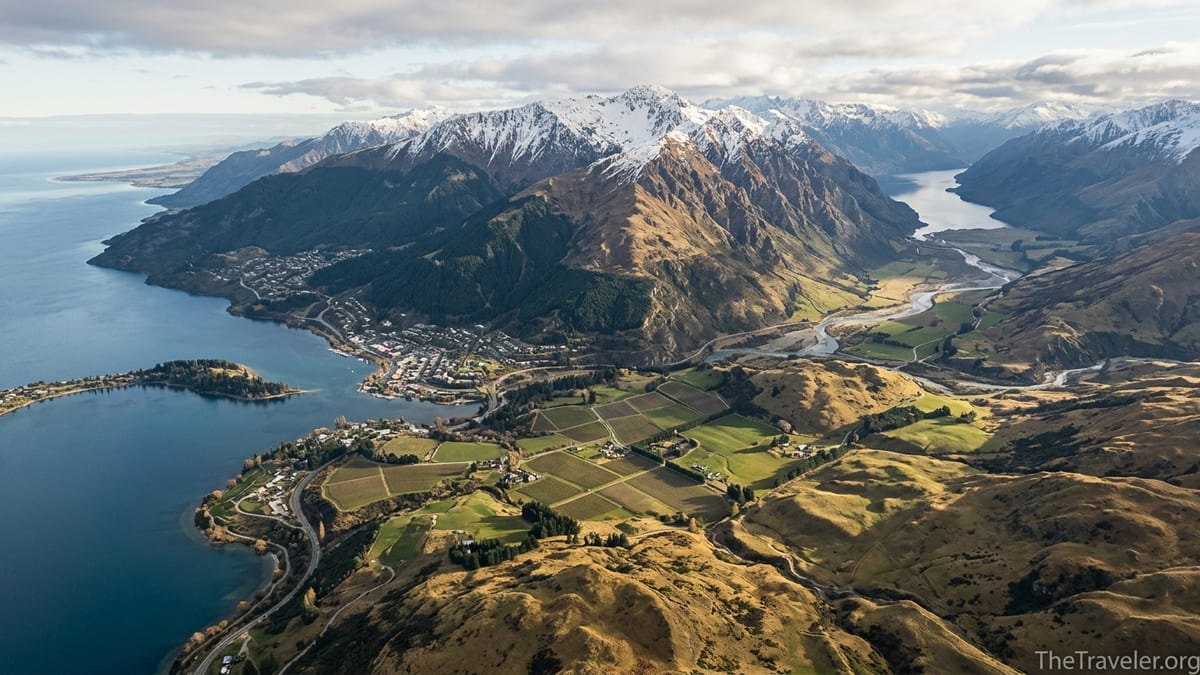
Queenstown sits on the shores of Lake Wakatipu with the Remarkables mountain range towering above, and has branded itself the "adventure capital" of New Zealand for good reason. You can bungee jump off the original Kawarau Bridge, ride the Shotover Jet through narrow canyons, or skydive above the lake. Current prices in 2026 put a classic bridge bungy around 220 NZD, the bigger Nevis Bungy close to 290 NZD, and jet boating from about 150 NZD per adult, so a couple of headline activities quickly add up.
Queenstown also works if you are not into high-adrenaline thrills. Half-day wine tours run to nearby Gibbston Valley with tastings at Central Otago wineries, lake cruises offer relaxed sightseeing, and there are numerous short walks like the Queenstown Hill track for panoramic views over town. In winter, ski fields such as Coronet Peak and The Remarkables are less than an hour’s drive, with full-day lift passes hovering around the mid-100 NZD range per adult in recent seasons.
Queenstown deserves at least three nights, and five nights is comfortable if you want time for both adventure activities and day trips. Popular side trips include an organised coach or small-group tour to Milford Sound, or self-driving the dramatically scenic route over the Crown Range to Wānaka for a day of lakeside walking and cafes. Many travellers also use Queenstown as a base to visit historic Arrowtown, or to connect with longer routes north to the West Coast glaciers or east to Aoraki/Mount Cook.
Because Queenstown is busy and comparatively expensive, it pairs well with calmer destinations. An itinerary might start with two days in Christchurch, then fly or drive to Queenstown for four days of action before slowing down in Wānaka or Marlborough. If you are short on time, flying into Queenstown and focusing your South Island stay there plus one or two out-and-back excursions is often more realistic than trying to see everything.
Milford Sound and Fiordland: Iconic Scenery on a Tight Schedule
Milford Sound is the best known corner of Fiordland National Park, with near-vertical cliffs dropping into deep, dark water and waterfalls plunging from hanging valleys. Almost everyone experiences it by boat. Standard cruises typically last around two hours and cost from roughly 120 to 180 NZD per adult depending on season and vessel size, with some operators offering nature-focused trips, buffet lunches or smaller boats that get close enough to waterfalls to soak the deck.
Reaching Milford Sound is part of the attraction. From Queenstown, it is at least a 4-hour drive each way in good conditions via Te Anau, and the road includes narrow sections and avalanche or rockfall hazard zones in winter and spring. Many visitors choose a coach-cruise-coach day trip from Queenstown or Te Anau to avoid driving fatigue. Others splurge on a fly-cruise-fly or coach-cruise-fly combination, with small-plane flights providing aerial views of glaciers and peaks at prices commonly in the 500 to 700 NZD range per person.
Milford Sound itself does not require much time on the ground. One night in Milford Sound village or at the lodge works if you want to join an early morning or late afternoon cruise in softer light, and perhaps walk a short section of the Milford Track or the Milford Foreshore walk. Otherwise, many travellers base in Te Anau for two or three nights, using one full day for Milford Sound and another for nearby walks like the Kepler Track day sections.
Milford Sound combines naturally with Queenstown and Wānaka. From Queenstown, a classic loop is to drive to Te Anau, continue to Milford for a cruise, then come back to Te Anau or Queenstown the same day. If you have more time, you can link Fiordland with the southern coast and Dunedin via the Southern Scenic Route, or cut back inland towards Aoraki/Mount Cook via Cromwell and the Lindis Pass.
Aoraki/Mount Cook: Alpine Landscapes Without Technical Climbing
Aoraki/Mount Cook National Park is the country’s highest alpine region, yet it is surprisingly accessible for non-climbers. The Hooker Valley Track is one of New Zealand’s most famous day walks. Official information from the Department of Conservation puts the return distance at about 10 kilometres, taking most people three to four hours. The well-formed gravel path crosses three swing bridges, passes glacial streams and ends at Hooker Lake with views of the Hooker Glacier and Aoraki/Mount Cook when the weather cooperates.
Other day walks include the shorter Kea Point track and the steeper Sealy Tarns route, which climbs a long series of steps to a viewpoint over Mueller Glacier. In clear weather the entire valley offers classic Southern Alps scenery: snow-capped peaks, moraine walls and milky turquoise glacial rivers. Scenic flights and heli-hikes on nearby Tasman Glacier are available from Mount Cook Village or the adjacent airstrip, with prices commonly in the 500 to 900 NZD range for combined flight and guided glacier walk experiences.
Plan to spend at least two nights in Aoraki/Mount Cook Village. That gives you one full day for the Hooker Valley Track and another for either additional hikes, a glacier activity or stargazing in the Aoraki Mackenzie International Dark Sky Reserve. Because this is a true mountain environment, weather can change rapidly. It is sensible to keep your schedule flexible enough to swap hiking and driving days if rain or strong wind closes tracks or scenic flights.
Aoraki/Mount Cook works well as a link between the east coast and the Southern Lakes region. Many travellers drive from Christchurch through Tekapo to Mount Cook, spend two nights, then continue over the Lindis Pass to Wānaka or Queenstown. Alternatively, you can arrive from Queenstown, spend a couple of nights in the park, then continue up the central South Island to Christchurch or the top-of-the-island regions.
Wānaka: Lakeside Hiking and a Calmer Queenstown Alternative
Wānaka sits an hour’s drive from Queenstown over the Crown Range or via Cromwell, but it feels more relaxed than its famous neighbour. The town hugs the shore of Lake Wānaka and is oriented around outdoor life rather than full-throttle adventure. Popular low-cost activities include walking the lakefront path, watching sunset from the rocky beach and taking half-day hikes such as the Mount Iron track, which offers 360-degree views over town and surrounding peaks.
For more serious hiking, the Roys Peak Track and the Glendhu Bay to Wānaka section of the new multi-day Te Araroa route are well known. Roys Peak in particular has become an Instagram favourite thanks to its panoramic ridge view of Lake Wānaka and the Southern Alps. Allow around five to seven hours return and be prepared for a steep, exposed climb. In winter, ski fields like Cardrona Alpine Resort and Treble Cone sit within an hour’s drive, making Wānaka a strong base for multi-day snow trips.
Two or three nights in Wānaka lets you explore a mix of hiking, lake time and local food and wine. Compared with Queenstown, accommodation and dining can be marginally more affordable, though peak-season prices still rise sharply and popular cafes fill quickly on summer weekends. Many travellers split their Southern Lakes time, staying two nights in Queenstown for high-adrenaline activities and nightlife, then two or three in Wānaka for hiking and a slower pace.
Wānaka combines smoothly with Aoraki/Mount Cook and the West Coast glaciers. One common loop is to drive from Queenstown to Wānaka, then follow the Haast Pass to the West Coast, visiting Franz Josef and Fox Glacier before looping back to Christchurch. Alternatively, you can pair Wānaka with the Fiordland region by driving the scenic route via Queenstown and Te Anau.
The West Coast: Glaciers, Rainforest and Wild Beaches
New Zealand’s West Coast between Haast and Greymouth is one of the wettest regions in the country, but all that rain feeds lush temperate rainforest and the famous glaciers of Franz Josef and Fox. Historically, guided hikes took visitors onto the glacier tongues from valley floors, but glacial retreat has made this unsafe in most conditions. Today, most on-glacier experiences are by helicopter, with typical heli-hike packages including a short flight and two to three hours on the ice, often priced in the 600 to 800 NZD range per adult.
Even without flying, the valley walks are worthwhile. Short tracks lead to glacier viewpoints, and the Lake Matheson walk near Fox Glacier offers mirror reflections of Mount Cook and Mount Tasman on still mornings. Further north, Punakaiki is known for its Pancake Rocks and blowholes, and the entire coast features dramatic beaches with driftwood and pounding surf. This is also one of the best regions to experience small, character-filled motels and local pubs rather than resort-style hotels.
The West Coast rewards those who slow down. Aim for at least two nights split between Franz Josef/Fox and another town such as Punakaiki or Hokitika. Weather disruptions are common, so if you have booked helicopter activities, build in spare time in case flights are postponed. Driving times are longer than distances suggest, with many winding, one-lane bridges and frequent stops for viewpoints and short walks.
This region lines up naturally between the Southern Lakes and the northern tip of the island. A popular route runs Queenstown to Wānaka, then via Haast Pass to the glaciers and up to Punakaiki and Westport, before crossing Arthur’s Pass back to Christchurch. From Westport you can also continue north to Nelson and Abel Tasman, making a full coast-to-coast loop.
Abel Tasman & Nelson: Golden Beaches and Coastal Trails
Abel Tasman National Park, at the top of the South Island, is the country’s smallest national park but one of its most visited. Its sheltered bays, golden sand beaches and clear water contrast strongly with the alpine landscapes further south. The Abel Tasman Coast Track is one of New Zealand’s Great Walks and can be tackled in full over three to five days, but most travellers sample it with a day trip that combines a water taxi and a section of coastal walking.
A typical day might start in Kaiteriteri or Marahau with a water taxi ride to a mid-park beach such as Bark Bay or Torrent Bay, then a 3 to 4 hour walk through native bush and along headlands to another bay where you are picked up. Expect to pay from around 100 to 160 NZD per person for combined boat transport and track access in recent seasons, with kayak tours that include guided paddling and beach picnics generally costing more.
The nearby city of Nelson and the Motueka Valley make convenient bases, offering a mix of craft breweries, galleries and farm-to-table restaurants. Two or three nights in the area gives you time for one full day in the national park, plus another exploring local wineries in the nearby Moutere Hills or simply enjoying the beach. In summer, book accommodation and water taxis well in advance, especially around Christmas and New Year.
Abel Tasman links easily with Marlborough and Picton. Many travellers arriving by ferry from Wellington head first to Nelson and Abel Tasman, then continue east to Marlborough’s vineyards. From there, you can drop south down the east coast through Kaikōura towards Christchurch, or swing inland via mountain passes to reach the Southern Lakes.
Marlborough: Wine Country and Sunlit Sounds
Marlborough, around Blenheim and the top of the east coast, is New Zealand’s largest wine region and especially known for its sauvignon blanc. Vineyards line the Wairau and Awatere valleys, with names that appear on supermarket shelves worldwide. From a traveller’s point of view, this means many cellar doors and winery restaurants in a compact area that is easy to explore by bike or on small-group wine tours. Half-day guided tours generally start around 120 to 160 NZD per person including tastings at several wineries.
The Marlborough Sounds, especially Queen Charlotte Sound, offer a different kind of landscape: flooded valleys, forested hills and sheltered bays that are best seen by boat or from the Queen Charlotte Track. Day cruises range from mailboat runs that drop off supplies to remote lodges to dedicated wildlife and scenery trips. Some operators combine boat transport with sections of the Queen Charlotte Track, which is a popular multi-day walk and bike route.
Marlborough is ideal for two to three days of slower travel, especially after an activity-heavy stint in Queenstown or on the West Coast. Spend one day visiting wineries by bike, stopping at cellar doors for tastings and a leisurely lunch, then another day out on the water in the Sounds. Blenheim and Picton have a range of accommodation from budget motels to boutique lodges, with prices generally lower than peak-season rates in Queenstown or Abel Tasman.
Geographically, Marlborough is a natural crossroads. It is the entry point for many travellers crossing between the North and South Islands by ferry. From here you can head west to Nelson and Abel Tasman, south along the coast to Kaikōura and Christchurch, or inland via the alpine passes to the Southern Lakes. Wine lovers may want to compare Marlborough with Central Otago wines around Queenstown and Wānaka, making both regions part of a broader tasting-focused itinerary.
Kaikōura, Christchurch and Dunedin/Southland: Wildlife, Gateways and the Deep South
Kaikōura, on the east coast north of Christchurch, is one of the South Island’s wildlife hotspots. Deep ocean trenches close to shore bring nutrient-rich waters that attract sperm whales, dolphins and seabirds. Whale watching tours typically last around 2.5 to 3 hours on the water, with adult prices often in the 170 to 200 NZD range in recent brochures. Scenic flights in small planes or helicopters offer a bird’s-eye view of both whales and the dramatic coastline in about 30 minutes of flight time.
Two nights in Kaikōura works for most itineraries, allowing one day for a whale watching tour and another for the clifftop Kaikōura Peninsula Walkway or a dolphin swimming trip. The town was damaged by a major earthquake in 2016 but key visitor infrastructure such as the highway, railway and marina have been rebuilt. Today it is once again a popular stop on the coastal route between Picton/Marlborough and Christchurch.
Christchurch is the South Island’s largest city and a common arrival or departure point. Since the 2011 earthquake, its cityscape has been steadily rebuilt, with a mix of restored heritage buildings and new architecture. Most visitors spend one or two nights here to adjust after a long flight, visit the Botanic Gardens and the Canterbury Museum precinct, or take the historic tram and gondola. Christchurch is also a practical place to rent or return a vehicle and stock up at supermarkets before heading into more remote regions.
Further south, Dunedin and the wider Southland region reward travellers who value wildlife and rugged coasts over adrenaline tourism. The Otago Peninsula just outside Dunedin hosts colonies of little blue penguins and the only mainland breeding colony of northern royal albatross, accessible by guided tours. Continuing into Southland brings you to the Catlins, a sparsely populated coastal region with waterfalls, sea caves and beaches where sea lions often haul out. Plan at least two nights in Dunedin and two in the Catlins or wider Southland to do the area justice.
These eastern and southern regions are easy to combine. For example, you might fly into Christchurch, travel north to Kaikōura and Marlborough, then cross to Nelson and Abel Tasman before looping back through the West Coast and Southern Lakes. Alternatively, base your route around wildlife by linking Kaikōura, Dunedin, the Catlins and a Fiordland trip to Milford Sound.
The Takeaway
New Zealand’s South Island is not a single destination but a patchwork of distinct landscapes: alpine peaks around Aoraki/Mount Cook, the fiords of Milford Sound, glacier valleys on the West Coast, sunlit vineyards in Marlborough, golden beaches in Abel Tasman and wildlife-rich coasts in Kaikōura and Southland. Rather than trying to tick every box in a single trip, focus on the themes that matter most to you: adventure, hiking, wine, beaches or wildlife.
As a rule of thumb, aim for at least 10 to 14 days if you want to combine Queenstown, Milford Sound, Aoraki/Mount Cook and one top-of-the-island region such as Abel Tasman or Marlborough. With three weeks, you can comfortably add the West Coast, Kaikōura and the deep south around Dunedin and the Catlins. However long you have, building your itinerary around a few key basecamps and allowing for New Zealand’s changeable weather will help you get the best from the South Island’s fiords, glaciers, Alps, wildlife and wine.
FAQ
Q1. How many days do I need for New Zealand’s South Island? Most travellers should allow at least 10 to 14 days for a first visit, which is enough to see Queenstown, Milford Sound, Aoraki/Mount Cook and either the West Coast or Abel Tasman/Marlborough at a moderate pace.
Q2. Is it better to base in Queenstown or Wānaka? Queenstown suits travellers who prioritise adventure activities, nightlife and easy access to organised tours, while Wānaka is better if you prefer hiking, a calmer atmosphere and slightly lower peak-season crowds.
Q3. Do I need to book Milford Sound cruises in advance? In peak season from December to February, it is wise to book Milford Sound cruises several weeks ahead, especially if you want specific departure times or small-boat nature cruises; in shoulder seasons, a few days’ notice is often enough.
Q4. Can I visit the West Coast glaciers without booking a helicopter tour? Yes, there are free valley walks to viewpoints near Franz Josef and Fox Glacier, and nearby tracks like the Lake Matheson loop still offer excellent scenery, although on-ice experiences now generally require helicopter access.
Q5. When is the best time to hike in Aoraki/Mount Cook National Park? Late spring to early autumn, roughly October to April, usually offers the most reliable track conditions for popular walks like the Hooker Valley Track, though you should always check local forecasts and Department of Conservation updates.
Q6. Is driving in the South Island difficult for first-time visitors? Driving is straightforward if you are comfortable with winding roads and driving on the left; allow extra time, avoid night driving in rural areas, and take regular breaks, as distances between towns can be longer than you expect.
Q7. How far in advance should I book accommodation in places like Abel Tasman and Queenstown? For stays during school holidays or over Christmas and New Year, booking three to six months ahead is sensible, while in shoulder seasons one to two months is often enough for a reasonable choice of mid-range options.
Q8. Can I rely on public transport to get around the South Island? Long-distance buses and some shuttle services exist between major hubs, but services may only run once daily on certain routes; hiring a car or campervan generally offers more flexibility, especially for accessing national parks and remote coasts.
Q9. Is Kaikōura worth adding if I am already visiting Milford Sound or Dunedin for wildlife? Kaikōura specialises in marine wildlife, especially whales and dolphins, while Milford Sound focuses on fiord scenery and Dunedin/Southland excel for penguins and seabirds, so including Kaikōura adds a different, ocean-focused experience.
Q10. How should I budget for activities on the South Island? Beyond fuel and food, plan for at least a few high-cost experiences such as a 150 to 300 NZD adventure activity in Queenstown, a 120 to 180 NZD Milford Sound cruise, or a 120 to 160 NZD wine tour, then fill the rest of your time with low-cost hikes and scenic drives.