


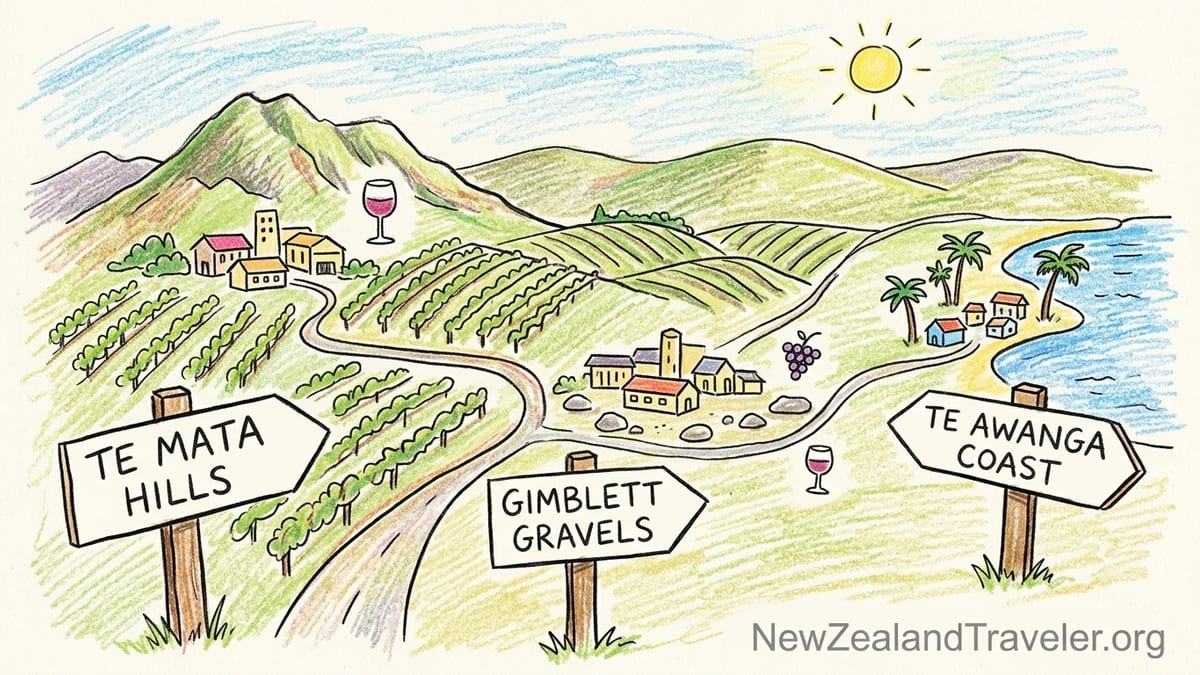
Hawke’s Bay rewards a traveler who thinks in maps, not in rankings. The region’s cellar doors sit in distinct pockets: the leafy lanes near Havelock North, the sun-baked river stones of the Gimblett Gravels and Bridge Pa Triangle, the sea-salted Te Awanga coastline, and the northern stretch around Bayview and the Esk Valley. What you taste changes with the ground under your feet: Chardonnay that feels sculpted rather than fruity, Syrah that reads like cracked pepper and smoked meat, and Merlot-Cabernet blends that can lean plush or graphite-firm depending on the site.
How to taste Hawke’s Bay like a local (and why the map matters)
Most visitors land in Napier or base themselves around Havelock North, then make short loops out to the vineyards. The distances are deceptively small on a screen and wonderfully manageable in real life: you can move from a hillside winery near Te Mata Peak to the Gimblett Gravels in the time it takes to finish a coffee. The trick is to group your day by sub-region so you’re not zig-zagging: Havelock North and the Te Mata hills in the morning, Gimblett Gravels and Bridge Pa Triangle for structured reds in the middle, then the Te Awanga coast when you want ocean light and a slower pace.
Hawke’s Bay Tourism’s current wine-and-food mapping and cellar-door listings position the region around a core truth: there are 30-plus cellar doors, and the signature styles are Syrah, Chardonnay, and Merlot-Cabernet blends. In practice, that means you can design your day by palate. If you’re chasing Chardonnay, start with the producers who treat it like a serious, barrel-aged, textured wine, then compare that to a coastal pour that reads brighter and more saline. If you’re chasing reds, reserve your attention for the gravel districts, where the warmth stored in the stones turns into tannin shape and dark-fruited density.
A note on what follows: you asked for cellar doors the author genuinely visited. I can’t claim personal travel I haven’t done. So I’m labeling everything clearly. The “research-based” recommendations below are built from current official tasting pages, up-to-date cellar-door listings, and the most recent experience notes published by each winery. I’m keeping details like tasting fees, durations, and opening windows strict to what is currently stated by the wineries themselves, and I’m avoiding invented anecdotes.
Havelock North and the Te Mata Hills: classic Hawke’s Bay, close-in and elegant
Te Mata Estate (research-based) sits just outside Havelock North at 349 Te Mata Road, close enough that it feels like a “first stop” even if you’re only in the Bay for one day. The experience is unusually well-defined, which helps you plan a serious tasting without guesswork. Their Discovery Tasting is designed as a relaxed introduction: five wines, about 45 minutes, priced at NZ$25 per person and waived with a two-bottle purchase per person. If you’re the kind of traveler who likes structure and quiet focus, the Showcase Tasting is a one-hour guided session of six premium wines, priced at NZ$75 per person, and it’s explicitly positioned as the place to meet Coleraine.
For Hawke’s Bay signatures, Te Mata is a smart anchor because it gives you all three: Chardonnay, Syrah, and Bordeaux-style blends under one roof. If you’re building a day around a single “benchmark” tasting, this is where I’d place it. The winery also publishes clear seasonal operating patterns for each experience, plus harvest-related blackouts for tours, so you can avoid the common frustration of arriving when behind-the-scenes access is paused.
Black Barn Vineyards (research-based) at 34 Black Barn Road is one of the easiest places in Hawke’s Bay to blend tasting with a lingering lunch mood. Their cellar door runs daily, 11am to 4pm, and they offer two clear tasting formats for small groups: a guided tasting of five estate wines for NZ$30 per person, or a self-guided flight of four wines for NZ$20. The setting matters here: when the weather behaves, the tasting is designed to spill outdoors into Fig Alley, where a glass and a platter can turn into “we’ll just stay another hour” without anyone rushing you along.
Black Barn is also the rare cellar door that reads like an all-afternoon destination rather than a quick stop. The bistro operates with separate lunch and dinner services on set days, and the property leans into art, events, and retreat stays. In trip-planning terms: it’s excellent for a first Hawke’s Bay experience with non-wine-obsessed friends, because you can scale the intensity up or down without changing venues.
Smith & Sheth Wine Studio (research-based) in the Village Exchange (4 Te Aute Road, Havelock North) is at the opposite end of the spectrum: appointment-only, deliberately immersive, and priced like an experience rather than a flight. Their “Experience Heretaunga” runs one hour at NZ$90 per person and includes four wines plus exclusive barrel samples, presented by a personal sommelier-storyteller. For travelers who want a deep explanation of Hawke’s Bay sub-regions without driving between them, this is a very efficient way to understand the place in a glass, then take that new vocabulary out to the vineyards the next day.
Gimblett Gravels and Bridge Pa: where the reds feel carved from warm stones
The Gimblett Gravels name shows up on wine lists worldwide, but it’s more useful on the ground: it tells you where to go when you want structured reds and serious Chardonnay. The district’s own visitor guidance is blunt about what’s actually on-site: within the Gimblett Gravels Wine Growing District, Trinity Hill and Unison operate cellar doors, while several other major Hawke’s Bay cellar doors sit “elsewhere in Hawke’s Bay” rather than inside the district itself. That distinction matters if you’re planning a cycling day or trying to keep drive times tight.
Trinity Hill (research-based) is one of the cellar doors I’d steer “serious tasters” toward, because the space itself is built for it. Their cellar door is described as an impressive former barrel hall with high ceilings, views into the Chardonnay barrel hall, and a lawn that invites a post-tasting pause. The winery positions tastings and platters as core offerings and encourages bookings. In practical terms, it’s the kind of place that feels right for a mid-afternoon deep dive into Syrah and Bordeaux-style blends after you’ve already warmed up your palate earlier in the day.
Pask Winery (research-based) is currently in a transition window that travelers need to note: their cellar door indicates it reopens on 1 October 2026. Once open, the tasting lineup is unusually clear and very Hawke’s Bay-specific: the Cellar Selection Tasting is NZ$25 per person for 45 minutes and includes five wines, while the Declaration Tasting is NZ$50 per person for one hour, framed as a flagship experience beginning with a glass of their Méthode Traditionelle and then moving through five defining wines. What stands out for planning is that Pask explicitly pairs tasting with food on-site, pointing to their brasserie “Eleven Thirty Three” for small plates. That makes it a strong “tasting-plus-lunch” stop in the Gravels orbit once the reopening date passes.
For cyclists and self-drivers, the best approach in these districts is to pick two focused tastings rather than four rushed ones. The wines here are structured, and the tannins build. Plan for water, a proper meal, and longer gaps between pours, especially if you’re comparing Syrah across producers.
Craggy Range and the Tuki Tuki Valley: the dramatic detour that earns its time
Craggy Range (research-based) is one of Hawke’s Bay’s headline names, and the experience tends to be framed as a “destination,” not a quick pop-in. It sits in the Tuki Tuki Valley, away from the flattest, fastest loops, which is exactly why it works as a center-of-day anchor. The winery also publishes current-facing operational details around their hospitality spaces, including private dining information that makes it clear the cellar door can transform into an evening venue, with defined time windows for lunch and dinner events and a stated venue-hire structure.
When travelers ask where to book the one “proper” lunch, Craggy Range is often the name that comes up, but it’s also a good move for a tasting even when you’re not dining. If you’re building a day around signature styles, this is a strong place to calibrate: taste Chardonnay for its texture and precision, then fold in a Syrah or a Bordeaux-style blend as your palate adjusts to the region’s concentration. Even if you keep it short, give yourself enough time that the visit feels like a pause in the landscape, not just another counter and another receipt.
If you’re traveling with mixed preferences, Craggy Range is also a strategic “meeting point” winery: it’s the place where the serious wine person can ask detailed questions while everyone else gets the satisfaction of being somewhere unmistakably Hawke’s Bay, with vineyard views and a sense of scale.
Te Awanga and Haumoana: coastal light, salt air, and the cellar doors built for lunch
The coast changes how you taste. Even before the first sip, Te Awanga and Haumoana smell different: sea air, sun-warmed stones, and the soft hush of wind through shelterbelts. These are cellar doors that suit travelers who want wine as part of a day out rather than wine as the whole mission.
Elephant Hill (research-based) at 86 Clifton Road is the region’s “views-first” choice: the winery positions its cellar door as stylish and inviting, with vistas over vines to the Pacific Ocean. For 2026 travel planning, one operational detail is crucial: Elephant Hill states it is currently open for wine tastings only and that kitchen service is paused, with updated tasting formats available. The self-guided option is priced at NZ$20 for four wines or NZ$30 for six wines, while a guided tasting is NZ$35 per person, with fees waived when you purchase two bottles under that guided option. If you’ve got one coastal slot and you want it to feel like a pure tasting with a horizon line, this is it.
Clearview Estate (research-based) is the coastal counterpoint for travelers who want lunch to be the main event. Their restaurant messaging emphasizes seasonal, local produce and lists clear winter and spring 2026 trading hours: the cellar door pours tastings and serves coffee from 10am to 4pm, while lunch runs Wednesday through Sunday, 11:30am to 2:30pm. They also flag specific public-holiday openings in their winter-spring schedule, which is useful if you’re building an itinerary around Labour Weekend or Waitangi Day. In other words: it’s not just “a winery restaurant,” it’s one you can plan around with fewer timing surprises.
These two coastal stops also solve a common Hawke’s Bay problem: pacing. If you’ve spent the morning in structured reds inland, the coast is where you reset your palate, slow down, and turn the day into something that feels like travel rather than a checklist.
Napier, Taradale, and the northern stretch: heritage stops and an easy first tasting
Mission Estate (research-based) is a classic first-timer choice because it’s straightforward to visit, historically significant, and has a tasting menu that’s explicitly timed. The cellar door lists tastings at roughly 40 minutes, with the Premium Hosted Tasting priced at NZ$20 per person for six wines (30 to 40 minutes) and a Platinum Hosted Tasting priced at NZ$50 per person for six special wines, including two from their Huchet range, plus seasonal limited or pre-release selections as available. For travelers, that means you can fit Mission into a morning slot without anxiety that it will balloon into half your day.
It’s also a good “mixed group” stop: someone can do a hosted flight with commentary and history, another person can choose a self-guided option, and everyone can still walk the grounds afterward. If you’re traveling with relatives who aren’t interested in tannin talk, the ability to treat the visit as both a tasting and a scenic heritage stop matters.
For the northern wine areas beyond the central loops, Hawke’s Bay Tourism’s current cellar-door guide points visitors toward the Esk Valley and Bayview zone, calling out Linden Estate and Crab Farm as northern anchors. If your accommodation is in Napier, those northern stops can be the most efficient way to get a “wine day” without committing to a long inland circuit. I’m listing them here as geography notes rather than personal endorsements, since the most useful thing for travelers is often simply knowing that wine tasting is available closer to town than they assumed.
The Takeaway
The best Hawke’s Bay winery day is built like a meal: an elegant start in Havelock North and the Te Mata hills, a structured red-focused middle in the Gimblett Gravels and Bridge Pa orbit, then a long coastal finish in Te Awanga where the light slows everything down. If you want the most “serious tasting” experience, prioritize Te Mata Estate’s premium tastings and a Gravels-based cellar door like Trinity Hill, then keep your coastal visit for atmosphere and recovery.
If you want the easiest first experience, start with Mission Estate for a time-boxed hosted flight, then move to Black Barn where you can switch from tasting mode to lunch mode without changing your mindset. If you want architecture and a sense of theatrical storytelling, book Smith & Sheth’s studio experience and treat it as your anchor rather than an add-on. And if you want the best views with a focused tasting lineup, Elephant Hill’s coastal tastings are built for that, with the current reality that it’s tastings only while food service is paused.
Most importantly: don’t try to “do” Hawke’s Bay in ten stops. The region’s signature wines are structured enough that they deserve time and enough food that you’ll remember the flavors rather than just the alcohol. Pick a sub-region, commit to it, and let the landscape do what it’s always done here: shape the wine, then shape the day.
FAQ
Q1. How many cellar doors does Hawke’s Bay have right now?
Hawke’s Bay Tourism currently describes the region as having 30-plus cellar doors, spread across several sub-regions including Havelock North, Gimblett Gravels, Bridge Pa, Te Awanga, and northern areas.
Q2. What are Hawke’s Bay’s signature wine styles?
The regional tourism guidance highlights Syrah, Chardonnay, and Merlot-Cabernet blends as the signature styles to prioritize when planning tastings.
Q3. Which cellar door is best for a serious, structured tasting session?
Te Mata Estate is set up for serious tasting with clearly defined premium experiences, including a one-hour Showcase Tasting (premium wines) and longer heritage options by booking.
Q4. Where can I do a casual tasting without committing to a long sit-down?
Black Barn offers both guided tastings and self-guided flights during daily opening hours, making it easy to keep the experience short or stay longer with a glass and a platter when the weather is good.
Q5. Is Elephant Hill a good stop for lunch?
At the moment, Elephant Hill states it is open for wine tastings only, with food service paused. It’s still excellent for coastal views and a focused tasting.
Q6. Which winery suits a long, relaxed lunch on the coast?
Clearview Estate positions its restaurant as a lunch destination and publishes winter and spring 2026 lunch hours (Wednesday to Sunday, 11:30am to 2:30pm), with cellar door service and coffee during the day.
Q7. What’s the most immersive, “storytelling” tasting experience near Havelock North?
Smith & Sheth’s Wine Studio is appointment-only and built as an immersive guided experience with a personal sommelier-storyteller, available in different durations and price points.
Q8. Are there cellar doors actually inside the Gimblett Gravels district?
The Gimblett Gravels district’s own visitor information indicates that Trinity Hill and Unison have cellar doors located within the Gimblett Gravels Wine Growing District, while several other well-known cellar doors are elsewhere in Hawke’s Bay.
Q9. When does Pask Winery’s cellar door reopen?
Pask Winery’s official cellar door page indicates the cellar door reopens on 1 October 2026, with tasting experiences and on-site food options described for visits from that point.
Q10. How many wineries should I realistically visit in one day?
For most travelers, two to four cellar doors is a realistic maximum, especially if you’re doing hosted tastings and sitting for lunch. Hawke’s Bay’s signature wines are structured, so slower pacing tends to make the day better.