


I arrived in Hawke’s Bay thinking I was booking a place to sleep near wineries. I left convinced that the accommodation can be the winery experience. When your deck sits at the end of a vine row, your morning coffee comes with birdsong and mist lifting off the valley, and your evening plans revolve around whether you can safely get back after a tasting, staying “among the vines” changes the whole rhythm of the trip. You taste differently, you pace yourself differently, and you notice details you would never catch while commuting from town: the way light hits the canopy at sunrise, the hush after the last cellar-door car leaves, and how a walk to dinner through vineyard lanes feels like the luxury you came for.
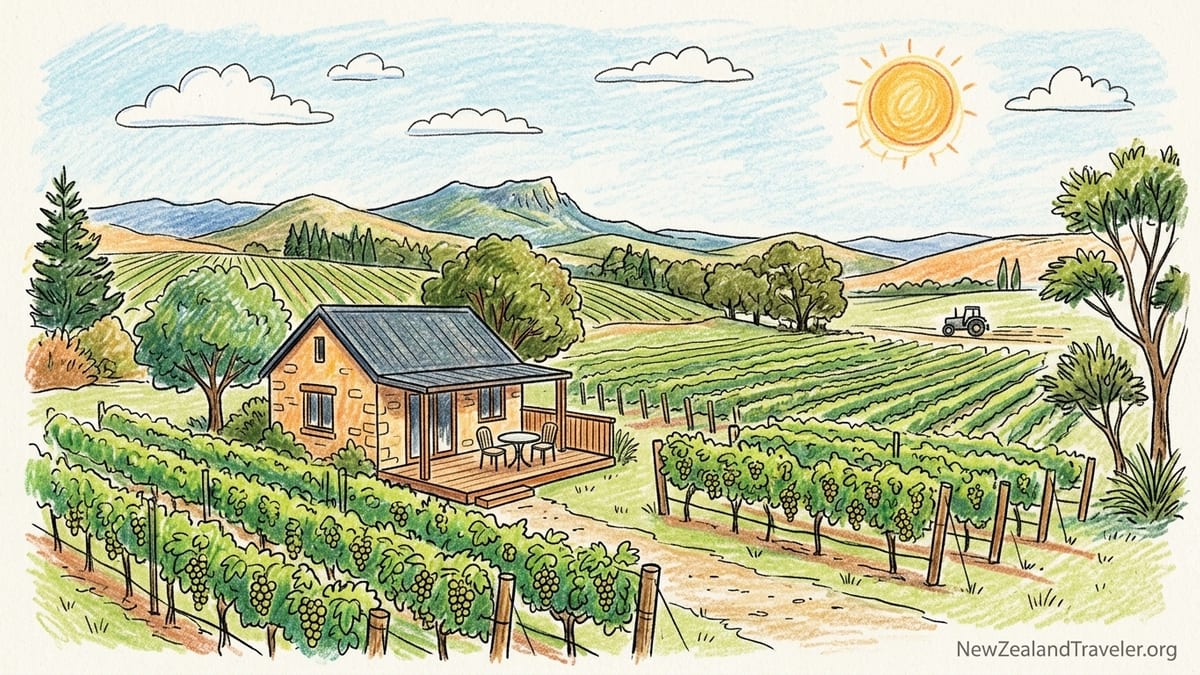
Why a Vineyard Stay Feels Like a Different Hawke’s Bay
Hawke’s Bay is compact enough that you can technically base yourself almost anywhere and still reach a cellar door in 20 to 30 minutes. The catch is what happens at the edges of the day. In a general hotel, the wine part begins when you drive out and ends when you drive back. In a vineyard stay, the wine country is the background noise of your whole weekend: tractors in the distance, dew on leaves at dawn, and that sudden quiet at night when the road traffic disappears.
On my first evening staying on a working vineyard, the biggest surprise was how quickly “one more tasting” stopped appealing. You do not need to chase. You can start later, linger longer, and finish the day with a bottle you already know you love, enjoyed outdoors with the vines and hills in full view. It is an easier, softer style of travel, especially in Hawke’s Bay where so many top cellar doors sit in clusters around Havelock North and the coastal Te Awanga strip.
There is also the practical reality: drinking and driving is not the kind of risk you want on rural Hawke’s Bay roads. Vineyard accommodation makes it simpler to plan transport around tasting. Many tour operators offer accommodation pickup and drop-off across Napier, Hastings, and Havelock North, which means you can commit to a proper tasting day without worrying about the drive back.
Havelock North and the Tuki Tuki Valley: Wake Up Inside the Postcard
If your mental image of Hawke’s Bay includes Te Mata Peak in the distance and vines stretching towards a mountain backdrop, start around Havelock North and the Tuki Tuki Valley. This is where vineyard stays are not an add-on. They are integral to the region’s high-end wine experience, with cellar doors, restaurants, and walking-friendly vineyard roads that make the days feel unhurried.
Craggy Range’s Vineyard Cottages at its Giants Estate are the classic example of a vineyard stay designed to make you slow down. The cottages are positioned among the vines with private terraces facing the rows and Te Mata Peak beyond. The set-up encourages lingering: a well-appointed kitchen, a freestanding wood burner for cooler nights, and inclusions that shape the stay around wine rather than simply providing a bed. At the time of writing, the official cottage inclusions list a complimentary bottle of Craggy Range wine from the Estate Collection, a complimentary wine experience and tour with a cellar-door host, locally sourced gourmet continental breakfast provisions replenished daily, and daily servicing. That combination matters because it turns day one into a true arrival experience: settle in, taste on-site, then walk or short-drive to dinner at the estate restaurant without trying to squeeze everything into a single afternoon.
What struck me most from on-the-ground inspection is the privacy. Even when the estate has a buzz at lunch, the accommodation zones feel buffered by lawns and vine blocks, so you can sit outside in the evening and hear almost nothing beyond insects and the occasional distant car. The only planning detail is that staying in the valley makes you want to drink at the estate restaurant, which is exactly when you should not be driving. The easiest answer is to make the accommodation itself the centerpiece for your tasting day, then use a tour pickup on the next day for a broader sweep of wineries in the wider Hastings districts.
For a smaller, more intimate take on “sleeping among the vines,” Tuki Vineyard Cottage in Havelock North is purpose-built to look over the vineyard. It is a one-bedroom, self-contained cottage with kitchen and lounge that opens toward the vines, and it is positioned to feel like a private hideout rather than a resort. This kind of stay suits couples who want an uncomplicated base: wake up, step outside, and you are already in wine country. The trade-off compared with a large estate is fewer on-site services, so plan breakfasts and dinners intentionally, and consider booking a driver for any day you plan to taste beyond walking distance.
Black Barn Retreats: Vineyard Living with Dinner Next Door
Black Barn’s accommodation lineup is one of the strongest arguments for choosing a vineyard stay over a standard hotel in the village. You are not simply near the winery. You are embedded in an ecosystem: bistro and cellar door on the same road, accommodation styles that range from heritage cottages to modern lodges, and the feeling that your “where we are staying” becomes part of the itinerary.
One of the most inspection-friendly options is Rush Cottage, a stone shepherd’s cottage positioned opposite the bistro and cellar door on Black Barn Road. It is marketed as secluded and private with views across the vines, and it is priced from $475 per night for a two-night minimum stay at the time of the listing. The cottage configuration is worth knowing in advance: two bedrooms upstairs, with a single bathroom and a separate toilet downstairs. For some travelers it is charming and totally workable, especially for a couple or two couples who spend most of the day out. For others, that layout is the kind of detail that can quietly shape the comfort of the stay.
What Black Barn gets right for wine travelers is the first-morning rhythm. Rush Cottage includes breakfast provisions for your first morning, which removes the friction of waking up in rural wine country and realizing you need to drive before coffee. That small convenience matters, especially if you arrive late and want to keep your first night simple: a glass in the garden, an early sleep, and then a slow morning with vineyard views before tasting.
For exploring, the location is a sweet spot. You are close enough to Havelock North village for restaurants and supplies, yet far enough out that nighttime quiet feels real. The only consistent challenge is transport after dinner if you drink more than a token sip. The practical fix is to treat at least one night as a “stay-in-the-zone” evening: book dinner on-site at the bistro, enjoy the cellar door earlier in the day, and keep the car parked. For the bigger touring day, lean on operators with accommodation pickup so your tasting schedule does not depend on who draws the short straw as the driver.
Hastings Wine Districts: Gimblett Gravels and Highway 50 Without the Commute
When people talk about the Hastings side of Hawke’s Bay wine, the conversation often turns to the bigger districts and bold reds. This is also where a vineyard stay can make a trip feel logistically easier. Rather than zig-zagging from Napier or a generic motel strip, you can choose accommodation that is literally within the vineyard landscape you came to see.
Unison Vineyard on Highway 50, just outside Hastings, offers boutique self-contained accommodation with vineyard views, with options that range from a romantic suite for two to a larger unit when available. The property’s stay page is unusually concrete about how it ties accommodation to wine: guests can pre-order platters and wine to be ready on arrival, and all guests enjoy complimentary tasting for over-18s whenever the cellar door is open, plus an additional discount off wine purchased during the visit. That is exactly the kind of detail that makes a vineyard stay distinct from a general hotel, because it turns “checking in” into “settling in with a tasting.”
From an on-the-ground traveler perspective, Highway 50 stays are less about dramatic coastal scenery and more about convenience. You wake up close to where you will taste, which means your day can start at the first appointment rather than in traffic. It also means you can build the trip around short drives and early returns. If you are the type who likes to reset in the late afternoon, shower, then go out again for dinner, this base makes that easy.
The challenge is that you still need a safe plan for transport if you taste heavily. The good news is Hawke’s Bay is well served by tour operators who pick up in Hastings and Havelock North, and there are airport-to-town shuttles and taxi options for arrivals and departures. If your goal is a serious tasting day, book pickup ahead and treat the vineyard stay as a calm, quiet anchor point rather than a place you only return to at midnight.
Te Awanga: Coastal Vines, Sea Air, and Sunset That Pulls You Outside
Te Awanga is where Hawke’s Bay wine country meets the coast, and staying here feels different from the inland districts. The light is sharper, the evenings stretch out, and the best moments often happen when you are not actively “doing” anything: sitting outside as the temperature drops, watching the sky fade toward the Pacific, and realizing you have not checked the time in an hour.
If you want dedicated accommodation that is explicitly framed around sunrise and sunset on the property, Te Awanga Cottages leans into that mood. Its overview copy promises a relaxing retreat and calls out enjoying the sun rising and setting over the Hawke’s Bay property. It also flags minimum stay requirements for holiday or special-event weekends. For travelers, that is a practical planning detail: these coastal stays can be popular around long weekends and event dates, so the “just one night” idea may not fit your calendar.
For a more winery-integrated coastal stay, Elephant Hill’s accommodation offering is positioned as a high-end lodge experience connected to the winery brand. The winery’s official contact information separates the cellar door and restaurant at Clifton Road from “The Lodge” contact and address, and the lodge’s own listing of inclusions is explicit about what you get as a stay guest. The Main Lodge listing includes a complimentary tasting and tour at Elephant Hill for stay guests, a complimentary minibar including a bottle from Elephant Hill’s Icon Range, and continental breakfast supply, alongside features like heated floors and a lap pool. Even if you never leave the property, those inclusions shape the stay into a wine-country immersion rather than simply luxury lodging.
Clearview Estate, also on Clifton Road, adds another layer to the Te Awanga appeal: you can stay on-site in the historic Clearview Homestead. The winery frames it as part of the estate experience, and the key travel advantage is obvious once you see the map: you are in walking distance to cellar doors and close to the coast, which can reduce the need to drive between tastings if you structure your day around one or two nearby venues and a long lunch. The caution is that “walking distance” and “safe after drinking” are not the same thing for everyone, especially at night on unlit rural roads, so plan your evening return conservatively.
Eskdale: Group-Ready Vineyard Stays for Celebrations and Long Weekends
Not every vineyard stay in Hawke’s Bay is designed for couples. Eskdale, north of Napier, is where the group-friendly version of the experience shines: big houses, multiple bedrooms, and the kind of indoor-outdoor flow that turns a winery weekend into a celebration base.
Kiwiesque in Eskdale markets itself directly as luxury vineyard accommodation for small and large groups, with options like a Vineyard Villa sleeping 10 and a Luxury Lodge sleeping 18, as well as booking the whole property for up to 28. The property messaging is geared toward weddings, reunions, and corporate groups, which is useful because it sets expectations. This is not the place you choose if you want to disappear into total solitude as a couple. It is the place you choose when the vineyard stay itself is the venue, and the vines and rural views are the backdrop for a shared weekend.
From an inspection standpoint, the big question with group vineyard stays is always nighttime quiet. In Eskdale, you are far enough from central Napier and Hastings that the evenings naturally calm down, and that can be a blessing after a day of tasting. The second question is transport. With a larger group, rideshare and taxis can be harder to coordinate in rural pockets, so the smartest move is to pre-book a private driver or a tour company that can run a full-day custom itinerary and return everyone to the same address. It costs more upfront, but it often costs less than the hidden friction of coordinating multiple cars and designated drivers.
Eskdale also works for travelers who want wine plus outdoor time. When you are not tasting, you can lean into a slower itinerary: late breakfast, a half-day of wineries, then back to the property for a long dinner at home. This is where “sleeping among the vines” makes exploring easier rather than harder. You do fewer stops, but each stop feels deeper.
The Takeaway
The biggest change that vineyard accommodation brings to a Hawke’s Bay trip is not the view, though the view helps. It is the pacing. You stop treating wineries as boxes to tick and start treating them as places you can return to, even within the same day. You become more selective with tastings because you are not chasing a checklist, and you gain the freedom to build mornings and evenings around the landscape that drew you here in the first place.
Havelock North and the Tuki Tuki Valley deliver the quintessential vines-and-peak panorama with high-comfort cottages and estate-level dining, while Black Barn makes it easy to combine vineyard quiet with an on-site bistro. Hastings districts reward travelers who want a base close to serious tasting terrain, especially when accommodation comes with cellar-door access and complimentary tastings. Te Awanga trades inland hills for coastal air and sunsets, with options ranging from cottage retreats to high-end lodge stays with tastings included. Eskdale is the group wildcard: the kind of place where the vineyard stay becomes the weekend’s centerpiece.
If you plan one thing carefully, make it transport after drinking. Build at least one day around pickup and drop-off wine tours, and treat your vineyard stay as the reset point in between. Done well, sleeping among the vines does not make exploring harder. It makes it calmer, safer, and far more memorable.
FAQ
Q1. What makes a vineyard stay different from a hotel in Napier or Hastings?
In a vineyard stay, the vineyard setting is part of your day from sunrise to night, and many properties include tastings, wine, or direct access to cellar doors on-site or next door.
Q2. Which Hawke’s Bay area is best for staying among the vines?
Havelock North and the Tuki Tuki Valley are the classic choice for vineyard cottages with vineyard rows and Te Mata Peak views, while Te Awanga is ideal if you want coastal air and sunset light.
Q3. Do any vineyard stays include wine or tastings?
Yes. Some properties list inclusions like a complimentary bottle on arrival and a hosted wine experience, while others offer complimentary tastings for stay guests during cellar door hours.
Q4. What is the easiest way to handle transport after wine tastings?
Book a wine tour that provides accommodation pickup and drop-off in Napier, Hastings, or Havelock North, or pre-arrange a private driver for the day you plan to taste the most.
Q5. Is it quiet at night when you stay on a vineyard?
Generally, yes. Most vineyard properties are set back from town traffic, and once cellar door activity ends, the evenings tend to be very calm, especially in rural pockets.
Q6. Are vineyard stays good for couples who want privacy?
Many are designed exactly for that, with self-contained cottages, private terraces, and vine-block buffers that keep you out of view even when the winery is busy during the day.
Q7. Are there vineyard stays suitable for large groups?
Yes. Some Eskdale vineyard properties are set up for multi-bedroom stays that can accommodate family reunions, corporate groups, and wedding parties, often with exclusive-use options.
Q8. Will staying in a vineyard make it harder to visit restaurants at night?
It can, depending on your location and how much you drink with dinner. Choose a property with an on-site restaurant, dine earlier, or plan a taxi or driver if you want to go into town.
Q9. Are minimum stays common for vineyard accommodation?
Yes. Two-night minimums are common, and some coastal or event-weekend properties require longer minimum stays, especially around holiday periods and special weekends.
Q10. How many nights should I plan for a Hawke’s Bay vineyard stay?
Two nights is the minimum that feels worthwhile, but three nights is the sweet spot: one slow estate day, one tour day with driver pickup, and one flexible day for beaches, markets, or a final tasting.