


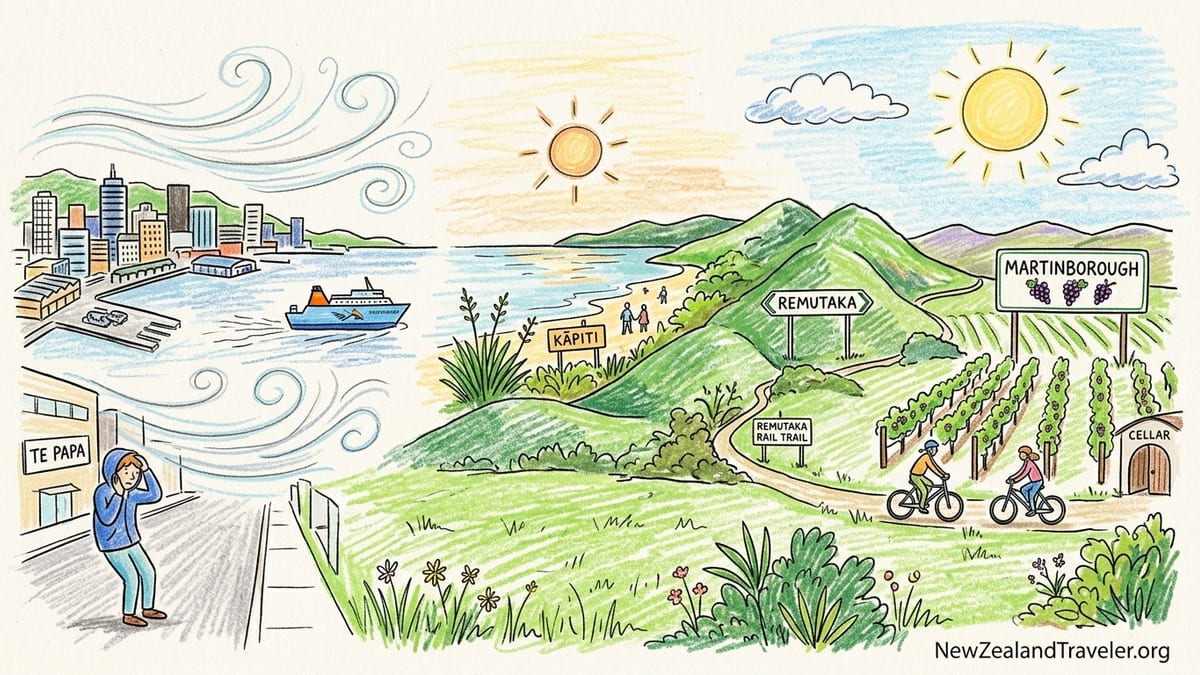
I used to think Wellington had one dominant season: windy. Then I started returning in different months and treating the region like a set of short, weather-led micro-trips rather than one big “Wellington holiday.” In the city, a gusty day changes how far you want to walk the waterfront, how you dress, and whether a museum-heavy itinerary suddenly becomes the best plan you didn’t know you needed. On the Kāpiti Coast, a calmer, warmer afternoon can turn a “maybe” into a beach-and-coffee day with time for a coastal cycle. In Wairarapa, the drier climate and the rhythm of the vines can make the same winery weekend feel like three different destinations depending on whether it’s harvest season, winter cellar-door quiet, or spring budburst.
Think In Micro-Trips, Not A Universal “Best Month”
The Wellington region rewards travelers who plan in modules. I now build trips around what needs steady weather and what can flex. City neighborhoods, museums, and restaurant crawls work in almost any month. Ridge walks, long waterfront strolls, and small-boat plans are far more sensitive to wind and swell. Wine weekends in Martinborough and the wider Wairarapa have their own calendar entirely, driven as much by vineyard activity as by the day’s forecast.
What surprised me most is how often “nearby” means “different weather.” Kāpiti is often a few degrees warmer than central Wellington, which can be the difference between a jacket zipped to the chin and a late afternoon that feels genuinely beachy. Wairarapa, on the other side of the Remutaka Range, is typically drier and can feel like someone turned the saturation down: more blue-sky days, sharper temperature swings, and a quieter, rural pace that makes Wellington’s compact intensity feel even more concentrated when you return.
So instead of telling you to come in one perfect month, I’ll break down the region into the trips I actually plan now: a windy-city culture sprint, a Kāpiti coast reset, a Wairarapa wine weekend, and the outdoor days that depend on trail conditions, ferry schedules, and sea state. I’ll also tell you what I packed wrong, when my plans changed at the last minute, and why shoulder season is when Wellington’s restaurant scene can feel like it’s quietly performing just for you.
Wellington City And The Wind: Walking Plans, Clothing Mistakes, And Smarter Routes
If you’ve heard the jokes about Wellington wind, they’re not jokes. My first mistake was dressing as if a sunny forecast meant a gentle day. A bright morning can still come with gusts that turn a waterfront walk into a lean-into-it workout, especially around the harbor edges where wind funnels between buildings. The city is walkable, but the wind changes your pace, your appetite for exposed routes, and how pleasant a “quick” 25-minute stroll feels when you’re battling side gusts.
What I packed incorrectly on an early trip: a compact umbrella. In calmer cities it’s a throw-in item. In Wellington, it was a donation to the wind gods. A hooded rain shell with a firm brim and a cap that stays on your head matters more than an umbrella ever will. The second packing correction was footwear. I brought slick-soled fashion sneakers for city dining, then spent a day on windy, damp pavement wishing for grippier soles. The city’s hills and steps feel steeper when the wind is pushing you downhill, and more tiring when it’s pushing you back up.
Wind changed my city walking plans most around the waterfront. On a particularly blustery afternoon, I cut a long promenade plan short and shifted into an indoor-heavy itinerary: Te Papa, a long coffee stop, and lingering over dinner instead of hunting sunsets. That flexibility is the real “best time to visit” hack. Wellington’s museums and cafés are not consolation prizes; they’re core attractions that happen to be perfect when the harbor looks dramatic but feels unpleasant.
Smarter walking routes on gusty days: weave through the core streets and use the waterfront in short segments instead of committing to long exposed stretches. If your must-dos include Mt Victoria lookout or the Brooklyn wind turbine area, aim for a forecast window that looks calmer and go early rather than gambling on an afternoon change. And if you’ve booked something time-sensitive, give yourself more buffer than you think you need; a headwind can make a short walk feel like you misread the map.
Kāpiti Coast On Warmer, Calmer Days: Beach Town Timing And Backup Plans
Kāpiti is where I go when Wellington feels like it’s all angles: sharp wind, sharp hills, sharp schedules. The coast towns are softer in vibe and often slightly warmer, and that subtle temperature edge matters when you’re trying to decide whether to spend hours outside. On one visit, I left the city in a brisk layer stack and arrived to a noticeably gentler afternoon that made an outdoor café stop feel like the whole point of traveling.
My best Kāpiti days have been the ones I planned around “calm enough” rather than “perfect.” If the forecast shows moderate winds instead of strong gusts, it’s suddenly realistic to plan a beach walk, an easy cycle, or just an unhurried afternoon in Paraparaumu and Waikanae without feeling like you’re constantly bracing yourself. When Kāpiti is calm, it’s not just nicer, it’s a different style of trip: longer stints outside, slower meals, and less urgency to duck indoors.
When Kāpiti wasn’t calm, my plans still worked, but I had to adjust. A windier day can make the shoreline feel raw even if the temperature is decent. That’s when I swap from “beach day” to “town day”: shorter coastal segments, more time in bookshops and cafés, and an earlier dinner reservation. I also learned not to pin an entire Kāpiti day on one exposed outdoor activity. Build the day so you can compress it into sheltered stops if the wind ramps up by midday.
Packing lesson here: I used to bring one “warm layer” for the entire region. Now I treat Kāpiti like its own microclimate. I still pack a windproof outer layer, but I add a lighter option underneath, because Kāpiti can feel unexpectedly mild compared with the city. If you get it right, you spend the day comfortable rather than constantly taking layers on and off and stuffing them into a day bag.
Wairarapa Wine Weekends: Harvest Energy, Winter Quiet, And Spring Reset
Wairarapa is where Wellington turns into open roads, dry hills, and wine-country time. It’s not just “a day trip to Martinborough.” The wine weekend feels different depending on the season, because the vines set the tempo. In late summer into early autumn, there’s an agricultural hum. The light feels longer, the afternoons stretch, and you can sense that this is the business end of the growing year.
In harvest season, the region’s rhythm can feel more intense and more alive. Some winery experiences remain steady year-round, but the atmosphere changes when vineyard work is front of mind. On my most “alive” visit, tastings felt like a doorway into what the season was doing, not just what the cellar had bottled. It’s the kind of weekend where you still do leisurely lunches, but you also end up talking about weather patterns, ripeness, and why one vintage can feel like a relief.
Then there’s winter, which I once underestimated. Winter wine-country weekends are quieter and, if you like conversations at the cellar door and snagging tables without fighting for a time slot, it can be a gift. The tradeoff is that you need to plan for shorter daylight and colder evenings, and you want accommodation that feels cozy rather than merely convenient. This is also when I noticed shoulder-season benefits: better availability, less competition for the most desirable dining times, and a general sense that you’re not sharing every tasting room with another group celebrating the same long weekend.
Spring is the reset button. The countryside starts to look freshly rinsed, and the whole weekend feels lighter. If your idea of a wine weekend includes cycling between tastings, spring can feel more comfortable than peak summer, with fewer scorching stretches and less pressure to “do everything.” But spring also taught me a key Wellington-region rule: don’t assume clear skies at breakfast mean stable weather all day. I’ve had plans shift simply because wind picked up enough to make outdoor seating less appealing or to change how long I wanted to be on a bike.
Seasonal Wine Calendars And Real 2026 Date Anchors (So You Can Plan Like A Local)
Wine-country planning gets easier when you anchor to events with firm dates, then build flexibility around the weather. For Martinborough, one of the most reliable 2026 anchors is Toast Martinborough, scheduled for Saturday 14 November 2026. If you’re traveling that weekend, book accommodation early and expect the town to feel busier than a typical spring Saturday. If you want the same vineyards with more breathing room, come the weekends immediately before or after and focus on tastings and long lunches rather than festival pacing.
For late-summer culture energy in the city, CubaDupa ran Saturday 28 and Sunday 29 March 2026, and the festival’s pattern is a March weekend. Even if you’re not a festival traveler, those dates illustrate a bigger point: Wellington’s late-summer to early-autumn stretch often packs in big outdoor street energy. That’s when wind becomes less of a deal-breaker and more of a quirky companion, because the city is already in motion and you can duck into venues, bars, and arcades between performances.
One more planning reality: not every “calendar” detail is published as far ahead as travelers want. Some wineries and operators release seasonal hours closer to the date, and smaller tours may adjust offerings based on demand and staffing. I plan the skeleton early (where I’m staying, how I’m moving), then confirm the details (tasting times, tour departures, dinner bookings) after I’ve checked the latest seasonal hours.
If you want a practical approach, think in three layers. Layer one is fixed-date events you care about, like Toast Martinborough in November. Layer two is seasonal vibe: harvest feel, winter quiet, spring reset. Layer three is the day-of forecast that decides whether you cycle between tastings or drive, whether you commit to outdoor seating or book indoors, and whether you build a second coffee stop into the plan because the wind is making the day feel faster.
Ferries, Islands, And Weather: When Boat Trips Work Best (And When They Don’t)
Boat trips in the Wellington region are unforgettable when the conditions cooperate, and fragile when they don’t. The Cook Strait is famously changeable, and it’s not unusual for strong winds and swells to disrupt crossings. Maritime safety agencies describe Cook Strait as a higher-risk piece of water with frequent gale-force wind events, which is why locals treat ferry days with a little respect rather than bravado.
If you’re using Cook Strait ferries as part of your Wellington trip planning, there’s a very specific 2026 detail that matters: Interislander published that from 22 June to mid-September 2026 it would operate a one-ship timetable while Kaiārahi underwent maintenance and Kaitaki headed overseas for required work. That kind of operational constraint is a reminder to check the operator’s current timetable before you build tight connections, because reduced sailings can mean fewer backup options if weather intervenes.
For a lower-stakes island day trip inside the harbor, Mātiu Somes Island is one of my favorite “wind-aware” plans because you can decide late and still feel like you got a real adventure. The East by West service runs between Queens Wharf and Days Bay, with trips that can include the island depending on the timetable. My personal rule: if the wind feels like it’s already slapping at street corners downtown, I choose a sheltered city day instead. If the harbor looks lively but manageable, that’s when I go and pack an extra warm layer even in summer, because the water adds bite.
My biggest outdoor-plan change happened around boats: I once treated a ferry-based day as a fixed commitment, then watched the forecast deteriorate and realized I’d built the entire day on a single point of failure. Now I plan island trips like optional upgrades. I’ll keep Te Papa, Zealandia-style nature time, galleries, and a great lunch as a parallel plan so a wind shift doesn’t become a wasted day.
On the packing front, boat trips are where my “I’ll be fine” layer system failed me. The fix is simple: a windproof outer shell, a warm mid-layer you can add even when it feels mild at street level, and a hat that stays on. If you’re traveling with a nicer camera, bring a cloth you can actually use in salty air and drizzle, not just a token lens wipe buried in a wallet.
Hiking And Cycling By Season: Trail Works, Exposure, And The Shoulder-Season Sweet Spot
Wellington is an outdoors city, but not an outdoors city that rewards complacency. Ridge walks like the Skyline Walkway are spectacular and exposed, and exposure is the point and the problem. In stable weather, that ridgeline is pure drama: big views, big sky, and the feeling that the city is floating below you. In unstable weather, it’s when you learn how quickly wind and cloud can change your comfort and your safety margin.
Cycling plans need even more real-time checking because trail conditions can change with maintenance work. A concrete 2026 example: the Remutaka Rail Trail section of the Remutaka Cycle Trail has had intermittent closures across July, August, September, and October 2026 due to work that began Monday 13 July 2026, with updates posted as conditions change. That’s not an argument against going, it’s an argument against assuming a route is open just because you saw a map six months ago. If your trip hinges on that ride, build in an alternative day or an alternative route in the region.
Regional park conditions can shift for reasons that have nothing to do with the weather. For example, Greater Wellington has posted notices about professional hunting operations in parts of East Harbour Regional Park between 31 August and 25 September 2026. Again, it doesn’t mean “don’t go,” it means confirm which sections are affected and don’t arrive expecting to wander anywhere you want without checking advisories.
My favorite time for hiking and cycling is often shoulder season, not peak summer. Shoulder season can bring calmer days, cooler temperatures that make climbs feel easier, and fewer crowds at trailheads. It can also improve the rest of your trip: I’ve found it easier to get a restaurant table at the time I actually want, and accommodation feels less pressured. The tradeoff is that you need more flexibility, because the region will still throw you a windy day that turns a ridge plan into a café-and-museum plan.
The Takeaway
The best time to visit the Wellington region depends on what you’re trying to do and how willing you are to flex with the forecast. For city culture, food, and museums, you can land almost any month and build a great trip, as long as you dress for wind and plan routes that let you duck inside when gusts peak. For Kāpiti, the difference between a raw day and a golden one is often just a few degrees and a calmer breeze, so it’s worth keeping that day as a movable piece in your itinerary. For Wairarapa, match your weekend to the wine calendar: harvest energy if you want buzz, winter quiet if you want time and conversation, spring if you want lighter riding and long lunches without peak-season pressure.
My most useful lesson is that Wellington doesn’t reward rigid plans. It rewards good bones and smart pivots: booking one or two key dinners, anchoring around major wine events like Toast Martinborough on 14 November 2026, and treating boats and ridge walks as optional upgrades you grab when conditions align. Pack a windproof shell, leave the umbrella behind, and you’ll start to feel like the region is cooperating rather than challenging you.
FAQ
Q1. What is the best month to visit Wellington city if I hate wind?
There is no guaranteed calm month, but late summer into early autumn often feels more forgiving; plan indoor backups for any day with strong-wind forecasts.
Q2. Is the Kāpiti Coast really warmer than Wellington?
Often, yes. Even a small temperature difference can make outdoor plans feel much more comfortable, especially for beach walks and coastal cafés.
Q3. When is Toast Martinborough in 2026?
Toast Martinborough is scheduled for Saturday 14 November 2026, which can affect accommodation demand and crowd levels in Martinborough.
Q4. When is CubaDupa and does it affect trip planning?
CubaDupa typically runs on a March weekend. In 2026 it ran 28 to 29 March, and central-city accommodation can book up around major events.
Q5. Do Cook Strait ferries get cancelled because of weather?
Yes. Strong winds and swell can disrupt sailings, so avoid tight same-day connections and always check the operator’s latest service updates.
Q6. Was there a reduced Interislander timetable in winter 2026?
Yes. Interislander published that from 22 June to mid-September 2026 it planned a one-ship timetable due to maintenance requirements, reducing sailing options.
Q7. How do I plan an island day trip in Wellington Harbour?
Keep it flexible. Choose a day with a manageable forecast and pack a windproof layer even in summer; if conditions worsen, switch to city attractions.
Q8. Are there seasonal closures or works on Wellington region trails?
Sometimes. For example, the Remutaka Rail Trail section had intermittent closures across July to October 2026 due to works, so check for current updates before you ride.
Q9. What should I pack for Wellington weather?
A hooded windproof rain shell, a warm mid-layer, and shoes with good grip. Skip the umbrella and plan for fast weather changes.
Q10. Is shoulder season worth it for Wellington restaurants and hotels?
Often, yes. Shoulder season can mean easier bookings and less crowd pressure, while still delivering great food, wine weekends, and outdoor windows.