


Hawke’s Bay, on New Zealand’s east coast, is one of those regions that feels like several destinations stitched together: beach towns and bike trails, Art Deco streetscapes in Napier, and vineyard roads that can turn your “quick tasting” into an all-day affair. I’ve visited across different seasons, and the biggest lesson I took home is that timing changes everything, not just the temperature. It changes which cellar doors feel effortless versus fully booked, whether cycling is breezy and comfortable or a headwind grind, and even whether the Cape Kidnappers gannets are nesting or long gone.
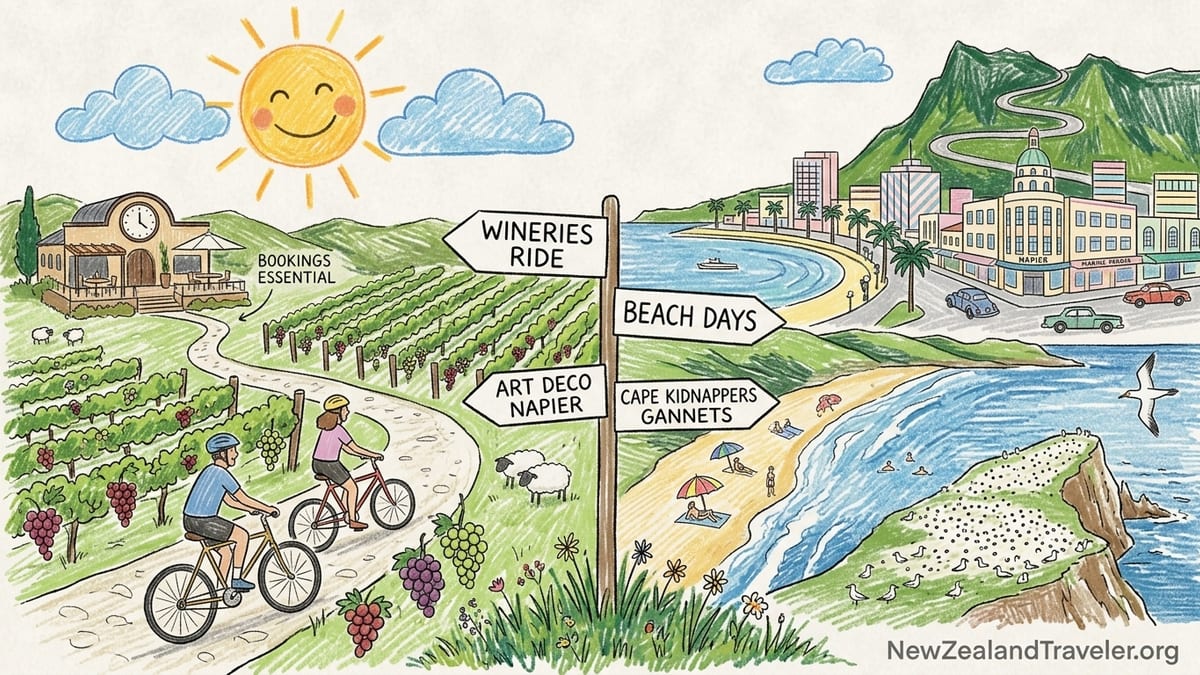
Summer In Hawke’s Bay: Beach Days, Bike Shorts, And Real Booking Pressure
I first met Hawke’s Bay in summer, and it was the version people picture when they say “New Zealand’s Food and Wine Country.” My days started early because the middle of the day could feel genuinely hot, the kind of heat that makes you grateful for shade on Marine Parade in Napier and quick dips at beaches like Westshore or the long sweep out at Ocean Beach. Even when the sky stayed a hard, bright blue, there were stretches when the wind made itself known, especially out on open coastal roads and exposed sections of the trails.
Summer is when Hawke’s Bay cycling clicks into place. The region’s Hawke’s Bay Trails network is mostly flat and built for easy exploring, including the Wineries Ride loop that links cellar doors near Hastings. In summer I loved the freedom of it: you can ride a gentle limestone trail, lock up outside a tasting room, then roll on to the next stop without needing a car. What changed my planning, though, was realizing that the weather and the calendar aren’t the only drivers. Summer is also peak travel time, and the best-known winery restaurants and popular tastings can be harder to do spontaneously.
A concrete example: at Church Road Winery in Taradale, some tastings have seasonal booking pressure, with the winery itself noting that bookings are essential from December through February for several tasting options. That single detail is the difference between a relaxed afternoon plan and a last-minute scramble, especially if your Hawke’s Bay trip lands in school-holiday periods or you’re pairing tastings with a special lunch reservation.
My summer rule now is to plan like you want “options,” not a locked-in schedule. I book one anchor experience per day in advance (a winery lunch, a tasting, or a festival ticket) and keep the rest flexible. That way if the afternoon wind picks up, or the heat makes you want a longer beach break, you can pivot without losing the best parts of the day.
Wine Harvest Season: What Felt Different At The Wineries And On The Roads
When I came back in harvest season, the region felt more like a working wine landscape than a tasting playground. Even without pretending you can “see harvest” at every winery, you can feel the change: more activity around vineyards, a sense that teams are busy, and a different rhythm to visits. The tasting bar might still be welcoming, but you’re more aware you’re dropping into someone’s workplace during a high-focus period.
The biggest planning implication is availability. Some cellar doors and experiences can reduce hours, switch to tastings by appointment, or steer visitors into set tasting times. Even on the Hawke’s Bay Trails Wineries Ride, the region’s own visitor information advises checking ahead because some wineries may only be open for tastings by appointment depending on the time of year. On my harvest-season visit, that translated into fewer “let’s just see what happens” stops and more “let’s confirm what’s open before we ride 30 kilometers in the sun.”
Harvest also reshaped how cycling felt. Compared with the height of summer, the warmth was still there, but the edges of the day were more forgiving. I found myself starting later without regretting it, riding longer without feeling drained, and enjoying vineyard roads when the light softened. If you want the best mix of winery energy and comfortable riding, this is when Hawke’s Bay starts to feel tuned for travelers who like active days and long meals.
If you want a specific date to build around, Harvest Hawke’s Bay is scheduled for Saturday 21 November 2026 at a dedicated festival site on Tuki Tuki Road in Havelock North, with shuttle buses offered from Napier, Hastings, and Havelock North and published per-person return prices. For travelers, that is an easy, real-world “bookend” for a spring trip: you can base yourself in Napier for Art Deco architecture and sea breezes, or closer to Hastings and Havelock North for cycling and vineyards, then use the festival transport rather than worrying about driving after a day of tasting.
Festival Weekends: Art Deco In February And How It Changes The Whole City
My most intense Hawke’s Bay crowds were not beach crowds, they were Art Deco crowds. The Art Deco Festival in Napier is the kind of event that transforms a city into a theme, with people dressing up, vintage cars in the streets, and a schedule that pulls you from promenade to theatre to late-night dance floor. The 2026 festival ran 19 to 22 February, and the scale is not subtle. It is marketed as a multi-day immersive heritage festival and, importantly for planning, it draws enough visitors that accommodation, restaurants, and transport feel noticeably tighter than a standard summer weekend.
In practical terms, festival timing changed how I moved through Napier. On a normal day, you can drift between the Art Deco streets around the CBD and an easy waterfront stroll. During festival days, you need a little more intent: plan where you will park, allow extra time for getting in and out of the center, and consider choosing accommodation that lets you walk to the heart of the action. The city feels like it belongs to the festival, which is wonderful, but it also means you can’t expect last-minute availability for everything.
Weather matters here, too, because February can be hot. I remember afternoons when costumes felt like commitment and shade became a real strategy. If you’re traveling with a group, I’d recommend building “cool-down breaks” into the day: a quick retreat to your hotel, a long lunch in air-conditioning, or a beach stop to reset between events. That is the difference between enjoying the festival through the night and fading out by early evening.
There’s a second, quieter planning win: the Art Deco Trust also runs Winter Deco Weekend, scheduled for 17 to 19 July 2026. It’s the same aesthetic pull in a different season, and for travelers it offers an alternative if you love the idea of Deco but want to avoid peak-summer heat and the biggest February accommodation crush.
Autumn In The Vineyards: Color, Calmer Roads, And The Comfort Factor
Autumn was when Hawke’s Bay felt most “balanced” to me, even though I’m careful not to crown any one month as universally best. What I experienced in autumn was a steadier kind of travel: fewer festival-style surges, less of that high-summer intensity, and days where you could comfortably do a long cycle section and still have the appetite for a winery dinner.
The visual change is real. Vineyards shift into gold and rust tones, and drives around the region, especially toward the Tukituki River and the Te Mata Peak backdrop, feel like they were designed for slow sightseeing. If your trip style is less “do everything” and more “do two things well,” autumn is the season that supports it. I found it easier to get a table without planning my entire day around one reservation, and easier to fit tastings into a cycling itinerary without racing the clock.
Autumn also changed my wind tolerance. On my summer trip, wind sometimes felt like the price of being by the sea. In autumn, I still had breezy days, but they were less likely to combine with punishing heat. That meant the Hawke’s Bay Trails felt more consistently comfortable, especially if you like riding for a few hours and then lingering over lunch. It’s also the season when you can build a trip around “small pleasures” that don’t require big crowds: local galleries, roadside fruit stalls, and unhurried cellar-door conversations.
My best autumn planning move is to choose one base and stay put. Napier is great if you want architecture, the waterfront, and easy access to Taradale cellar doors. Havelock North is great if you want to be closer to vineyards, Te Mata Peak, and the Tukituki landscapes. Autumn rewards staying local rather than trying to cover the entire region every day.
Winter City Breaks: Deco Without The Heat, Food Events, And A Different Kind Of Itinerary
I didn’t come to Hawke’s Bay for winter beaches, but I did come to appreciate winter as a city-break season. Napier’s Art Deco core is made for strolling, and cooler weather changed the pace in a good way. I could walk longer without looking for shade every ten minutes, linger in shops and galleries, and treat a café stop like an experience rather than a rushed refuel.
Winter also sharpened the value of “event weekends.” Winter Deco Weekend, set for 17 to 19 July 2026, is a strong example of how Hawke’s Bay keeps its cultural calendar humming outside peak summer. If you like the idea of dressing up and dipping into talks, tours, and themed events, winter gives you that atmosphere with fewer heat-management problems. It’s also a reminder to check policies and logistics: the Art Deco Trust’s festival FAQs reference rules that apply during both the February festival and Winter Deco Weekend, including restrictions around alcohol in public spaces. Small details like that matter when you’re planning picnic-style days or meeting friends outdoors.
In winter, my winery strategy also changed. Instead of trying to “collect” tastings across the day, I preferred a single standout winery experience and then something cozy afterward. Church Road, for example, publishes winter hours that differ from peak-season patterns, with tastings operating Thursday through Monday during the winter period and the restaurant also on a Thursday to Monday schedule. That’s the kind of seasonal shift that can make or break a spontaneous Monday tasting mission if you haven’t checked hours.
Winter is also when I’d prioritize paid guided experiences, not because you can’t do it yourself, but because the comfort and convenience pay off. A half-day wine tour or a guided Art Deco walk can turn a cold or drizzly morning into the highlight of your trip.
Spring: Food And Wine Travel, Festival Anchors, And Timing Your Gannet Visit
Spring in Hawke’s Bay feels like the region is resetting for the year: vines waking up, menus getting brighter, and weekend energy returning without the full crush of midsummer. For food-focused travelers, it’s a satisfying time to build days around markets and tastings. The Hawke’s Bay Farmers’ Market operates every Sunday morning year-round, rain hail or shine, at the Tomoana Showgrounds in Hastings. In spring, that kind of anchor is useful because you can plan the rest of the day around what you buy: strawberries and stone fruit when they appear, fresh bread for a beach picnic, and a bag of produce that makes your accommodation kitchenette suddenly worth it.
Spring is also when I learned to plan my Cape Kidnappers gannet viewing properly rather than assuming it’s a year-round guarantee. The Department of Conservation describes the best time for viewing nesting gannets as early November through late February, with chicks starting to hatch in early November and the last chicks departing during May. That is a concrete seasonal window that changes how you plan the coast. If you’re coming in late winter, you might still see adults returning to the area, but if your goal is the full colony experience with active nesting and chicks, you’ll want to time it toward that November to February peak.
Access timing matters, too. The Department of Conservation notes that the walking track from the beach to the plateau colony is closed from July to the week before Labour Weekend each year to limit disturbance. That one line can reroute your whole itinerary, because it nudges many travelers toward commercial overland tours during parts of the year rather than a self-guided walk.
Put it together and spring becomes a smart season for travelers who want a little bit of everything without claiming it’s “the best.” You can build a trip around a real 2026 calendar event like Harvest Hawke’s Bay on 21 November 2026, add a Sunday market morning in Hastings, and then slot in a gannet tour when the viewing window is strongest. It’s the kind of season where Hawke’s Bay feels easy to plan, provided you respect the details that change: track closures, winery hours, and festival weekends that can spike demand.
The Takeaway
Hawke’s Bay doesn’t reward a single “best month” mindset, it rewards timing that matches your travel style. Summer gave me beach weather and long cycling days, but also more heat management and real booking pressure at popular wineries. Harvest season made the region feel alive and purposeful, but required more checking ahead for tasting availability and hours. February’s Art Deco Festival turned Napier into a joyful, crowded time capsule, while the July Winter Deco Weekend offered a cooler, alternate version of the same pull.
Autumn was my comfort-season for cycling and vineyard scenery, with calmer roads and a slower dining rhythm. Winter worked best as a city break, with shorter days built around indoor experiences, published reduced winery hours, and event weekends that still draw visitors. Spring stitched it all together with food-first travel, shoulder-season flexibility, and the most important wildlife timing note of all: if gannets are on your must-do list, plan around their nesting and chick season rather than hoping you’ll catch them by luck.
If you plan Hawke’s Bay the way locals live it, with seasonal awareness and a couple of firm bookings surrounded by flexibility, you don’t need a universal “best time.” You just need the right week for your version of the region.
FAQ
Q1. When is the Art Deco Festival in Napier?
The Art Deco Festival runs each February. For 2026, it ran from 19 to 22 February in Napier.
Q2. Is there a winter Art Deco event in Hawke’s Bay?
Yes. Winter Deco Weekend is scheduled for 17 to 19 July 2026, offering a smaller-scale Deco experience in cooler weather.
Q3. When is Harvest Hawke’s Bay in 2026?
Harvest Hawke’s Bay is scheduled for Saturday 21 November 2026.
Q4. Do I need to book winery tastings in summer?
Often, yes. Some wineries state that bookings are essential during peak months like December through February for certain tasting experiences, so it’s smart to reserve ahead for must-do stops.
Q5. Is Hawke’s Bay good for cycling if I’m not an experienced rider?
Yes. The Hawke’s Bay Trails network is known for mostly flat, easy-riding sections, including winery-focused loops designed for casual riders and e-bike users.
Q6. What months are best for seeing the Cape Kidnappers gannets?
The strongest viewing for nesting and chicks is generally early November through late February, when colony activity is at its peak.
Q7. Are there seasonal closures for walking to the gannet colony?
Yes. The Department of Conservation notes the track from the beach to the plateau colony is closed from July to the week before Labour Weekend each year, so check access before you plan to walk.
Q8. What’s the best season for vineyard scenery and color?
Autumn is a favorite for many travelers because the vines change color and the region often feels less pressured than peak summer festival periods.
Q9. Is Hawke’s Bay worth visiting in winter?
Yes, especially for a Napier city break. Cooler weather suits Art Deco walks, museum and gallery time, and winery lunches, and winter event weekends can add extra atmosphere.
Q10. Is there a reliable weekly food market I can plan around?
Yes. The Hawke’s Bay Farmers’ Market runs every Sunday morning at the Tomoana Showgrounds in Hastings, operating year-round.