


I used to think “best time to visit Christchurch and Canterbury” meant circling one perfect month on a calendar. Then I actually traveled the region across multiple seasons, and the place refused to stay in one mood. I’ve eaten fish and chips in Akaroa under a calm summer glow, braced against a winter crosswind on the road to Arthur’s Pass, watched spring reshape the Aoraki Mount Cook tracks day by day, and learned the hard way that Tekapo stargazing is less about temperature and more about whether the sky is truly clear. What changed my trip wasn’t a date. It was wind direction, a surprise rain band, an early-season frost, a sea-state call from a skipper, and the clothing I packed because I assumed “New Zealand weather” meant “mild.”
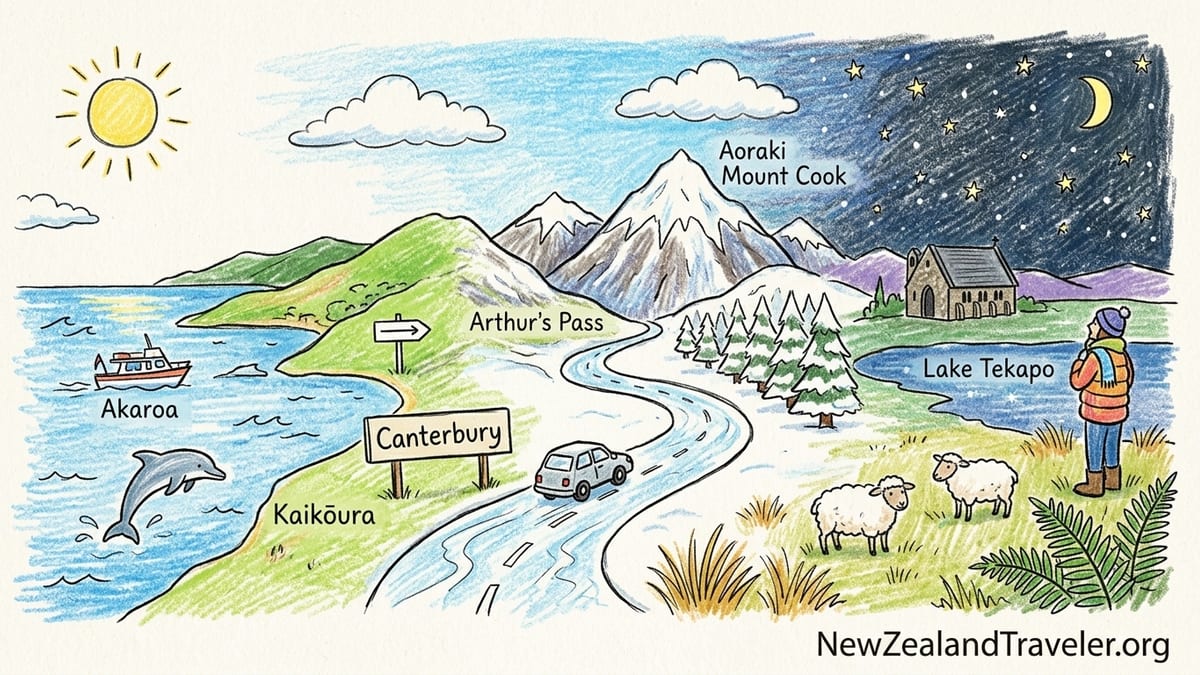
How I Learned To Plan Canterbury By Conditions, Not Months
Christchurch is a city where you can start the day in a light jacket along the Ōtākaro Avon River and end it wishing you’d packed an extra layer on the Port Hills. But the real lesson came once I began using Christchurch as a hub to chase day trips and short overnights across the region: Akaroa and Kaikōura are coastal and exposed in different ways, Arthur’s Pass is a mountain crossing where forecasts are an evolving story, Aoraki Mount Cook sits in an alpine environment that can turn severe fast, and Tekapo lives and dies by cloud cover.
My own “best time” kept changing because my priorities changed. When I wanted glassy water and an easy boat ride, I started caring about wind and swell more than anything else. When I wanted high-country views, I started caring about road ice, snow, and the kind of rain that arrives sideways. And when I wanted stars, I learned to care about the three-dimensional problem of cloud layers, not whether the app said it would be 5°C or 15°C overnight.
The practical shift was simple: I began building plans with a Plan A and a Plan B, and I stopped locking in too many non-refundable pieces. For example, if I had a coastal day that depended on calm seas, I tried to keep the next day more flexible for swapping. If I had a mountain day that depended on visibility, I made sure I’d still be happy doing a lower, forested walk if the tops were socked in. That mindset is what made the seasons feel like a feature rather than a flaw.
Summer On The Coast: What Changes In Akaroa And Kaikōura Boat Trips
In Akaroa, summer felt like the region putting on its easiest face: longer daylight, a harbor that can look almost Mediterranean from the right angle, and a town that runs on day-trippers and holiday energy. On the water, the biggest difference I noticed wasn’t just warmth, but how forgiving the day felt. When the harbor stayed calm, it was the kind of boat trip where you can actually take photos without bracing your elbows like you’re on a moving platform. That said, calm is never guaranteed, and even in “good” summer weather, wind funneled through the harbor could still put a sharp edge on the deck.
Pricing and demand also become part of the season. Akaroa Nature Cruise has published a price increase effective from 1 September 2026, with adult tickets listed at NZ$130 and children at NZ$60, which is the kind of detail that matters when you’re budgeting a family day out. In summer, the cost feels more justifiable because the overall experience tends to be more comfortable: fewer layers, less spray, and a better chance of lingering outside without turning stiff. But it also means you’re sharing the harbor with more people and a tighter schedule, so the vibe is less “private nature moment” and more “high-season outing.”
Kaikōura is a different beast. It’s open-ocean, not harbor-protected, and summer’s advantage is convenience: longer days and generally easier travel logistics. But summer doesn’t magically erase seasickness. Dolphin Encounter notes that their tours are open-ocean and seasickness can happen even in slight conditions, and they list water temperatures that rarely rise above about 18°C in summer and can drop to around 9°C in winter. That matched my experience in spirit: summer water still felt cold the moment it hit my face, and I stopped thinking of “summer” as “warm ocean” and started thinking of it as “less punishing ocean.”
Crowds were the other summer reality. In both Akaroa and Kaikōura, summer made the region feel booked-out and time-boxed. My best coastal days happened when I treated boat trips like the first priority of the day, not the thing I’d squeeze in after a slow morning coffee. The sea is often friendliest earlier, and the day doesn’t feel as rushed when you’re not racing a check-in time.
Autumn’s Shoulder-Season Sweet Spot: Fewer Crowds, More Weather Personality
Autumn was the season that made me feel like I’d cracked a code, and then immediately reminded me that Canterbury doesn’t reward smugness. The upside was obvious: fewer people in the most obvious photo spots, easier restaurant timing in smaller towns, and a calmer pace overall. In Christchurch, it was the season where I could drift from the Botanic Gardens to a bakery without the city feeling like it was in peak visitor mode.
But the tradeoff was that weather started expressing itself with more personality. I noticed sharper temperature swings between sun and shade, and a higher penalty for “close enough” clothing choices. On a day that began calm, a late-afternoon wind off the water made Akaroa’s waterfront feel suddenly cold, the kind of cold that creeps into your sleeves. My mistake was assuming a midweight hoodie would be fine because the forecast looked mild. It wasn’t. The wind made it feel like I’d dressed for a city stroll, not a coastal deck.
Autumn also made driving days feel less automatic. A route that seemed straightforward on a map could become tiring when rain set in for hours and visibility narrowed. That’s when I appreciated stopping in smaller service towns for a reset: fuel, a hot drink, a chance to dry out gloves. Canterbury is full of those practical pauses if you plan for them, but you don’t want to be improvising when you’re already cold.
If summer is about making the most of long days, autumn is about choosing fewer anchor activities and giving them room to move. That flexibility let me take advantage of clear patches when they appeared, instead of forcing a timetable through a weather system that didn’t care about my bookings.
Winter In Arthur’s Pass: Alpine Driving, Road Ice, And Why “Fine In Christchurch” Means Nothing
Winter was the season that humbled me the most, especially around Arthur’s Pass and the broader alpine crossing feeling of State Highway 73. In Christchurch, winter can feel brisk but manageable. In the mountains, winter feels like a different country. The cold is sharper, shadows last longer, and the road can change mood quickly as elevation rises. Even when the highway is open, winter driving can demand more attention than visitors expect: shaded bends that don’t thaw, early-morning slick patches, and the way a light dusting becomes more serious once it compacts into something that behaves like ice.
What kept replaying in my head was how often the mountains punished “casual confidence.” The Department of Conservation’s Arthur’s Pass information emphasizes that even a beautiful summer day can end with snow flurries, and that understanding the weather patterns matters. If that’s true in summer, winter simply raises the stakes. On my winter pass day, the biggest challenge wasn’t a dramatic blizzard scene. It was the steady accumulation of small risks: freezing air that made my hands clumsy at pull-offs, a wind that punished any stop where I didn’t immediately put on a layer, and the fatigue of constantly scanning for changing road texture.
DOC’s avalanche guidance for Arthur’s Pass National Park notes that avalanches usually occur from May to November, which covers almost the entire winter and the shoulder months around it. That matters even if you’re not planning a technical mountaineering mission. It changes how you should think about steep terrain, gullies, and any route that crosses or sits beneath avalanche paths. I didn’t need to see an avalanche to feel the weight of that warning. In winter, you learn quickly that “looks like a nice snowy slope” can be exactly the kind of thing that becomes a problem in the wrong conditions.
Clothing was where I got it wrong. I packed for the car, not for the moments outside it. I had warm layers, but I underestimated how fast the cold would bite when I stepped out into wind and blowing grit. A proper windproof outer layer mattered more than a thicker midlayer. My hands were the first to complain. The next time, I’d throw in warmer gloves even for “short stops,” because winter in the Pass doesn’t respect your idea of a quick photo.
Spring In Aoraki Mount Cook: Hiking Conditions That Change Week To Week
Spring was the most dynamic season I experienced around Aoraki Mount Cook, because it felt like the landscape was actively negotiating between winter and summer. One week could feel like the start of hiking season. The next could feel like the mountains reminding everyone who’s in charge. Trails that look straightforward on a sunny day can become colder, wetter, and more exposed when cloud wraps the valley. And the same track can feel dramatically different depending on whether overnight temperatures stayed above freezing.
Hooker Valley Track, for example, is famous for being accessible and rewarding. But spring changed the way I walked it. I paid more attention to wind at the valley floor and to how quickly the air cooled when the sun disappeared. In spring, I found myself stopping more often not because the track was difficult, but because conditions made it harder to stay comfortable. A calm patch can invite you to unzip a layer, and then a gust can make you regret it. That constant micro-adjustment is what made spring feel less “easy hiking” and more “active management.”
DOC’s own stance on the area reinforced the seriousness behind the scenery. DOC has issued safety messaging for Aoraki Mount Cook visitors, and the broader guidance for the region includes the real possibility that SH80, the main access road into the park, can close because of snow. New Zealand Transport Agency updates have documented SH80 closures in snow events. I didn’t personally get trapped by a closure, but I did have a day where the road felt like it was on the edge of changing, with weather moving in and the sense that plans could be rewritten by a single front overnight.
Clothing mistakes in spring were subtler than winter. I brought warm layers, but I still got caught by moisture. I wore a jacket that was warm enough but didn’t breathe well, and I ended up damp inside from effort, then chilled when I stopped. The fix wasn’t buying a bigger jacket. It was switching to a layering system that handled exertion: a breathable base, a midlayer I could vent, and a shell that actually blocked wind and light rain without turning into a sauna.
Tekapo After Dark: Why Clear Nights Matter More Than Temperature For Stargazing
Tekapo taught me the most counterintuitive lesson: the best stargazing nights can feel colder, not warmer, because clear skies often mean you lose heat fast. What mattered in practice wasn’t whether my weather app said it would be a comfortable evening. It was whether cloud cover would stay away across the night, and whether the sky would actually be transparent, not just “not raining.” I had one night where the air temperature was tolerable but thin high cloud turned the stars into a washed-out suggestion. Another night felt colder, but the sky snapped into clarity, and it was instantly worth it.
Local operators are very direct about what controls the experience. Tekapo Stargazing, which runs tours from Tekapo Springs, states that visibility depends on seasonal conditions, moon phase, and cloud cover, and that they can’t guarantee perfect clarity. They also note that when cloud makes outdoor stargazing impossible, the guided portion can shift to an indoor virtual reality experience while other parts of certain products still run. Dark Sky Project’s own planning guidance emphasizes cloud layers and explains that clear skies across low, mid, and high levels offer the best stargazing conditions. Those are not marketing details. They’re the difference between seeing the Milky Way properly and spending the night squinting at a brighter-than-usual darkness.
My biggest Tekapo clothing error was underestimating how long I’d be standing still. Hiking layers are great when you move. Stargazing is the opposite: you’re stationary, looking up, losing warmth. I wore what I thought was enough because it felt fine walking from the car to the meeting point. Twenty minutes into a clear night, I wished for a heavier insulated layer and warmer socks. The next time, I’d pack for stillness: a proper insulated jacket, gloves that let me adjust camera settings, and a beanie that doesn’t slip when you tilt your head back.
Tekapo also changed how I booked. Instead of choosing “the best season,” I started choosing “the best opportunity.” If I had two nights in the Mackenzie region, I learned to use the first clear night rather than saving the experience for a symbolic final evening. Cloud can roll in fast, and the stars don’t care about your itinerary.
The Takeaway
There is no single best month to visit Christchurch and Canterbury, because what you’re really chasing is a set of conditions, not a calendar square. Summer can make Akaroa and Kaikōura feel smoother and easier on the water, but it also brings crowds and the reality that open-ocean tours can still be rough. Winter can turn Arthur’s Pass into a serious alpine day where road ice and rapid weather shifts deserve respect, and avalanche season considerations stretch across May to November. Spring can make Aoraki Mount Cook hiking feel alive and changeable, beautiful one day and severe the next, with the very real possibility of SH80 disruptions in snow. And Tekapo proves, night after night, that clear skies matter more than temperature when your goal is to see the universe.
The best trip I had in Canterbury wasn’t the one where the weather stayed perfect. It was the one where I packed for wind and rain even when the forecast looked friendly, left space in the itinerary for swapping days, and treated official guidance as part of the plan, not background noise. Canterbury rewards travelers who stay humble, stay flexible, and dress like they expect to be surprised.
FAQ
Q1. What is the best season to visit Christchurch and Canterbury overall?
There isn’t one overall best season. The best time depends on whether you prioritize calm seas, clear hiking weather, winter scenery, or stargazing conditions.
Q2. How does summer change Akaroa harbor cruises?
Summer typically brings longer days and a more comfortable time on deck, but also higher demand and a busier atmosphere in Akaroa.
Q3. How much does an Akaroa wildlife cruise cost in 2026?
Akaroa Nature Cruise has published an adult price of NZ$130 effective from 1 September 2026, with children listed at NZ$60.
Q4. How does summer change Kaikōura dolphin and whale trips?
Summer can be more convenient for travel and daylight, but tours remain dependent on sea state, and seasickness can occur even in slight conditions.
Q5. What should I know about winter driving to Arthur’s Pass?
Expect colder temperatures, possible road ice in shaded areas, and rapidly changing mountain weather. Plan extra time and drive conservatively.
Q6. When is avalanche season in Arthur’s Pass National Park?
DOC notes that avalanches usually occur from May to November, which affects route choices and risk management across winter and shoulder seasons.
Q7. How does spring affect hiking at Aoraki Mount Cook?
Spring conditions can change quickly from mild to severe. Wind, cold snaps, and fresh snow can alter comfort and safety even on popular tracks.
Q8. Can SH80 to Aoraki Mount Cook close due to snow?
Yes. Official guidance and road updates have documented SH80 closures during snow events, so it’s important to check conditions close to travel.
Q9. What matters most for Tekapo stargazing: temperature or clear skies?
Clear skies matter more. Cloud cover and moon phase strongly affect visibility, and a cold clear night can be far better than a mild cloudy one.
Q10. What clothing mistakes do travelers commonly make in Canterbury?
Underpacking windproof layers for the coast, not bringing warm gloves for alpine stops, and dressing too lightly for standing still during Tekapo stargazing are common errors.