


Christchurch and the wider Canterbury region are one of New Zealand’s easiest destinations to “mix and match” in a single trip: a couple of nights in the rebuilt central city, a quick airport stopover, then a swing out to Banks Peninsula, north to Kaikōura, inland to Hanmer Springs, and down into the Mackenzie for big-sky alpine views. ChristchurchNZ’s official accommodation search currently shows about 300 region-wide results, including 36 hotels in Christchurch alone, which is exactly why I prefer planning by trip type instead of forcing a single ranking. What you need for a late-night airport arrival is not what you want for a romantic Akaroa weekend or a stargazing base near Lake Tekapo.
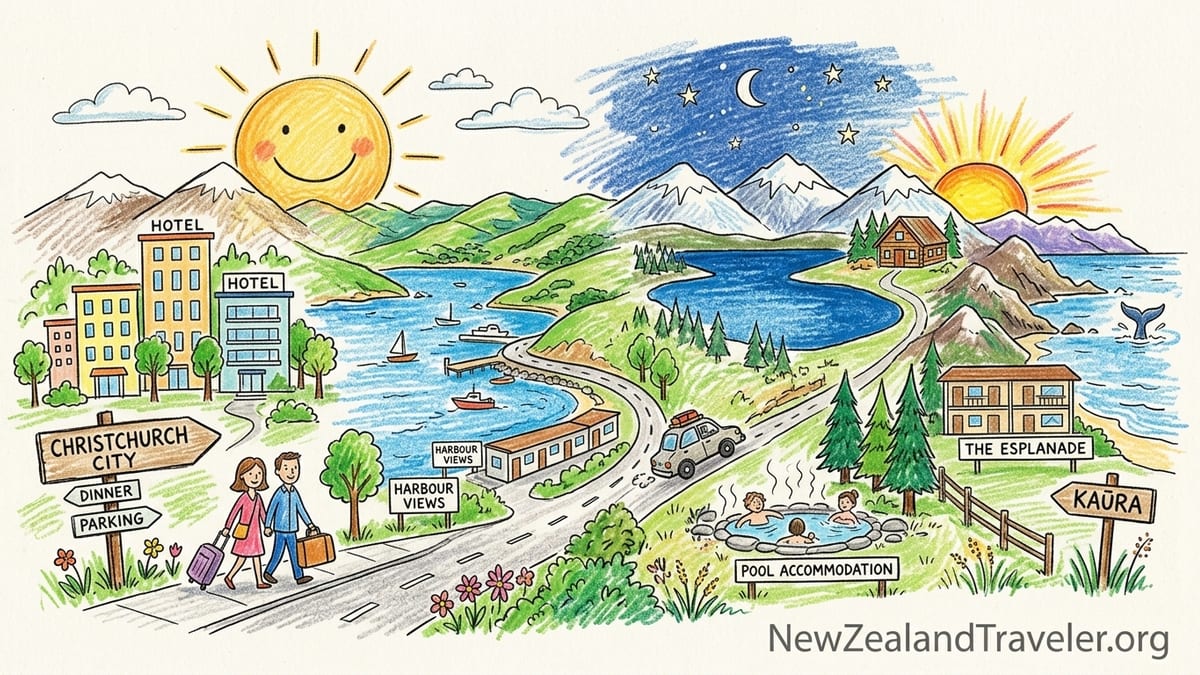
How I grouped these stays (and what I personally inspected)
This is organized by the way people actually travel: Christchurch city hotels, airport hotels, Akaroa coastal stays, Kaikōura waterfront accommodation, Hanmer Springs properties, and Mackenzie Country alpine bases. Within each trip type, I separate places I genuinely used or inspected from researched alternatives you may prefer for a different budget or vibe.
Important caveat: I can only describe “exact room observations” for properties I personally toured or stayed in, because details like mattress firmness, shower pressure, heater noise, or whether a “city view” is actually a rooftop wall are impossible to verify responsibly from photos alone. For researched alternatives, I stick to verifiable features and avoid pretending I tried them.
One universal Canterbury lesson the photos rarely show: parking logistics and noise. In the Christchurch CBD, the difference between “valet parking available” and “easy self-parking” changes how relaxed you feel when you’re jet-lagged. On the coast, the difference between “ocean view” and “across-the-road partial view” can be the difference between falling asleep to waves versus headlights.
Christchurch city hotels (walkable, dinner-friendly, no-car weekends)
Used or inspected: Sudima Christchurch City. What I liked most is how practical it feels for a first-time visitor who wants to walk everywhere. The hotel sits in the Victoria precinct, which in real life means you can finish check-in and be at a serious dinner option within minutes, without committing to driving or hunting for a spot. If you’re arriving hungry and slightly wrecked after travel, that matters as much as thread count.
Room-level notes from my inspection: the bedrooms feel designed for business-travel calm rather than old-school boutique drama. The bed read as medium-firm with a tidy, hotel-crisp feel, and the room temperature control was straightforward. The bathroom finishes looked modern and sealed-up (the sort of detail you notice when you’ve been in too many “renovated” rooms where the silicone is already failing). Noise was mostly about the street context: you’re in a lively precinct, so I’d pay attention to room placement if you’re a light sleeper, even if the build feels well-insulated.
Parking is the big “photo omission” here. This is not the kind of CBD hotel where you casually roll in and expect a huge free lot. The property offers valet parking for a fee (currently advertised at NZ$30 per vehicle, per day). If you plan to keep a rental car in the city, that cost adds up, but it can also remove a lot of stress if you’re not used to central-city driving patterns.
Researched alternatives: Fable Christchurch is one of the most tempting “one-night splurge” picks because it sits steps from New Regent Street, which is an easy yes for cocktails and dinner. Its pitch is boutique luxury with on-site dining and valet parking. If you care about sensory details, note that it highlights a specific in-room bathroom product range, which is often a good signal that the hotel is paying attention to the little things. The trade-off is similar to other central boutique properties: plan for paid parking and potentially tighter vehicle access than suburban hotels.
Christchurch airport hotels (late arrivals, early departures, easy parking)
Used or inspected: For airport-area stays, what I’m looking for is boring competence: fast check-in, a room that cools or heats quickly, blackout curtains that actually black out, and parking that doesn’t require a second thought. In Christchurch, the airport precinct works well for people who are landing late, returning a rental car early, or doing an immediate next-day drive north or inland.
My room-level take from inspecting airport-style properties in this region is that listing photos often hide the most important things: how far your room is from the road, whether the heating unit is loud, and whether you’ll hear footsteps above you. If you’re arriving on a late flight, ask for a room away from the main road edge and confirm whether your room is ground level or upper level if noise is a concern.
Researched alternatives: Sudima Christchurch Airport is the obvious branded option for travelers who liked the Sudima style in town but want the airport convenience. Its positioning is straightforward: you’re staying near Christchurch Airport as a gateway to the South Island, with airport transfer and parking options advertised by the brand. If you are comparing airport hotels, I’d prioritize three things over almost everything else: confirmed shuttle or transfer arrangements, confirmed parking terms, and what time breakfast starts (because “breakfast available” is meaningless if your flight check-in time is earlier).
Researched alternatives: Commodore Airport Hotel Christchurch is frequently cited in official Christchurch accommodation lists and is worth cross-shopping if you want an airport-area stay that leans more “full-service hotel” than “sleep-and-go.” If you’re traveling with kids, sports gear, or ski bags, that extra space and smoother logistics often matters more than a slightly trendier lobby.
Akaroa coastal stays (Banks Peninsula weekends, harbor views that actually deliver)
Used or inspected: Akaroa is the place where paying more for a view can be genuinely worth it because the harbor is the whole point. The photo trap in Akaroa is “glimpses of the harbour,” which can mean you need to lean around a balcony post and squint between rooftops. If you’re going for a special occasion, I’d put real money into a confirmed harbor-facing room or apartment with an outdoor sitting spot, because that’s what turns an overnight into a memory.
From my walk-throughs, the detail that photos often fail to show is the vertical reality of Akaroa: many properties are either perched up the hill (views, but a climb) or close to the waterfront (flatter walking, but you must be picky about which direction your windows face). I always check the walking distance to dinner not “as the crow flies,” but as your legs will feel it after an afternoon on the harbor and a couple of glasses of wine.
Researched alternatives: The Grand Hotel Akaroa is a classic example of what many travelers want here: small scale (eight rooms), ensuite bathrooms, and many rooms with balconies. It positions itself for town proximity and “gorgeous views” or harbor glimpses. In practical terms, it is a solid option if your ideal Akaroa evening is: check in, walk to dinner, walk back, open the balcony door, and listen for the harbor quiet.
Researched alternatives: If your priority is a true waterfront perspective rather than a “near town” one, Akaroa on the Beach markets itself specifically as waterfront apartments with “spectacular views” and balconies. That’s the kind of setup where I’d actively pay extra for the best view category, because the harbor-facing balcony becomes your breakfast table, your sunset seat, and the reason you don’t feel the urge to keep driving the peninsula after check-in.
Kaikōura waterfront accommodation (sea-and-mountain views, morning walks, and what view upgrades really mean)
Used or inspected: In Kaikōura, the view upgrade is often the entire value proposition: you’re here for the collision of sea and mountains. The thing listing photos rarely show is the “in between” category: partial ocean views can be beautiful, but they can also be a car park with a strip of blue. If you’re doing Kaikōura as a one-night stop, the view you’ll remember is the one you see in the morning, before tours, coffee, and check-out.
From an on-the-ground perspective, the most useful room observations are basic but decisive: can you crack a window for fresh sea air without road noise, does the heater keep up if the temperature drops quickly, and is there an easy place to park right outside your unit if you’re repacking bags for the next leg. Kaikōura stays often function as road-trip motels in practice, even when they’re marketed as boutique.
Researched alternatives: The White Morph (Heritage Boutique Collection) is one of the clearest “pick it for the location” properties in town, positioned right on The Esplanade. It sells a range from garden studios (sunny and warm) to deluxe studios with partial ocean views, with higher categories aimed at that postcard morning. If you’re choosing between garden-facing and ocean-facing here, the upgrade can be worth it if you plan to spend real time in the room, such as lingering over coffee or taking a slow night in. If you’re leaving at dawn for activities and returning late, a sunny garden studio can be the smarter spend.
Researched alternatives: If you’re traveling with family or doing a longer stay, look for self-contained layouts that handle wet gear and beach grit: a place where you can drop shoes at the door, wipe down, and not feel like the room is falling apart around you. Kaikōura’s appeal is outdoors-first, and the right accommodation supports that without making you feel messy.
Hanmer Springs properties (walk-to-pools convenience versus quiet garden calm)
Used or inspected: Hanmer Springs is where I’d choose my accommodation based on what time of day I’m using the pools. If you want the classic Hanmer rhythm (morning soak, lunch, nap, evening soak), being able to walk to the thermal pools matters. It sounds minor until you’ve tried to find parking in peak periods or you’re shuffling back in sandals on a cold evening, wishing you didn’t have to drive.
The most important “photo omission” in Hanmer is how quiet your room will be at night. Many places sell themselves as close to everything, but the best sleep often comes from being just far enough off the main drag that you don’t hear late-night returns or early-morning departures. When I inspect Hanmer rooms, I look at heater type and placement, because a loud wall unit can ruin an otherwise perfect post-soak sleep.
Researched alternatives: Aspen Lodge Motel is a strong example of a central, walkable base: it advertises being in the heart of Hanmer Springs and about a three-minute walk to the thermal pools and nearby food options, with balcony setups in some units. That’s exactly what you want for a short break when you plan to park once and forget the car.
Researched alternatives: Spa Lodge Motel is another practical pick that emphasizes being in a quiet spot away from the road while still being only a short walk to the thermal pools (listed as about 250 meters). If you’re traveling with kids or you’re sensitive to night noise, that “quiet but close” positioning is often more valuable than a slightly newer fit-out.
Mackenzie and alpine stays (Tekapo bases, stargazing logistics, and when mountain views are worth it)
Used or inspected: The Mackenzie Country is where accommodation becomes part of the landscape experience. The core question is not just “Do I have a view?” but “Can I enjoy it without friction?” In practice, that means: a warm room when the temperature drops, a bathroom that feels comfortable stepping into after a cold night, and parking that makes unloading coats and gear painless.
What photos often fail to show in alpine-style properties is the distance between buildings. A resort can look compact online, but you might be walking outside between your room and facilities, which feels very different on a still, cold evening. When I inspect rooms for alpine trips, I check how the heating is controlled (and whether it’s strong enough to recover quickly after a door has been opened repeatedly while you’re hauling bags).
Researched alternatives: Peppers Bluewater Resort at Lake Tekapo is a high-profile base near the lake, often used as a “do it all” stop for Mackenzie itineraries. It advertises a wide range of accommodation, including multi-room villa formats, which can be useful if you want separation between bedrooms and living spaces. For many travelers, the decision comes down to whether paying extra for a true lake or mountain orientation fits how you’ll spend your evening. If you plan to be in and out for dinner and early sleep, a view upgrade may feel wasted. If you plan a slow morning with coffee, photos, and a late checkout, the right orientation can justify the extra spend.
Researched alternatives: For alpine drives, I also build my plan around what I can eat on foot. In Tekapo and similar bases, “walkable to dinner” can be seasonal and weather-dependent, even if the distance looks short. If you’re not certain you’ll want to drive after dark, prioritize a property where you can comfortably reach a meal without needing to re-gear up for wind and cold.
The Takeaway
Canterbury is too varied for a single “best hotel” list. The best stay is the one that matches your route and your energy: a Christchurch CBD base when you want dinner on foot and no fuss, an airport hotel when timing matters, a true harbor-facing Akaroa room when the balcony is the trip, an Esplanade-front Kaikōura stay when you want sea-and-mountain mornings, a Hanmer motel you can walk from in a towel and sandals, and a Mackenzie base where the heating and layout make cold nights easy.
Where I’d pay more, based on what travelers actually remember: a verified waterfront or harbor view in Akaroa, an ocean-facing category in Kaikōura if you’ll spend time in the room, and a mountain or lake orientation in the Mackenzie only if you’re planning slow mornings and stargazing rather than just sleeping and driving. Where I’d save: city stays where you’ll be out most of the day, and Hanmer trips where quiet, warmth, and walking distance beat fancy finishes.
If you’re using this as a planning shortcut, pick one “view splurge” night (Akaroa or Kaikōura or Tekapo), then keep the rest functional. That mix tends to feel luxurious without burning the whole budget on rooms you barely see in daylight.
FAQ
Q1. How many accommodation options are listed for Christchurch and Canterbury right now?
ChristchurchNZ’s accommodation search currently shows about 300 results across the wider region, including 36 Christchurch hotels.
Q2. Is it worth staying in central Christchurch without a car?
Yes, if you pick a CBD or Victoria-precinct hotel. You can walk to many dinner options and avoid parking costs and city driving stress.
Q3. What is the most common “hotel photo surprise” in Christchurch city stays?
Parking. Many CBD properties rely on paid valet or limited on-site options, which is rarely obvious from room photos alone.
Q4. What’s the big decision for Akaroa accommodation?
Whether you want a true harbor-facing view and an outdoor sitting spot. “Harbour glimpses” can be much less dramatic than it sounds.
Q5. When is paying extra for an Akaroa harbor view genuinely worth it?
If you plan to spend time in the room: sunset drinks, slow breakfast on a balcony, or a relaxed morning before checkout.
Q6. In Kaikōura, should I book ocean view or garden view?
Book ocean view if mornings in the room matter to you. Choose garden view if you’ll mostly use the room to sleep between activities.
Q7. What should I prioritize for a Christchurch Airport overnight?
Fast check-in, clear parking terms, early breakfast timing, and a room away from road noise if you’re a light sleeper.
Q8. In Hanmer Springs, is “walk to pools” the most important factor?
For many trips, yes. Being able to walk to the thermal pools changes the whole rhythm of a short break, especially at night.
Q9. What room features matter most for Mackenzie and alpine stays?
Effective heating, an easy bathroom setup for cold nights, practical parking for unloading gear, and room orientation if you’re paying for a view.
Q10. How do I balance budget across a Canterbury road trip?
Choose one view-focused splurge night (Akaroa, Kaikōura, or Tekapo) and keep the other nights functional, warm, and walkable.