


Wedged between New Zealand’s largest lake and a chain of active volcanoes, Taupō is one of the country’s most concentrated adventure hubs. The challenge is not finding things to do but deciding what to prioritise, how much to spend and how to combine lake experiences, waterfalls, geothermal walks and the Tongariro mountains into a coherent itinerary. This guide focuses on real decisions travellers face, with concrete examples of free versus paid options and where activities naturally overlap.
How to Structure Your Time in Taupō
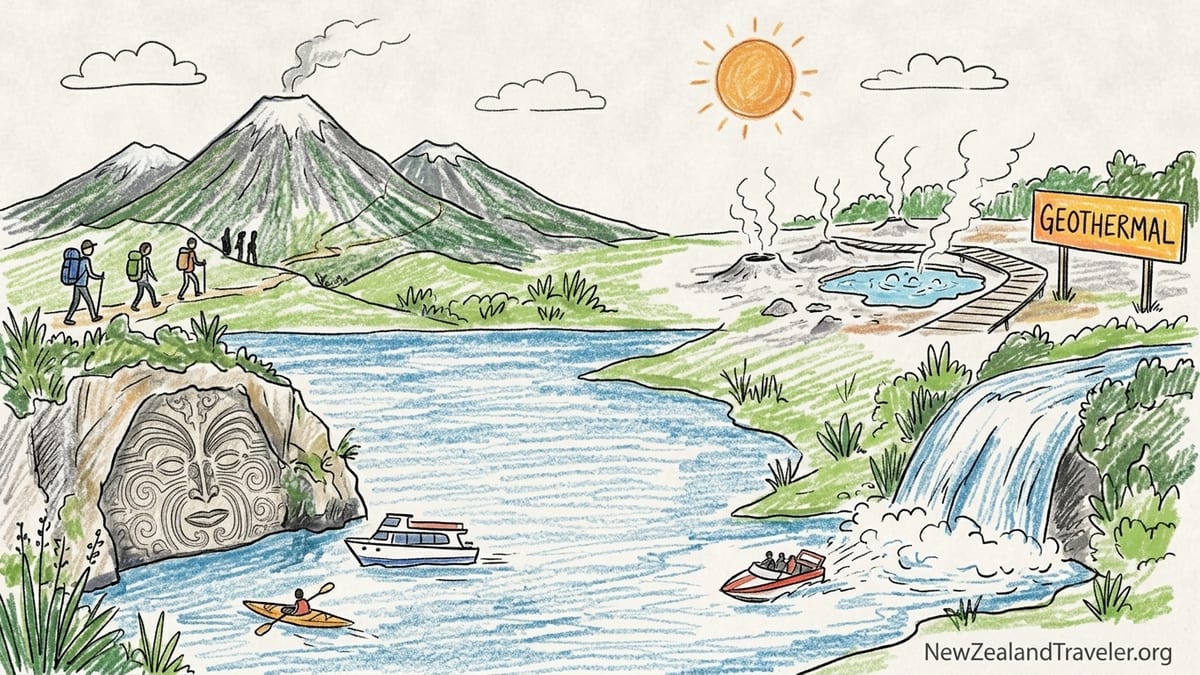
Before diving into individual attractions, it helps to think of Taupō in clusters. Official tourism information tends to group the area around five pillars: Lake Taupō itself, Huka Falls, Tongariro National Park, Māori Rock Carvings, and geothermal areas such as Craters of the Moon and Ōrakei Kōrako. Practically, that translates into lake-focused days, geothermal days and mountain or hiking days, with Huka Falls and Aratiatia Rapids easy to plug into any schedule.
For a two or three night stay, many visitors choose one full day focused on Lake Taupō (a cruise or kayak trip to the Māori Rock Carvings plus hot pools), one day around waterfalls and geothermal parks (Huka Falls, Aratiatia Rapids, Craters of the Moon or Ōrakei Kōrako), and, if time allows, a longer day or overnight in Tongariro National Park for hiking. Shorter visits can still sample the highlights because several marquee experiences sit close together north of town.
If budget is a key concern, you can build an almost entirely free Taupō itinerary by combining Huka Falls, Aratiatia Rapids, hot-water spots on the main lakefront and short lakeside walks. Paid experiences such as lake cruises, jet boating and geothermal parks add comfort, expert commentary and access to more dramatic landscapes, but they are optional layers rather than compulsory costs.
Travel logistics are straightforward. Taupō town sits on the northeastern shore of the lake, and most tours depart from the boat harbour near Redoubt Street or from pick-up points in the central accommodation area. Having a car gives you maximum flexibility to reach Tongariro trailheads and outlying geothermal parks, but plenty of operators offer shuttles for major walks and cruises if you prefer not to drive.
Lake Experiences: Free Lakeside Time vs Paid Cruises and Carvings
Lake Taupō is the anchor for almost every visit. At the most basic level, it is a giant, walkable, swimmable playground and you can enjoy it without spending a cent. The main lakefront in central Taupō has grassy reserves, playgrounds and a lakeside path where locals stroll in the evening with takeaway fish and chips. On calm days in summer, you can swim directly off the main beach, where sections of shallow water are naturally warmed by geothermal springs seeping up through the lakebed.
For many travellers, the signature paid lake experience is a cruise or kayak trip to the Māori Rock Carvings at Mine Bay. Several operators, including long-running companies such as Ernest Kemp Cruises and Chris Jolly Outdoors, run 2 to 2.5 hour trips that combine commentary on the lake’s volcanic history with close-up views of the 14 metre carving of Ngātoroirangi etched into a cliff on the western shore. As of mid 2026, adult tickets for standard daytime cruises typically start in the region of 55 to 70 New Zealand dollars, with family and child discounts common. Kayak tours tend to cost more but include gear and a guide, and suit reasonably fit travellers comfortable paddling for several hours.
It is important to understand how activities overlap. A scenic cruise to the Māori Rock Carvings is both a lake experience and a cultural encounter. If you book one of these cruises, you do not need a separate generic “Lake Taupō cruise” unless you specifically want a different style, such as an evening sailing catamaran trip focused on sunset views and onboard drinks rather than commentary. On the other hand, if you are on a tight budget or do not enjoy boat tours, you can skip the carvings entirely and still get a strong sense of the lake by walking the lakefront path, picnicking on the beach or watching the sunset from the boat harbour.
Free and paid activities blend easily on the lakefront. A realistic low-cost day might start with a walk along the Great Lake Pathway, continue with lunch from a local bakery eaten on the grass by the harbour, then finish with a late-afternoon soak at a public hot-water stream where it flows into the lake. Travellers happy to spend more could swap in a midday cruise to Mine Bay, then move on to a commercial hot pool complex for a more polished experience with changing rooms, showers and café service.
Huka Falls and Aratiatia Rapids: Free Natural Spectacle, Optional Paid Upgrades
Huka Falls is Taupō’s most photographed spot and, importantly for planners, it is completely free to visit. A short drive from town brings you to a large car park and walking paths that fan out to several viewing platforms. From the main bridge you can watch the Waikato River squeeze through a narrow volcanic channel before tumbling over a final six metre drop into a churning pool. The force is impressive enough that many visitors simply stand and watch the colour and speed of the water for long stretches.
Several paid experiences build on Huka Falls without replacing the free viewpoints. Jet boat companies, for instance, run high powered tours that race along the river and finish with close passes near the base of the falls, often including spins and sudden stops for thrills. Prices typically run to well over 100 New Zealand dollars per adult for trips of around half an hour on the water, positioning them as big ticket add-ons rather than casual extras. Another option is a slower-paced river cruise from Taupō harbour up the Waikato to the base of the falls, a gentler ride that appeals to families and older travellers who still want to feel the river’s energy.
A short drive downstream lies Aratiatia Rapids, one of the best free shows in the region. Here, the Waikato River is released from a hydroelectric dam several times a day, transforming a dry rocky gorge into a torrent as water surges through a 28 metre drop over about one kilometre. Viewing platforms on either side of the gorge are accessible by short walks from a roadside car park. Travellers typically aim to arrive at least 10 to 15 minutes before the scheduled release so they can watch the riverbed fill and then feel the change in sound and spray as the rapids peak.
For planning, it helps to treat Huka Falls and Aratiatia Rapids as a combined half day excursion, especially if you have your own transport. You might start at Huka Falls in the morning, walk one of the short loop tracks alongside the river, then drive or cycle on to Aratiatia in time for a midday dam release. The entire experience can cost nothing more than fuel and snacks. Travellers looking for more adrenaline could weave in a jet boat trip on the same stretch of river, but should be aware that the scenery overlaps heavily with what you can see for free from the lookouts.
Geothermal Taupō: Craters of the Moon vs Ōrakei Kōrako
Geothermal landscapes sit at the heart of the Taupō experience, but there is a real decision to make between lower cost, close-to-town options and more dramatic but pricier parks further afield. Craters of the Moon, a steaming valley just north of town, is the budget friendly staple. A wooden boardwalk loops through fumaroles and bubbling ground, with gentle gradients suitable for most visitors. An entrance fee applies, usually a relatively modest amount compared with Rotorua’s headline thermal parks, and you can simply show up and pay on arrival. Many travellers complete the circuit in 45 to 60 minutes, making it easy to slot between Huka Falls and other nearby attractions.
Ōrakei Kōrako, by contrast, is a more substantial half day outing about 30 to 40 minutes’ drive from Taupō, signposted from State Highway 1 and accessed by a short ferry ride across the Waikato River. It is consistently described as one of the most photogenic geothermal parks in the country, with brightly coloured silica terraces, steaming pools and a rare geothermal cave. As of 2026, adult admission is advertised at a little under 60 New Zealand dollars, with child and family tickets available. That price includes the return ferry transfer and access to extensive walking tracks on the far side.
Because both parks showcase steaming vents and mineral terraces, it rarely makes sense to pay for multiple full scale geothermal attractions on a short visit. If you are travelling with young children or have limited mobility, Craters of the Moon may be the easier option, with shorter walking times and simpler logistics. If you are an avid photographer or geology enthusiast, Ōrakei Kōrako’s more varied terrain and relative sense of remoteness tend to justify the higher ticket price and extra driving time.
There are also genuinely free geothermal experiences around Taupō, such as hot streams that meet the lakefront east of town or small public thermal areas on the edge of the CBD. These do not replace the scale and drama of the dedicated parks, but they can give budget conscious travellers a taste of steaming ground and hot water without entry fees. In practice, many visitors blend one paid park with casual stops at free hot spots to feel they have done geothermal Taupō justice.
Hot Pools and Soaking Options: Public Streams vs Commercial Spas
Soaking in naturally heated water is one of the pleasures of staying in Taupō, particularly in the cooler months from April to October. At the most budget friendly end are public hot water spots where geothermal streams enter the lake or river. One popular example is a hot stream that meets the Waikato River near Spa Thermal Park, a short walk from a public car park on the edge of town. Here you can sit where hot water mixes with cooler river currents and adjust your position for comfort, creating a do-it-yourself spa experience that costs nothing beyond the walk in.
Commercial hot pool complexes offer more comfort, cleanliness and amenities. Several operators around Taupō and along the road to Rotorua run family friendly pools where you pay a per person entry fee, then have access to a range of outdoor pools at different temperatures, changing rooms and sometimes private spa pools or hydroslides. Prices vary, but as a ballpark, adults might expect to pay in the range of 20 to 30 New Zealand dollars for basic pool access, with upgrades available for private soaking or day spa services. These venues can be ideal for unwinding after a Tongariro hike or a day of lake activities.
It is worth thinking about hot pools in the context of your broader geothermal and lake plans. If you have already booked a half day at Ōrakei Kōrako or another major geothermal park, the marginal benefit of also paying for an upmarket spa may be lower, particularly if you are on a tight budget. On the other hand, if your main interests are hiking and waterfalls, a hot pool session becomes an attractive way to add geothermal flavour without allocating a separate sightseeing block to a thermal valley.
Families should also weigh up free versus paid options. Public hot streams can be great fun for children who enjoy experimenting with different water temperatures, but lack lifeguards and have natural, sometimes slippery banks. Commercial complexes control depth more carefully, provide lifeguards at busy times and often have shallow toddler areas, which may justify the entry fee for peace of mind.
Adventure and Hiking: Tongariro, Lakeside Trails and Jet Boats
For many travellers, the big decision in Taupō is whether to commit a full day and significant budget to the Tongariro Alpine Crossing or other Tongariro National Park walks. The Crossing, a one way 19 kilometre hike over volcanic terrain between Mangatepopo and Ketetahi, is free in itself but requires return transport because of road end parking restrictions and the distance between trailheads. Shuttle operators running from Taupō and nearby towns typically charge in the region of 70 to 100 New Zealand dollars per person for return transfers, turning a free walk into a substantial purchase once you factor in gear rental and food.
The experience, however, can be exceptional in good weather, with views of Mount Ngauruhoe, emerald crater lakes and wide volcanic plateaus. In summer, departure times are often as early as 5 or 6 in the morning from Taupō, with pick up in the late afternoon. In winter and shoulder seasons, guided options are strongly recommended or even required if snow and ice cover the track. These guided packages layer on additional costs but include equipment like crampons, ice axes and waterproof outerwear, as well as experienced mountain guides who assess conditions and group safety.
Not every visitor wants or needs such a long or committing hike. Shorter lakeside and riverside tracks around Taupō can deliver a satisfying sense of the landscape with far less logistics. The Huka Falls walking track, for instance, follows the Waikato River from Spa Thermal Park to the falls in a few hours of easy walking each way, with opportunities to detour to riverside picnic spots. Sections of the Great Lake Pathway closer to town can be tackled in casual one hour chunks, ideal for families with strollers or travellers arriving after a long drive who simply want to stretch their legs.
Adventure activities beyond hiking link closely with the same landscapes. Jet boating on the Waikato near Huka Falls is the headline adrenaline activity, overlapping heavily with the free waterfall viewpoints but adding speed and proximity to the water. Other options in the broader Taupō area include tandem skydiving with views over the lake and volcanic plateau, or bungy jumping from platforms above the river. All are firmly paid activities, often costing several hundred dollars per person. For decision making, it helps to choose just one or two big ticket adventures that align with your interests rather than trying to tick everything at once.
Putting It Together: Sample Combinations by Budget and Interest
Thinking in terms of overlapping clusters makes it easier to build an efficient itinerary. A low cost, nature focused one day plan might combine a morning walk along the lakefront, a free soak at a hot stream where it meets the river, then a drive to Huka Falls and on to Aratiatia Rapids for an afternoon dam release. This uses the core Taupō landscapes of lake, river, waterfall and hydro gorge without paying for structured tours. Food could be simple, such as supermarket supplies for lakeside picnics or a casual café lunch in town.
A mid range two day plan for a couple might allocate day one to the lake and geothermal areas and day two to moderate hiking. On day one, you could take a mid morning cruise to the Māori Rock Carvings with a reputable operator, followed by lunch on the waterfront and a late afternoon visit to Craters of the Moon. On day two, you might walk the Huka Falls track from Spa Thermal Park to the falls and back, then round off the afternoon with a paid session at a commercial hot pool complex. This approach spends selectively on a few anchor experiences while keeping transport and food costs reasonable.
For travellers prioritising bucket list experiences and willing to spend more, a three day plan might start with a sunset sailing cruise to the Māori Rock Carvings, followed by a full Tongariro Alpine Crossing day with a pre booked shuttle, and finish with a morning at Ōrakei Kōrako and an afternoon jet boat ride near Huka Falls. This hits all five elements of the official visitor cluster: the lake, Māori carvings, Tongariro mountains, geothermal parks and Huka Falls, but requires careful attention to weather forecasts and advance bookings, particularly for the Crossing and sailing trips during peak summer months.
Whatever your budget, it pays to build in flexibility. Taupō’s weather can change quickly, with fog or rain obscuring mountain views even when the lakefront looks calm. Many operators allow date changes or refunds with reasonable notice, so consider scheduling your most weather dependent activities, such as Tongariro hikes or sunset sails, early in your stay to give yourself backup days if conditions do not cooperate.
FAQ
Q1. Is Huka Falls free to visit, and how much time should I allow?
Huka Falls is free, with no entry or parking charges at the main car park. Most visitors spend 30 to 60 minutes walking between viewpoints, or up to a few hours if including riverside tracks.
Q2. Are the Māori Rock Carvings at Mine Bay free to see?
There is no fee to view the carvings themselves, but they are only accessible by water. Expect to pay a moderate fare for a lake cruise or more for a guided kayak tour unless you have your own boat.
Q3. Should I choose Craters of the Moon or Ōrakei Kōrako if I only want one geothermal park?
Craters of the Moon is closer to town and cheaper, with an easy boardwalk loop. Ōrakei Kōrako is more expensive and requires a drive plus ferry ride, but offers more dramatic terraces and a larger walking area.
Q4. Are Aratiatia Rapids worth fitting in if I have already visited Huka Falls?
Yes, Aratiatia Rapids provide a different experience, with the riverbed changing from mostly dry to a surging torrent when the dam releases. It pairs well with Huka Falls as a free half day combination.
Q5. Do I need to book Tongariro Alpine Crossing shuttles in advance from Taupō?
Advance booking is strongly recommended, especially in the summer season when daily numbers are high and departure times can be very early from Taupō.
Q6. Can I experience hot pools in Taupō without paying for a spa complex?
Yes, you can soak where natural hot streams enter the lake or river near Taupō at no charge, though facilities are basic and you should take care on slippery rocks.
Q7. Is a lake cruise necessary if I am on a tight budget?
No, you can enjoy Lake Taupō from the shore through walks, picnics and free hot-water spots. A cruise adds cultural interpretation and access to the carvings but is optional.
Q8. How family friendly are Taupō’s main attractions?
Most key sites, including Huka Falls, Aratiatia Rapids lookouts, Craters of the Moon and commercial hot pools, cater well to families, with short walks, toilets and clear signage. Always supervise children near water and geothermal areas.
Q9. When is the best time of year to visit Tongariro from Taupō?
Late spring to early autumn generally offers the most stable conditions for unguided walks. In winter, guided trips are recommended and sometimes essential due to snow and ice.
Q10. How many days do I need in Taupō to see the main highlights?
With two full days you can experience the lake, Huka Falls, a geothermal park and some short walks. Three days or more allow time for Tongariro hiking and more relaxed hot pool sessions.