

For many visitors, Māori culture is the beating heart of a North Island journey. From geothermal valleys in Rotorua to the historic Waitangi Treaty Grounds and the volcanic cones of Auckland, there are now dozens of iwi-led and Māori-owned experiences that invite manuhiri, or visitors, to learn about te ao Māori, the Māori world. Choosing between cultural performances, guided heritage tours, hāngī feasts and contemporary art can feel overwhelming. This guide focuses on the most respected, authentic options to help you build an itinerary that fits your route and the depth of cultural interpretation you are looking for.
Understanding Māori Cultural Experiences: How to Choose
Māori cultural tourism on the North Island ranges from quick one-hour performances to full half-day feasts, guided museum visits and quiet walks on sacred volcanic cones. Experiences are often grouped under similar labels, but they can feel very different in practice. A 30 to 45 minute kapa haka performance in a museum theatre is usually an introduction to song, haka and poi, while a three to four hour evening at a dedicated Māori village typically weaves together stories, protocols such as pōwhiri welcomes, and traditional kai, or food.
As you compare options, it helps to understand some broad categories. Cultural performances are usually set pieces of waiata, haka and storytelling, often suitable for tight schedules or families with young children. Guided heritage visits focus on particular historic places such as Waitangi or pā sites and are ideal if you want context for New Zealand’s colonial history. Hāngī experiences centre on food cooked in earth ovens and tend to be longer, social evenings. Geothermal-and-culture combinations, common around Rotorua, pair geysers and mud pools with kōrero, or narratives, about how local iwi have lived with these landscapes. More historical experiences might be based in museums or at treaty sites, emphasising documents, taonga and political history over performance.
Your budget and timeframe also matter. In 2026, evening hāngī and performance packages in Rotorua commonly sit around the NZ$180 to NZ$260 range per adult, including transport from central Rotorua in some cases, while museum-based cultural shows in Auckland are more likely to be in the NZ$40 to NZ$80 bracket per adult. Heritage passes at Waitangi Treaty Grounds vary by season but typically cost less than a Rotorua feast experience and include access over two consecutive days. Deciding how much of your North Island time and budget you want to devote to Māori culture will help you pick the most meaningful stops.
Authenticity in Māori tourism is about more than whether you see a haka. Look for experiences that are iwi-led or Māori-owned, where hosts clearly explain their connection to the place, and where there is space for questions about history, language and contemporary issues. Tourism New Zealand and regional tourism organisations increasingly highlight such experiences as a core part of North Island planning, so you will often find them flagged in official visitor guides and on regional tourism sites.
Rotorua: Geothermal Landscapes and Living Māori Villages
Rotorua is frequently described as the cultural capital of Māori tourism, and with good reason. Multiple iwi and whānau have hosted visitors here for generations, particularly the people of Te Arawa. Many Rotorua experiences combine geothermal activity with storytelling about how local communities live alongside the steaming valleys and hot springs. If you want a single place to really immerse yourself in Māori culture on the North Island, this is often the most convenient choice.
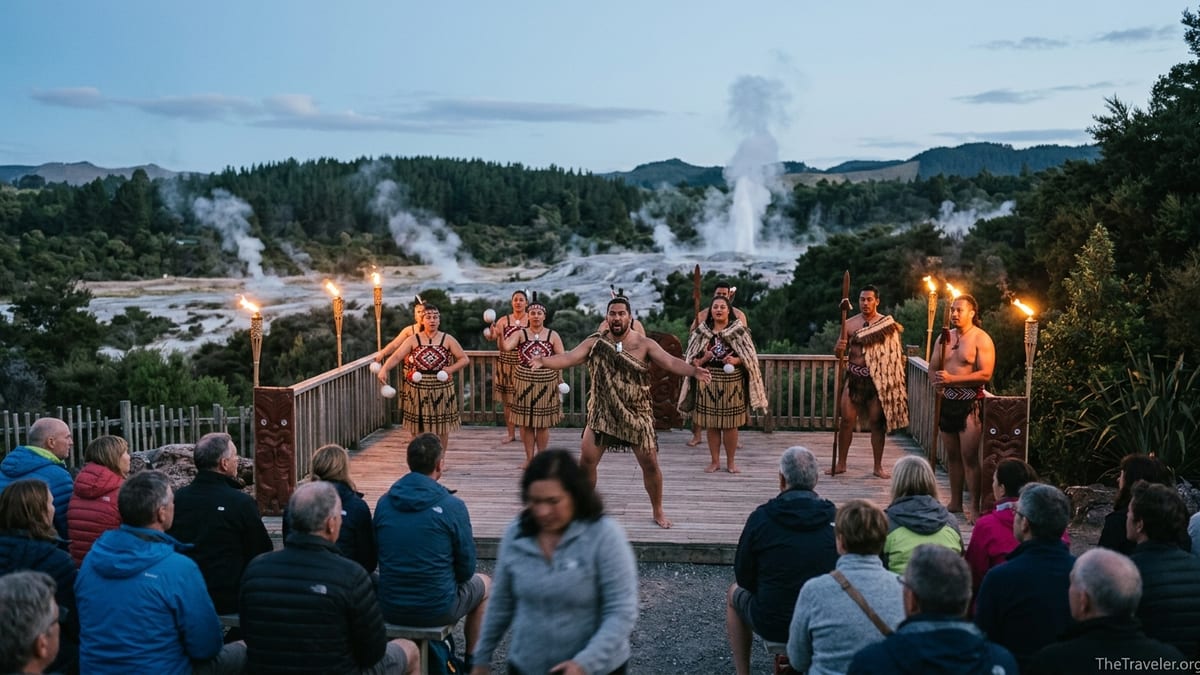
Te Puia, located in the Whakarewarewa geothermal valley, is one of Rotorua’s flagship attractions. It brings together dramatic features such as the Pōhutu Geyser, bubbling mud pools and native bush with guided tours, a Māori cultural performance and the New Zealand Māori Arts and Crafts Institute. Daytime visits typically include a guided walk through the valley and access to carvers and weavers in their workshops, while evening Te Pō packages add a 45 minute performance followed by a hāngī-inspired buffet dinner, with prices commonly in the mid to high NZ$100s per adult depending on inclusions.
Whakarewarewa The Living Māori Village, run by descendants of the Tūhourangi Ngāti Wāhiao people, provides a different perspective. Here you walk through a real village built amid active geothermal features, see how residents use steaming vents for cooking, and join a guided tour that might last around an hour, often with an optional cultural performance add-on. Recent visitor brochures show village tours and performance combinations typically priced in the NZ$40 to NZ$80 range per adult, making this a strong choice if you want a daytime, real-community context more than a large-scale dinner show.
Evening hāngī and show experiences such as Te Pā Tū and Mitai Māori Village are popular with travellers who want an immersive night out. At Te Pā Tū, a four hour “feast of fire and kai” format often includes a ceremonial welcome, storytelling stations across a village-like setting and a multi course menu built around indigenous ingredients; pricing tends to be at the top end of the Rotorua range but includes coach transfers from central accommodation. Mitai Māori Village offers a more classic combination of hāngī buffet, cultural performance and a short nature walk to see glowworms and waka on a stream, usually at a slightly lower price point than Te Pā Tū. Reading the inclusions carefully will help you match your expectations with what is actually delivered.
Waitangi Treaty Grounds: Aotearoa’s Founding Place
The Waitangi Treaty Grounds in Northland is one of the most significant historic sites in New Zealand, and a cornerstone for understanding the country’s bicultural foundations. This is where many Māori chiefs and representatives of the British Crown signed Te Tiriti o Waitangi, the Treaty of Waitangi, in 1840. Visiting here is less about an entertainment-style experience and more about confronting the complex history of colonisation and ongoing treaty relationships.
An admission pass to Waitangi Treaty Grounds typically grants access over two consecutive days, allowing you to explore two substantial museums, the Treaty House, the carved meeting house Te Whare Rūnanga and extensive outdoor grounds. Tickets often include a guided tour of about one hour and a Māori cultural performance in the meeting house, where hosts introduce visitors to song, haka and the symbolism of the carvings. This combination means you can arrive in the morning, take the tour, attend the performance, then return the next day to spend time in the museums and along the shoreline at your own pace.
The cultural performance at Waitangi differs in tone from many commercial experiences. Although it uses the same forms of waiata, poi and haka, it is framed explicitly within the political and spiritual history of the site. Guides typically explain the significance of the marae space, the role of oratory, and the stories represented in the carvings, and they often encourage thoughtful questions afterward. This can be an especially powerful experience for travellers who want depth over spectacle and who are prepared to sit with the uncomfortable aspects of colonial history.
Practically, Waitangi works best as part of a wider journey through the Bay of Islands, linking with Paihia and Russell. If you have a rental car, it is straightforward to spend one full day at Waitangi and another exploring nearby towns and beaches. Families often appreciate that the Treaty Grounds are spacious and largely outdoors, with room for children to move, and that the two day pass gives flexibility around weather and energy levels. For those keen to anchor their North Island trip around New Zealand’s founding story, this is the place to prioritise.
Auckland: Urban Māori Culture, Museums and Maunga
Auckland, or Tāmaki Makaurau, is New Zealand’s largest city and sits on an isthmus rich in Māori history. While it does not have the same concentration of evening village experiences as Rotorua, it offers a wider variety of ways to encounter contemporary Māori culture in an everyday urban setting. These range from museum performances and curated exhibitions to walks on volcanic cones, public art and marae-based programmes.
A common first stop is the Māori cultural performance at Auckland War Memorial Museum. Here, a team of performers introduces visitors to poi, haka and traditional instruments in a theatre-like space, often several times a day in peak seasons. Ticketing usually allows you to combine show admission with museum entry, which gives access to extensive Māori and Pacific collections and exhibitions such as Tāmaki Herenga Waka: Stories of Auckland. For travellers short on time, this pairing offers an efficient way to gain context on Māori history nationwide and specifically within Tāmaki Makaurau.
Outside the museum, the city itself can become a classroom. Guided walks on maunga such as Maungawhau Mount Eden or Maungakiekie One Tree Hill introduce you to the remains of terraced pā sites, kūmara storage pits and defensive earthworks. Several tour operators and mana whenua organisations offer walks that focus on the cultural and ecological restoration of these volcanic cones, often lasting two to three hours and priced similarly to other half day city tours. Joining one of these routes you may hear stories of historic battles over the isthmus, gain an understanding of how iwi are co governing the maunga today, and see how modern Aucklanders are reconnecting with ancestral landscapes.
Just north of the city, Te Hana Te Ao Marama operates a cultural centre that offers marae-style accommodation, village tours and cultural performances by arrangement. It is frequently highlighted in Auckland travel planning resources as a way to experience pōwhiri welcomes, carving and night village visits within an hour or so’s drive of the city centre. While not as large scale as Rotorua’s offerings, it is particularly suitable for groups or educational visits wanting a more intimate setting.
Types of Māori Cultural Experiences Explained
Cultural performances are the most accessible entry point to Māori culture for many visitors. These are set sequences of waiata, poi, weaponry demonstrations and haka, often running for 30 to 60 minutes in museums, village theatres or marae spaces. They are designed for mixed audiences, including families and people with limited background knowledge. The performance at Auckland Museum is a good example in an urban context, while daytime shows at Te Puia or the Waitangi Treaty Grounds offer a deeper connection to particular landscapes and histories.
Guided heritage visits occupy a different niche. At Waitangi Treaty Grounds, for instance, guides spend much of the tour time explaining the circumstances of the Treaty’s signing, the differences between the Māori and English texts, and how these continue to shape New Zealand today. Similarly, in Rotorua, guides at Whakarewarewa The Living Māori Village explain how their ancestors adapted to geothermal conditions, how tourism shaped village life over almost two centuries, and how modern residents balance daily life with hosting visitors. These experiences usually involve more walking and conversation than performance, and are well suited to travellers who enjoy asking questions.
Hāngī experiences organise the evening around food. After a welcome and sometimes a short cultural performance, hosts demonstrate the preparation of kai in an earth oven, where meat and vegetables are steam cooked over hot stones. Dining may be buffet style, as at Mitai Māori Village or Te Puia’s Te Pō experience, or served in courses as at Te Pā Tū. Many travellers remember these evenings less for specific facts about history than for the atmosphere of sharing stories over food and the chance to interact informally with hosts.
Geothermal-and-culture combinations are especially characteristic of Rotorua, where both Te Puia and Whakarewarewa integrate hot springs, mud pools and geysers into their narratives. Daytime guided tours typically last one to two hours and can be combined with a performance or evening meal for a fuller experience. By contrast, more strictly historical experiences, like museum-based exhibitions or the Treaty museums at Waitangi, may feature digital displays, taonga and interpretive panels with less focus on live performance or landscape. The most rewarding North Island itineraries tend to mix at least two of these types, for example a heritage-focused day at Waitangi followed by a hāngī evening in Rotorua.
Respectful Engagement and Choosing Authentic Operators
As Māori tourism has grown, concerns about shallow or overly commercialised experiences have followed. Choosing iwi-led or Māori-owned operators is one way to support communities directly and to encounter stories told by those with ancestral connections to the land. Organisations such as New Zealand Māori Tourism maintain directories of member businesses across regions, making it easier to identify experiences grounded in local authority and tikanga, or customary practices.
When visiting any Māori cultural experience, be prepared to follow host guidance. At marae and meeting houses, this may include removing shoes before entering, waiting to be called onto the marae during a pōwhiri, and refraining from eating or drinking in certain spaces. Hosts will usually explain photography rules and when it is appropriate to move around. Dressing modestly, silencing phones and arriving on time are simple ways to show respect.
It is also worth thinking about the kinds of questions you bring. Hosts are often generous in sharing perspectives on history, language revitalisation and contemporary issues such as land claims or co governance. Listening carefully, avoiding interrupting formal speeches and resisting the urge to debate political points during or immediately after a pōwhiri all contribute to a more balanced exchange. If you are unsure about protocol, asking politely in advance is welcomed.
Finally, remember that Māori culture is a living, evolving world, not just a set of performances. In cities like Auckland you may encounter contemporary Māori art in galleries, bilingual signage on public transport, or Matariki New Year events in winter. Building these everyday encounters into your trip, alongside scheduled tours and performances, allows you to see Māori culture not only as something presented to tourists but as a vital force in modern Aotearoa.
Planning Your North Island Itinerary Around Māori Culture
For many visitors with one to two weeks on the North Island, a simple framework works well: anchor your deeper Māori experiences in one or two hubs, then add shorter encounters as you travel. A common pattern is to spend a full day and evening in Rotorua focused on geothermal and cultural experiences, then a day at Waitangi Treaty Grounds if you are heading north, and one or two half days in Auckland exploring museums, maunga and public art.
If you are driving from Auckland to Rotorua, you might schedule an Auckland Museum performance and gallery visit on your first full day, then travel south the next morning and book an evening hāngī and show at Te Pā Tū or Mitai. The following day you could join a guided tour at Whakarewarewa or Te Puia to see the geothermal valley in daylight and visit the arts and crafts institute. This pattern gives you both an atmospheric evening and a more reflective daytime walk with time for your questions.
Travellers heading north to the Bay of Islands could reverse the emphasis. After arriving in Auckland, you might drive directly to Paihia and devote one full day to Waitangi Treaty Grounds, using the flexibility of the two day pass to return for any areas you missed. On your way back to Auckland, a stop at Te Hana Te Ao Marama for a pre arranged tour or overnight stay can add a marae centred experience without pulling you too far off the main highway. Back in the city, you can then round out your understanding with museum visits or a guided walk on one of the maunga.
Whatever route you choose, booking key experiences ahead is sensible, especially around peak periods such as summer holidays and the Matariki mid winter season. While walk up tickets are sometimes available for daytime museum shows, evening hāngī experiences in Rotorua often sell out on popular dates. Checking current schedules and prices a few months in advance will help you avoid disappointment and allow you to weave Māori culture through your North Island journey in a deliberate, considered way.
The Takeaway
The North Island of Aotearoa New Zealand offers a remarkable range of ways to connect with Māori culture. Rotorua’s geothermal valleys and evening feasts, the historic gravity of Waitangi Treaty Grounds, and the urban richness of Auckland’s museums and maunga each illuminate different aspects of te ao Māori. Rather than trying to do every possible show, focusing on a small number of well chosen, iwi-led or Māori-owned experiences will usually yield a deeper, more memorable understanding.
By distinguishing between cultural performances, guided heritage visits, hāngī centred evenings, geothermal tours and historical museums, you can match specific experiences to your interests, budget and time. Whether you are captivated by song and haka, drawn to political history, or fascinated by how communities live with geothermal forces, there is a North Island experience to suit you.
Approach these encounters with curiosity and respect, follow your hosts’ guidance and leave space to reflect on what you have heard. In doing so, you will not only enjoy some of the most compelling tourism experiences in New Zealand, but also contribute to the ongoing vitality of Māori culture and language across the North Island.
FAQ
Q1. What is the best place on the North Island for a first Māori cultural experience?
The most convenient single hub for first time visitors is usually Rotorua, where you can combine an evening hāngī and performance at venues such as Te Pā Tū, Mitai Māori Village or Te Puia with daytime guided tours of geothermal valleys and living villages.
Q2. How far in advance should I book Māori cultural experiences?
For evening hāngī and performance packages in Rotorua it is wise to book at least several weeks ahead in peak summer and around public holidays, while museum based performances in Auckland or daytime guided tours at places like Waitangi Treaty Grounds can often be booked closer to the date, although advance reservations are still recommended.
Q3. Are Māori cultural performances suitable for children?
Yes, most cultural performances are family friendly and many operators explicitly welcome children, though very young kids may find haka loud or intense; if in doubt, choose daytime shows of around 30 to 45 minutes and sit near an exit so you can step out if needed.
Q4. What should I wear when visiting a marae or meeting house?
Dress modestly in clothes that cover shoulders and knees, bring a light layer as you may be asked to remove shoes before entering the meeting house, and avoid hats inside unless a host advises otherwise for cultural reasons.
Q5. Is it appropriate to join a hāngī if I have dietary restrictions?
Most operators can accommodate common dietary needs such as vegetarian, gluten free or halal if you advise them in advance, and many now offer buffet spreads where you can choose dishes that work for you, so always mention your requirements when booking.
Q6. How can I tell if an experience is iwi-led or Māori-owned?
Look for information on the operator’s website or brochure about which iwi or hapū is involved, check whether guides talk about their own whakapapa, or use directories curated by organisations such as New Zealand Māori Tourism that highlight Māori-owned businesses.
Q7. Are there free ways to experience Māori culture in Auckland?
Yes, you can walk on co managed maunga with interpretive signs, notice Māori public art and bilingual place names in the city centre, and attend community events such as Matariki celebrations, many of which are free or low cost, then deepen your understanding with a paid guided tour or museum visit.
Q8. Can I take photos during cultural performances and on marae?
Photography is usually allowed in many tourism settings, but flash is often discouraged and some moments, such as during karakia or inside certain meeting houses, may be restricted; always listen carefully to the host’s instructions and when in doubt, ask first.
Q9. How much should I budget for Māori cultural experiences on a typical North Island trip?
As a rough guide, many travellers allocate the cost of one evening hāngī and performance in Rotorua, often in the NZ$180 to NZ$260 range per adult, plus one or two daytime experiences such as a Waitangi Treaty Grounds pass or an Auckland Museum performance, which tend to be less expensive.
Q10. Do I need to speak any te reo Māori before I go?
No, fluency is not required, but learning a few words such as kia ora for hello, tēnā koe for thank you to one person, and pronouncing place names carefully is appreciated by hosts and will enrich your experience.