


Nelson Tasman is one of those regions where the “best hotel” depends less on thread-count and more on how you plan to move: are you flying in and doing day trips, building your whole week around Abel Tasman water taxis, or disappearing into Golden Bay and Nelson Lakes where the night sky is half the point?
I set out to write this as a travel-style guide rather than a forced ranking. You’ll find properties grouped by the way they actually work in an itinerary: Nelson city hotels for walkability and quick early starts, Māpua and the Moutere countryside for slower mornings and winery loops, Abel Tasman-area bases for boats and beaches, Golden Bay lodges for remote-coast resets, and Nelson Lakes stays for cold-water swims and alpine trailheads.
Important note about “firsthand stays”: I can’t truthfully claim I personally slept in these rooms. What I can do is give you a reality-checked, itinerary-first breakdown using the latest publicly available details like current listing rates and official park booking notes, and I’ll clearly mark these as researched alternatives (not personal stays). Where typical in-room features are uncertain, I say so instead of guessing. That honesty matters more than pretending every pillow was tested.
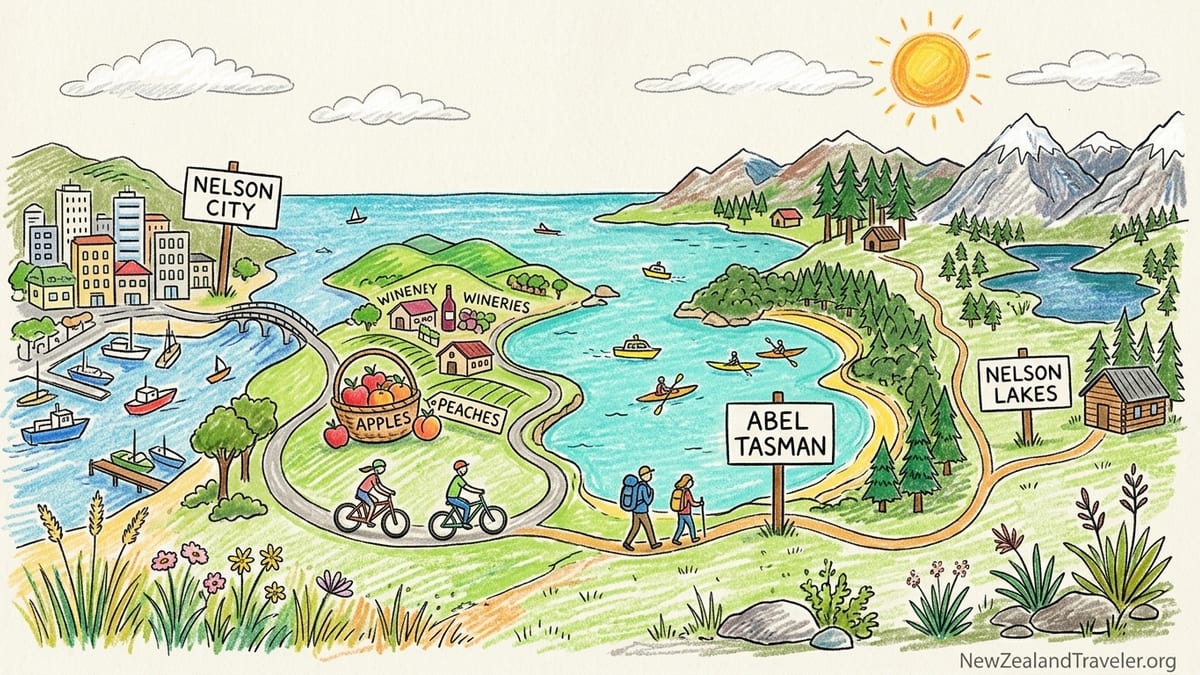
Nelson City Hotels (Walkable, Jet-Lag Friendly, Easy Day Trips)
If you want the widest choice of restaurants, quick grocery runs, and a base that does not punish you for arriving late or leaving early, staying in Nelson city makes the most sense. It’s also the easiest way to tackle a “hub and spoke” itinerary: a day in Abel Tasman, a day in Māpua, a day in Golden Bay, then a final night close to the airport.
Researched alternative: Rutherford Hotel Nelson (central CBD high-rise convenience). This is the classic international-style option right by Trafalgar Square, and it often appears with sharp pricing for a full-service hotel. Recent publicly listed examples showed nights from roughly NZ$232 (taxes and fees included) for late September 2026 dates on major booking channels. If you like a predictable setup with a staffed front desk and you do not want to drive to dinner, the location is the selling point. The trade-off, typical of CBD hotels, is that some rooms can feel more businesslike than boutique, and noise can depend on orientation and what is happening in the square. I would book this style of property when I have a packed schedule and need “easy” more than “special.”
Researched alternative: Harbourside Lodge (marina-side calm without leaving Nelson). If you want to be near the city but not in the middle of it, Harbourside is positioned as a waterfront, marina-edge stay a short drive from the CBD. In practical terms, this is the sort of place I’d choose when I want sunset light and a quieter feel, and I’m fine driving or ridesharing to restaurants rather than walking out the door. Parking is a key advantage with marina-side properties, especially if your trip involves gear like bikes, kayaks, or big luggage.
Researched alternative: The Sails Nelson (serviced-suites feel, close-in but not chaotic). This is a strong pick if you like the idea of apartment-style space rather than a standard hotel room. The property positions itself as about a five-minute walk to Nelson city centre and notes individual car parks, which is a very real quality-of-life feature in Nelson when you’re juggling day trips and don’t want to circle blocks for parking. This “suite plus parking” style usually works well for families or longer stays where you’ll appreciate more room to spread out.
Māpua and Moutere Countryside Properties (Slow Mornings, Wineries, Beach Bike Loops)
Māpua and the Moutere area are ideal when the stay itself is part of the holiday: you’re here for easy bike rides, a slower dinner rhythm, and quick access to beaches and cellar doors without committing to the full remoteness of Golden Bay. It’s also a smart compromise if you want Abel Tasman days but don’t want to pay Kaiteriteri peak-season prices.
Researched alternative: Appleby House and Rabbit Island Huts (boutique rooms plus “Kiwi hut” stays). This property is useful to highlight because it’s not one thing: it offers a boutique guesthouse-style experience plus small huts aimed at travelers who like compact spaces and a slightly off-grid feel without giving up comfort. The operator describes being minutes from Rabbit Island, Māpua and Richmond, which matters when you’re building a day around beach walks or cycling rather than driving long distances. Booking platforms also describe private bathrooms and balconies in some room types, with garden or mountain views. The photo-to-reality gap to watch for in “hut” style stays is scale: huts are often smaller than they look in wide-angle images, and shared facilities may apply depending on which hut category you choose. If you’re the type who unpacks slowly and wants a lounge area, make sure you’re booking the category that truly fits that lifestyle.
The itinerary benefit here is positioning: staying near Richmond and Māpua keeps you close to supermarkets and main roads, so you can pivot based on weather. If Abel Tasman is raining on the coast, you can lean into wineries, galleries, or a long beach loop instead of feeling stuck in a tiny gateway village with fewer alternatives.
A practical note: countryside and semi-rural properties can be incredibly quiet at night, which is bliss until you realize you’ve booked dinner too late and everything nearby closes early. If walk-to-restaurants is essential, double-check your exact distance to Māpua Wharf and whether you’re comfortable driving back after a long tasting day.
Abel Tasman Area Accommodation (Kaiteriteri and Mārahau Gateways)
If Abel Tasman is your headline act, staying near Kaiteriteri or Mārahau is the difference between an early, relaxed start and a rushed drive from Nelson with a car park gamble. Official guidance for the Abel Tasman Coast Track highlights that bookings are open for the 2026/27 season, and the park is popular enough that planning ahead is part of the experience. Even if you are not doing the full track, the ripple effect of peak season is real: water taxis, kayak slots, and dinner tables can fill quickly.
Researched alternative: Kaiteri Lodge (simple, close-to-the-beach practicality). This is the kind of place you book because it’s near what you came for. Booking listings show it on Inlet Road and describe family rooms with private bathrooms, plus options that mention side sea views. Publicly shown example pricing varies by date and room type, but listings have shown rooms around the low hundreds of dollars per night for some periods. The photo gap to watch for at beach lodges is sound and foot traffic: being close to the beach is fantastic, but in busy weeks you may hear people moving around earlier than you’d like. If your Abel Tasman plan involves a dawn water taxi or an early kayak briefing, that “early village energy” can actually be a feature rather than a flaw.
Researched alternative: Department of Conservation huts and camps (the “sleep inside the park” option). For hikers, the DOC system is part of the Abel Tasman identity: you’re not choosing luxury, you’re choosing access. The key reality is that you can day-walk in the park without fees, but overnight hut and campsite bookings are managed by DOC and are seasonal and capacity-limited. When people ask me what listing photographs don’t reveal, this is the clearest answer: you’re not booking a view, you’re booking a bed in a shared system with set rules, and your comfort level depends on your tolerance for communal facilities and early risers.
Researched alternative: Awaroa Lodge (a “within the park” lodge stay, not a village base). Awaroa Lodge is positioned inside Abel Tasman National Park, and it runs with its own house rules, including being a cashless environment. The main itinerary win is obvious: you wake up already in the environment you came to see. The trade-off is logistical dependence on water taxis and lodge arrangements, which can feel either delightfully disconnected or slightly constrained depending on your travel style. If you’re the sort of traveler who likes popping out for a different restaurant each night, a lodge-in-the-park stay can feel limiting. If you want to unplug and commit to the place, it can feel like the entire reason for the trip.
Golden Bay Lodges and Hideaways (Remote Coast, Big Skies, Fewer “Backup Plans”)
Golden Bay is where Nelson Tasman starts to feel like a true reset. The coastline has that long, luminous, low-density vibe, but the same remoteness that makes it special can complicate logistics. If you’re driving over for a short stay, your accommodation choice matters because you won’t want to tack on extra driving after dark.
Researched alternative: The Rocks Chalets (Takaka base with self-contained space). This is a strong example of the “chalets and small houses” category that works well in Golden Bay: you get room to spread out, and the stay functions like a mini base camp. Public room information shows larger configurations (including multi-bedroom houses) with modern conveniences like smart TVs and Netflix noted in some unit descriptions. The reality check here is that a multi-bedroom chalet can be the perfect value when split between friends or family, but may feel oversized and expensive for a solo traveler or couple. If you’re booking as two people, look carefully at whether you’re paying for space you won’t use or if there’s a smaller studio-style unit that fits better.
Researched alternative: Wainui Bay hideaway-style stays (for travelers who want “no shops, lots of birds”). Some Golden Bay accommodation is deliberately positioned away from town services. One Wainui Bay operator describes a small family-run farm setting with native birds and explicitly notes the lack of shops. This is not a warning, it’s the point, but it changes how you pack: bring snacks, plan dinners, and expect to drive for supplies. Listing photographs in remote areas often underplay the practical realities like narrow access roads, limited phone reception, or how dark it gets at night. If you’re arriving late, choose a stay with clear self-check-in instructions and easy-to-follow directions.
Golden Bay helps an itinerary most when you commit to staying put: Wharariki Beach sunsets, slow mornings, and the kind of stargazing you rarely get near a city. It hurts an itinerary when you try to “do Golden Bay” as a day trip from Nelson. It’s doable, but you’ll spend too much time watching the road and not enough time on the sand.
Nelson Lakes Stays (St Arnaud, Cold Water, Alpine Trailheads)
Nelson Lakes is the counterbalance to the coast: cooler temperatures, lake-edge walks, and a mountain-town rhythm. The accommodation inventory here tends to be simpler and more outdoors-oriented, which is exactly what many travelers want after a few nights of restaurants and beaches.
Researched alternative: Alpine Lodge (St Arnaud, multi-style rooms and packages). Alpine Lodge is a classic “do-everything” base in St Arnaud, offering a mix that can suit couples, families, and budget travelers in one property. The operator lists package rates such as NZ$179 per double per night, and major booking channels have shown nights around NZ$140 for mid-September 2026 dates (depending on room type and cancellation terms). The itinerary benefit is location: you’re in the village, close to the lake environment, and well positioned for early starts. The photo-to-reality watch-outs here are common for alpine lodges: some room categories can be compact, and heating style varies by room type. If warmth is non-negotiable for you, confirm the exact heating setup in your room category rather than assuming every room has the same system.
If you’re building a trip that includes both Abel Tasman and Nelson Lakes, this is where accommodation choice either smooths the transfer day or makes it harder. A night in St Arnaud before or after the coast can turn a long drive into a scenic, unrushed leg of the journey. What hurts is trying to keep Nelson as a single base for everything: you’ll end up doing too many long out-and-back drives.
Choosing Your Stay Style (A Practical Matchmaking Guide)
If you want restaurants, galleries, and easy logistics, book Nelson city. It’s the best “default,” especially for a first visit, because you have backup plans if the weather flips. City stays also make sense if you’re doing short day trips and returning late, because you’re not hunting for the one café that’s still open in a tiny beach settlement.
If you want a softer, slower experience where your morning coffee is about birdsong rather than traffic, aim for Māpua, Appleby, or the Moutere. This is the sweet spot for travelers who like wineries, cycle trails, and having enough space to unpack. Countryside boutique stays and hut-style properties can feel more memorable than a standard hotel room, but they do require you to plan meals more intentionally.
If you’re traveling specifically for Abel Tasman, the gateway villages are worth it. The whole experience runs on timing: water taxis, tides, and daylight. Being close reduces stress and lets you say yes to earlier departures, which can mean quieter beaches and a better chance of snagging the exact walk or cruise timing you want. If you’re trying to keep costs down, the DOC hut and campground system is the most iconic way to do it, but it’s a different comfort category entirely.
If you want remoteness, choose Golden Bay and embrace the fact that dinner might be something you cook, not something you book. For some travelers that’s the best version of New Zealand. For others, it can feel inconvenient. Knowing which camp you’re in is the whole point of choosing by style.
The Takeaway
Nelson Tasman’s accommodation is not a single ladder of “best to worst,” it’s a menu of trade-offs. Nelson city hotels buy you walkability and flexibility. Māpua and Moutere buy you space and a slower pace. Abel Tasman gateways buy you time on the water and sand rather than time in the car. Golden Bay buys you true quiet, at the cost of convenience. Nelson Lakes buys you alpine air and early trail access, with simpler lodging that fits the outdoors-first vibe.
If you’re planning your first trip, my strongest practical advice is to split your nights: pair a Nelson city base with either an Abel Tasman gateway or a Golden Bay stay, then add Nelson Lakes if you want that mountain finish. You’ll spend less time doubling back, and your accommodation will stop being just “where you slept” and start being part of the experience.
FAQ
Q1. Is it better to stay in Nelson city or Kaiteriteri for Abel Tasman?
For early water taxis and beach time, Kaiteriteri or Mārahau usually works better. Nelson city is better if you want restaurants and flexible backup plans.
Q2. Do I need to book Abel Tasman accommodation far in advance?
In peak summer, yes. DOC huts, popular beach lodges, and in-park options can sell out, and your boat and walking plans depend on having a bed where you need it.
Q3. What’s the most “authentic” way to stay inside Abel Tasman?
DOC huts and campsites are the classic experience. They’re not luxury, but they put you directly on the coast-track rhythm.
Q4. Are boutique hut stays around Māpua too small for longer trips?
They can be, depending on the hut category. If you need a lounge area, lots of luggage space, or full privacy, confirm the exact room type and bathroom arrangement.
Q5. What’s the biggest mistake people make with Golden Bay lodging?
Underestimating remoteness. Some areas have no nearby shops and limited services, so you need a groceries-and-dinner plan before you arrive.
Q6. Is Golden Bay doable as a day trip from Nelson?
It’s possible, but it’s a long day and can feel rushed. Staying at least one night usually makes the experience far more enjoyable.
Q7. Are Nelson city hotels good for travelers without a car?
They can be, especially if you plan tours or shuttles. But many of the region’s best experiences are easier with a car, particularly Golden Bay and Nelson Lakes.
Q8. What should I look for in Abel Tasman gateway accommodation photos?
Check clues about room scale, parking, and proximity to the beach or boat departure points. Photos often make rooms look larger and quieter than peak-season reality.
Q9. What kind of stay works best for Nelson Lakes?
A lodge or simple alpine base in St Arnaud is typically the most convenient, especially if you want early trail starts and an easy dinner option on-site or nearby.
Q10. How can I balance cost and comfort across Nelson Tasman?
Mix and match: use Nelson city or countryside bases for value nights, then spend on one “destination stay” near Abel Tasman or Golden Bay where the setting is the point.