


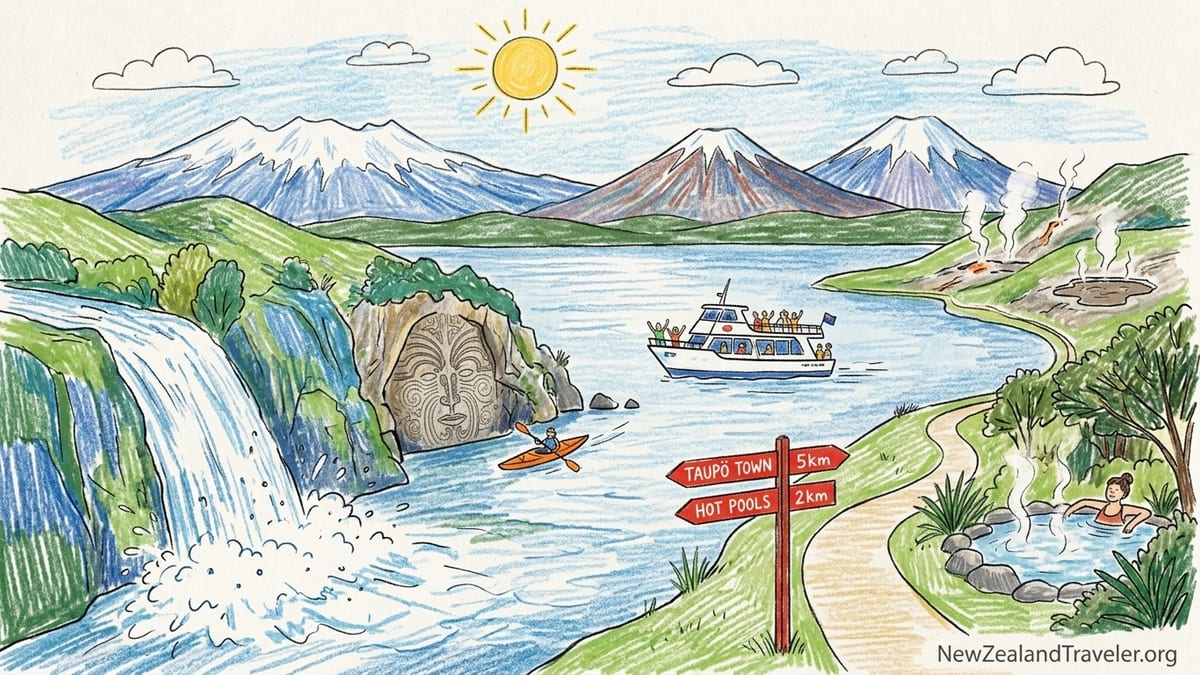
Fringed by volcanoes and filled with thermal energy, Lake Taupō is one of New Zealand’s most rewarding short-stay destinations. With Huka Falls, steamy geothermal valleys, natural hot pools, big-sky lake views and access to Tongariro National Park, it is easy to fill two or three days without feeling rushed. This guide helps you build flexible 1, 2 and 3 day Taupō itineraries, with a practical two-day core you can extend or trim to suit your trip.
How Many Days in Taupō: 1, 2 or 3?
If you are driving between Auckland and Wellington, you can see a surprising amount of Taupō in one long day, but two days is the real sweet spot. With two full days you can dedicate one to Huka Falls, geothermal areas and hot pools, and another to Lake Taupō itself, including a cruise or kayak trip to the Ngātoroirangi Māori Rock Carvings plus time for adventure activities or lakeside hiking.
Adding a third day opens up the wider region. You can head south to Tūrangi for riverside walks and local hot pools, or continue into Tongariro National Park for one of New Zealand’s classic alpine day hikes such as the Tongariro Alpine Crossing, which usually takes around eight hours plus shuttle time. Alternatively, you can drive the quieter western shore of the lake to Kinloch and explore sections of the Great Lake Trails by foot or e-bike.
The itineraries below are designed so that Day 1 and Day 2 form a complete two-day visit. If you only have one day, pick the one that best matches the weather and your interests. If you have three days, add the Day 3 option that appeals most, whether that is volcano landscapes in Tongariro, relaxed riverside time in Tūrangi or lakefront trails around Kinloch.
All timings are approximate and based on self-driving, which is by far the easiest way to get around Taupō and reach trailheads, geothermal parks and outlying villages. If you are relying on tours or shuttles, build in extra buffer time and confirm departure schedules at least a day in advance.
Day 1: Huka Falls, Geothermal Valleys and Hot Pools
Start your first morning with Taupō’s signature sight: Huka Falls. Just 10 minutes’ drive from central Taupō, the Waikato River narrows dramatically before plunging over a final drop of around 11 metres, creating a constant roar and clouds of spray. A free car park beside Huka Falls Road leads to short, fenced viewpoints where you can feel the power of the water in a matter of minutes, or you can walk the easy riverside trail from Spa Thermal Park to the falls if you prefer to arrive on foot.
If you enjoy walking, consider the Spa Thermal Park to Huka Falls track in one direction and return by shuttle or taxi. The track follows the river for roughly one hour each way at a relaxed pace, passing native bush, small bluffs and glimpses of turquoise water. Many visitors stop partway to soak their feet where the warm Otumuheke Stream flows into the cooler Waikato River near Spa Thermal Park. The natural rock pools here are free to use, but water temperatures can be hot, so ease in slowly and keep your head above water.
After Huka Falls, shift to a paid geothermal attraction for a more in-depth look at the region’s volcanic energy. Popular options within a 15 to 25 minute drive of town include Craters of the Moon, with a one-hour boardwalk through steaming vents and bubbling mud, and the more spa-focused Wairakei Terraces, where you can combine a short geothermal walk with outdoor silica-rich hot pools. Entry prices are typically in the range of a few dozen New Zealand dollars per adult, and most sites remain open in light rain, which actually enhances the otherworldly steam effects.
As afternoon slides toward evening, finish the day in a hot pool. In bad weather or with kids, you might opt for a family-oriented complex with hydroslides and heated pools, while couples often prefer quieter adults-only pools such as the terraced thermal baths at Wairakei Terraces or the riverside hot stream at Spa Thermal Park. Many pools stay open into the evening, and soaking while the air cools and stars emerge above the dark silhouette of the surrounding hills is one of Taupō’s simple pleasures after a busy day of walking and sightseeing.
Day 2: Lake Taupō, Māori Rock Carvings and Adventure
Your second day focuses on Lake Taupō itself. The town’s compact centre sits right on the lakefront, so you can start with a stroll along the promenade, picking up coffee and breakfast from a local café and watching early-morning anglers launch boats. On clear days the snow-capped peaks of Ruapehu, Tongariro and Ngāuruhoe line the far horizon, reminding you that this huge lake is actually a flooded volcanic caldera from an ancient eruption.
Late morning is a good time to head out on the water to visit the Ngātoroirangi Māori Rock Carvings at Mine Bay. Several companies operate scenic cruises or sailing trips, with typical durations between 90 minutes and two and a half hours. Prices for standard daytime cruises often start from roughly 40 to 60 New Zealand dollars per adult, with family discounts and occasional deals in shoulder seasons. The towering face carved into the cliffs in the late 20th century is visible only from the water, and while it is a contemporary artwork rather than a pre-European relic, most trips include commentary on local Māori history and legends that give cultural depth to the experience.
If you prefer a more active outing, consider a guided kayak trip to the carvings. These excursions generally take about four hours including transport from town, a safety briefing and paddling time, and suit people with moderate fitness and some comfort on the water. Conditions on the lake can change quickly, so guided trips are safer and more reliable than going out alone unless you are an experienced paddler used to variable wind and chop.
Back on shore, dedicate the afternoon to either adventure or easy walking, depending on your style. Taupō is one of New Zealand’s hubs for adrenaline activities: commercial skydiving with lake and volcano views, jet boat rides on the Waikato River near Huka Falls, white-water rafting on the Tongariro River and bungy jumping from a clifftop platform over the river are all available in or near town. Many operators offer photos and videos as paid extras and run multiple departures per day in high season, but spaces can book out on sunny summer weekends, so pre-booking helps if you have limited time.
If that sounds too intense, choose a gentler option like the Great Lake Pathway, an easy shared walking and cycling track running for many kilometres along the lake edge from Taupō towards the suburb of Wharewaka Point. You can walk a shorter section from town past small beaches and picnic areas, rent bikes to cover more ground, or simply enjoy an ice cream on the sand. In the evening, find a casual restaurant with lake views, try local dishes such as pan-fried trout where legally available, and watch the sun sink behind the volcanic plateau, reflecting soft pink and gold light across the water.
Day 3 Option 1: Tūrangi and Tongariro National Park
If you have a third day and reasonable fitness, use it to explore the southern end of the lake and World Heritage listed Tongariro National Park. From Taupō, it is about a 45 minute drive to Tūrangi, a small town on the Tongariro River known for trout fishing and access to the national park. Many visitors grab breakfast or picnic supplies here before continuing another 40 to 50 minutes to the main trailheads in the park, depending on road and weather conditions.
The most famous hike is the Tongariro Alpine Crossing, a roughly 19 kilometre one-way track that traverses volcanic craters, emerald lakes and alpine saddles. Most hikers allow around seven to eight hours on the trail, not including transport. Private car parking at the Mangatepōpō road end is limited and subject to time restrictions in the main season, so the Department of Conservation and local authorities strongly encourage use of licensed shuttle operators. Return shuttle services run from points such as National Park Village, Tūrangi and Taupō, with typical adult fares from Taupō sitting in the broad vicinity of 60 to 80 New Zealand dollars.
Weather is the key factor for Tongariro. Strong winds, rain, low cloud and winter snow can make the route unsafe or unpleasant, and operators will cancel shuttles if conditions do not meet safety thresholds. Build flexibility into your schedule by staying at least two or three nights in the wider region if the Crossing is a priority, and always carry appropriate gear including sturdy footwear, warm layers, waterproof outerwear, food and water. If the forecast is marginal or you prefer a shorter outing, consider alternative tracks such as the Tama Lakes walk from Whakapapa Village, lower-level trails to Taranaki Falls, or lakeside walks near Tūrangi.
After hiking, reward tired muscles with a soak in one of the small hot pool complexes near Tūrangi or back in Taupō. Simple local pools in the Tūrangi or Tokaanu area typically offer fairly priced entry to outdoor mineral pools fed by natural thermal springs. Many hikers choose to end the day with a quiet dinner in Taupō’s town centre and an early night after the exertion of a full day in the mountains.
Day 3 Option 2: Western Bays, Kinloch and Great Lake Trails
For a more relaxed third day, or if alpine hiking is not for you, consider exploring the lesser-visited western side of Lake Taupō. From Taupō town, it takes around 20 to 25 minutes to drive to Kinloch, a small lakeside settlement with a sheltered bay, marina and pebbly beach. The road winds through farmland and pine forest with occasional glimpses across the lake to the volcanic peaks on the far shore.
Kinloch is a key access point to the Great Lake Trails, a network of purpose-built walking and mountain biking tracks that trace the bushy shoreline and bluffs of the Western Bays. You do not need to be a serious mountain biker to enjoy them; local operators in Taupō and Kinloch hire e-bikes and standard bikes, offer shuttles to trailheads and can suggest short sections suitable for families or less experienced riders. Popular choices include out-and-back rides or walks along the Whakaipo to Kinloch section or shorter loops that give elevated views across the vast expanse of water.
If you prefer to stay close to the water, simply base yourself in Kinloch for the day. Swim in the clear (although often chilly) lake, picnic on the lakeside reserve, or hire stand-up paddleboards in summer if conditions are calm. Small cafés or general stores in the village provide coffee, snacks and basic supplies, but do not expect the same range of dining and shopping as Taupō itself, so it is wise to bring a packed lunch or extra drinks.
On your drive back to Taupō, stop at viewpoints over the lake or detour to one of the bays with roadside parking and informal access paths to the shore. Western bays often feel quieter than the main town beaches, especially outside peak summer holidays. This makes them a good choice for travellers who want to experience the scale of Lake Taupō without crowds, rounding out a three-day visit with a slower, more contemplative pace.
Practical Tips for Building Your Taupō Itinerary
When deciding how to arrange your days, keep a close eye on the weather forecast. On bright, clear days it makes sense to prioritise outdoor and high-viewpoint activities such as the Lake Taupō cruise, skydiving or the Tongariro Alpine Crossing. Save geothermal parks, hot pools and short forest walks for cloudier or windier conditions, when views into the distance matter less but steam, mud pools and close-up textures still impress.
Accommodation in Taupō ranges from lakefront motels and family holiday parks to apartment-style hotels and lodges. Prices fluctuate with demand, usually peaking in the December to February summer holidays, long weekends and during major events such as sporting races. Booking at least a few weeks ahead gives you more choices close to the lakefront, which helps if you want to walk to restaurants and pick-up points for tours. If you plan to spend most of your time in Tongariro National Park, consider splitting your stay between Taupō and a village like National Park or Whakapapa to reduce daily driving.
Transport also shapes what is realistic in a one, two or three day itinerary. With a rental car, you can comfortably see Huka Falls, a geothermal park and hot pools in one day, then enjoy a cruise and lakeside walking the next. Without a car, focus on activities departing directly from central Taupō such as lake cruises, guided kayak trips, shuttle-connected walks and organised tours that link Huka Falls and geothermal areas. Public transport is limited, so do not rely on buses alone for reaching trailheads or small villages.
Finally, remember that Taupō rewards slowing down as much as ticking off highlights. Allow time for unplanned stops by the river, coffee breaks in town, or a spontaneous short walk when you see an inviting track sign on the roadside. The itineraries in this guide are intended as frameworks, not rigid schedules. Adjust them to your interests, fitness, travel style and the conditions you encounter when you arrive.
The Takeaway
In one day, Taupō delivers a concentrated mix of waterfalls, geothermal landscapes and hot mineral water, making it a worthwhile stop even on a tightly timed New Zealand road trip. With two days, you can add time on the lake itself, cruise or paddle to the Māori Rock Carvings, and either sample adventure sports or settle into relaxed lakeside walking and café-hopping.
A third day expands your horizons to Tūrangi, Tongariro National Park or the quieter western bays around Kinloch. Whether you choose alpine hiking, e-biking the Great Lake Trails or simply drifting between riverside picnic spots and hot pools, those extra hours reveal how varied this central plateau region can be. The key is to match each day’s focus to the weather and your energy, keeping your plans flexible enough to adapt.
However you divide your time, Taupō’s combination of water, steam and mountain silhouettes leaves a strong impression. From the thunder of Huka Falls to the stillness of dawn over the lake, it is a place where big volcanic landscapes feel accessible without specialist skills. Plan your one, two or three days with these routes in mind, then let the elements and the lake’s changing moods shape the fine details.
FAQ
Q1. Is two days in Taupō really enough to see the main sights?
Two full days is enough to visit Huka Falls, a geothermal park, relax in hot pools, cruise or kayak to the Māori Rock Carvings and enjoy some lakeside walking or an adventure activity. A third day simply allows you to explore a wider area at a more relaxed pace.
Q2. Can I visit Huka Falls and the Māori Rock Carvings in one day?
Yes, you can see both in a single day if you start early. Plan to visit Huka Falls and possibly walk part of the riverside track in the morning, then book a midday or afternoon lake cruise or kayak trip to the Māori Rock Carvings, leaving time for meals and transport between locations.
Q3. Do I need to book Lake Taupō cruises and Tongariro shuttles in advance?
For summer and busy holiday periods it is sensible to book key activities in advance, especially Tongariro Alpine Crossing shuttles and popular cruise times such as midday or sunset. Outside peak times you may find same day availability, but pre-booking still reduces stress and helps you plan around the weather.
Q4. Is the Tongariro Alpine Crossing suitable for beginners?
The Tongariro Alpine Crossing is a demanding full day hike rather than a casual walk. Many first time visitors with good fitness complete it, but it includes steep sections, exposed alpine terrain and rapidly changing weather. If you are unsure, talk with local guides, consider shorter walks in Tongariro National Park, or join a guided trip that provides extra support and equipment.
Q5. What are good alternatives if the weather is bad for Tongariro?
If conditions close the Tongariro Alpine Crossing, stay flexible. You can still enjoy geothermal parks around Taupō, visit multiple hot pool complexes, take short forest or river walks near Tūrangi, or explore the western bays by car and on foot. Many of these lower level activities remain enjoyable in light rain or wind.
Q6. Are Taupō’s geothermal hot pools safe for children?
Most commercial hot pool complexes around Taupō welcome families and have varying pool depths and temperatures, but supervision is essential. Natural hot streams and informal rock pools can be very hot in places and may lack lifeguards or clear signage, so always test the water carefully, keep children within arm’s reach and follow any posted safety advice.
Q7. Do I need a car to follow this Taupō itinerary?
A car makes it much easier to reach Huka Falls, geothermal parks, Kinloch and Tongariro trailheads on your own schedule. Without a car, focus on activities departing from central Taupō and use organised tours or shuttles where available. You can still enjoy lake cruises, guided kayak trips, some short walks and hot pools, but your itinerary will be more limited.
Q8. When is the best time of year to visit Taupō?
Summer from December to February brings warm lake days and long evenings but also more visitors and higher prices. Spring and autumn offer milder temperatures, fewer crowds and often clear views of the snow-dusted volcanoes. Winter can be crisp and cold yet atmospheric, especially if you combine Taupō with skiing or snow play on Mount Ruapehu.
Q9. How expensive are activities like cruises, hot pools and shuttles?
Exact prices change regularly, but as a general guide you can expect to pay the equivalent of a few dozen New Zealand dollars per adult for standard lake cruises or geothermal park entry, more for premium or small group options, and similar or slightly higher amounts each way for Tongariro shuttles from Taupō. Checking current prices shortly before you travel will help you set a realistic daily budget.
Q10. Can I swim in Lake Taupō and the rivers around it?
Many people swim in Lake Taupō during the warmer months, especially at town beaches and sheltered bays like Kinloch, although the water can still feel cool. Some stretches of the Waikato and Tongariro Rivers are also popular for swimming, but always assess local conditions, obey safety signs and be cautious around fast flowing sections, hydro dams and areas with boat traffic.