


Rotorua is one of New Zealand’s most iconic destinations, but first-time visitors are often surprised by how much there is beyond bubbling mud and geysers. Sitting roughly midway between Auckland and Taupō, this compact city blends geothermal landscapes, living Māori culture, tranquil redwood forests, lakefront walks and a strong wellness scene. This guide focuses on the core first-timer experiences around Te Puia and Whakarewarewa, Wai-O-Tapu, Waimangu Volcanic Valley, the Redwoods, Lake Rotorua, Kuirau Park, Māori cultural evenings and geothermal spas, with practical detail on transport, bookings and how Rotorua fits into a wider North Island itinerary.
How Rotorua Fits Into a North Island Itinerary
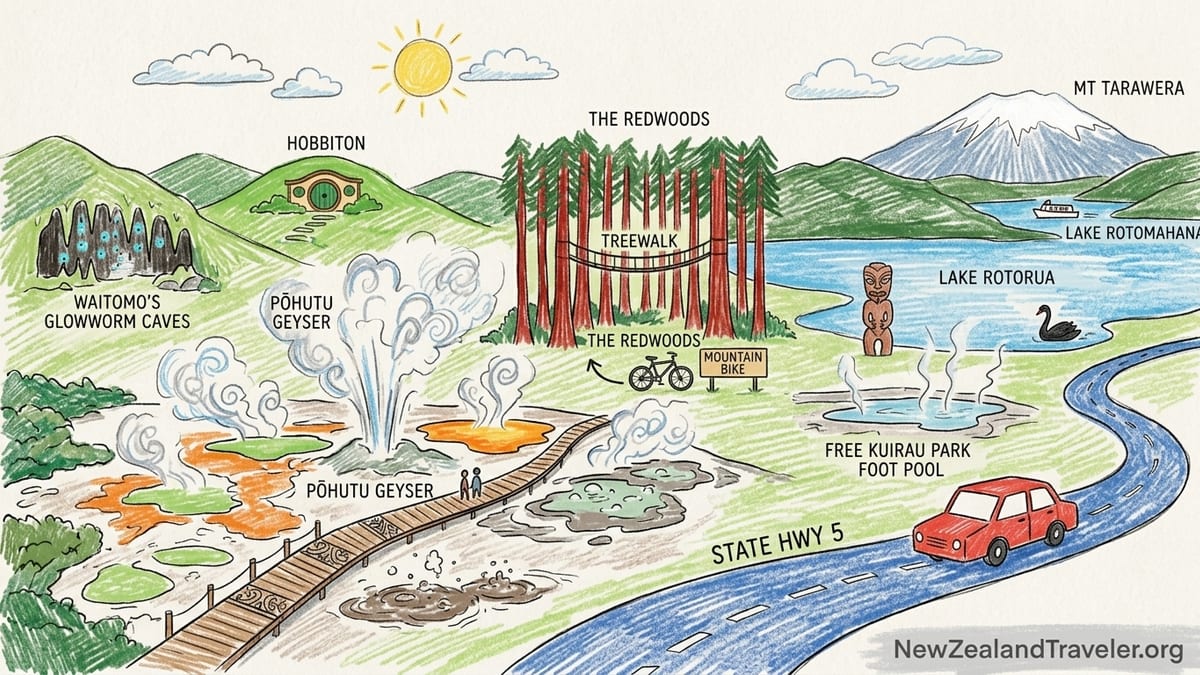
Rotorua sits in the central North Island, about a 2.5 to 3 hour drive from Auckland via Hamilton and the Waikato farming region, and around 1 hour from Taupō along State Highway 5. Many first-time visitors pair Rotorua with Matamata (for Hobbiton), Waitomo’s glowworm caves and Taupō’s lake and volcanic landscapes. In practical terms, Rotorua works well as a 2 to 3 night base in between Auckland and Taupō, allowing at least one full day for geothermal and cultural experiences and another for forests, lakes and relaxation.
If you are coming from Auckland or the Waikato, it is common to visit Hobbiton near Matamata earlier in the day and continue on to Rotorua in the afternoon. Driving from Matamata to Rotorua typically takes about 1 hour, which means you can book a late-morning Hobbiton tour and comfortably arrive in Rotorua before dinner. From the south, Rotorua is an easy stop between Taupō and the Bay of Plenty coast, or part of a loop that links Taupō, Rotorua and the Coromandel Peninsula.
Because many of Rotorua’s headline experiences are spread along the highway towards Taupō, having a rental car gives you the most flexibility. Waimangu Volcanic Valley is roughly a 25 minute drive from central Rotorua, while Wai-O-Tapu sits about 27 kilometres further south again. Public transport is limited on these routes, though there are dedicated shuttles and tour packages to help visitors without a car reach key geothermal sites.
For most first-time visitors, two full days in Rotorua is the minimum to see a representative mix of geothermal, forest and cultural attractions without rushing. If you also want to include several spas, lake activities and a slower pace, three nights is more realistic. Rotorua’s compact size means you spend less time commuting than in larger cities, leaving more time in actual landscapes, villages and on the water.
Te Puia and Whakarewarewa: Geothermal Heartland and Living Culture
Te Puia and the neighbouring Whakarewarewa valley form the core of Rotorua’s geothermal and cultural experience. Te Puia combines the Te Whakarewarewa geothermal valley, the Pōhutu Geyser, a kiwi conservation centre, an arts and crafts institute and cultural performances with hāngī-inspired dining. Day experiences typically include a guided walk past mud pools and silica terraces, viewing platforms for the geyser and insight into traditional carving and weaving schools, followed by optional lunch at the on-site restaurant that overlooks the valley.
Next door, Whakarewarewa The Living Māori Village offers a different perspective: a community where people still live among steam vents and use geothermal heat for everyday cooking and bathing. Guided tours explain how families have adapted their homes to the environment, with practical demonstrations of cooking corn in boiling pools and using vents to prepare classic dishes. Because this is a functioning village, visiting feels more intimate and is especially rewarding for travellers who want to understand how geothermal activity shapes daily life, not just sightseeing.
For most visitors, Te Puia and Whakarewarewa can be explored without a car. They sit a short drive or local bus ride from Rotorua’s central hotels, and taxi or rideshare services are readily available. Guided tours at both sites run throughout the day, and while you can often buy tickets on arrival outside peak periods, it is wise to book ahead during New Zealand summer school holidays and major events. Combination tickets that include a guided tour and cultural performance at Te Puia are particularly popular and may sell out for prime time slots in the evening.
If your time is limited, prioritise one or the other depending on your interests. Travellers wanting a strong mix of culture, geysers and modern visitor facilities often choose Te Puia with its formal cultural performance and large visitor centre. Those more drawn to community life and the feel of a traditional village often opt for Whakarewarewa. Many first-time visitors with two days in Rotorua make time for both, visiting one site in the morning and the other in the afternoon, which gives a rich understanding of how Māori identity and geothermal landscapes are intertwined.
Wai-O-Tapu and Waimangu: Iconic Geothermal Landscapes That Need a Car
Beyond Rotorua’s city limits, Wai-O-Tapu Thermal Wonderland and Waimangu Volcanic Valley showcase some of the most striking geothermal scenery in New Zealand. Wai-O-Tapu is known for its colourful pools, craters and terraces, including the vividly green Devil’s Bath and the Champagne Pool with its orange rim and steaming surface. The walking tracks are self guided and well marked, with three loop options that can take from under an hour to about three hours depending on how many side paths you explore.
Waimangu Volcanic Valley offers a more expansive, natural-feeling landscape shaped by the 1886 eruption of Mount Tarawera. Visitors follow a track that descends through a lush valley past steaming cliffs, boiling lake edges and geothermal terraces, with options to shorten the walk by using internal shuttle buses or extending it with boat cruises on Lake Rotomahana. The valley feels wilder and more spread out than Wai-O-Tapu, which some travellers prefer if they enjoy walking in nature as much as geothermal features.
Both Wai-O-Tapu and Waimangu are located south of Rotorua along the road to Taupō and are easiest to visit by car. Travel time from central Rotorua to Wai-O-Tapu is roughly 30 to 35 minutes, while Waimangu is about 25 minutes’ drive. There is a dedicated shuttle service from the Rotorua i-SITE visitor centre to Wai-O-Tapu that includes park entry in a combined ticket, typically departing around mid-morning and returning early afternoon, which is very useful for visitors without a vehicle. For Waimangu, some tour operators offer transport packages, but options are fewer and schedules more limited, so a rental car or private transfer gives more flexibility in timing and weather.
Advance booking is strongly recommended for both valleys, particularly in the high season from December to March, long weekends and New Zealand school holidays. Booking online a few days ahead usually secures your preferred time slot, and tour packages that bundle park entry and transport can sell out earlier. Weather can change quickly in the region, so consider building in some flexibility: for example, aim for Wai-O-Tapu on a day with reasonable visibility to appreciate the colours and reflections, while Waimangu’s forested tracks can still be atmospheric in light drizzle as steam and mist blend together.
The Redwoods and Lake Rotorua: Forest Trails, Free Walks and Nightlights
Rotorua’s other defining landscape element lies just outside the city centre in the Whakarewarewa Forest, often simply called “the Redwoods.” Towering Californian redwoods line a network of walking, running and mountain biking trails, many starting only a 5 to 10 minute drive from central hotels. The forest is free to enter and is one of Rotorua’s most accessible ways to balance hot, mineral-rich air with cool, shaded paths. Short walking loops from the Redwoods Visitor Centre can take as little as 30 minutes, while longer circuits and shared trails cater to more energetic hikers and cyclists.
For a more structured experience, the Redwoods Treewalk and its Redwoods Nightlights offer a series of suspension bridges strung between the trees, high above the forest floor. By day, you walk among the trunks and canopy, while at night contemporary lanterns cast warm light over the pathways, creating a gentle glow rather than a theme-park feel. Tickets can usually be bought on-site, but fast-pass or timed-entry options are strongly advised around summer evenings, New Zealand public holidays and weekends when queues may form. The Treewalk area is close enough to reach by taxi or local bus, although a car makes it easier if you are travelling with children or planning a late-night visit.
Lake Rotorua itself is a huge, shallow volcanic lake that wraps around the north of the city centre. A wide lakeside promenade and nearby parks offer easy, free strolls with views of steaming vents and black swans gliding across the water. From the main lakefront area, boat cruises, kayak tours and scenic flights operate throughout the day, some bundling in sunset drinks or cultural commentary. First-time visitors often enjoy an early evening walk along the lake before heading to a cultural show or dinner, as it gives a sense of Rotorua as a lived-in town rather than just a set of attractions.
Because the Redwoods and Lake Rotorua are so close to accommodation and dining areas, they are ideal “filler” activities around more structured bookings. For example, you might spend a morning at Te Puia, enjoy a relaxed lunch in town, then walk the lakefront and visit the Redwoods for an evening Treewalk. No advanced booking is needed for the forest trails or lake walks themselves, which helps balance a schedule that otherwise includes timed entries and evening performances.
Free Geothermal Encounters at Kuirau Park and in the City
Not all geothermal experiences in Rotorua require tickets. Kuirau Park, just west of the city centre, offers a free and surprisingly dramatic introduction to hot pools, steaming vents and bubbling mud. Paved paths wind between fenced-off geothermal features with interpretive signs explaining the activity beneath your feet. In some corners of the park, small wooden foot pools allow visitors to soak their feet in warm mineral water, which can be particularly welcome on a cool afternoon.
Kuirau Park is easily reached on foot from central hotels and the main bus routes, making it an excellent option for travellers without a car or those arriving later in the day when paid attractions may be closing. Early morning visits can be especially atmospheric as cool air and hot steam combine to form swirling mist. Because the park is unfenced and part of the city’s public green space, it is open at all hours, though for safety it is sensible to stick to daylight or early evening.
Around the edges of Lake Rotorua and in pockets of the city, you will notice smaller geothermal vents and pools integrated into everyday life, such as steam rising from drains or fenced-off boiling patches in residential streets. These are reminders that Rotorua sits atop a dynamic geothermal field, and they contribute to the city’s distinctive smell of sulfur. For first-time visitors, Kuirau Park provides a safe, well-signed environment to appreciate this energy up close, without the commitment of a half-day excursion.
Even though Kuirau Park is un-ticketed, basic precautions still apply. Always stay behind fences and on marked paths, as ground near geothermal features can be thin and unexpectedly hot. Keep children close and avoid touching water or mud outside designated foot-soaking areas. Combined with a walk along the lakefront, a visit to Kuirau Park can form a relaxed, low-cost afternoon that complements paid visits to Te Puia, Wai-O-Tapu or Waimangu earlier in your trip.
Māori Cultural Evenings and Geothermal Spas
Rotorua is one of the most accessible places in New Zealand to experience Māori cultural performances, storytelling and shared meals. Several evening experiences combine traditional welcomes, kapa haka performances and hāngī dinner cooked underground or using steam and hot stones. These events often start with a bus pickup from central hotels, a formal welcome ceremony, followed by songs, chants, poi demonstrations and a haka, finishing with a generous buffet-style meal. Because they operate on fixed schedules, evening cultural experiences are among the first things that should be booked once your travel dates are set.
During the busy summer season and holiday periods, popular cultural venues can sell out several days in advance, particularly for Friday and Saturday nights. Booking at least a week ahead is sensible if you are visiting between December and March or during school breaks. Shoulder seasons such as spring and autumn may offer more flexibility, but it is still worth reserving as soon as you finalise accommodation. For travellers relying on hotel pick-up, double-check pick-up times and locations so you can plan any afternoon activities accordingly.
Rotorua’s geothermal spas add another layer to the city’s identity, combining mineral-rich waters with lake views and landscaped pools. Facilities range from large complexes with family-friendly public pools, slides and casual dining, to more tranquil adult-oriented retreats offering private pools and spa treatments. Some lakeside pools feature terraced hot pools facing Lake Rotorua, making them especially appealing at sunset or in cooler weather when steam rises dramatically from the water.
Advance booking for spas depends on the type of experience. Public pools with large capacity often accept walk-ins, though weekends and holiday evenings can be busy. Private pools and spa treatments such as massages or mud wraps usually require reservations, particularly in the early evening slots that many visitors prefer after a day of sightseeing. Arranging spa bookings around your more fixed commitments, such as shuttle departures to Wai-O-Tapu or evening cultural performances, will help you avoid time pressure and make the most of Rotorua’s wellness side.
Where to Stay and How to Get Around
Rotorua offers a wide mix of accommodation clustered mainly around the city centre and along Fenton Street, which runs south from the lake. Lakeside hotels and apartments appeal to visitors who prioritise views and easy access to the waterfront and dining, while motels along Fenton Street provide convenient parking and simple driving access to Te Puia, the Redwoods and the highway to Taupō. There are also campgrounds and holiday parks with cabins and powered sites, popular with families and self-drive travellers.
For first-time visitors without a car, staying near the lakefront or close to the main bus routes is practical. You can walk to Kuirau Park, the central dining precinct, the i-SITE visitor centre and many hotel pick-up points for cultural evenings and day tours. From this area, taxi and rideshare services make it straightforward to reach Te Puia, the Redwoods and local spas. If you plan to rely heavily on shuttles, check whether your chosen accommodation is on common pick-up routes or if you will need to walk to a central meeting point.
Travellers with a rental car have more flexibility in choosing accommodation and timing day trips, but should be prepared for the distinctive geothermal smell that can be more noticeable around some parts of the city. Most hotels and motels offer free or low-cost parking, and driving within Rotorua is generally uncomplicated, with short travel times between attractions. When visiting popular sites like the Redwoods in the evening or major geothermal parks on weekends, aim to arrive a little earlier to secure parking, particularly during the summer holiday period.
In practice, many first-time visitors choose a central motel or hotel for two or three nights and build their Rotorua stay around a simple pattern: one day focused on Te Puia or Whakarewarewa and local spas, another day for Wai-O-Tapu or Waimangu plus the Redwoods, with Kuirau Park and lakefront walks fitting in on arrival or departure days. This structure balances pre-booked, time-sensitive experiences with flexible, low-cost activities that can adjust to weather and energy levels.
The Takeaway
Rotorua is far more than a quick geothermal stop between Auckland and Taupō. For first-time visitors, it is a place where geysers and mud pools share the stage with lakeside promenades, towering redwoods and some of the most accessible Māori cultural experiences in New Zealand. Anchoring your visit around Te Puia or Whakarewarewa, Wai-O-Tapu, Waimangu, the Redwoods, Lake Rotorua, Kuirau Park, evening cultural performances and geothermal spas allows you to experience this range in just two or three days.
Practical planning makes a real difference. Experiences that usually require advance booking include Wai-O-Tapu and Waimangu (especially if you need transport), cultural evenings with dinner and performance, and private spa pools or treatments. By contrast, Kuirau Park, the Redwoods forest trails and lakefront walks remain flexible anchors you can slot around fixed commitments, ideal for arrival afternoons, weather changes or moments when you simply want to wander.
Whether you are arriving from Auckland after a Hobbiton tour in Matamata or driving north from Taupō, Rotorua rewards a slightly slower pace. Sitting at the meeting point of geothermal activity, Māori culture, forests, lakes and wellness, the city offers a concentrated slice of what makes the central North Island distinctive. Plan ahead where it counts, leave room for unstructured time in the forest and by the lake, and your first visit to Rotorua is likely to feel both full and unexpectedly restorative.
FAQ
Q1. Do I need a car to see the main Rotorua attractions?
While a car gives you more flexibility and is the easiest way to reach Wai-O-Tapu and Waimangu, you can still see many highlights without one. Te Puia, Whakarewarewa, the Redwoods Treewalk, Kuirau Park, Lake Rotorua and several spas are accessible by taxi, rideshare, local bus or hotel pick-up, and there is a dedicated shuttle from central Rotorua to Wai-O-Tapu that includes park entry.
Q2. How many days should a first-time visitor spend in Rotorua?
Two full days is a practical minimum to cover geothermal sights, Māori culture and forest or spa time without feeling rushed. If you also want to fit in multiple spas, longer walks in the Redwoods or extra lake activities, three nights allows for a more relaxed pace and flexibility for weather changes.
Q3. Which attractions in Rotorua require advance booking?
It is sensible to book Wai-O-Tapu and Waimangu Volcanic Valley in advance, especially in summer or school holidays, and essential to reserve evening Māori cultural experiences that include dinner and performance. Private spa pools and spa treatments also usually require reservations, while public pools, Kuirau Park, forest trails and lakefront walks typically do not.
Q4. How does Rotorua fit between Auckland, Hobbiton and Taupō?
Rotorua sits roughly 2.5 to 3 hours’ drive from Auckland and about 1 hour from Taupō, making it a natural base between the two. Many travellers visit Hobbiton near Matamata the same day they drive from Auckland to Rotorua, then continue on to Taupō or further south after two or three nights exploring Rotorua’s geothermal, cultural and forest highlights.
Q5. Is Rotorua only about geothermal activity?
No, Rotorua’s tourism identity now combines geothermal landscapes with Māori culture, redwood forests, lakes and wellness. While geysers, mud pools and hot springs remain central, travellers also come for the Redwoods Treewalk, lake cruises or kayaking, forest biking and a range of spa and relaxation experiences that make the city feel more like a rounded destination than a single-theme stop.
Q6. What is the difference between Te Puia and Whakarewarewa?
Te Puia combines a geothermal valley, the Pōhutu Geyser, a kiwi conservation centre, arts and crafts institutes and formal cultural performances in one visitor complex. Whakarewarewa is a living Māori village where families still use geothermal heat in everyday life, and guided tours focus on community stories and daily practices. Both share the same geothermal valley but offer distinct experiences that many visitors find complementary.
Q7. When is the best time of day to visit Wai-O-Tapu and Waimangu?
Morning visits to Wai-O-Tapu often provide better light and cooler temperatures for walking the exposed tracks and viewing colourful pools. Waimangu’s longer, more sheltered valley walks can work well from mid-morning to afternoon, and internal shuttle buses help shorten the route if needed. In summer, starting earlier in the day helps avoid the hottest hours and allows time to add a spa or forest walk later on.
Q8. Are there free geothermal experiences in Rotorua?
Yes, Kuirau Park near the city centre offers free access to steaming pools, bubbling mud and warm foot baths along marked paths. Smaller geothermal features can also be seen around Lake Rotorua and in some residential areas, though visitors should always stay on designated paths and behind fences for safety.
Q9. Do I need to book the Redwoods Treewalk and Nightlights?
Tickets for the Treewalk and Nightlights can often be purchased on arrival, but during peak periods such as summer evenings, weekends and school holidays, fast-pass or timed-entry options are recommended to reduce waiting times. The forest’s free ground-level trails require no booking and provide an excellent alternative if you prefer independent walking.
Q10. Is Rotorua suitable for children and families?
Rotorua is very family-friendly, with short geothermal walks, interactive cultural experiences, gondolas and luge rides, lakeside playgrounds and both fun-focused and quieter spas. Many attractions offer family tickets or child pricing, and driving distances between sites are short, which helps keep days manageable for younger travellers.