


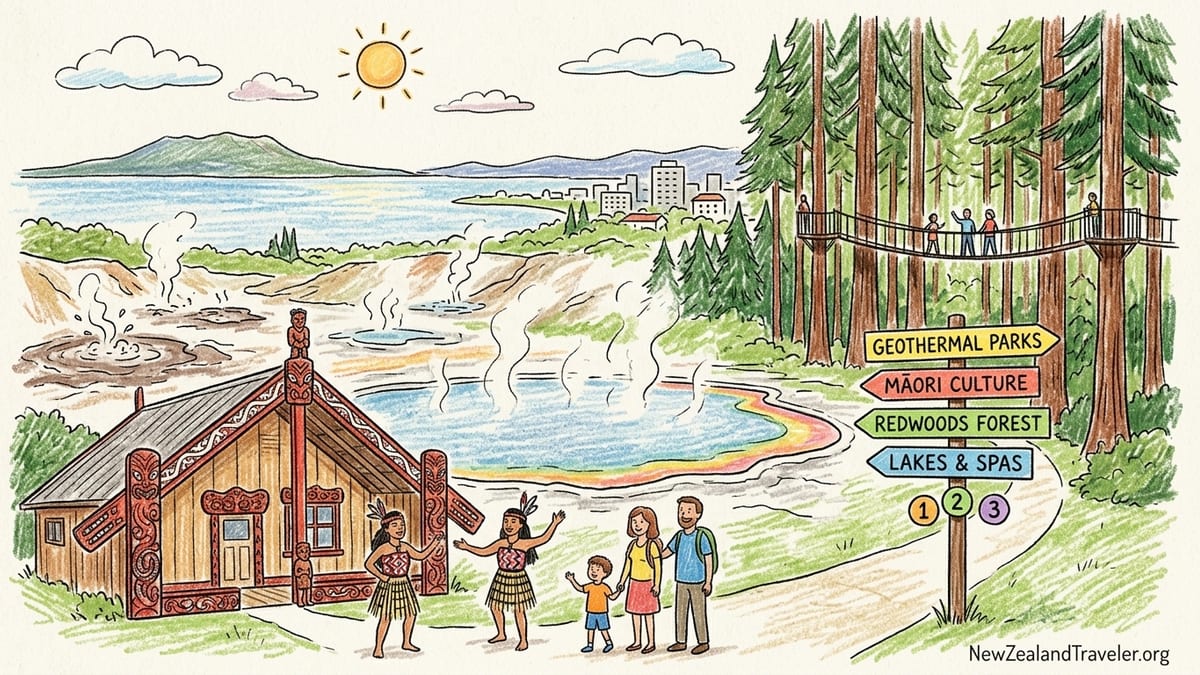
Rotorua is one of New Zealand’s most compact, easy to plan destinations. Within 30 minutes of the city centre you can walk through active geothermal valleys, sit down to a Māori hāngī feast, ride zip lines through towering redwoods, and finish the day soaking in a hot mineral pool. Rotorua’s own tourism authority currently recommends at least three nights to do the region justice, and most recent trip advice clusters itineraries around three full days. This guide builds clear 1, 2 and 3 day versions so you can scale up or down while still keeping a logical flow: geothermal and Māori culture first, then redwoods and adventure with spa time, then lakes or an out of town experience.
How Long to Spend in Rotorua and Where to Stay
If you only have one full day, you can still see a headline geothermal park, experience Māori culture in the evening and squeeze in a short soak in a hot pool. Two days lets you add the Redwoods, one or two adventure activities and a more relaxed spa visit. Three full days is the current sweet spot promoted by Rotorua tourism operators, giving time for two geothermal areas, a cultural evening, the Redwoods and an extra day for lakes or an out of town trip without rushing between each booking.
Most visitors base themselves in central Rotorua, roughly around Fenton Street and the lakefront. This area keeps you within a short walk or 5 minute drive of restaurants, supermarkets, the i-SITE visitor centre, tour pick up points and popular spots such as Polynesian Spa and Government Gardens. Typical mid range motels here often include kitchenettes and sometimes private mineral hot tubs, while larger hotels offer lake views, restaurants and on site spas. Prices are generally lower than in Queenstown or Auckland for a similar standard, so it is worth booking something comfortable if you plan to stay three nights.
If you prefer more peace and greenery, you can stay just out of town near the Whakarewarewa Forest or along the eastern lakes such as Lake Tarawera or Lake Rotoiti. These areas suit travellers with a rental car who want easy access to trailheads and lake activities. Expect a 15 to 30 minute drive back into Rotorua for dinner or evening cultural shows, and try to book lakefront or forest edge accommodation if early morning views matter to you.
Regardless of where you stay, pre book your key activities if you are travelling in the New Zealand summer school holidays from late December to early February. Popular guided experiences such as geothermal park tours, Māori cultural evenings, the Redwoods Treewalk and spa packages sell out in peak weeks, and having confirmed time slots will make your itinerary flow much more smoothly.
Day 1: Geothermal Wonders and Māori Culture
Your first day should focus on why Rotorua exists as a destination at all: its geothermal activity and the Māori communities who have lived with it for centuries. Start with a major geothermal valley such as Te Puia, Wai O Tapu or Waimangu Volcanic Valley. Te Puia combines geothermal terraces, the powerful Pōhutu Geyser and the New Zealand Māori Arts and Crafts Institute, so it works well for travellers who want geothermal features and cultural context in one ticket. Plan two to three hours to walk the paths, watch geyser eruptions and, if available, see carvers and weavers at work.
Wai O Tapu, about 25 minutes south of Rotorua by car, is known for vividly coloured pools like the Champagne Pool and Artist’s Palette. Trails are clearly marked and take one to two hours depending on the route you choose. Many tours combine Wai O Tapu with Waimangu Volcanic Valley, a younger geothermal valley with steaming cliffs, craters and a lake cruise on Lake Rotomahana. If you visit independently, expect to pay for each site separately and allow half a day for two valleys with driving and photo stops.
Return to town by mid afternoon to rest, grab food from a local café or eatery along Eat Streat, then prepare for an evening Māori cultural experience. Options range from village style experiences in geothermal settings to larger theatre style performances. A typical evening includes a pōwhiri welcome ceremony, kapa haka performance with songs and haka, cultural storytelling and a hāngī buffet dinner cooked using steam or heated stones. Door to door transfers from central hotels are usually included, and the full evening runs for about three hours.
For travellers with only one day in Rotorua, this combination of daytime geothermal exploration and a night time cultural evening forms your 1 day Rotorua itinerary. If you still have energy, finish with a short late night soak at a central spa complex such as Polynesian Spa or Wai Ariki Hot Springs and Spa. Both draw on natural hot mineral water and offer a mix of public pools and quieter adult only areas, with pricing structured by access zone rather than time spent in the water.
Day 2: Redwoods, Adventure and Rotorua’s Spa Scene
With the geothermal and formal cultural experiences under your belt, day 2 shifts to forest, adventure and relaxation. Begin in the Whakarewarewa Forest, home to Rotorua’s famous redwoods. The easiest introduction is the Redwoods Treewalk, a system of suspension bridges threading through the lower canopy of the Californian redwoods at around 20 metres above the forest floor. The walk is suitable for most ages, with wide platforms and no harnesses, and usually takes 40 to 60 minutes at a relaxed pace.
Mountain bikers and hikers can then explore the wider forest network. Rotorua has become a major mountain biking centre, with graded trails from family friendly beginner loops to technical downhill runs. Bike hire and shuttle services operate from the forest edge and from town, so you do not need your own gear. If you prefer a guided experience high in native forest, Rotorua Canopy Tours offers small group zipline and swing bridge tours that combine adventure with wildlife and conservation stories.
Adventure seekers have plenty of other options for the middle of day 2. Zorb Rotorua runs large inflatable ball rides down specially designed hillsides, while the Rotorua Skyline complex on Mount Ngongotahā offers gondola rides, luge tracks and a viewing platform over the city and lake. White water rafting trips on the Kaituna River leave from Rotorua and include the chance to raft over Tutea Falls, often described as one of the highest commercially rafted waterfalls in the world. Plan for half a day if you add rafting or a full canopy tour, factoring in transfers and safety briefings.
Late afternoon is the time to slow down. Book an early evening soak at a spa complex that suits your travel style. Polynesian Spa, on the edge of Lake Rotorua, has been welcoming bathers for decades and offers lakeside mineral pools, family areas and quieter adult only zones. Newer options such as Wai Ariki Hot Springs and Spa emphasize Māori wellness concepts and higher end design, with pools arranged in circuits designed to be followed in a particular order. Pricing for adult pool access commonly sits in a moderate to high range by New Zealand standards, with optional add ons such as massages or private pools increasing costs. This mix of forest, light adventure and spa time is ideal for a 2 day Rotorua itinerary.
Day 3: Lakes, Tarawera or an Out of Town Trip
A third full day lets you see beyond the city and its immediate geothermal fields. One popular option is to focus on the Rotorua lakes. Lake Rotorua itself borders the city and is the base for short lake cruises, kayaking and paddleboarding. Nearby lakes such as Lake Tarawera, Lake Tikitapu (Blue Lake) and Lake Rotokākahi (Green Lake) offer quieter walking tracks and swimming spots. A typical day might involve a morning walk on the Tarawera Trail or the Blue Lake circuit, followed by a lakeside picnic and an afternoon boat or water taxi trip to a remote hot water beach.
Lake Tarawera is particularly atmospheric due to its links with the 1886 eruption of Mount Tarawera, which destroyed the famous Pink and White Terraces. Guided visits to historic sites and viewpoints help you piece together that history while still leaving time for modern comforts like soaking in lake edge hot pools or exploring bush tracks. Independent travellers with a rental car can reach most trailheads in 20 to 30 minutes from central Rotorua, while tour companies bundle lake cruises, hot pool access and walks into half or full day packages.
If you would rather go further afield on day 3, consider a trip to the wider volcanic plateau. To the south, Taupō is around an hour’s drive away and sits on the shore of Lake Taupō, New Zealand’s largest lake. Day tours from Rotorua often combine a visit to another geothermal area with views of Huka Falls or a lake cruise. To the east, some travellers head for the Whirinaki or Kaimanawa forests for more serious day hikes in native bush. These options turn Rotorua into a hub from which you can see a wider slice of the central North Island.
For many itineraries, though, a third day used entirely within the Rotorua district is more than enough. You might revisit a favourite forest track at a slower pace, schedule a longer spa treatment, or add a second geothermal park that you did not reach on day 1. Rotorua handles bad weather better than many destinations because much of what you do there either takes place indoors, under forest cover or in water where rain does not matter, so having a flexible third day also acts as a buffer if one of your earlier days turns wet or cold.
Building Your 1, 2 or 3 Day Rotorua Itinerary
To structure a 1 day plan, base yourself in central Rotorua the night before so you can start early. Spend the morning in a major geothermal park, choose an inner city café or bakery for a quick lunch, then rest briefly back at your accommodation. Book a Māori cultural evening experience that includes dinner and transfers, and finish with a short late soak in a public mineral pool if you still have energy. This version delivers geothermal landscapes, an understanding of Māori culture and at least a taste of Rotorua’s spa scene in just one long but manageable day.
For 2 days, keep day 1 the same and dedicate day 2 to the Redwoods and either adventure sports or a more extended spa visit. You might start day 2 with the Redwoods Treewalk, add a half day of mountain biking or ziplining, then schedule a two to three hour soak and optional massage at a spa in the late afternoon or evening. Leaving some unscheduled time in the middle of the day allows for weather shifts and energy levels, and gives you flexibility to drop in a last minute activity such as a luge ride or a lakefront stroll if you happen to finish earlier than expected.
A 3 day itinerary simply layers on more depth rather than spreading thinly over new themes. Keep day 1 for geothermal and Māori culture and day 2 for forest, adventure and spa. On day 3, choose between spending time on the lakes, exploring Mount Tarawera’s story or taking a day trip to Taupō or another part of the volcanic plateau. The goal is to have one core focus each day instead of trying to hop between geothermal parks, forests and lakes every few hours. With this approach you will still leave with a sense that there is more to do if you return, but you will not feel that you only skimmed each of Rotorua’s main experiences.
Travelers who are integrating Rotorua into a wider New Zealand itinerary should also consider drive times. Rotorua sits roughly three hours by road from Auckland, around one hour from Tauranga and about an hour from Taupō in typical conditions. If you are arriving by bus or domestic flight and renting a car in town, factor in pick up time before booking your first geothermal tour. On departure days, remember that some activities such as spa visits or forest walks can be squeezed into a half day, but you will want a clear buffer before any connecting flights, especially if driving winding rural roads to your next stop.
Practical Tips: Getting Around, What It Costs and When to Go
Rotorua’s core sights are spread over a compact radius, but a rental car still makes itineraries far easier, particularly if you are visiting multiple geothermal valleys or the outer lakes. Without a car, you can rely on a mix of shuttle transfers, guided tours that include transport, taxis and rideshare services. Many Māori cultural evenings, spa packages and adventure products advertise pick up points at central hotels or the main i SITE visitor centre, which helps travellers who prefer not to drive at night or on rural roads.
Entry prices for major attractions change periodically, and most operators have separate rates for adults, children, families and sometimes students or seniors. Many geothermal parks and spa complexes also offer combo tickets that group several experiences together at a small discount. Budget conscious travellers can balance paid experiences with low cost or free walks in the Whakarewarewa Forest, lakefront promenades and public gardens. Eating in Rotorua is flexible, with everything from simple pies and coffee to mid range restaurants within a few blocks of most central accommodation.
Rotorua is a year round destination. Summer from December to February brings warm days, busy trails and extended evening light, better for late Redwoods Treewalk sessions or lakeside dinners. Autumn and spring are mild and often less crowded, with cooler air that can make hot pools feel more appealing. Winter is cooler, but snow stays on distant ranges rather than in town, and the contrast between cold air and steaming thermal pools is part of the appeal. Whenever you visit, pack layers that can handle shifts between cool mornings in the forest and humid geothermal areas.
Finally, remember that geothermal landscapes are fragile and potentially dangerous if you step off marked paths. Stay behind barriers, pay attention to safety briefings and follow guides’ instructions during tours. The same applies to adventure activities and lakes, where operators provide safety gear and clear explanations. Taking those precautions seriously means you can spend more time enjoying geysers, forests and hot pools and less time dealing with avoidable mishaps during what should be a highlight of your New Zealand trip.
The Takeaway
Rotorua rewards travellers who give it at least three nights, but it remains remarkably easy to scale down without losing its core character. A single day delivers a strong geothermal and Māori cultural introduction. Two days add the redwoods, forest adventures and a decent spa session. Three full days let you slow down, reach the lakes or Mount Tarawera and still enjoy unhurried meals and evening soaks. Rather than stretching a thin itinerary across a full week, think in terms of one major theme per day and use extra time to deepen those experiences instead of chasing new ones.
As you plan, align your bookings with that simple structure: geothermal plus culture first, forest and adventure with spa second, and lakes or an out of town experience third. Book headline experiences in advance for peak periods, then leave gaps for sponteneous walks, café stops and extra soaking time. With that balance in place, Rotorua can slot neatly into a wider New Zealand journey or stand alone as a compact three day escape built around hot water, cool forests and living culture.
FAQ
Q1. Is one day in Rotorua really enough to see the main sights?
One day is enough for a highlight visit if you focus on one major geothermal park during the day, then attend a Māori cultural evening that includes dinner. You will not see everything, but you will experience geothermal activity, local culture and at least a brief soak in a hot pool if you plan carefully and stay centrally.
Q2. How many nights should I ideally book in Rotorua?
Most recent guidance from Rotorua’s tourism operators suggests a minimum of three nights. That gives you two full days plus parts of arrival and departure days or, better, three full days. With that amount of time you can fit in at least one major geothermal area, a cultural evening, the Redwoods and forest activities, a proper spa visit and either lake time or a short out of town trip.
Q3. Do I need a rental car to follow this 1, 2 or 3 day itinerary?
A rental car makes Rotorua significantly easier, especially for reaching geothermal valleys south of town and the outer lakes, but it is not essential. Many popular experiences, including geothermal parks, Māori cultural evenings, zipline tours and some spa packages, offer shuttle transfers or include central pick up as part of the ticket. If you prefer not to drive, choose tours that bundle transport and base yourself near the lakefront in central Rotorua.
Q4. Which geothermal park should I choose if I only visit one?
If you want geothermal features and Māori culture in one place, Te Puia is a strong choice because it combines the Pōhutu Geyser, terraces and a cultural institute. If you are more interested in colourful pools and walking tracks, Wai O Tapu or Waimangu Volcanic Valley may appeal more. Travellers with two or three days in Rotorua often visit one park on day 1 and add a second on day 3 if time and budget allow.
Q5. What is the best way to fit in the Redwoods Treewalk and a spa visit?
A common pattern is to visit the Redwoods Treewalk in the morning of day 2, add a forest activity such as mountain biking or a zipline tour around midday, then book a spa session in the late afternoon or evening. This order lets you be active first and relax later. If you want to see the Redwoods Treewalk illuminated, you can instead visit in the evening and swap activities around according to weather and your energy levels.
Q6. Are Rotorua’s hot pools suitable for children and families?
Yes, several Rotorua hot pool complexes include family friendly areas with lower temperatures and shallow pools. When booking, look for pools classified as family or main pools rather than adult only zones. Always check temperature signage, follow pool rules and watch children closely around any hot water. Some higher end spa facilities focus on adult relaxation and may have age limits, so it is worth confirming in advance.
Q7. When is the best time of year to visit Rotorua?
Rotorua is a genuine year round destination. Summer offers warm days and long evenings that suit lakes and outdoor dining but also brings peak visitor numbers. Autumn and spring are often less busy and can balance comfortable walking temperatures with enjoyable hot pool sessions. Winter can feel cooler, yet many travellers enjoy the contrast of cold air and steaming thermal pools, and forest walks are still accessible because snow rarely affects the city itself.
Q8. How expensive are Rotorua’s main attractions?
Prices vary by operator and change over time, but geothermal parks, cultural evenings and spa complexes are generally mid to high priced by New Zealand standards. Many places offer discounted family tickets, child rates and sometimes combination passes that group several activities together. You can reduce overall costs by mixing paid experiences with free or low cost options such as walks in the Whakarewarewa Forest, lakefront strolls and self catered meals from supermarkets and local bakeries.
Q9. Is Rotorua safe to walk around at night for evening shows and spa visits?
Central Rotorua, particularly the area around the main streets and lakefront, sees regular visitor traffic into the evening due to restaurants, cultural shows and spas. As in any small city, basic precautions apply: stay on lit streets, keep valuables out of sight and use accommodation or tour shuttles if you are returning late at night. If you feel unsure, choose experiences that include hotel pick up and drop off so you do not need to walk unfamiliar streets after dark.
Q10. Can I visit Hobbiton and Rotorua in the same day?
Some travellers do combine a tour of the Hobbiton Movie Set near Matamata with an evening in Rotorua, especially if they have a rental car and are comfortable with the drive. It makes for a long day, so it works best if you stay overnight in Rotorua afterwards rather than driving back to Auckland. If you try this, treat Hobbiton as a separate themed day and start your geothermal and Māori culture focused 1, 2 or 3 day Rotorua itinerary the following morning.