


Rotorua has been New Zealand’s geothermal wellness hub for more than a century, and today its hot pools and spas range from classic lakefront bathhouses to contemporary Māori-led sanctuaries and wild-feeling mud baths. If you are trying to choose between Polynesian Spa, Wai Ariki Hot Springs & Spa, Hell’s Gate and a handful of private pool experiences, the differences in atmosphere, bathing style and price matter. This guide compares the main options so you can match your soak to your budget and the kind of Rotorua experience you want.
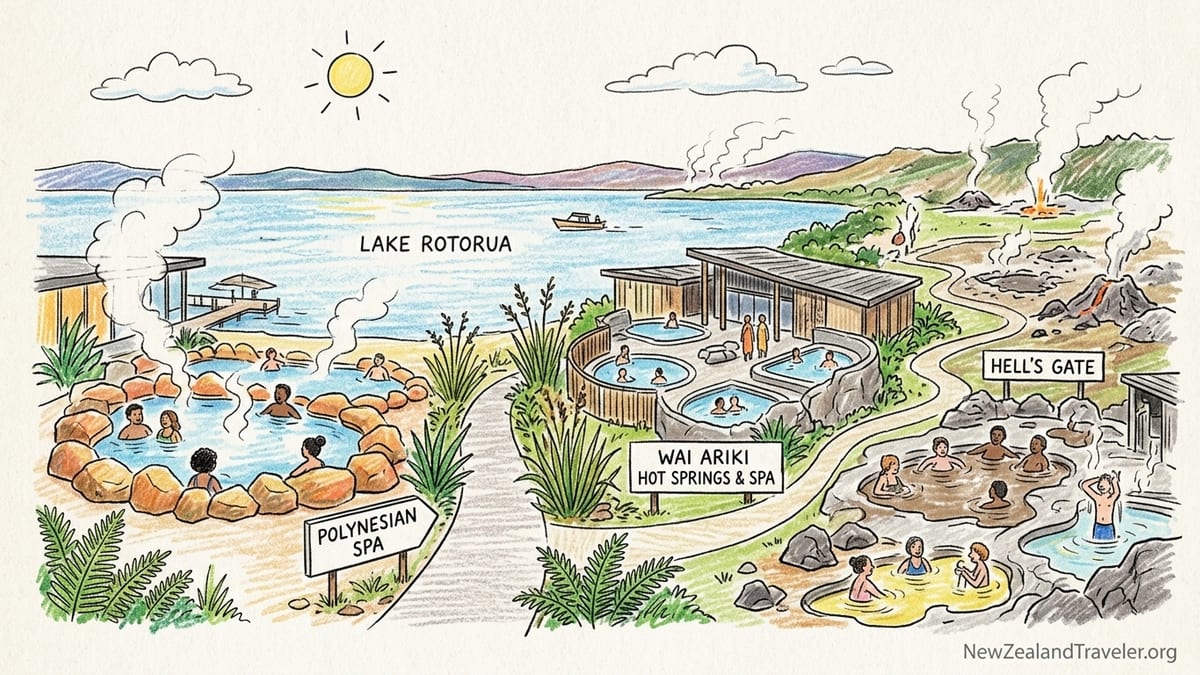
Rotorua’s Geothermal Wellness Scene at a Glance
Set on the shores of Lake Rotorua and surrounded by steaming vents and bubbling mud, the city has long attracted visitors seeking the therapeutic value of mineral water. Historic bath houses once drew 19th century travelers for prescribed “cures.” Today, the tradition continues in a modern form at venues such as Polynesian Spa, Wai Ariki Hot Springs & Spa and Hell’s Gate, each drawing from different geothermal sources and offering distinct approaches to rest and recovery.
The key decision for most visitors is how structured and luxurious they want their experience to be. Polynesian Spa blends heritage with resort-style comfort right on the lakefront. Wai Ariki is a newer, Māori-owned sanctuary with strong cultural interpretation layered over premium bathing and spa rituals. Hell’s Gate sits in an active geothermal park where you can wander past roaring fumaroles before immersing yourself in silky grey mud. Around these headline names are more low-key private tubs in the forest and valley that appeal to couples or those who prefer a quieter soak.
Prices change regularly, but at the time of writing a typical adult soak in Rotorua’s commercial hot pools ranges from around NZ$40 at simpler complexes on the outskirts of town to more than NZ$100 for package-style experiences that bundle spa treatments with premium bathing. Polynesian Spa’s public Pavilion Pools and Deluxe Lake Spa, Wai Ariki’s shared and private thermal journeys, and Hell’s Gate’s mud and sulphur pools sit toward the middle and upper part of that range, clearly segmenting the market by amenity level and atmosphere.
Because most venues are within a 20 to 30 minute drive of central Rotorua, many visitors choose to try more than one style of bathing during a stay. One common itinerary is a relaxed lakefront evening at Polynesian Spa, a cultural and wellness journey at Wai Ariki the next day and a half-day geothermal park and mud spa experience at Hell’s Gate, supplemented by a more rural private pool for contrast.
Polynesian Spa: Classic Lakeside Mineral Bathing
Polynesian Spa is Rotorua’s best-known hot pool complex, occupying a prominent position on the Lake Rotorua foreshore. The pools here draw from two natural springs, one acidic and one alkaline. In practice, that means you can alternate between Priest Spring pools, which many visitors find helpful for tired muscles and joints, and Rachel Spring pools described as gentler on the skin. The Pavilion Pools are the main mixed public area, while the Deluxe Lake Spa sits slightly apart with smarter finishes and uninterrupted lake views.
Current adult entry for the Pavilion Pools is typically in the mid NZ$50s, while the more upmarket Deluxe Lake Spa is around NZ$80 to NZ$90 for adults, which aligns with the NZ$55 to NZ$85 range you might see on recent brochures and booking engines. The price difference buys a noticeably more tranquil adults-focused zone, towel and locker inclusions in some passes, landscaped rock-edge pools, heated recliners and a lounge that looks directly across Sulphur Bay. For many visitors who want a single “signature” soak with a strong sense of place, this view is a major reason to choose the Deluxe Lake Spa.
Polynesian Spa also offers private lakeview pools bookable in short time slots, typically around 30 minutes, sometimes bundled with public pool access. These closed-door rooms suit couples or those who want privacy while still enjoying the vista of Lake Rotorua through large picture windows. Prices per person for private pools vary by package, but you can expect to pay a premium over standard public entry, with the trade-off of exclusivity and guaranteed quiet.
Spa treatments at Polynesian Spa’s Retreat Day Spa range from straightforward Swedish massages to body wraps incorporating Rotorua mud and local aromatics. Package deals commonly pair a 60 minute massage or mud wrap with access to the Deluxe Lake Spa, pushing the total price into the low-to-mid hundreds of dollars for a half-day experience. The focus here is on classic spa service rather than explicit cultural storytelling, although the complex does reference Rotorua’s bathing history in its marketing and interior design.
Wai Ariki Hot Springs & Spa: Māori-led Luxury and Ritual
Opened more recently on the Rotorua lakefront, Wai Ariki Hot Springs & Spa is owned by Ngāti Whakaue and anchors its concept in Māori wellness traditions. The design is contemporary, with dark stone, warm timber and curated artwork, but much of what you encounter, from the naming of the pools to the order of experiences in its signature journeys, draws on local narratives about the water and land. The spa positions itself firmly at the premium end of Rotorua’s geothermal offerings.
Wai Ariki sells both shared geothermal bathing and distinctly private experiences, clearly segmenting its offer. Its main shared pathways walk guests through sequences of hot and cold pools, steam rooms, saunas and relaxation spaces, all adults only, with a minimum age of around 16. These shared experiences are typically priced higher than standard public pools in town, reflecting both the facilities and the slower, ritual-like pacing of the visit. Guests often spend two to three hours completing the circuit, lingering in quiet lounges with lake views between stages.
Private experiences at Wai Ariki include Ngāwhā style geothermal bathtubs and lakeview mineral pools for one or two people. A standard private bathtub ritual, which includes bath salts, a locally sourced mud mask and native herbal infusions such as mānuka and kawakawa, usually runs well over NZ$100 for an individual session and more again for a deluxe version for two. These are sheltered, candlelit spaces that prioritise deep rest, so they suit couples celebrating a special occasion or solo travelers seeking a more introspective soak.
Alongside bathing, Wai Ariki offers a full spa menu with massages, body scrubs, facials and multi-hour wellness journeys. Prices are comparable to high-end hotel spas in major New Zealand cities, and many treatments are framed through Māori concepts of balance between body, mind and wairua, or spirit. For visitors who want their Rotorua soak to be both physically restorative and culturally anchored, this blend of interpretation and luxury distinguishes Wai Ariki from Polynesian Spa’s more historical but less overtly cultural focus.
Hell’s Gate: Mud, Sulphur and a Raw Geothermal Landscape
Located at Tikitere, around 15 to 20 minutes’ drive from central Rotorua, Hell’s Gate combines a geothermal park with a dedicated mud and sulphur spa. Here the emphasis is less on polished spa interiors and more on the visceral experience of walking through an active geothermal field before immersing yourself in its mineral-rich mud. The landscape features steaming fumaroles, hissing vents and bubbling mud pools, with both self-guided and guided tours that explain the Māori history of the area and its historic use for healing.
Most visitors choose a package that combines entry to the geothermal park with access to the mud baths and sulphur pools. Pricing for the full mud bath and sulphur spa experience for adults generally sits below the cost of premium bathing at Wai Ariki but can be similar to or slightly above a high-tier public soak in town, depending on seasonal specials and whether you add extras. Time in the mud baths is controlled, often around 20 minutes, to avoid overheating, followed by a thorough rinse and soaking time in the hot sulphur pools set among native planting.
Hell’s Gate’s mud pools are shallow, communal basins where guests are encouraged to smooth the fine, grey mud over their skin before letting it dry slightly in the warm air. Many describe a post-bath softness to their skin, although the sulphur smell is more pronounced here than at lakefront facilities. Simple spa add-ons such as foot massages are sometimes available, but this is not a full-service day spa with lengthy treatment menus. Instead, it is best viewed as an immersive geothermal attraction with a strong bathing component.
Compared to the more curated calm of Polynesian Spa and Wai Ariki, Hell’s Gate feels rugged and elemental. The trade-off is that changing facilities and relaxation areas, while functional, are more basic. Travelers who prioritise cultural storytelling and a sense of being in the middle of Rotorua’s geothermal forces, rather than high-end design touches, often rate Hell’s Gate very highly and describe it as a must-do to complement a more refined soak elsewhere.
Comparing Experiences: Public Pools, Adults-only Zones and Private Soaks
Polynesian Spa, Wai Ariki and Hell’s Gate all draw on geothermal resources, but the way they organise bathing speaks to different traveler priorities. Polynesian Spa’s Pavilion Pools are mixed public pools where families, couples and groups soak side by side. There are multiple pool temperatures, some covered and some open to the sky, and the atmosphere can feel social, particularly in peak season. The Deluxe Lake Spa, while still communal, is more clearly skewed toward adults, with quieter zones and children either not permitted or restricted by age, depending on the pass.
Wai Ariki, by contrast, describes itself as an adults-only facility, which immediately alters the tone. Without young children splashing nearby, shared pools retain a hushed, spa-like quality even at busier times. Seating areas encourage lingering, and the temperature progression of pools and thermal rooms is designed to be followed slowly. If you are seeking tranquility and reflection in a shared space, Wai Ariki’s model may be more appealing than the busier Pavilion Pools, particularly in school holidays.
Private soaking is available at all three flagship venues but in different ways. Polynesian Spa’s timed private lakeview pools and skyview pools are self-contained rooms with their own showers, ideal for couples who want views without the presence of others. Wai Ariki’s private bathtubs and lakeview pools overlay that privacy with ritual elements and are priced accordingly, making them a considered splurge. Hell’s Gate does not offer private mud baths in the same sense; the mud pools are communal, although capacity is controlled, and staff may space out entries to avoid crowding at quieter times.
Outside these main complexes, Rotorua also offers standalone private hot tub experiences such as Secret Spot Hot Tubs in the Whakarewarewa forest, where individual cedar tubs are tucked among trees and booked in 45 minute slots, and Waikite Valley Hot Pools, around 25 to 30 minutes south of Rotorua, which combines rural public pools with bookable private rooms. These alternatives are not always fed by the same mineral-rich geothermal sources as the lakefront spas, but they are popular with couples seeking seclusion and a more natural or rural backdrop.
Mud Bathing, Spa Treatments and Cultural Interpretation
When it comes to mud, Hell’s Gate is the clear specialist. The mud here is drawn directly from the geothermal system beneath the park, and the entire visitor flow revolves around that experience. You enter the park, hear stories about how Māori historically used the area’s hot muds and waters, then literally coat yourself in that same mud in the baths. While Polynesian Spa offers mud wraps and body treatments in its day spa, these usually use mud in a more controlled, treatment-room setting rather than open-air communal pits. Wai Ariki, too, incorporates locally sourced mud masks into private bathing rituals but emphasises them as one layering element in a broader sensory journey.
Spa treatment menus are most extensive at Polynesian Spa and Wai Ariki. Polynesian Spa’s day spa leans on familiar international spa styles combined with Rotorua ingredients: Swedish and deep-tissue massages, hydrotherapy, body polishes and mud body wraps. Guests commonly pair an hour-long massage with Deluxe Lake Spa bathing, turning a simple soak into a half-day retreat. Wai Ariki’s treatments are often framed around Māori concepts and may integrate native botanicals, guided breathing or karakia-inspired elements, with prices reflecting the premium positioning.
Cultural and wellness interpretation varies significantly. Wai Ariki weaves Ngāti Whakaue stories throughout its signage, room naming and hosted experiences, inviting guests to understand the spiritual significance of geothermal water and land. Hell’s Gate offers interpretive panels and guided tours that explain both geological processes and the way local iwi have used the area for centuries. Polynesian Spa references Rotorua’s broader bathing history and story of early European visitors, but its day-to-day experience is more about relaxation than in-depth interpretation.
For travelers who see Rotorua not only as a place to relax but also to learn, weaving in both Wai Ariki and Hell’s Gate can be powerful. A morning spent on a guided walk through Hell’s Gate’s geothermal park followed by an afternoon journey at Wai Ariki provides two complementary lenses: one anchored in raw geothermal power on the outskirts of town, the other in curated, contemporary Māori wellness on the lakefront.
Pricing, Value and How to Choose for Your Budget
Polynesian Spa’s price range from approximately NZ$55 for Pavilion Pools entry to around NZ$85 for the Deluxe Lake Spa gives it broad appeal. Budget-conscious travelers can opt for Pavilion Pools, accepting a busier environment in exchange for lower cost, while those with more to spend can enjoy a quieter, more scenic experience in the Deluxe Lake Spa. Occasional concession passes or combo deals that bundle multiple visits or sightseeing activities provide extra value if you plan to soak more than once.
Wai Ariki positions itself in a more premium bracket, with shared geothermal bathing often costing more than Polynesian Spa’s standard public pools and private rituals rising further. For example, a private geothermal bathtub ritual including mud masks and native herbal elements is likely to cost well into three figures for one or two people, particularly if you extend the time or add spa treatments. That price reflects not only the facilities but also the curated journey and adults-only setting. If you are celebrating a honeymoon, anniversary or milestone birthday, this may feel justified, whereas backpackers on tight budgets may prefer to reserve Wai Ariki for a single splurge session.
Hell’s Gate’s combined geothermal park, mud bath and sulphur spa tickets tend to sit somewhere in between: not as inexpensive as a simple public soak, but generally less costly than a full spa package at Wai Ariki. Here, the value lies in the uniqueness of the landscape as well as the bathing. Travelers often describe it as a one-off Rotorua experience that is worth the outlay even if they would not repeat it on every visit.
Cheaper options for soaking include rural complexes such as Waikite Valley Hot Pools, where adult entry to the main pools is generally lower than central Rotorua’s flagship spas, with optional private pools available at a moderate surcharge. Forest hot tubs like Secret Spot usually charge by the tub for a timed session, which can represent good value for couples splitting the cost. For free or barely regulated thermal streams outside commercial complexes, always seek up-to-date local advice, as access conditions, safety and cultural sensitivities can change.
Other Notable Rotorua Bathing Experiences
Beyond the big three, several other hot pool experiences round out Rotorua’s wellness offerings. Waikite Valley Hot Pools, set in a rural valley about half an hour south of the city, channels steaming water from the Te Manaroa Spring into a series of terraced pools with bush views. The complex feels more like a community facility than a luxury spa, but it is known for clean pools and a relaxed, low-key atmosphere, particularly appealing to families or those with a car seeking a quieter soak than central Rotorua.
On the edge of the Whakarewarewa forest, Secret Spot Hot Tubs offers private cedar tubs filled with fresh water heated to soaking temperature, each screened by planting for privacy. Many visitors pair an afternoon exploring the Redwoods walking or mountain bike trails with an early evening tub, often including drinks served to the side of the pool. While the water here is not drawn from a mineral spring in the way that lakefront spas are, the forest setting and seclusion make it a strong choice for travelers who care as much about atmosphere as mineral content.
Lake-based hot pools, such as those on the shore of Lake Rotoiti accessible only by boat, provide yet another style of experience. Operators run lake cruises that stop at secluded geothermal bathing spots where pools are tucked against bush-clad slopes at the water’s edge. These trips usually combine time in hot pools with swimming off the boat and short walks, creating a full half-day outing rather than just a soak.
Together, these additional options mean you can easily structure a multi-day Rotorua itinerary around different types of bathing: a premium cultural spa day at Wai Ariki, a classic historic lakefront soak at Polynesian Spa, a geothermal park and mud afternoon at Hell’s Gate, a rural evening at Waikite Valley and perhaps an indulgent private tub in the forest or on the lake.
The Takeaway
If your priority is a classic Rotorua hot pool experience with flexibility in price, Polynesian Spa is the logical starting point. The Pavilion Pools provide easygoing, social mineral bathing at a moderate cost, while the Deluxe Lake Spa takes the same core ingredients and layers on privacy, lakeside landscaping and gentle resort polish. For many visitors this strikes the best balance of cost, comfort and setting, especially for a first-time visit to Rotorua.
Travelers seeking a more immersive, culturally anchored and adults-only experience should seriously consider Wai Ariki Hot Springs & Spa. Its focus on Māori wellness concepts, carefully sequenced bathing journeys and premium design make it a natural choice for special occasions and deeper relaxation, albeit at a higher price point. Adding a private ritual or treatment can turn a simple soak into a memorable highlight of a North Island trip.
Hell’s Gate stands apart as the most elemental option, pairing an active geothermal landscape with signature mud bathing and sulphur pools. It suits travelers who want to feel the geothermal power of Rotorua up close and who do not mind a slightly more rustic spa environment in exchange for that rawness. Combining Hell’s Gate with either Polynesian Spa or Wai Ariki gives you both the wild and the refined sides of Rotorua wellness.
Ultimately, the best hot pools and spas in Rotorua are not just about temperature and minerals, but about the stories, settings and sensations that surround them. With thoughtful planning, you can curate a sequence of experiences that move from lakeside calm to forest seclusion and geothermal drama, leaving your body rested and your understanding of this volcanic region significantly richer.
FAQ
Q1. Which Rotorua spa is best for first-time visitors?
For a first visit, many travelers start with Polynesian Spa, especially the Deluxe Lake Spa, because it combines classic Rotorua mineral bathing, lake views and a broad price range, making it easy to tailor the experience to your budget.
Q2. Is Wai Ariki worth the higher price compared with Polynesian Spa?
If you value adults-only spaces, strong Māori cultural interpretation and high-end design, Wai Ariki’s higher pricing can feel justified, particularly for special occasions. Budget-focused travelers may prefer Polynesian Spa’s Pavilion Pools or a rural complex and reserve Wai Ariki for a single splurge session.
Q3. Where should I go for a proper mud bath experience?
Hell’s Gate is the leading choice for mud bathing in Rotorua, offering communal mud pools fed by its geothermal system and paired with sulphur hot pools, all set within a dramatic geothermal park that you can explore on foot.
Q4. Are there adults-only areas at Polynesian Spa?
Yes. While the Pavilion Pools welcome a mix of visitors, the Deluxe Lake Spa is designed as a quieter, more refined space with an adults-focused atmosphere, making it better suited to those seeking relaxation without the buzz of family areas.
Q5. Can I book private pools at these Rotorua spas?
Polynesian Spa offers timed private lakeview and skyview pools, Wai Ariki has private geothermal bathtubs and lakeview pools as part of its rituals, and rural venues such as Waikite Valley Hot Pools and Secret Spot Hot Tubs also provide bookable private tubs in more natural settings.
Q6. How much should I budget for a premium spa day in Rotorua?
For a premium day combining shared bathing and a 60 minute treatment at Wai Ariki or Polynesian Spa, it is sensible to budget in the low-to-mid hundreds of New Zealand dollars per person, depending on seasonal pricing and whether you add food or extra rituals.
Q7. Which option is best for strong cultural interpretation as well as soaking?
Wai Ariki and Hell’s Gate both foreground cultural storytelling, with Wai Ariki rooted in Ngāti Whakaue wellness concepts and Hell’s Gate offering guided geothermal park tours that explain traditional use of the area’s muds and waters.
Q8. What is the best choice for families with children?
Families often gravitate toward the Pavilion or family areas at Polynesian Spa, or to rural complexes like Waikite Valley Hot Pools, which combine a range of temperatures and depths with a relaxed, family-friendly feel, while Wai Ariki’s adults-only policy makes it less suitable for younger children.
Q9. Do I need to book Rotorua hot pools in advance?
Advance bookings are strongly recommended for private pools, mud baths and any spa treatments, especially in peak holiday periods or on weekends, while public pool access at larger complexes can sometimes be arranged on the day, subject to capacity.
Q10. Can I visit more than one spa in a single day?
It is possible, for example combining a morning geothermal park and mud bath at Hell’s Gate with an evening soak at Polynesian Spa, but most visitors find that one major bathing experience per day allows enough time to relax, rehydrate and avoid overdoing the heat.