


Planning a wine day from Queenstown is no longer as simple as booking the only tour in town. Queenstown’s official tourism site now lists around 60 wine and winery experiences and notes more than 75 wineries across the wider Central Otago wine region, with Gibbston, 25 to 30 minutes from town, as the closest subregion. With so many options, the real question is not "which winery" but "what style of wine day" suits your budget, fitness, and wine curiosity. This guide compares four of the most popular ways to explore Gibbston and beyond, focusing on the practical details that shape your day rather than repeating another list of cellar doors.
Understanding Queenstown’s Wine Geography and What You Can Realistically Do in a Day
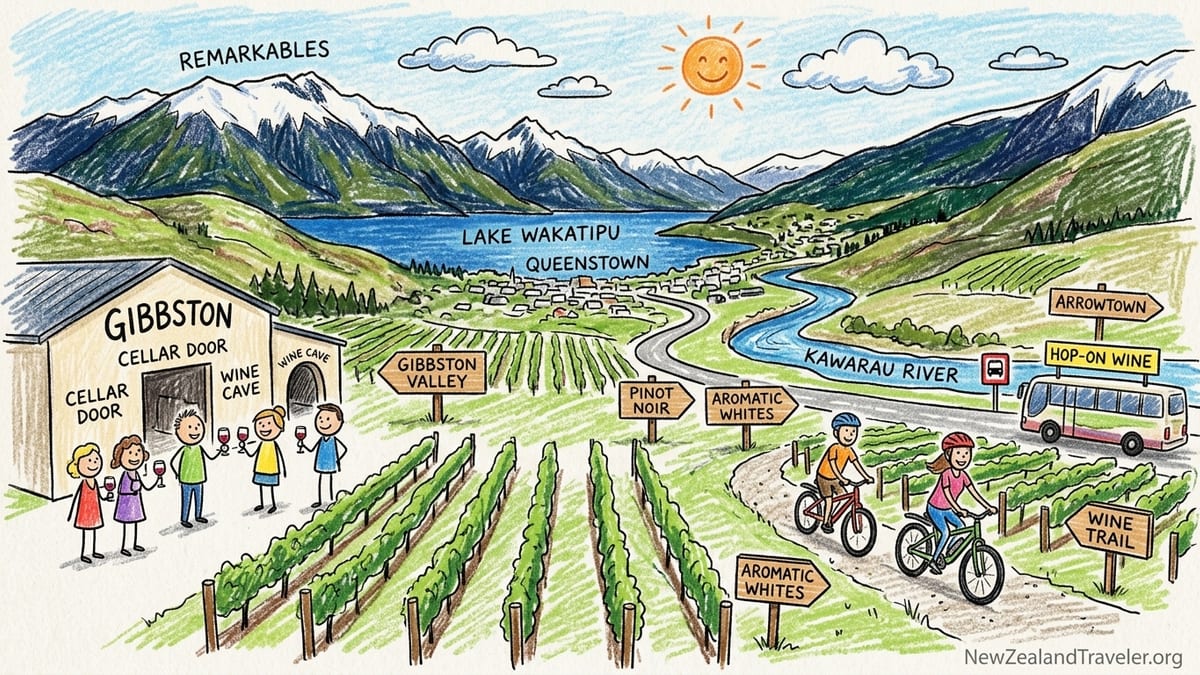
Before you choose a tour style, it helps to visualise the map. Queenstown sits beside Lake Wakatipu. To the east, about 20 to 25 minutes by road, are Arrowtown and Lake Hayes, where you find cellar doors such as Amisfield and Akarua. Continue a further 10 minutes through the Kawarau Gorge and you enter Gibbston, often called the Valley of the Vines. Beyond that, roughly 45 to 60 minutes from Queenstown, lie Bannockburn and Cromwell, drier and warmer subregions with a slightly different character, especially for Pinot Noir.
For most travellers, a wine day from Queenstown is built around Gibbston. It is close, compact, and dense with cellar doors connected by the Gibbston River Wine Trail and the main highway. Queenstown’s official tourism information confirms that there are more than 75 wineries across Central Otago and that Gibbston is the closest subregion to town, which is why most group tours stay within this corridor for half-day or full-day itineraries. Bannockburn and Cromwell appear more often on premium or full-day tours, or private charters where guests specifically request to go farther.
A realistic tasting pace for a relaxed day is three to four cellar doors, or five at the most if you are very focused and start early. Each structured tasting often includes four to six wines and takes 40 to 60 minutes once you factor in settling the bill, browsing the shop, and a quick look around the vines. Layer on a leisurely winery lunch and transport time and you quickly see why trying to "do it all" is neither pleasant nor particularly safe when alcohol is involved.
Central Otago is world renowned for Pinot Noir and that grape will anchor almost every tasting you do. Expect each stop to pour at least one or two Pinot Noirs, often a regional blend and a single-vineyard bottling, plus aromatic whites such as Pinot Gris, Riesling and Sauvignon Blanc, with a few Chardonnays and sparkling wines. Even if you consider yourself more of a white wine drinker, the depth and variety of Pinot Noir styles here is a major part of what makes any Queenstown wine day special.
Small-Group Guided Wine Tours: Maximum Learning, Minimal Logistics
Small-group guided tours are the classic Queenstown wine experience for good reason. Operators such as Queenstown Wine Trail and Altitude Tours typically carry 8 to 12 guests in a comfortable minibus, collect you from central Queenstown or major hotels, and weave between three or four cellar doors over four to six hours. Current pricing as of late 2026 for an afternoon small-group tour generally falls between about NZD 199 and NZD 280 per person, depending on inclusions like lunch, cave tours or premium tastings.
Inclusions are where these tours shine. A representative small-group itinerary might offer hosted tastings at three Gibbston wineries, all tasting fees covered, a behind-the-scenes look at a barrel hall or wine cave, and either a shared platter or a prearranged winery lunch with one glass of wine. Guides tend to be either long-time locals or qualified wine professionals who explain Central Otago terroir, Pinot Noir clones, and seasonal challenges in plain English. If you enjoy context and stories with your sips, this format delivers more depth than you will get wandering in alone.
From a safety and logistics perspective, small-group tours solve almost everything. You do not need a designated driver, you do not have to interpret cellar door hours, and your day is paced for you. The downside is less flexibility. If you fall in love with your second stop, you still have to move when the group moves. You also share the shuttle with strangers, which some people enjoy and others find limiting, particularly on romantic trips or when travelling with children. Many wine tours in Gibbston operate as adults-focused experiences, so check age policies closely if you are visiting with kids or teens.
If your budget stretches to around NZD 200 to NZD 250 per person and your goal is to deepen your wine knowledge without thinking about driving or timing, a small-group guided tour is often the sweet spot. You will usually visit three or sometimes four cellar doors, taste at least a dozen wines across the day with a heavy emphasis on Pinot Noir, and enjoy either a shared platter lunch or the chance to order your own meal at a winery restaurant.
Private Wine Tours: Tailored Days and Access at a Premium Price
Private wine tours are the most flexible but also the most expensive option. In Queenstown, several established operators offer private itineraries where the vehicle, driver and, often, a dedicated wine guide are exclusive to your group. Pricing is usually quoted either per person or for the vehicle, with full-day private tours from Queenstown commonly starting in the high hundreds of dollars per person once you include tastings and lunch. Families or groups of four or more can sometimes secure more attractive per-person pricing when costs are spread.
The real value of a private tour lies in customisation. You can design a day focused purely on Pinot Noir and single-vineyard releases, mix wineries with a distillery or craft brewery, or request a slower pace with just two in-depth tastings and a long, multi-course winery lunch. It is also much easier to incorporate Bannockburn and Cromwell into a private tour, which opens up high-profile cellar doors in the Cromwell Basin if you are already familiar with Gibbston wines and want to compare subregions side by side.
Private tours also work well for travellers with specific needs. If you are visiting during winter and prefer a later start, travelling with older relatives who walk slowly, or celebrating a special occasion like a honeymoon or proposal, a private driver allows you to adjust on the fly. Guides can often call ahead to shift tasting times if your group runs late or wants to stay longer for dessert. Some operators will also coordinate pick-up or drop-off from Arrowtown, Cromwell or Queenstown Airport to fold a wine day into your arrival or departure logistics.
The trade-off is cost. Once you factor in tasting fees at three or four cellar doors, a winery lunch with wine, and a private driver-guide for six or more hours, you are typically looking at at least several hundred dollars per person. For couples deciding between a private wine day and another big-ticket Queenstown activity such as a helicopter flight or Milford Sound excursion, it becomes a genuine either-or decision rather than an impulse add-on. However, for groups of four to six who value a relaxed pace, tailored winery selection and not sharing the van with others, private tours can feel like good value for the level of service and access.
Hop-On Hop-Off Wine Shuttles: Freedom with Scheduled Structure
Hop-on hop-off wine shuttles sit between guided tours and fully independent travel. These services run fixed loops from Queenstown to Gibbston, and sometimes via Arrowtown or Lake Hayes, all day. You buy a pass for the day, ride the bus out to your chosen starting point, and then hop on later departures to move between cellar doors. Compared with a classic guided tour, you have more control over how long you spend at each stop, but you still avoid driving yourself.
As of late 2026, day passes for Queenstown to Gibbston hop-on hop-off services usually sit somewhere in the NZD 90 to NZD 130 range per adult, depending on inclusions and seasonal offers. Tasting fees are not included, so you pay those as you go, usually around NZD 15 to NZD 25 per standard tasting flight. On a typical day you might comfortably manage three stops, perhaps starting with a late morning flight at a large cellar door with a café, lingering over lunch at another winery, then finishing with a final tasting at a smaller boutique producer before catching the last shuttle back to town.
Because hop-on hop-off services operate to timetables, there is some light planning involved. You need to choose which wineries you want to prioritise and check how often the shuttle passes each one. Wait times between pick-ups can range from roughly an hour to closer to 90 minutes or more later in the afternoon, and last buses back to Queenstown are usually mid to late afternoon. Missing the final shuttle can mean a very expensive taxi or rideshare, if one is available at all from Gibbston, so keep an eye on the clock, especially after a long lunch.
This format works particularly well for independent travellers who enjoy making their own decisions but do not want anyone in the group to limit their tasting due to driving. It also suits those who have already visited Central Otago once and want to revisit favourite cellar doors without paying for a full guided experience. If you travel in peak times such as summer and early autumn, consider booking or at least calling ahead for lunch venues, as popular winery restaurants can fill quickly and some smaller cellar doors may limit walk-in groups arriving all at once from a shuttle.
Self-Guided Bike and E-Bike Wine Tours: The Gibbston River Wine Trail and Arrowtown to Gibbston
For active travellers, cycling through the vines is one of the most memorable ways to experience Gibbston. The key piece of infrastructure is the Gibbston River Wine Trail, an approximately 8.7 kilometre easy-grade trail that runs from near the Kawarau Suspension Bridge through the valley, with spurs and short road sections connecting to cellar doors. Several Queenstown and Arrowtown bike hire companies offer "ride and wine" packages that include a bike or e-bike, helmet, map and a shuttle drop-off at Arrowtown or the start of the trail near the Kawarau Bungy Centre, plus an afternoon pick-up from a designated winery so you do not ride back after tastings.
There are two main ride patterns. The first is to start at the Kawarau Bungy area and simply ride the Gibbston River Wine Trail itself, a mostly flat, easy gravel path suitable for confident novice cyclists. On an e-bike, most people cover the trail and visit two or three cellar doors over three to five hours without feeling rushed. The second, more ambitious option links Arrowtown to Gibbston via the Arrow River Bridges Trail and then continues along the Gibbston River Wine Trail, creating a ride of roughly 14 kilometres or more one way. This route is popular with intermediate riders who want more time on the bike before settling into tastings.
Pricing for self-guided bike wine days varies with bike type and shuttle inclusions. As a general guide, expect to pay somewhere in the region of NZD 120 to NZD 180 per person for a quality e-bike with helmet and shuttle transport from Queenstown or Arrowtown, and less for a standard pedal bike. Tasting fees at each cellar door are additional. Many cycling guests limit themselves to two or three tasting stops, both to stay within shuttle pick-up times and to ensure they remain safe and steady on the bike between wineries.
Safety deserves special emphasis. New Zealand law treats e-bikes and bikes as vehicles, and the drink-driving limit applies. Even if you are mostly on off-road trails, there are short sections where you may share roads or cross car parks, and an impaired fall on gravel can ruin more than your holiday. Pace your tastings with plenty of water, share flights between two people if needed, and build in food at one of the valley’s winery restaurants or pubs. Choosing an e-bike helps flatten climbs and reduce fatigue, which can keep your riding smoother and safer later in the day.
Costs, Tasting Fees and How Many Wineries You Can Really Visit
When comparing wine day options, it helps to run some approximate numbers. A small-group guided tour at around NZD 199 to NZD 280 per person generally includes tastings at three or four cellar doors and sometimes a shared platter or lunch. If you replicate that independently using a hop-on hop-off shuttle at, say, NZD 100 per person, plus three tastings at around NZD 20 each and a modest winery lunch with a glass of wine at roughly NZD 50 to NZD 70, you quickly reach the NZD 200 mark as well. The difference is where your money goes: towards guiding and curation on a tour, or toward your autonomy and wine choices if self-directed.
On a self-guided bike day, you might pay around NZD 140 for an e-bike and shuttle package, add three tastings at NZD 20 each, then lunch and drinks. That can total somewhere in the NZD 220 to NZD 260 range depending on your lunch choices. For couples, sharing one tasting flight at each stop is a practical way to keep both alcohol intake and costs down while still trying multiple wines. Some cellar doors will subtract tasting fees from bottle purchases, particularly if you buy higher-value wines, but this is not universal, so ask politely before assuming a refund.
Ambitious travellers sometimes ask whether they can fit five or more wineries into a single day. It is physically possible, especially in Gibbston where cellar doors are close together, but it rarely leads to a better experience. Palate fatigue sets in, details blur, and the risk of overconsumption rises. Three comfortably paced tastings and a long lunch, or four tastings if you start early and keep pours modest, usually give you a richer sense of Central Otago Pinot Noir without tipping into excess.
Booking needs vary by format. Guided group and private tours should always be booked in advance, especially from December to March and around school holidays. Hop-on hop-off shuttles may sell out on peak weekends, while bike hire with shuttles is limited by fleet size and trail conditions. For independent visitors driving themselves, cellar doors in Gibbston can often accommodate walk-ins for two, but groups of four or more, and anyone wanting a specific restaurant sitting, are wise to reserve ahead via phone or email.
Alcohol, Safety and Designated Drivers: Making Wise Choices
Central Otago wine days are relaxed affairs, but the combination of rural roads, unfamiliar vehicles and alcohol makes thoughtful planning essential. New Zealand’s legal blood alcohol limit for drivers over 20 is low compared with some countries, and enforcement on highways can include random breath testing. If you are driving yourself or sharing the wheel of a rental campervan, the safest assumption is that the driver should spit tastings or skip them entirely and enjoy one glass of wine with lunch at most.
That reality is one reason guided transport options are so popular around Queenstown. Small-group tours, private drivers, hop-on hop-off buses and pre-arranged bike shuttles all exist to separate your wine intake from the responsibility of driving on winding, unfamiliar roads. If you are staying in Gibbston or Arrowtown, local taxi services and pre-booked transfers can also fill gaps, but rideshares are sparse outside Queenstown itself. Do not rely on being able to summon a last-minute car from the valley after a few too many tastings.
For cyclists, impairment risks look different. Even on apparently gentle sections of the Gibbston River Wine Trail, there are curves, short climbs, gravel patches and occasional narrow spots above the river. A lapse in attention or balance can mean a hard fall. Using an e-bike does not exempt you from these risks. Riders should wear helmets, drink water at every stop, and honestly assess how they feel before setting off to the next winery. If in doubt, it is better to call your bike hire company and request an earlier shuttle pick-up than to push on unsteadily.
Parents and families should also weigh the social and safety aspects of wine touring with children. Some cellar doors welcome children in outdoor areas and offer non-alcoholic drinks and simple lunches, while others position themselves as adults-focused spaces or restrict children from seated tastings or underground caves. Asking in advance avoids awkward surprises. In all cases, having at least one completely sober adult in charge of supervision and logistics makes the day more enjoyable for everyone.
Should You Go Beyond Gibbston to Bannockburn or Cromwell?
Many wine-aware travellers wonder whether it is worth pushing beyond Gibbston to Bannockburn or Cromwell on a day trip. The answer depends on your priorities. In broad terms, Gibbston is cooler and higher, with Pinot Noirs that can lean toward red fruits, spice and bright acidity, while Bannockburn and Cromwell, in the Cromwell Basin, are warmer and more continental, often yielding darker-fruited, structured Pinot Noir along with excellent Chardonnay and aromatic whites. Tasting them side by side is fascinating for enthusiasts.
However, time is the constraint. Adding Bannockburn typically means at least 45 minutes of extra driving each way from Queenstown, eating into tasting and lunch hours. On a six-hour small-group tour that tries to include both Gibbston and Bannockburn, you may feel more time on the road than at cellar doors. Private tours or self-drivers who start early can mitigate this, but then the drink-driving question becomes more acute when journeys back to Queenstown lengthen.
If this is your first visit to Central Otago, focusing on Gibbston and the Queenstown to Arrowtown corridor will still provide an excellent overview of the region’s wines. You can taste multiple Pinot Noir styles, explore one or two flagship cellar doors, and enjoy a vineyard lunch without spending much of the day in transit. Bannockburn and Cromwell become more compelling on a second visit, for serious collectors, or for travellers already staying a night in that area and using Queenstown as a broader base.
One practical compromise is to choose a guided tour that spends most of its time in Gibbston but includes one stop in the Cromwell Basin, often at a larger, well-known winery with capacity for groups. This gives you a glimpse of a different landscape and wine profile without fully reorienting your day around longer distances. Alternatively, dedicated wine lovers sometimes rent a car just to drive to Bannockburn for a long lunch and one deep tasting, with one person committed to remaining under the legal limit, leaving a more relaxed, lower-alcohol day for Gibbston itself on another date.
The Takeaway
For a Queenstown-based wine day, your first decision is less "which winery" and more "what style of day" fits your budget, wine interest, and energy. Small-group guided tours suit travellers who want stories, structure and safe transport at a mid to upper-mid price. You will likely visit three or four cellar doors, taste widely across Central Otago Pinot Noir and companion varieties, and enjoy either a shared platter or winery lunch without worrying about directions or driving.
Private tours are the premium choice for couples celebrating something special, groups who value privacy, or serious wine students who know exactly which subregions and producers they wish to focus on. The price is significantly higher, but so is the capacity to customise your route, tasting depth and pace. Incorporating Bannockburn or Cromwell becomes much more practical with a private driver, but also more costly.
Hop-on hop-off shuttles strike a balance between independence and safety. They work well if you enjoy choosing your own cellar doors, are comfortable reading timetables, and want to keep costs a little lower while still avoiding the need for a designated driver. Self-guided bike and e-bike tours along the Gibbston River Wine Trail or from Arrowtown to Gibbston offer a more active, scenic day for those with moderate fitness and comfort on gravel trails, provided you treat the riding as seriously as the wine.
If your budget is tight, consider a hop-on hop-off shuttle or a shared-bike-and-shuttle package, share tasting flights, and focus on two tastings plus a generous lunch. If you are new to wine and want an introduction, a small-group tour with an engaged guide will usually offer the most learning per dollar. If you are a seasoned Pinot Noir fan or celebrating a milestone, a private guide who can unlock specific cellar doors, longer tastings and perhaps a side trip to Bannockburn may be worth the investment. And if an active day is your priority, letting an e-bike carry you between Gibbston cellar doors, with a shuttle ride home after your last tasting, can be the most memorable vineyard experience of all.
FAQ
Q1. How many wineries can I realistically visit in one day from Queenstown?
Most travellers find three cellar doors plus a winery lunch to be the sweet spot for a relaxed day. Four tastings are possible if you start early, keep pours modest, and do not linger too long at each stop, but more than that often leads to palate fatigue and rushed experiences rather than deeper enjoyment.
Q2. Are tasting fees included in Queenstown wine tours?
On most small-group and private tours, standard tasting fees at the scheduled cellar doors are included in the tour price. Hop-on hop-off shuttles and self-guided bike packages rarely include tastings, so you should expect to pay around NZD 15 to NZD 25 per flight at each winery. Always check tour inclusions before booking to avoid surprises.
Q3. Is it safe to combine wine tasting with cycling in Gibbston?
It can be safe if approached sensibly. Choose an e-bike to reduce fatigue, limit yourself to two or three tasting stops, drink water at every winery, and make sure your shuttle pickup is arranged so you do not ride back after several glasses of wine. Remember that drink-driving laws apply to cyclists and e-bikers too, and that a fall on gravel can easily end your holiday early.
Q4. Do I need to book cellar doors in advance, or can I just walk in?
Small cellar doors and winery restaurants near Queenstown often appreciate bookings, especially in summer, on holiday weekends, and for groups of four or more. Guided tours usually reserve tasting slots on your behalf. If you are using a hop-on hop-off shuttle or cycling independently, it is wise to reserve lunch and at least one or two must-visit tastings a few days ahead to avoid disappointment.
Q5. Is it worth paying extra to visit Bannockburn or Cromwell from Queenstown?
If you are a keen wine drinker or already familiar with Gibbston, then a day that reaches Bannockburn or Cromwell can be rewarding, as the warmer subregions offer a different style of Pinot Noir and excellent Chardonnays. For first-time visitors with only one wine day, staying closer to Queenstown and Gibbston usually delivers ample variety without losing time to longer drives.
Q6. What is the difference between a small-group tour and a private wine tour?
A small-group tour shares a vehicle and guide with around 8 to 12 other guests and follows a set or semi-flexible itinerary, at a lower per-person price. A private tour reserves the vehicle and driver-guide for your group alone, lets you adjust timing and winery selection more freely, and can more easily incorporate side trips to places such as Bannockburn, but costs significantly more per person.
Q7. How much should I budget for a wine day in Queenstown?
A mid-range small-group guided tour with tastings and some food might cost around NZD 200 to NZD 280 per person. A hop-on hop-off shuttle plus three tastings and a winery lunch often adds up to a similar amount, though you have more control over where you spend. Self-guided e-bike wine days with shuttles, tastings and lunch commonly land somewhere in the low to mid NZD 200s per person, while private tours can run into the high hundreds depending on inclusions.
Q8. Can I bring children on Queenstown wine tours?
Some small-group tours and private tours accept children, but many position themselves as adults-focused experiences and may limit under-18s, especially on cave tours or in certain tasting rooms. Hop-on hop-off shuttles and self-drive days are often more flexible for families. Always check policies with the operator and individual cellar doors, and plan for at least one fully sober adult to supervise children throughout the day.
Q9. What should I wear for a winery day or bike wine tour from Queenstown?
Smart casual clothing works well at cellar doors, along with comfortable closed-toe shoes for walking on gravel paths. For bike tours, choose activewear layers you can add or remove as temperatures change, and always bring a lightweight jacket, sunglasses and sunscreen. Helmets are provided by bike hire companies and are compulsory on New Zealand cycle trails.
Q10. Do I need prior wine knowledge to enjoy Queenstown wine tours?
No prior knowledge is necessary. Guides on small-group and private tours are used to mixed groups and explain winemaking and Central Otago’s story in accessible language. At cellar doors, hosts are generally happy to tailor explanations to your experience level. If you are curious but inexperienced, a guided tour can be the most comfortable way to learn the basics of tasting and talking about wine.