


Waiheke Island is one of New Zealand’s great day trips, a 40-minute ferry ride from downtown Auckland and home to famous vineyards like Mudbrick, Cable Bay, Batch and Stonyridge. With dozens of independent operators and a mix of guided tours, hop-on-hop-off passes and ferry packages, choosing the right Waiheke wine tour can feel confusing. This guide breaks down the main options, what they actually include and how to match them to your time, budget and appetite.
How Waiheke Wine Tours Work From Auckland
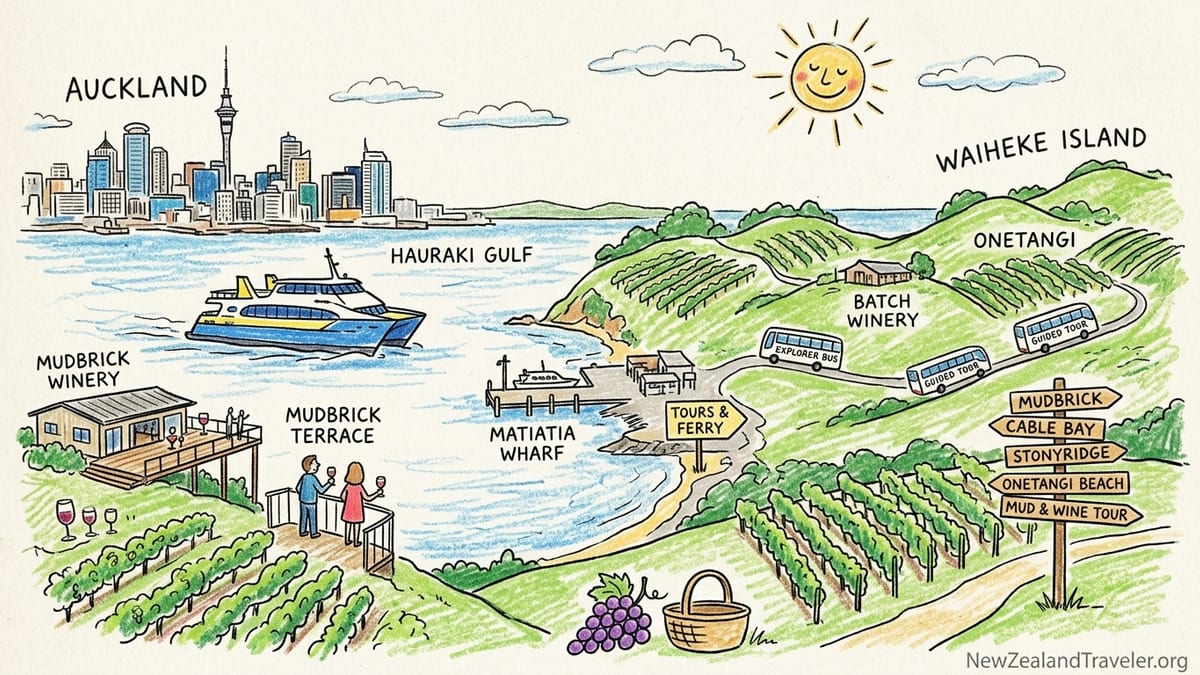
Almost every Waiheke wine experience from Auckland starts the same way: a passenger ferry across the Hauraki Gulf to Matiatia Wharf on Waiheke’s western side. Fullers360 runs the main walk-up ferry service, with crossings taking about 40 minutes in typical conditions and departures running regularly throughout the day. Independent tours are scheduled around these sailings, so you usually choose a morning ferry from central Auckland and meet your guide on the wharf a little before lunch.
From Matiatia, wine tours fan out across the island to vineyards clustered around Church Bay, Onetangi and the central hills. Tourism materials from Auckland and Tourism New Zealand often highlight a classic “loop” that links Cable Bay, Batch, Stonyridge and Mudbrick on a single day. That route gives a good snapshot of what Waiheke does best: sea views and modern cuisine at Cable Bay, hilltop panoramas at Batch, Bordeaux-style reds at Stonyridge and sunset views back to the Auckland skyline at Mudbrick.
The biggest practical difference between tour options is what is bundled into the price. Some products include return ferry tickets from Auckland plus all tastings and lunch. Others begin on Waiheke, which means you buy your own ferry tickets and then meet a guide holding a sign at Matiatia. When comparing prices, it is important to pay attention to whether wine tastings, food and transport between vineyards are included or pay-as-you-go extras.
Because Waiheke has a substantial independent tour market, there is no single “official” tour. Instead you will see a mix of branded packages sold by the ferry operator, boutique local tour companies offering small-group tastings, and hop-on-hop-off buses that let you connect vineyards at your own pace. The best choice depends on how structured you want your day to be, how many wineries you want to visit and whether you are happy organising some elements independently.
Guided Vineyard Tours: Classic Waiheke Wine Circuits
Guided vineyard tours are the most straightforward option for visitors who want a relaxed day without logistics. A typical shared small-group tour visits three wineries, includes hosted tastings at each stop and provides a driver-guide and vehicle for the day. Tourism New Zealand’s sample itineraries often describe a sequence of Cable Bay, Batch, Stonyridge and Mudbrick after the morning ferry, which mirrors what many commercial operators offer in practice.
One common format is a five-hour scenic wine-tasting tour that begins when a local guide meets you at Matiatia Wharf, usually just before 11 am. From there you drive a short distance to Cable Bay Vineyards for your first tasting, then continue across the hills for a dedicated lunch stop at Batch Winery. After lunch the tour often heads to Stonyridge for a Bordeaux-style red wine tasting in its valley setting, before finishing with a final flight at Mudbrick looking over the Hauraki Gulf and back to Auckland’s skyline.
On these independent guided tours, ferry tickets are usually not included in the tour price. You buy your own Fullers360 tickets in the city, catch the recommended morning sailing, then join the group on Waiheke. Wine tastings at three venues and all transport between vineyards are typically included, while lunch at Batch or another winery is at your own cost unless a set menu is clearly specified. Many operators cap group sizes to keep tastings personal, and most require participants to be 18 or over for shared departures.
Because transport between wineries is fully handled, this style suits visitors who want to sample wineries in comfort and are happy to follow a fixed schedule. It is also a good match if you are unfamiliar with Waiheke’s roads or prefer not to drive after wine tasting. The main limitation is flexibility: with only three vineyard stops and a set timetable for lunch, there is little scope to linger longer at a favourite cellar door or add a beach walk mid-afternoon.
Wine and Food Tours: Long Lunches and Paired Tastings
For travellers who see food and wine as inseparable, Waiheke’s wine-and-food tours combine hosted tastings with a more substantial vineyard lunch. One well-known example is a full-day package that includes wine tastings at wineries such as Casita Miro and Mudbrick, an olive oil tasting at Allpress Olive Groves and a two-course seasonal lunch with a glass of wine at Batch Winery. This style of tour is designed around a leisurely midday meal rather than squeezing in as many wineries as possible.
Many of these packages bundle return ferry tickets from downtown Auckland, which simplifies planning. You check in for your Fullers360 sailing at the Downtown Ferry Terminal on Quay Street, travel across to Waiheke and meet the tour coach directly outside Matiatia Wharf. From there, a private coach stays with the group all day, linking the olive grove, lunch venue and wineries before delivering everyone back to the wharf for a late afternoon ferry back to the city.
Compared with standard wine circuits, wine-and-food tours often trade one tasting stop for that longer lunch experience. Instead of visiting four wineries, you might visit two or three wineries plus an olive grove, with the meal as a highlight. Because lunch and one glass of wine are included, there is less guesswork about the final cost. These tours work especially well for couples celebrating a special occasion or visitors who care as much about Waiheke’s cuisine as its cellar doors.
One point to note is that some premium vineyards on Waiheke, such as Stonyridge, also offer their own in-house tours and tastings that can be paired with on-site dining. In those cases you would typically book ferry tickets separately, then reserve a vineyard table and perhaps add a guided tour of the vines once you arrive. That is more of a DIY approach, but it can deliver a very focused experience at a single flagship estate rather than a multi-stop circuit.
Hop-On-Hop-Off Explorer Buses and DIY Wine-Hopping
Waiheke’s hop-on-hop-off tourist bus allows visitors to design their own route around the island with a flexible day pass. Branded Explorer buses depart from just outside Matiatia Wharf, stopping at key villages, beaches and wineries. The route usually includes Church Bay near Cable Bay and Mudbrick, the Onetangi area for vineyards such as Stonyridge and the hill country around Batch, as well as popular beaches and viewpoints.
In practice, many visitors buy a combined ferry and hop-on-hop-off bus ticket, which simplifies logistics and often represents better value than buying the two separately. The bus pass typically covers unlimited travel on the Explorer route for a day, but it does not include wine tastings or food. You hop off at each stop of interest, pay for tastings at the cellar door and then rejoin a later bus to continue your circuit.
This format is ideal for independent travellers who prefer to set their own pace. You can choose to spend an hour tasting at Cable Bay, walk the coastal path toward Mudbrick, then catch a later bus to Onetangi for an afternoon at Stonyridge and nearby vineyards. If you fall in love with a particular winery’s terrace, you simply stay longer and adjust your plan, rather than being tied to a guide’s timetable.
The trade-off is that you must pay more attention to the time. Explorer buses are scheduled around the ferry timetable, but they do not run as frequently as urban public buses. It is wise to pick up the latest route map and timetable at Matiatia on arrival and aim to finish your last tasting with enough margin to return to the wharf for your chosen ferry back to Auckland, especially in the late afternoon when many visitors are leaving the island at once.
Ferry and Tour Combinations with Fullers360
As well as operating the main passenger ferries, Fullers360 sells several combined ferry and tour packages designed for visitors who want a one-stop booking. These include wine-focused products, general sightseeing tours and themed packages that use the Explorer hop-on-hop-off bus. For wine lovers, the key point is that these products almost always include return ferry tickets, meaning you check in once in Auckland and the rest of the day is handled for you.
One well-known package is a “Taste of Waiheke” style tour, which bundles the ferry with a full day on the island. A private coach meets you at Matiatia and takes you to an olive grove such as Allpress for tastings, then on to wineries like Casita Miro and Mudbrick for wine flights. A two-course lunch with a glass of wine at Batch Winery is included, and the coach returns you to Matiatia in time for a late afternoon ferry back to the city. Tastings, lunch and all on-island transport are part of the package, so only additional drinks or purchases at the cellar door are extra.
Another style is a “Vineyard Explorer” product, which pairs return ferry travel with a pass for the Western Explorer hop-on-hop-off bus and pre-arranged tastings at three participating wineries on the route. Instead of a fixed coach itinerary, you still have flexibility about when to visit each winery, but you have the reassurance that tastings at nominated vineyards are included in the price.
There are also ferry-and-lunch combinations, where the focus is more on a long vineyard meal than multiple tastings. These might include a return ferry ticket, a one-day Explorer bus pass and a multi-course lunch with wine at a leading winery such as Batch. While the emphasis is not exclusively on wine touring, these packages can be a good fit for visitors who want an elevated lunch, a glass of something local and some scenic bus stops rather than a full tasting schedule.
When booking any of these combinations, it pays to read the product description carefully. Check how many wineries are included, whether tastings are part of the package or pay-as-you-go, and what time the tour returns to Matiatia. Because ferry timetables can vary by season, some packages specify a particular return sailing, while others give you the option of returning on any scheduled ferry that suits you after the guided component ends.
Independent Local Operators and Private Tours
Beyond the ferry operator’s own packages, Waiheke has a thriving independent tour scene. Local companies and guides offer small-group tours that typically begin at Matiatia Wharf, visiting three or four wineries with all transport included. Some focus on the classic Cable Bay, Batch, Stonyridge and Mudbrick circuit, while others incorporate lesser-known producers or craft breweries, or mix wine tastings with art galleries and scenic lookouts.
Private tours are a popular option for groups of friends, family celebrations or travellers who want more control over the day. A private driver-guide can tailor the itinerary to your preferences, perhaps combining big names like Mudbrick and Stonyridge with a smaller cellar door you would struggle to reach with public transport. In many cases, private tours can also secure restaurant bookings at busy times or adjust the schedule if your ferry is delayed.
As with shared tours, most independent operators base their meeting point at Matiatia Wharf, timed to coincide with a specific morning ferry from downtown Auckland. Ferry tickets are usually not included, unless you see a clear statement that they are part of the package price. Tastings at three wineries and on-island transport tend to be included; lunch is often optional and paid separately at a chosen winery, though some premium private tours quote an all-inclusive rate with a set-menu lunch and wine pairing.
The benefit of going with an independent local operator is depth of knowledge. Many guides live on Waiheke and can share insights into the island’s wine region, microclimates and vintages, as well as pointing out walking tracks, beaches and restaurants you might return to later. For travellers with specific interests, such as organic viticulture, Bordeaux blends or Waiheke olive oils, this personal context can be as valuable as the tastings themselves.
What to Look For When Comparing Waiheke Wine Tours
With so many overlapping options, a bit of comparison shopping goes a long way. The first detail to check is whether return ferry tickets from Auckland are included. Fullers360-branded experiences almost always bundle ferry travel, while many independent tours start on Waiheke and expect you to arrange your own ferry. If you already have an AT HOP card or are staying on Waiheke overnight, a tour without ferry tickets might actually make more sense.
Next, confirm what is covered on the island. A typical guided tour includes coach or minibus transport between wineries and hosted tastings at three vineyards. Some packages also include an olive oil tasting or a scenic drive, while others keep it simpler. Lunch arrangements vary considerably: in many cases you pay for lunch separately at a winery such as Batch or Mudbrick, choosing from the à la carte menu. In more premium wine-and-food packages, a set multi-course lunch and one glass of wine are built into the price, which can make budgeting easier.
It is also useful to think about how many wineries you realistically want to visit. In a relaxed day it is common to manage three tastings and a proper lunch without rushing. Some hop-on-hop-off users manage four or five stops by keeping tastings shorter and minimising travel time, but that is best suited to travellers who prefer a quicker pace. Remember that tastings are typically 30 to 45 minutes each, and you will want some time for photos and the views, particularly at coastal vineyards like Cable Bay and Mudbrick.
Finally, consider your comfort with planning and navigation. If you enjoy organising your own days, a combined ferry and Explorer bus pass, with tastings paid at each cellar door, offers maximum flexibility. If you prefer a structured experience where everything is booked and pre-paid, a guided small-group tour or a Fullers360 package with lunch included will feel more seamless. For groups celebrating something special, a private driver-guide can be worth the extra cost for the ability to tailor the day exactly to your tastes.
The Takeaway
For a first-time visitor to Auckland who wants a simple, good-value introduction to Waiheke’s wine scene, a guided small-group tour starting at Matiatia Wharf and visiting three wineries such as Cable Bay, Batch, Stonyridge and Mudbrick remains a reliable choice. You buy your own ferry tickets from the city, meet your guide on the wharf and let someone else manage the driving, vineyard timings and commentary as the day unfolds.
If food is as important as wine for you, consider a wine-and-dine package that includes a long lunch at a winery like Batch or Mudbrick, paired with tastings at one or two additional vineyards and perhaps an olive grove. Booking a Fullers360 product that bundles ferry travel, island transport, tastings and lunch can simplify the process and leave you to focus on the experience rather than the logistics.
Independent travellers who like to explore at their own pace may prefer the flexibility of the Explorer hop-on-hop-off bus. Combined with a return ferry ticket, it lets you design your own route between headline vineyards and lesser-known cellar doors, shaping the day around the views, beaches or restaurants that catch your eye. Just keep an eye on the timetable and leave margin for the return ferry to Auckland.
Whichever option you choose, the core ingredients of a Waiheke wine tour stay constant: the short ferry ride across the Hauraki Gulf, vineyard views that take in the sea and hills, and a glass of island-grown wine in hand. With a bit of advance thought about ferry tickets, tastings, lunch and transport between vineyards, you can pick the style of tour that best matches your travel style and make the most of a day or weekend on “the island of wine.”
FAQ
Q1. How long is the ferry from Auckland to Waiheke Island?
The passenger ferry from downtown Auckland to Matiatia Wharf on Waiheke typically takes about 40 minutes each way, depending on sea conditions and the specific sailing.
Q2. Do most Waiheke wine tours include ferry tickets?
Fullers360-branded tours and some wine-and-food packages usually include return ferry tickets, while many independent small-group and private tours start on Waiheke and require you to buy ferry tickets separately.
Q3. How many wineries can I visit in one day on Waiheke?
On a relaxed guided tour with a proper lunch, most visitors comfortably visit three wineries. If you use the hop-on-hop-off bus and keep tastings shorter, you may manage four or more, but it can feel rushed.
Q4. Are wine tastings included in tour prices?
On most guided vineyard tours and ferry-and-wine packages, standard tastings at the scheduled wineries are included. With hop-on-hop-off passes and public buses, you usually pay for tastings at each cellar door as you go.
Q5. Is lunch usually included on Waiheke wine tours?
Lunch is often not included on basic tasting tours, where you pay separately at a winery restaurant such as Batch or Mudbrick. Wine-and-dine packages and some Fullers360 experiences include a set multi-course lunch and a glass of wine in the advertised price.
Q6. Where do tours pick up on Waiheke Island?
Most organised wine tours, whether independent or run through the ferry operator, meet guests at Matiatia Wharf shortly after the morning ferry arrives. Some private tours may offer hotel or holiday home pickups by prior arrangement.
Q7. Can I explore Waiheke wineries without a guided tour?
Yes. Many visitors combine the ferry with the Explorer hop-on-hop-off bus or local public buses, then walk between nearby wineries in areas like Church Bay or Onetangi. In that case you pay for tastings and meals directly at each venue.
Q8. Do I need to book Waiheke wine tours in advance?
In peak periods such as summer and holiday weekends, advance bookings are strongly recommended for both tours and winery restaurants. Outside busy times, you may find last-minute availability, but popular tours and lunch venues often sell out.
Q9. Are Waiheke wine tours suitable for non-drinkers?
Many tours welcome non-drinkers, who can enjoy the scenery, food and vineyard settings. Some operators offer reduced rates for non-tasting passengers or can substitute grape juice or soft drinks at tastings if arranged in advance.
Q10. What should I wear and bring on a Waiheke wine tour?
Smart-casual clothing, comfortable walking shoes and a light jacket are usually appropriate, as weather can change quickly. Sunscreen, sunglasses, a refillable water bottle and a small day bag are also useful, especially if you plan to walk between stops or visit beaches.