


Auckland rewards travellers who plan around experiences rather than ticking off a long list of sights. Built on ancient volcanoes and wrapped around a glittering harbour, the city’s best days out connect viewpoints, Māori culture, island escapes and waterfront dining into a coherent story. This guide focuses on the core experiences current 2026 destination reports consistently highlight: Sky Tower, Mt Eden, Auckland Museum, the Viaduct and Wynyard waterfront, Devonport, Rangitoto and Waiheke. You will find practical detail on what to book, what is free, and how to combine them into a few memorable days rather than a rushed checklist.
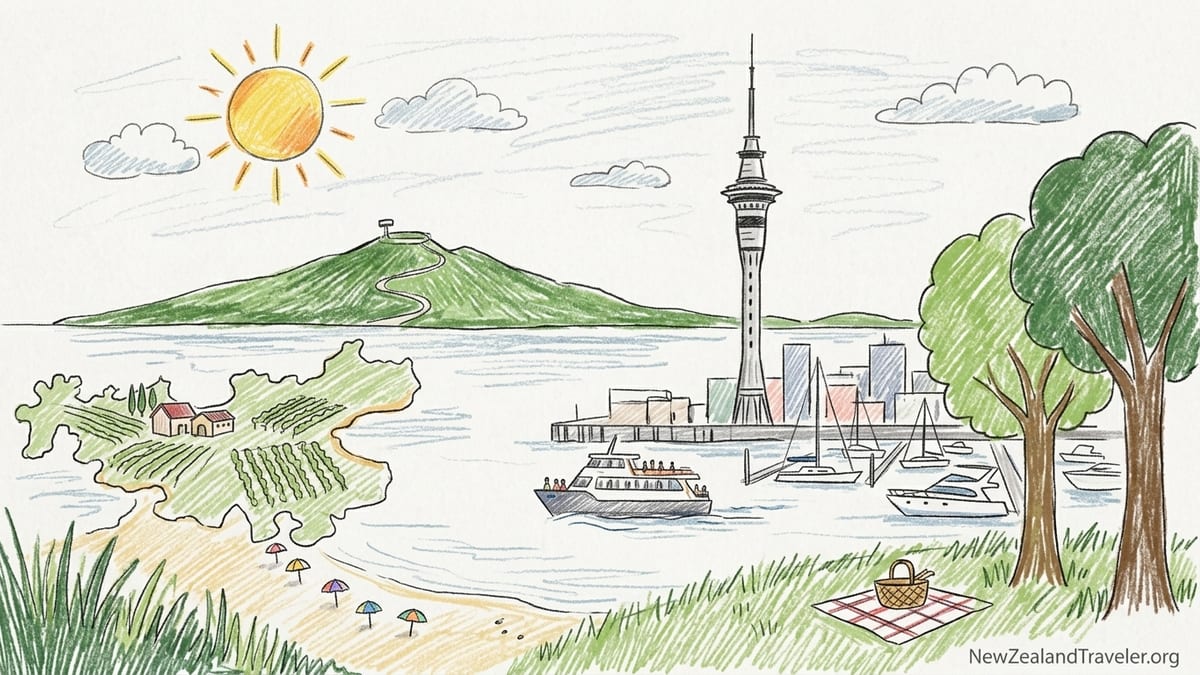
How to Structure an Auckland Itinerary Around Experiences
Thinking in themes rather than attractions makes Auckland far easier to navigate. Most visitors have 2 to 4 days in the city, which is enough time to combine three broad experiences: a city icons day linking Sky Tower with the Viaduct waterfront, a volcanic and Māori culture day around Mt Eden and Auckland Museum, and one full day out on the harbour to either Rangitoto or Waiheke. Devonport is the flexible extra: an easy half-day that can be slotted in when the weather is fine or used as a gentle first taste of the harbour after arrival.
Transport is straightforward once you anchor yourself on downtown’s Queen Street valley. From here you can walk to Sky Tower in about 10 minutes, reach the Viaduct and Wynyard Quarter in 10 to 15 minutes, and be at the main ferry terminal for Devonport, Rangitoto or Waiheke in under 10 minutes. Buying and topping up an AT HOP public transport card keeps bus, train and inner-harbour ferry fares lower than paying cash, though most visitors treat the longer island ferries as one-off tickets. This compact layout means you can comfortably chain several experiences together in a single day without spending half of it in transit.
Weather matters more than many first-time visitors expect. Clear conditions transform Sky Tower, Mt Eden and Rangitoto into standout days, while grey or wet weather suits Auckland Museum or a relaxed Devonport café wander. When you arrive, check the next 2 to 3 days of forecasts, then lock in any weather-dependent bookings such as Waiheke winery tours or Rangitoto summit excursions for the clearest window, leaving museum and inner-city time as your bad-weather buffer.
City Icons: Sky Tower and the Downtown Waterfront
Sky Tower is Auckland’s most recognisable landmark and an obvious anchor for your first afternoon or evening in the city. Standing 328 metres high, it offers 360-degree views from multiple observation levels. As of late 2026, walk-up adult admission is around 47 New Zealand dollars for a single visit, with family tickets and annual passes on offer. You buy tickets at the SkyCity complex beneath the tower or online, and in normal conditions you do not need to prebook a specific time slot. On clear summer evenings or public holidays, going an hour before sunset lets you see the city in daylight, watch the harbour turn gold, then stay as the lights come on.
For many visitors, a Sky Tower visit is also a dining decision. There are restaurants inside the tower, including a revolving dining room that often requires advance reservations in busy periods such as December and January. A dinner reservation usually includes access to the observation levels, which can make economic sense if you were planning to dine out at a similar price point anyway. If you prefer to keep things flexible, a simpler option is to visit just for the views, then eat afterwards in nearby Federal Street or on the waterfront, where casual spots serve everything from fish and chips to contemporary New Zealand cuisine.
From Sky Tower it is a 10 to 15 minute downhill walk to the Viaduct Harbour and Wynyard Quarter, the twin hubs of Auckland’s modern waterfront. This area requires no ticket and no planning beyond checking what time the sun sets. The Viaduct’s marina basin is lined with bars and mid-range restaurants, many with outdoor tables looking across rows of yachts. A few minutes further on, Wynyard Quarter blends play spaces, public art and harbourside promenades with food trucks and family-friendly eateries. On a warm evening, this is one of the easiest free experiences in Auckland: simply stroll the boardwalks, watch working fishing boats and superyachts glide in and out, and linger over a drink as the Sky Tower glows in the background.
If you are arriving from a long-haul flight and want a low-effort first night, combining a gentle Sky Tower visit with a Viaduct dinner works well. Buy tower tickets mid-afternoon, stay for sunset if the weather is clear, then walk downhill to the harbour for an early meal. No advance booking is essential unless you have your heart set on a specific high-end restaurant; most casual places around the Viaduct can seat walk-ins, especially on weeknights outside the peak Christmas to New Year period.
Volcanic Viewpoints and Mt Eden
Auckland is built on a volcanic field, and Mt Eden, or Maungawhau, is the most accessible way to understand that landscape. Only a few kilometres from downtown, it is a grass-covered cone with a deep crater and sweeping views across the city to both coasts. Access is free for visitors on foot, although private vehicles are restricted from driving to the summit. In practice, you take a bus or rideshare to the base and walk the final 10 to 20 minutes on well-formed paths. Sunrise and late afternoon offer softer light and cooler temperatures, but the summit is open during daylight hours, so you can fit it around museum or harbour plans.
Mt Eden is also an important Māori site, with terracing and earthworks from historic pā, or fortified villages, still visible on the slopes. Because of this cultural significance, you are asked not to walk into the central crater or climb over delicate areas. Simple choices like sticking to marked paths and reading the interpretive signs turn what could be just another viewpoint into a deeper experience. If you prefer structure, several local guides offer paid walking tours that combine the summit with nearby neighbourhoods, but most visitors manage comfortably on their own with a map app and a refillable water bottle.
In practical terms, Mt Eden pairs neatly with Auckland Museum, which sits in the Domain park a short bus or taxi ride away. You could spend the morning at the museum, have lunch in the Parnell or Newmarket districts, then head up Mt Eden for the afternoon view. Because both experiences are free to access once you have sorted transport, they suit days when you want to keep spending modest after pricier items like Sky Tower tickets or island ferries.
Māori Culture and History at Auckland Museum
Auckland War Memorial Museum, often simply called Auckland Museum, is the city’s most substantial introduction to Māori and Pacific culture. Located on a hill in the Auckland Domain, it looks over the central city and harbour. Entry policies can vary by residency, but as of mid 2026, visitors from outside the Auckland region typically pay an admission fee, while local residents may access the galleries at a reduced rate or by donation. For travellers, it is safest to budget for a standard adult ticket, then be pleasantly surprised if special offers are in place when you arrive. Opening hours are generally from 10 in the morning on weekdays and from 9 on weekends, with one late evening each week that is useful if you have packed sightseeing days.
The museum’s lower floors hold carved meeting houses, waka (canoes) and taonga, or treasures, that trace Māori history and identity. Taking one of the daily Māori cultural performances, which are a paid add-on to general admission, helps bring these objects to life. A typical session runs around 30 minutes and includes waiata (songs), poi, haka and explanations in English. These shows can sell out at busier times, especially when cruise ships are in port, so booking a performance time online once you know your dates is wise. Smaller group tours of the galleries are also available and often include focused discussion of Māori perspectives on the city’s volcanic landscape and colonial history.
Above the cultural galleries, the museum’s natural history and war memorial sections give more context to the city and the country. You might spend an hour with the Māori and Pacific collections, half an hour in the New Zealand environment exhibits, and another hour in the war memorial areas, making this a comfortable half-day activity. Because almost everything is indoors and well air conditioned, the museum is ideal for rainy or very hot days, and it sits within easy reach of central cafés in Parnell and Newmarket for a relaxed lunch before or after your visit.
For travellers interested in tying museum learning back to place, a good pattern is to visit the museum in the morning, then use Mt Eden or another volcanic cone in the afternoon to see the pā sites and old lava flows described in the exhibits. You will recognise place names and geological features from the displays, and the views from the summit help you orientate the harbour, islands and city suburbs you will explore later in your stay.
Harbour Experiences: Viaduct, Wynyard and Devonport
Auckland’s harbour defines the city as much as its volcanoes, and you do not need an expensive cruise to experience it. The Viaduct and Wynyard Quarter, already mentioned as evening destinations after Sky Tower, also act as gateways to short harbour outings. In summer, daytime dolphin spotting cruises, sailing experiences and harbour tours depart from piers within a few minutes’ walk of the main restaurant strips. These are paid activities with per-person fares, and in peak periods you should book ahead, but for many visitors the free option of wandering the wharves, watching bridge openings and seeing racing yachts warm up is enough.
Across the water on the North Shore, Devonport offers a gentler, village-scale harbour experience. Regular commuter ferries run from the main downtown terminal, taking about 12 minutes each way. You buy a return ticket at the terminal or tap on and off with an AT HOP card, and you do not have to prebook specific times. The sailing itself is a highlight, with views back to the city skyline and out toward Rangitoto that rival much more expensive harbour cruises.
Once you arrive in Devonport, everything is walkable. Cafés and bookshops line the main street, and a short uphill walk leads to North Head or Mt Victoria, both former defence sites with grassy slopes, old bunkers and excellent city and harbour views. Access is free, so your only costs on a Devonport visit might be the ferry fare and a coffee or ice cream. This makes the suburb an excellent flexible option: you can decide on the day, check the sky, and head over whenever you feel like a low-key few hours by the water.
Timing Devonport is more about mood than logistics. A morning ferry works if you want to beat the afternoon heat on the hills, while a late afternoon outing lets you watch the city lights come on as you ride back. If your Auckland stay is short and packed, Devonport can be combined with Rangitoto or Waiheke by catching an early island ferry, returning mid-afternoon, then taking the short Devonport sailing for sunset views before dinner downtown.
Islands and Hikes: Planning a Rangitoto Day Trip
Rangitoto Island, a symmetrical volcanic cone rising from the Hauraki Gulf, is one of Auckland’s defining shapes on the horizon and a memorable day trip for active travellers. The island itself is managed as a conservation area, and there is no bridge or road access. Instead, you reach it on a passenger ferry from the downtown terminal or via guided kayak across the harbour. Ferry operators run services that typically take around 25 minutes each way, with a few departures in the morning and returns in the afternoon, varying by season. Tickets are sold on a per-person basis and cost more than short commuter runs such as Devonport. Online booking is strongly recommended in summer and on sunny weekends, partly because the number of daily sailings is limited.
Once on Rangitoto, there are no shops, cafes or drinking water taps, so you must bring everything you need for the day. That usually means at least 1.5 litres of water per person, lunch and snacks, sun protection and sturdy walking shoes to handle lava rock surfaces. The classic Rangitoto experience is the summit walk, which takes about an hour to 90 minutes each way at a moderate pace, with options to detour through lava caves or coastal tracks. Paths are well formed but can be hot and exposed in the middle of the day, so many visitors aim for a morning ferry, reach the summit before noon, then descend for a snack and a rest near the wharf before their return sailing.
Because Rangitoto is predator controlled, you will see signs and equipment related to conservation traps and monitoring. Respecting these, staying on tracks and checking your bags and shoes for seeds before departure keeps the island safe for native birds and plants. There are no public rubbish bins, so you must pack out what you bring in. Guided tours, which can be added to some ferry tickets, are useful for travellers who prefer commentary on geology and history or who want transport up the steeper lower slopes to save energy.
Rangitoto makes the most sense if you enjoy walking and want a full or half day of outdoor activity. If you are short on time or travelling with young children, Devonport’s smaller hills or the easy walks on Waiheke might be a better fit. Remember that missing the last ferry back from Rangitoto turns a pleasant day into a logistical headache, as there is no casual accommodation by the wharf, so keep an eye on your watch and carry a paper or phone photo of the timetable.
Waiheke Island: Wine, Beaches and Coastal Views
Waiheke Island combines vineyards, beaches and art galleries into Auckland’s most popular island escape. It sits about 35 minutes by fast ferry from downtown, with frequent sailings from early morning into the evening. Multiple companies operate services, and as of 2026 adult return visitor fares are generally in the range of 59 to a little over 60 New Zealand dollars, with occasional seasonal variations and commuter pass products for regular travellers. For most holidaymakers, simply buying a standard return ticket on the day works, but in peak summer, booking a specific departure time online ensures you are not left waiting for the next sailing.
On arrival at Matiatia Wharf, you can choose between public buses, rideshares, rental cars or organised tours. Public buses timed to meet ferries run to key beach and village areas like Oneroa, Onetangi and Ostend, using the same AT HOP system as central Auckland. Wine-tasting tours usually need advance booking, especially on weekends, and often include pick-up from the wharf, visits to two or three vineyards for tastings, and free time at a beach or village. Prices vary depending on group size and inclusions, but planning at least a month ahead for peak holiday dates such as late December and early January makes sense if wine is a priority for your visit.
Waiheke is not only about wine. Oneroa offers cafés, galleries and a sheltered main beach within walking distance of the ferry, making it an easy low-planning day: take a morning ferry, stroll the clifftop path, swim or paddle at the beach, then enjoy fish and chips or a relaxed late lunch before heading back. Further afield, Onetangi’s long sandy bay suits families and walkers, with a choice of beachfront eateries that do not require reservations outside peak mini-season weekends. Walking trails lace the island’s hills and headlands, and a well-marked coastal walkway system lets reasonably fit visitors explore on foot without a guide.
Because Waiheke ferries run into the evening, you can choose between a relaxed full day returning before dark or a later sailing back after dinner on the island. If your accommodation is downtown and you are concerned about sea conditions, check forecasts and ask terminal staff about any expected rough weather. In calm conditions the crossing feels like an extended harbour cruise, with views of the city skyline receding behind you and of headlands and smaller islands sliding past on both sides.
Putting It Together: Sample Experience-Based Combinations
There is no single correct way to combine Auckland’s core experiences, but a few patterns work well for most visitors. On a two-day stay, you might devote the first day to city icons and culture: morning at Auckland Museum, lunch in Parnell, afternoon on Mt Eden for views and a feel for the volcanic landscape, then an evening at Sky Tower followed by dinner on the Viaduct. That approach uses mostly bus and walking connections, keeps ticketed costs modest apart from the tower and museum, and leaves you with a strong sense of the city’s geography.
On the second day, you could choose between Rangitoto and Waiheke depending on your preferences. If you like hiking and bare volcanic scenery, take the morning ferry to Rangitoto, walk to the summit, explore some side tracks, then return in time for a late-afternoon drink in Wynyard Quarter. If you prefer food, wine and beaches, reserve a Waiheke ferry, perhaps add a half-day vineyard tour, and allow time for a swim or coastal walk before your evening sailing back. In both cases, everything revolves around the ferry timetable, so check departure and return times before locking in dinner reservations back in the city.
Travellers with three or four days can add Devonport and extra waterfront time without rushing. For example, on a third day you might sleep in, then move slowly through the downtown laneways to the ferry terminal for a late-morning Devonport crossing. After coffee and a walk up Mt Victoria or North Head, head back to the city mid-afternoon, then wander the Wynyard Quarter’s Silo Park and playgrounds before a casual dinner. That still leaves one more flexible day to revisit a favourite spot, spend longer at the museum, or simply enjoy Auckland’s neighbourhoods away from the harbour.
The key is to let themes guide your decisions. Think of one harbour day, one volcano-and-museum day, and one city icons and dining day, then place individual sights into those buckets rather than trying to see everything at once. Doing so keeps logistics simple, minimises ticket and transport overlap, and allows enough unstructured time to enjoy the city’s cafés, parks and shoreline in between the headline experiences.
FAQ
Q1. Do I need to book Sky Tower tickets in advance?
For most of the year you can buy Sky Tower tickets on arrival at the SkyCity complex, but during busy summer evenings and holiday weekends it is sensible to purchase online earlier in the day or the day before, especially if you want to time your visit for sunset. If you have a dinner reservation at one of the tower restaurants, your dining booking usually covers access to the observation levels, so check the confirmation before buying a separate ticket.
Q2. Is Mt Eden free to visit, and how long does the walk take?
Yes, visiting Mt Eden is free for pedestrians, and it is one of Auckland’s best-value viewpoints. From the nearest bus stop or parking area, most people take 10 to 20 minutes to reach the summit on well-graded paths, with extra time if you stop for photos. Allow about an hour in total to walk up, circle the crater rim, read the interpretive signs about the old pā site and enjoy the views before heading back down.
Q3. How much time do I need at Auckland Museum?
Plan for at least two to three hours inside the museum if you want to see the main Māori and Pacific galleries, parts of the natural history displays and the war memorial areas. If you add a scheduled Māori cultural performance or a guided tour, your visit can stretch to half a day. Because the building is indoors and in a central park, it is easy to combine the museum with a café stop in nearby Parnell or Newmarket before or after your visit.
Q4. Do I need to reserve ferries to Rangitoto and Waiheke?
For Rangitoto, it is wise to book ahead in summer and on sunny weekends, as there are only a limited number of sailings each day and numbers on board can be capped. For Waiheke, ferries are more frequent and many travellers simply buy tickets on the day, but reserving a specific departure time online is helpful in peak holiday periods or if you have winery tour pick-ups arranged on the island.
Q5. Which is better if I only have one harbour day, Rangitoto or Waiheke?
If you enjoy hiking, volcanic landscapes and self-guided nature walks, Rangitoto offers a distinctive summit hike and lava fields in a single compact excursion. If you prefer wine tasting, beaches, cafés and galleries, Waiheke is usually the better fit, with more varied activities and infrastructure. Both are rewarding, but your personal interests, fitness and the weather forecast should decide which one to prioritise.
Q6. Can I visit Devonport and Rangitoto or Waiheke on the same day?
Combining Devonport with either Rangitoto or Waiheke is possible, though it makes for a full day. A common pattern is to take the earliest practical island ferry, spend the morning and early afternoon hiking or touring, return to downtown mid-afternoon, then ride the short commuter ferry to Devonport for a couple of hours of wandering and views before dinner back in the city. Always check ferry timetables so you are not rushing the last crossings.
Q7. Are these Auckland experiences suitable for children?
Yes, with some planning. Children tend to enjoy the Sky Tower views, Auckland Museum’s natural history exhibits, the waterfront playgrounds at Wynyard Quarter and the short hills in Devonport. Rangitoto’s summit track is manageable for school-age children used to walking, provided you bring enough water and snacks, while Waiheke’s beaches and bus routes make it easier with younger kids. Consider a child’s attention span and energy when choosing between a long hike and more flexible beach or village time.
Q8. How should I budget for tickets and transport?
Beyond accommodation and food, the main paid items in this guide are Sky Tower admission, Auckland Museum entry and any island ferry tickets or tours. Short commuter ferries such as Devonport and regular buses are relatively inexpensive, especially with an AT HOP card. Island ferries are a larger single cost, often around the price of a mid-range restaurant meal per adult for a return ticket, so many visitors choose either Rangitoto or Waiheke rather than both if on a tight budget.
Q9. What should I pack for Rangitoto and Waiheke day trips?
For both islands, bring sun protection, comfortable walking shoes, a reusable water bottle and snacks. Rangitoto has no shops or taps, so all food and water must be carried in and rubbish taken out. On Waiheke, shops and cafés are available, but distances between beaches and villages can be longer than they appear on a map, so having a small daypack with water, a light jacket and basic snacks keeps you flexible between bus stops and walking tracks.
Q10. When is the best time of year to experience these Auckland highlights?
Late spring through early autumn, roughly from October to April, offers the most reliable weather for harbour and island trips, with longer daylight hours for summits and evening waterfront walks. Winter can still be rewarding, with clearer air for city views and quieter museums and ferries, but you will need warmer layers, a flexible attitude to passing showers and possibly backup indoor options if conditions close in on your chosen day for Rangitoto or Waiheke.