


Auckland is one of those cities where you can spend the morning in a glass tower downtown, the afternoon on a black-sand surf beach, and the evening tasting wine on an island. The problem for visitors is not finding tours, but choosing from hundreds of competing options that all sound similar. This guide cuts through the noise and helps you decide which Auckland tours are actually worth booking, and which style suits your time, budget and travel style.
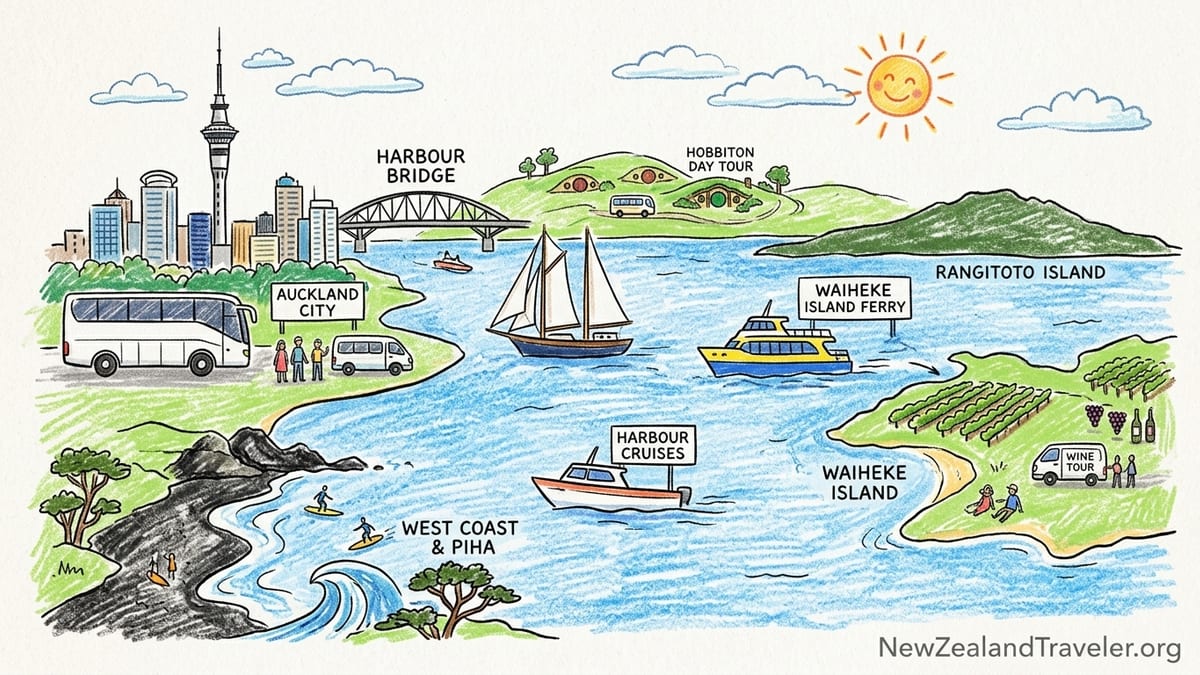
How to Choose the Right Auckland Tour Style
Online marketplaces now list well over 700 tours and activities in and around Auckland, from one-hour harbour hops to 13-hour Hobbiton and Rotorua marathons. Many overlap, using similar routes and attractions while differing mainly in group size, commentary quality and inclusions. Before you scroll through pages of options, it helps to decide three things: how much time you have, how much structure you want, and whether you truly benefit from a guide or just need transport.
Half-day tours, usually 3 to 5 hours, work best for travellers using Auckland as a stopover or cruise port call. Typical examples include a 3-hour small-group city highlights tour with hotel pickup, or a 2.5-hour harbour sailing with a drink and snacks. Full-day tours, often 8 to 13 hours, are better for out-of-city trips such as Hobbiton, Piha and Rotorua, where public transport is limited and distances are longer.
Small-group tours in Auckland usually cap numbers at around 10 to 16 guests in a minivan or mid-size coach. These tend to cost more per person but include more personalised commentary and flexibility in photo stops. Large coach tours can take 30 to 50 people, which keeps prices down and suits budget travellers or those comfortable with a more structured, less interactive experience.
A local guide adds the most value when you are leaving the city, learning about Māori culture, or tackling terrain such as the west coast surf beaches and volcanic islands. In the central city, you can explore independently using an app-based audio guide or a simple walking map, then save your touring budget for destinations where logistics and interpretation are more complex.
Auckland City Sightseeing: When a Guide Helps and When It Does Not
City sightseeing tours in Auckland tend to follow a predictable loop: the Viaduct Harbour and Wynyard Quarter, viewpoints like Mt Eden or One Tree Hill, heritage districts such as Parnell and Ponsonby, and waterfront suburbs like Mission Bay. You will see this same core route offered as a 3-hour small-group tour, a half-day coach, and on some private tours that add café stops or museum entries.
If you only have one afternoon in the city and want a fast orientation, a 3 to 4-hour small-group tour with hotel pickup can be worthwhile. Typical mid-range options include morning departures that collect guests from central hotels, drive the scenic waterfront, stop at Mt Eden for skyline photos, and pass the Auckland Domain, Parnell boutiques and Tamaki Drive beaches. Prices for these tours commonly sit in the rough range of NZ$80 to NZ$140 per adult, depending on group size and inclusions such as museum entry.
Cruise passengers and rail or bus travellers arriving near Britomart Station often do just as well with a self-guided city walk and a single viewpoint such as the Sky Tower or Mt Eden. The central area is compact, and many of the highlights are publicly accessible. In this case a full-guided coach tour may duplicate what you could do easily on foot or by public bus, especially if you are comfortable navigating a modern city.
Travellers with mobility issues, families juggling strollers and grandparents, or visitors with only a few daytime hours between flights generally benefit more from a city sightseeing tour that includes door-to-door transport. For them, the value lies less in commentary and more in the convenience of step-free access and not having to work out timetables or steep hills.
Harbour Cruises: From Short Sails to Dinner on the Waitematā
Auckland’s Waitematā Harbour is central to the city’s identity, and getting out on the water is one of the most rewarding activities you can book. Harbour cruises range from short daytime sails to full dinner experiences with a three-course meal. Operators offer one-hour harbour highlights cruises, 90-minute sightseeing trips, and 2.5-hour evening dinner cruises that combine sailing or cruising with dining and city skyline views.
Short daytime harbour cruises are ideal if you have limited time or want to pair the trip with another activity. These often depart from Viaduct Harbour or nearby central wharves, circling under the Harbour Bridge and past landmarks like the container terminals and Devonport naval base. Many operate multiple departures per day and cost in the ballpark of a casual restaurant meal, which makes them accessible for most visitors.
Evening dinner cruises cater to couples and small groups wanting a relaxed way to experience the city lights. A typical Auckland harbour dinner cruise lasts around 2.5 hours, departs early evening, and includes a set or buffet-style three-course menu plus a welcome drink. You can expect to pay a moderate premium over a similar quality restaurant meal, but you are also getting a moving viewpoint of the skyline, bridge lights and waterfront neighbourhoods. Some cruises are motorised launches, while others are sailing yachts that heel under wind, which may suit or deter guests prone to seasickness.
In terms of guiding, harbour cruises tend to offer light commentary focused on basic city history and maritime stories. A detailed guide is less critical here than on overland tours. The main decisions are comfort level, whether you want an open deck or enclosed cabin, and whether dining on board suits your budget and schedule. Travellers prone to motion sickness might choose a larger, more stable vessel on the sheltered inner harbour and avoid the windiest evening departures.
Waiheke Island Excursions: Wine, Beaches and Getting Around
Waiheke Island sits roughly 40 minutes by passenger ferry from downtown Auckland and is renowned for its vineyards, coastal walks and beaches. Most visitors face a simple first choice: travel independently using the regular ferry and public or hop-on hop-off buses, or book an organised Waiheke tour that bundles ferry tickets, vineyard tastings and transport between stops.
Independent travellers who enjoy flexibility can often save money by buying a return ferry ticket and then using the island’s bus system or a pay-per-use hop-on hop-off bus. Once on the island, you can mix boutique wineries, local cafés and beach walks at your own pace. This approach works well for repeat visitors, budget-conscious travellers and those comfortable planning their own day.
Guided Waiheke wine tours, typically running 5 to 7 hours including ferry time, appeal to visitors who prefer not to drive after tastings and want guaranteed seating at popular cellar doors. A common format involves morning ferry travel, a minivan meeting you at Matiatia Wharf, and visits to three or four wineries for tastings with a local host. Prices vary with inclusions, but most sit at a premium over independent travel once you account for tastings and hosted transport. Lunch may be included at a vineyard restaurant or left open so you can order as you wish.
If your group includes non-drinkers or children, consider a Waiheke highlights tour rather than a wine-focused itinerary. These tours might include viewpoints such as Oneroa and Onetangi, short bush walks and time at the beach. In these cases, a guide adds value by managing time around ferry schedules and providing context on the island’s history and lifestyle, while also ensuring you do not miss the last boat back to Auckland.
Piha and the West Coast: Why Local Knowledge Matters
Auckland’s west coast, particularly Piha, Karekare and Muriwai, is spectacular but can be challenging for first-time visitors. These beaches are known for black sand, rugged surf and fast-changing weather. Piha sits roughly an hour’s drive from central Auckland by car, but the route involves winding roads through the Waitākere Ranges and limited public transport.
Guided west coast tours typically run as half-day or full-day trips. A half-day Piha or west coast tour might include hotel pickup, scenic lookouts over the Waitākere Ranges, a beach walk and short bush walk to a waterfall or viewpoint. Full-day versions sometimes combine multiple beaches or add wine tasting at west Auckland vineyards. For context, many tours bundle regional park visitor centres, Karekare Falls, and time on the sand at Piha, while providing commentary on local ecology and surf safety.
This is one area where a guide is particularly worthwhile, especially for international visitors unfamiliar with New Zealand’s surf conditions and track etiquette. Local guides are usually up to date on tide times, track closures, and safety notices. They can steer you toward patrolled sections of beach, advise on rips and help avoid sensitive conservation areas where off-trail walking can damage dunes or native bush.
Self-driving to the west coast is feasible for confident drivers who are used to left-hand traffic and narrow rural roads. However, parking can be tight on summer weekends, and many rental agreements now highlight restrictions or cautions around remote roads. If you are jet lagged or unused to this kind of driving, a small-group guided tour often proves more relaxing and safer than renting a car solely for a day at Piha.
Rangitoto and Volcanic Adventures: Self-Guided or Guided?
Rangitoto Island, a volcanic cone rising from the Hauraki Gulf, is one of Auckland’s most distinctive landmarks and a popular half-day excursion. Ferries operate from the central city to Rangitoto’s wharf, from where most visitors follow the steep but well-formed summit track, often taking around an hour each way. Along the way you pass fields of jagged lava, pohutukawa forest and views back to the city skyline.
For active, independent travellers, a self-guided Rangitoto trip is straightforward. You simply book a return ferry, carry sufficient water and snacks, and follow marked tracks. There are no shops on the island, so you must bring everything with you and be mindful of the last ferry departure back to Auckland. This option keeps costs low and still delivers world-class scenery.
Guided Rangitoto tours tend to fall into two main categories. The first involves a guided walk, sometimes with a nature or geology focus, led by a ranger or local guide who explains the island’s volcanic history and unique ecosystems. The second uses a tractor-pulled trailer or off-road vehicle to carry you partway or most of the way to the summit area, with commentary along the route. These versions are well suited to visitors with limited mobility, those traveling with young children, or anyone wanting more interpretation than a guidebook can provide.
Weather is a key factor when planning Rangitoto. In hot summer months, the exposed lava fields can become uncomfortable, and shade is limited. A morning departure often makes the climb more pleasant. In cooler or breezy conditions, a guided tour with vehicle transport may be preferable, as it reduces effort while still giving you access to summit views and the historic lava caves where conditions allow.
Hobbiton and Major Out-of-City Day Tours
For many visitors, especially those who enjoy film or fantasy, a day trip to Hobbiton is the highlight of their time in the North Island. The movie set lies near Matamata, roughly a two-hour drive south of Auckland in normal traffic. Guided tours from Auckland vary: some focus purely on Hobbiton and return the same day, while others combine the movie set with Rotorua’s geothermal attractions or the Waitomo Glowworm Caves in a long multi-stop itinerary.
A standard full-day Hobbiton tour from Auckland typically includes early morning hotel pickup, transport by coach or minivan, a guided walking tour of the Hobbiton Movie Set with a local set guide, and some free time at the Green Dragon Inn. Journeys that bundle Hobbiton with geothermal parks such as Te Puia or Wai-O-Tapu, plus Rotorua city landmarks, often run 12 to 13 hours door to door. These extended itineraries suit travellers with limited time who want to see both Middle-earth and geysers in a single day, though they can be tiring.
Prices for guided Hobbiton day trips that include transport from Auckland generally sit at a higher tier compared with city or harbour activities, reflecting longer distances, entry fees and included meals or snacks. Some small-group operators also offer flexible one-way options, such as Auckland to Rotorua via Hobbiton, which work well for travellers continuing south. These one-way tours are especially useful for those who do not wish to rent a car but still want to reposition efficiently between hubs.
Other significant out-of-city tours from Auckland include Rotorua-only geothermal and Māori culture days, Waitomo cave excursions, and multi-day itineraries that link several regions. In almost all of these cases, joining a tour is easier than relying on public transport, which is sparse outside the main intercity routes. A guide is most beneficial when you are visiting marae or cultural centres, exploring cave systems, or trying to understand geothermal phenomena, where context and safety briefings greatly enhance the experience.
Half-Day vs Full-Day, Small-Group vs Coach: Matching Tours to Travellers
With so many companies offering variations on similar themes, choosing the right Auckland tour often comes down to matching the format to who you are traveling with and what kind of day you want. Shorter half-day trips work for people who dislike early starts or long bus rides, or for those combining sightseeing with business meetings or family visits. Half-day city, harbour or west coast tours can slot neatly into a morning or afternoon without consuming your entire day.
Full-day tours demand more stamina but reach destinations such as Hobbiton, Rotorua or the Coromandel that are not realistic as short excursions. They make sense if Auckland is your main base and you are not renting a car, or if you prefer someone else to handle navigation, fuel and parking. Families with school-age children often find that one full-day out-of-city adventure, balanced by a more relaxed day in town, keeps everyone happier than stacking long days back to back.
Small-group tours are generally best for travellers who care about interaction with the guide, photography, and a slightly slower pace. You might pay more, but you are more likely to get tailored recommendations, the chance to ask questions, and flexibility if the group wants to linger at a particular viewpoint. Solo travellers who value companionship and conversation often gravitate to this style.
Large coach tours suit price-sensitive visitors, cruise groups and anyone who feels reassured by a more structured environment. You trade some spontaneity for reliability: rest stops are scheduled, commentary is standardised, and itineraries run on a tight schedule. For first-time international visitors who are anxious about driving on the left or handling rural roads, these coach tours provide a low-stress way to see key highlights beyond the city.
The Takeaway
Planning tours around Auckland does not need to mean wading through hundreds of near-identical listings. Start by deciding whether you want a city, harbour, island, west coast or middle-of-the-North-Island experience, then match the tour style to your energy levels and appetite for structure. Half-day city and harbour options are ideal for orientation and relaxed sightseeing, while full-day trips unlock Hobbiton, Rotorua, Piha and other regional highlights.
As a rule of thumb, book a guided tour whenever you are leaving the city into areas with limited public transport or specific safety considerations, such as the surf beaches and caves, or when you want deeper insight into Māori culture and geology. Within the central city and on simple ferry routes, independent exploration often works well. Whether you choose a cosy small-group minivan or a cost-effective coach, focus on the itineraries that match how you like to travel rather than chasing every possible highlight.
FAQ
Q1. Is it worth doing a guided Auckland city tour if I only have one day?
If you have just one full day, a guided half-day city tour in the morning can be useful for orientation, leaving the afternoon free for a harbour cruise, Sky Tower visit or independent exploring. If you enjoy planning and walking, you may prefer to skip the guided city tour and instead book one structured activity such as a harbour cruise or Waiheke ferry and design the rest yourself.
Q2. Do I need to book Auckland harbour cruises in advance?
For daytime sightseeing cruises outside peak holidays, you can often book a day or two ahead. Dinner cruises and special event sailings are more limited and can sell out, especially on summer weekends and public holidays. If your schedule is fixed or you are visiting between December and February, advance booking is strongly recommended.
Q3. Is Waiheke Island better as a tour or self-guided trip?
If you want to visit multiple wineries without driving and prefer someone to manage timings, a guided Waiheke wine tour is easier and more relaxing. Independent travellers who are comfortable using ferries and buses, or who want a mix of beaches, cafés and perhaps just one winery, often find that self-guided days are more flexible and slightly cheaper overall.
Q4. Are Piha and the west coast safe to visit without a tour?
Piha and other west coast beaches are safe for visitors who respect local conditions, swim only between the lifeguard flags when patrolled, and stay on marked tracks. However, surf rips and changing weather can surprise those unfamiliar with coastal environments. A guided tour is strongly recommended if you are not confident about driving rural roads, reading surf conditions or planning around tides and track closures.
Q5. How long do I need for Rangitoto Island, and should I take a guided tour?
Most visitors allow four to five hours for a Rangitoto trip, including ferry travel and the hike to the summit and back. Fit, independent travellers who enjoy walking can comfortably do this self-guided. Those with limited mobility, very young children, or a strong interest in geology or ecology may get more from a guided tour that includes transport on the island and in-depth commentary.
Q6. What is the typical length of a Hobbiton day tour from Auckland?
Hobbiton-focused day tours from Auckland usually run 10 to 12 hours, depending on traffic and whether other stops are included. Extended itineraries that add Rotorua’s geothermal parks or glowworm caves commonly reach 12 to 13 hours. Expect early departures and late returns, and plan a lighter schedule the following day if you tire easily.
Q7. Should I choose a small-group or coach tour for Hobbiton and Rotorua?
Small-group tours offer a more personalised experience, with fewer guests and more opportunity to ask questions or adjust timing slightly at photo stops. Coach tours generally cost less and may suit budget travellers, large families or groups who enjoy a structured environment. If you are travelling solo and value conversation and flexibility, a small-group option is often worth the higher price.
Q8. Can I visit Hobbiton and Rotorua in one day from Auckland without renting a car?
Yes, several operators offer combined Hobbiton and Rotorua day tours that include transport from central Auckland, entry fees and guided experiences. These full-day trips are long but practical for visitors who prefer not to drive. Some companies also provide one-way versions that start in Auckland and end in Rotorua, which can be useful if you are continuing your journey further south.
Q9. Do Auckland tours usually include hotel pickup?
Many Auckland tours, especially small-group and full-day options, include pickup from selected central city hotels or a few main meeting points. Budget or very short tours sometimes require you to meet at a specific pier or downtown location. When booking, check whether your accommodation is within the pickup zone or whether you may need to walk or take a short taxi or rideshare to the meeting point.
Q10. How far in advance should I book popular Auckland tours like Hobbiton or Waiheke wine tasting?
For peak periods such as Christmas, New Year and local school holidays, it is wise to book key tours like Hobbiton day trips or Waiheke wine tours several weeks ahead. Outside these periods, booking a week or so in advance is often sufficient, though weekends can still fill in good weather. Harbour cruises and city tours have more capacity and can sometimes be booked closer to the date, but advance reservations always provide more choice of departure times.