


Auckland is where many New Zealand trips begin, but it does not have to dominate your itinerary. The city is a pleasant mix of harbours, islands and neighborhoods, yet most travelers are really deciding one thing: how many days to give Auckland before heading for dramatic landscapes elsewhere. This guide walks you through practical 1, 2 and 3 day plans built around the CBD and waterfront, Waiheke or Rangitoto, plus character suburbs and museums, so you can decide how much of your New Zealand trip Auckland actually deserves.
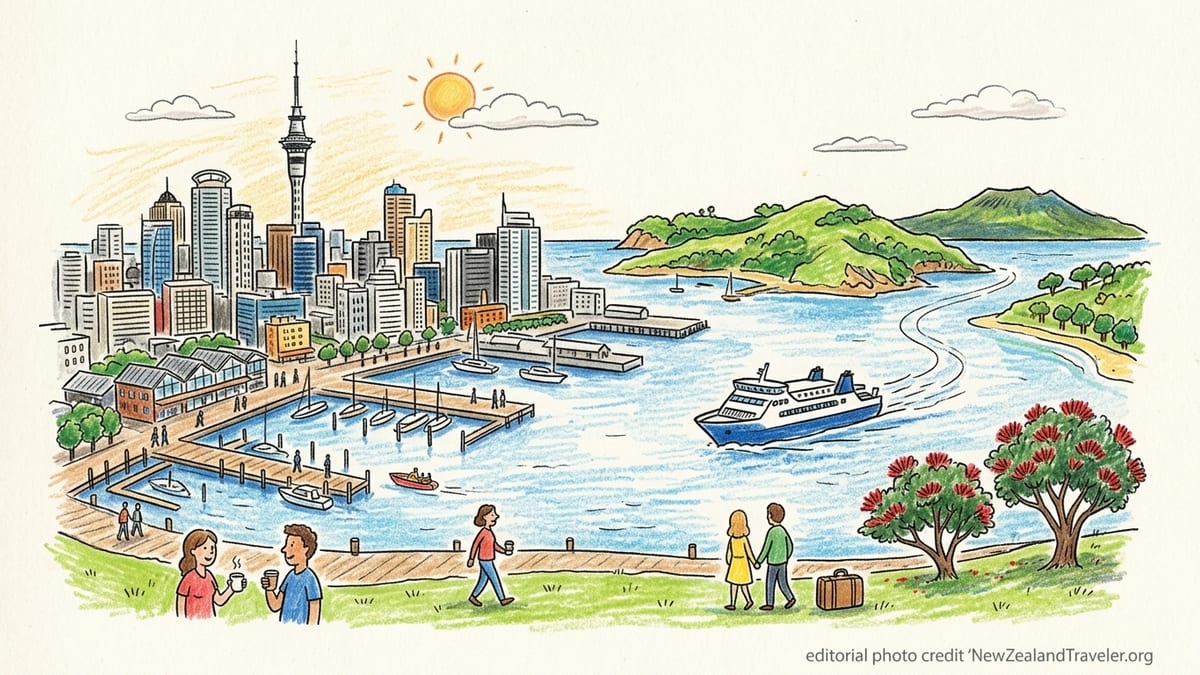
How Many Days Does Auckland Really Deserve?
If you are flying into New Zealand from a long haul destination such as Los Angeles or London, you will almost certainly land in Auckland. The question is not whether to visit, but whether you give it one busy day, a relaxed weekend, or a full three days. For many first time visitors focused on South Island scenery or road tripping Northland and the central plateau, 1 to 2 full days in Auckland is usually enough for the highlights. A third day makes sense if you enjoy wine tasting, urban neighborhoods, or slower travel.
A compact downtown and an excellent ferry network mean you can see a lot without renting a car. The CBD, waterfront and Mt Eden sit within a short public transport hop of each other, and popular islands like Waiheke and Rangitoto depart from the same downtown ferry terminal. You might spend the morning walking between Britomart, Commercial Bay and the Viaduct Harbour, then be aboard a ferry to Waiheke less than ten minutes after finishing your coffee.
Think of Auckland as a soft landing and a harbour playground rather than the main event. If you have only one week in New Zealand, one full day in the city and a second day on the water is usually enough. With ten to fourteen days, three Auckland days can work, especially if you prefer to start or end your trip with slower urban time. If you have three weeks, adding the third day is easy and can be slotted before picking up a rental car or catching a domestic flight.
The itineraries below assume you are staying near the CBD, especially Britomart or the waterfront, which keeps transfers simple and avoids the need for a car. If you book accommodation further out, such as Ponsonby or Parnell, you can still follow the plans with minor tweaks using buses or ride share.
Where to Stay and When Not to Rent a Car
For short Auckland visits, location is more useful than luxury. Staying in or near the CBD avoids traffic, simplifies airport transfers and puts you within walking distance of the ferry terminal. The Britomart and waterfront area is ideal for first time visitors. You will find a mix of large hotels inside the SkyCity complex near the Sky Tower, design focused waterfront properties around Viaduct Harbour and Wynyard Quarter, and smaller boutique options in Britomart’s restored brick warehouses. Budget travelers often base themselves in hostels or basic hotels along Queen Street, which still keeps you close to transport and food.
A practical rule of thumb is this: if you are only in Auckland for 1 to 3 days and mainly following this itinerary, you usually do not need a rental car. The SkyBus style airport shuttles, taxis or ride share will get you into the CBD in around 40 to 45 minutes depending on traffic. Once you are downtown, you can walk to most of the first day’s sights and rely on ferries and buses for Waiheke, Rangitoto and neighborhoods like Ponsonby or Parnell. Parking in central Auckland hotels often costs a noticeable nightly fee, and street parking rules can be confusing for visitors.
There are times when a car makes sense. If your third day will turn into a day trip well beyond the city, such as the black sand beaches of Piha on the west coast or wineries in Kumeu, then collecting a rental car on the morning of that excursion can be efficient. Many companies have depots near the CBD or at the airport, and you can return the car before flying out. What does not make sense for most travelers is renting a car at the airport, driving into the city just to park it for two days, then paying both rental and hotel parking while you take ferries and walk.
In terms of price, downtown hotels span from basic chain rooms that might sit around a mid range nightly rate in New Zealand dollars, to high end suites overlooking the Waitemata Harbour that can be several times that. If you are planning to be out most of the day, a comfortable mid range property near Britomart or Commercial Bay gives you what you need without eating your overall New Zealand budget.
Day 1: CBD, Waterfront and Mt Eden
Use your first day to understand the layout of the city and shake off travel fatigue. Start late morning in Britomart, the compact precinct anchored by the main rail station and a cluster of pedestrian lanes. Grab a coffee and something simple like avocado toast or a cabinet pastry from a local cafe, then stroll towards the water through Commercial Bay. This newer downtown shopping and dining complex sits directly above the ferry terminal and has an indoor food court where you will find everything from inexpensive bao buns and ramen to local burger chains, which can be a time saver if you are trying to keep costs down.
From here, walk west along Quay Street into Viaduct Harbour and Wynyard Quarter. This waterfront stretch is where you feel Auckland’s harbour setting most strongly, with marinas, public art and boardwalks. Families can stop at the Silo Park playground or let kids watch the lifting bridge near the Viaduct open and close for yachts. If the weather is clear, consider a short harbour sailing or simply sit at one of the casual bars for a drink. This part of the city is flat and easy to walk, so you do not need any transport until you leave the waterfront.
Mid to late afternoon, head up to the Sky Tower or toward Mt Eden for a view of the city. The Sky Tower’s observation decks sit hundreds of metres above the CBD and usually require a paid ticket, which is often around several dozen New Zealand dollars for adults, with discounted tickets for children. Alternatively, a taxi, rideshare or bus will take you to the base of Maungawhau Mount Eden, an extinct volcanic cone with a grassy crater and a viewing deck that looks back toward the city and both harbours. Walking from the parking area to the summit typically takes 10 to 15 minutes. Bring a light jacket, as the breeze can be cool even in summer.
In the evening, return to the CBD for dinner. Federal Street, at the base of the Sky Tower, has a dense run of restaurants ranging from casual noodle spots to chef driven dining rooms. If you prefer a more local, slightly bohemian feel, take a short bus or taxi uphill to Karangahape Road, often known as K Road, for small bars, live music and late night eateries that stay open well past midnight on weekends.
Day 2: Waiheke or Rangitoto, Choose Your Island
Your second day pivots around the ferry terminal on Quay Street. Depending on your interests and fitness level, choose between Waiheke Island for wine, beaches and small villages, or Rangitoto Island for a half day volcanic hike and coastal views. Both depart from the downtown ferry piers and make use of regular services that run multiple times per day, with extra departures in peak summer.
Waiheke suits travelers who enjoy food, wine and a slower pace. Passenger ferries from the CBD to Matiatia Bay on Waiheke usually take around 35 to 40 minutes. Return ticket prices for adults are commonly several tens of New Zealand dollars, and you can often buy them on the day unless you are traveling during a peak holiday weekend. On the island, you can book a guided wine and food tour, use the local buses that meet most ferries, or hire e-bikes to explore at your own pace. Popular stops include vineyards on the western side of the island with tasting rooms and restaurants, and beaches like Oneroa where you can have fish and chips looking back towards the mainland skyline.
Rangitoto is better for active travelers who want a half day hike on New Zealand’s youngest volcanic cone. The ferry ride is shorter, roughly 25 minutes from the CBD, but departures are less frequent and often cluster in the morning and afternoon, so you need to pay careful attention to the timetable. Return adult fares also sit in the range of several tens of dollars. There are no shops on Rangitoto, so you must bring all water, snacks and sun protection with you. The classic summit track is a well defined trail of volcanic rock and boardwalks, taking roughly one hour each way for most reasonably fit visitors. At the top, you are rewarded with wide views back across the Hauraki Gulf to the city.
Whichever island you choose, aim for an early ferry to avoid crowds and give yourself flexibility. A workable pattern is to catch a mid morning sailing, spend five to six hours on the island including lunch, then return to the city for a relaxed evening. Back in Auckland, you could book another vantage point visit if you skipped the Sky Tower or Mt Eden the previous day, or simply enjoy a quiet dinner in Britomart or the Viaduct. If you chose Rangitoto, you will likely be back mid afternoon and may have enough energy to explore the nearby New Zealand Maritime Museum on the waterfront.
If you have two full days total in Auckland, these first two days are enough to give you a broad sense of the city: harbour, island, skyline and one volcanic summit. From here, many travelers are ready to move on to destinations like Rotorua, Taupo or Queenstown without feeling they have missed Auckland’s core experiences.
Day 3: Neighborhoods, Museums and Nearby Excursions
The third day is where you can tune Auckland to your interests. Culture minded travelers often begin at the Auckland War Memorial Museum in the Auckland Domain, a large park not far from the CBD. International visitors typically pay an entry fee that is in the tens of dollars, while residents and some local visitors have free or donation based entry. The museum combines natural history, World War exhibits and one of the country’s most significant collections of Maori and Pacific artefacts, and can easily absorb two to three hours. There is also a paid cultural performance showcasing Maori song and dance several times a day, which many visitors consider a useful introduction before visiting marae or cultural sites elsewhere in the country.
From the museum, you can walk down to Parnell, a neighborhood of cafes, galleries and terraced houses. A practical combination is a morning at the museum, lunch at a Parnell cafe, then either a return to the CBD for shopping around High Street and Vulcan Lane or a short ride over to Ponsonby. Ponsonby Road is a long ridge of boutiques, restaurants and bars with a slightly more local, residential feel than downtown. It is a good place for an early evening meal or drinks before returning to your CBD accommodation.
If you would rather use your third day for a bigger excursion, this is the time when a one day car rental can make sense. Popular options within roughly one hour’s drive include the dramatic black sand beaches and surf at Piha and Karekare on the west coast, or the coastal villages and regional parks north of the city. These areas are challenging to reach efficiently by public transport, particularly if you want to move between viewpoints and trailheads, so having your own vehicle makes the day practical. Pick up the car in the morning from a central depot, spend the day exploring and return it that evening so you are free of parking concerns overnight.
Travelers with children may prefer to stay closer to the city and spend more time in Wynyard Quarter’s family friendly playgrounds, or visit the free Auckland Art Gallery near Albert Park. On a rainy day, combining the museum, gallery and a relaxed lunch in Commercial Bay or Britomart gives you plenty to do without worrying about weather exposed viewpoints. This third day is deliberately flexible: use it to either deepen your feel for Auckland’s neighborhoods, or to escape the city briefly before continuing your wider New Zealand journey.
Practical Tips for Ferries, Weather and Costs
Auckland’s ferries are central to this itinerary, so it helps to know a few practicalities. The Downtown Ferry Terminal on Quay Street is the main departure point for both Waiheke and Rangitoto. Services to Waiheke run many times per day year round, with extra sailings in summer and over holidays. Rangitoto services are less frequent and can change seasonally, so always check the current timetable the day before you travel and again on the morning of departure. Ferries can be busy on summer weekends, especially around Christmas and New Year, so arriving early and carrying your ticket or booking confirmation in advance is wise.
Prices fluctuate slightly over time and between operators, but as a ballpark planning figure, many travelers find that a return adult ferry to Waiheke from downtown Auckland sits somewhere in the vicinity of the mid tens of dollars range per person. Rangitoto ferries are usually of a similar order, sometimes a little less. Guided tours, bike rentals and wine tastings on Waiheke add to the cost, so a full day on the island with food and drinks can easily reach low to mid hundreds of dollars for a couple, depending on how many vineyards and paid tastings you include. By contrast, a self guided Rangitoto hike mainly adds the cost of packed snacks and an occasional coffee after you return to the city.
Weather is a major variable. Auckland’s climate is maritime and can flip between warm sun, wind and showers within a single day. In summer, daytime highs often sit in the low to mid twenties Celsius, but the sun is strong and you should pack sunscreen, a hat and sunglasses. In winter, expect cooler temperatures, rain and early dusk, which means you might compress the day slightly or front load outdoor activities into the morning. If the forecast is unsettled, it can be sensible to swap days around, taking your island trip on the clearest day and shifting museums and neighborhoods to the cloudier slot.
Budget wise, Auckland is one of New Zealand’s more expensive places for food and accommodation. You can keep costs in check by using food courts in Commercial Bay or Elliot Stables style developments for lunches, then choosing a mix of casual and mid range restaurants for dinners. Public buses and the city rail link, once fully open, will provide inexpensive transport across the central city, but for short visits it is often worth paying occasional taxi or rideshare fares to save time, especially if you are splitting the cost between two or more travelers.
The Takeaway
Planning Auckland first helps you plan New Zealand as a whole. A focused day on the CBD, waterfront and a volcanic summit will show you the city’s bones. A second day on Waiheke or Rangitoto adds the essential island experience that many visitors remember most. A third day lets you slow down in neighborhoods, museums or nearby coasts, but it is optional for travelers who are more excited by alpine landscapes, geothermal parks or long road trips.
If your total trip is a week or less, give Auckland one full day in the city and one day on the water, then move on. With ten to fourteen days, two and a half to three days in Auckland fits naturally at the start or end of the journey. Longer trips have enough slack to use the city as a recovery point in the middle. In all cases, staying central, relying on ferries and public transport and delaying any car rental until you truly need it will keep your Auckland days efficient and less stressful.
Think of Auckland as the prologue and epilogue to your time in New Zealand. Spend enough time here to understand the country’s harbour culture, volcanoes and urban life, then let the rest of your itinerary pull you onward to the beaches, mountains and small towns that likely inspired your trip in the first place.
FAQ
Q1. Is one day in Auckland enough for a first visit?
For many travelers focused on seeing other regions of New Zealand, one full day is enough to walk the CBD and waterfront, visit a viewpoint like the Sky Tower or Mt Eden, and get a feel for the city before moving on.
Q2. Should I choose Waiheke or Rangitoto for my only island day?
Choose Waiheke if you enjoy wine, food and beaches with an easy pace, and choose Rangitoto if you prefer a half day volcanic hike and views with minimal extra cost beyond the ferry fare.
Q3. Do I need to rent a car for this Auckland itinerary?
No. For 1 to 3 days focused on the CBD, ferries and nearby neighborhoods, walking, public transport, taxis and ride shares are usually enough. Consider a one day rental only if you plan a more distant excursion like Piha.
Q4. Where is the best area to stay in Auckland for first timers?
The CBD waterfront, Britomart and Viaduct Harbour area suit first time visitors best, as they give easy access to ferries, dining, shopping and key sights without needing a car.
Q5. How far is the airport from downtown Auckland?
Auckland Airport is roughly 20 to 25 kilometers from the CBD. Depending on traffic, airport buses, shuttles or taxis usually take about 40 to 60 minutes to reach central hotels.
Q6. Is the Sky Tower worth the ticket price?
Most visitors find the Sky Tower worthwhile for first time orientation and wide harbour views, especially if you time your visit around late afternoon or sunset when the light is softer.
Q7. Can I visit both Waiheke and Rangitoto in a single day?
It is technically possible but not recommended, as ferry timetables and the time needed on each island mean you would rush both. It is better to pick one and enjoy it fully.
Q8. What is the best season to follow this itinerary?
Late spring, summer and early autumn offer longer days and calmer seas for ferry trips, though winter can still be pleasant if you are prepared for cooler temperatures and some rain.
Q9. Are Auckland museums suitable for children?
Yes. The Auckland War Memorial Museum has interactive exhibits and open spaces, and the nearby Domain parklands and central city playgrounds make it easy to combine culture with outdoor time.
Q10. How much should I budget per day in Auckland?
Budgets vary by travel style, but many mid range visitors find that once they have paid for accommodation, daily spending on food, local transport and one paid activity or ferry can easily reach into the low hundreds of New Zealand dollars.