


Waikato’s soft green hills and easy driving distances make it one of New Zealand’s best regions for a farm stay, especially if you are in the country to visit Hobbiton or the Waitomo glowworm caves. Rather than another anonymous hotel, you can wake to the sound of cattle in the paddocks, watch mist lift off the hills and pour your morning coffee while lambs nose the fence just outside your window. This guide focuses on real working-farm and rural stays around Matamata, Cambridge, Ōtorohanga / Waitomo and the rural fringes of Hamilton, comparing the experiences on offer so you can match the right property to your itinerary.
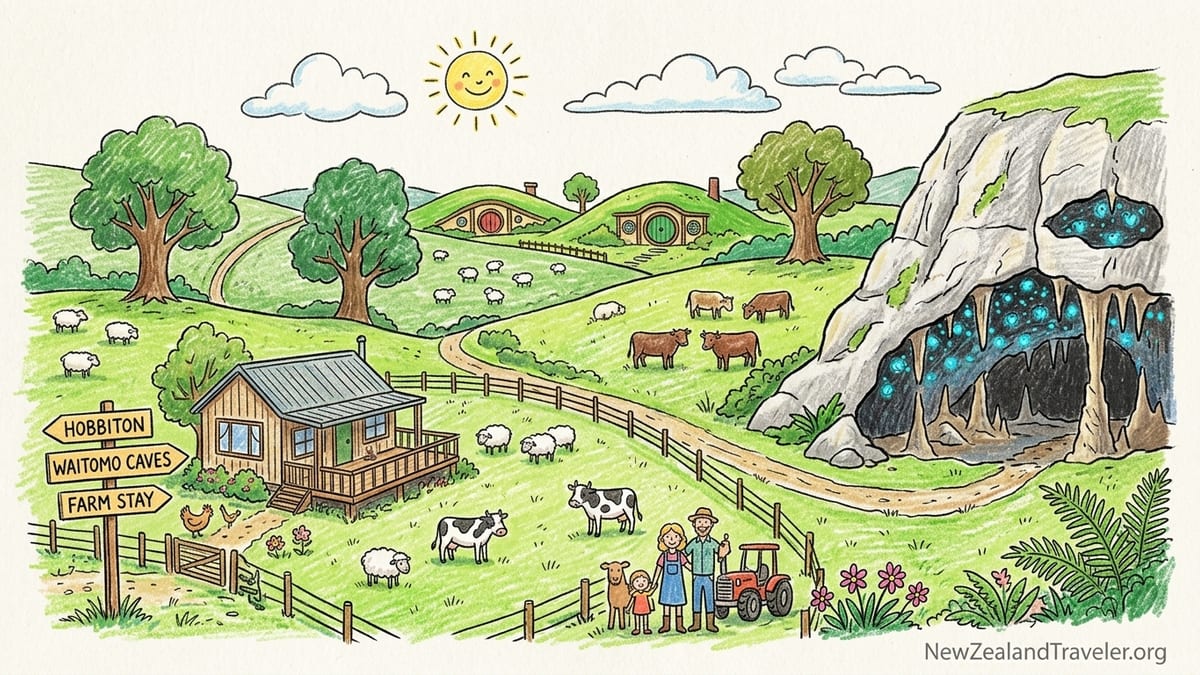
Why Waikato Farm Stays Work So Well With Hobbiton and Waitomo
The central Waikato region is unusual in that two of New Zealand’s most popular attractions sit in the middle of classic working farmland. Hobbiton Movie Set is located on a family-run sheep and beef farm just outside Matamata, while the Waitomo caves lie under rolling dairy and drystock country near Ōtorohanga. Staying on a farm here feels completely natural because you are not detouring into the countryside; you are staying in the very landscape that makes these places famous.
From a practical point of view, farm stays also solve a common planning headache. Both Hobbiton and Waitomo draw large coach groups in the middle of the day, which means the most atmospheric times are early morning and late afternoon. If you base yourself in Matamata or on its rural fringes, you can be at the Hobbiton carpark in roughly 10 to 20 minutes rather than driving an hour or more from Rotorua or Hamilton. Around Waitomo and Ōtorohanga, many farm stays sit within 15 to 20 minutes’ drive of the glowworm caves, which makes it easy to book the first or last tour of the day without a pre-dawn start.
Compared with urban hotels, Waikato farm accommodation is usually small scale, often run by the owners who live on site, and designed around rural life. That might mean a converted woolshed for two on a hill above a private glowworm cave, a self-contained cottage beside a horse paddock near Cambridge, or B&B rooms in the main farmhouse with breakfast at a big communal table. You trade room service and minibar menus for animal interaction, local tips and the simple pleasure of driving a gravel road back to your own quiet corner of the hills.
Matamata & Hobbiton Countryside: Close to the Shire
For many visitors, Matamata is where the Waikato dream begins. Hobbiton Movie Set sits on a 550-hectare working sheep and beef property outside town, and the surrounding countryside is full of similar farms that now host guests in cottages and B&B rooms. A typical example is Matamata Lodge, which looks out over a working lifestyle farm only a few minutes’ drive from Matamata township and within easy reach of the Hobbiton tours. Here you can sit on the deck with uninterrupted rural views, then be parked at the Hobbiton visitor centre in around 15 minutes if you have an early tour booked.
At the more intimate end of the spectrum are small mixed farms that open one or two units to guests. Properties like Da Barn, promoted through local visitor networks, describe themselves as small farms with animals that guests can interact with, which can range from feeding chickens and meeting friendly goats to watching the owners move stock in nearby paddocks. While every host sets their own boundaries, this style of stay is ideal for families who want children to experience a real farm environment without committing to an all-day farm tour.
Most Matamata-area farm stays provide generous breakfasts, but the format varies. Bed and breakfast rooms in the farmhouse often include a cooked or continental breakfast served in the main kitchen or dining room so you can chat with hosts about the farm and get advice for the rest of your road trip. Self-contained cottages may lean toward a stocked-fridge approach with eggs, bread, fruit and cereals supplied so you can eat when it suits you. In both cases you should expect strong tea and coffee, farm-fresh milk and a relaxed attitude about topping up supplies if you stay more than one night.
In terms of style, Matamata stays lean toward cottages and small B&Bs rather than large lodges. Cottages suit couples and small families who want to self-cater and enjoy privacy, while one or two B&B rooms in the farmhouse work well for solo travelers or pairs who like meeting hosts. Parking is usually right outside your door and free, a real contrast to parking-charged city hotels. If Hobbiton is your priority, look carefully at actual driving distances when you book; a place listed as “Matamata area” can range from about 10 minutes to 30 minutes from the movie set, which matters if you are trying to catch the first morning tour.
Cambridge & Rural Hamilton: Horses, Rivers and Easy Touring Bases
South of Hamilton, the countryside around Cambridge and the rural fringes of Hamilton itself is dotted with horse studs, dairy farms and lifestyle blocks that now host paying guests. Cambridge is known as a horse town, and that character comes through at properties like Jakama Lodge farmstay, set on a working farm between Cambridge and Tirau. Marketing material for the lodge highlights its central location for visiting Hobbiton, Waitomo and Rotorua, making it an appealing base if you prefer to unpack once and take day trips in a rental car rather than moving every night.
Closer to Cambridge and Lake Karāpiro, boutique rural B&Bs and cottages such as Hazelbank House and other farm-based retreats sit in quiet paddock-fringed settings. Hazelbank House, for example, is purpose-built in a rural spot between Cambridge and Lake Karāpiro, about 4.5 kilometres from each, and caters to guests attending local events as well as touring couples. Rooms here are guest-only but the wider property operates as part of a rural enterprise, so you still feel surrounded by fields and birdlife rather than traffic noise.
On the Hamilton side of the region, Moifaa Farm B&B near Tamahere shows how close you can be to the city while feeling entirely rural. Set on a working horse and cattle farm, it offers a private guest level with several bedrooms, its own lounge and a deck overlooking the paddocks. Hosts emphasise that they are roughly 10 minutes’ drive from both Hamilton and Cambridge and within an easy drive of Hobbiton and Lake Karāpiro. For visitors who want to mix a rural stay with Hamilton’s restaurants or who are visiting friends in the city, a place like this can be more convenient than going all the way to Matamata.
Breakfast in the Cambridge and rural Hamilton area is usually a highlight. Many farm hosts stock guest fridges and pantries with local produce and luxury continental breakfast supplies, including yoghurts, breads, fruit, muesli and Waikato dairy products, sometimes alongside free-range eggs from the property’s own hens. You are more likely to encounter boutique B&B rooms here than hands-on working-sheep experiences, though some farms keep horses and a few friendly animals that children can meet under supervision. Parking is rarely an issue, and most properties provide off-street or private parking right beside the house, which is especially useful if you are juggling hire cars, child seats and luggage.
Ōtorohanga & Waitomo: Farm Life Above the Glowworm Caves
Further south, the countryside around Ōtorohanga and Waitomo blends classic dairy country with limestone bluffs and sinkholes that hide the area’s famous glowworm caves. For many travelers, the goal is to visit the Waitomo Glowworm Cave and perhaps an adventure trip in Ruakuri or Aranui Caves, but a farm stay can turn this into a more rounded rural experience. Local tourism material highlights several farm-based and rural properties within around 15 minutes’ drive of the caves, so you can spend the day underground and then return to wide skies and stock quietly grazing in the evening.
One of the best-known options for families is Waitomo Big Bird B&B and Petting Farm near Waitomo village. It combines classic B&B accommodation with an on-site petting farm, so children can meet friendly animals and learn a little about rural life. Reviews and regional guides describe it as a relaxed, social place that suits families wanting more than a simple motel room. Being within walking distance or a short drive of the caves and village facilities such as cafés makes it easy to split the day between cave tours and downtime on the farm.
For couples, the region offers more secluded options. Te Tiro farm accommodation, for instance, pairs self-contained cottages and glamping tents with a tranquil rural setting on a hill farm near the caves. Promotional material emphasises sunsets, stars and views over farmland, with guests staying in compact, self-contained units rather than farmhouse rooms. Similarly, the Waitomo Woolshed provides a luxury escape for two on the same farm as a private glowworm cave, combining a converted farm building with a very short drive to the main Waitomo experience. These properties are not rough farm bunkrooms; they keep the rural setting but add comfortable beds, modern bathrooms and thoughtful touches for couples.
In the broader Ōtorohanga area, rural motels and cottages such as Waitomo Golf Stays and self-contained units on farms between Ōtorohanga and Te Kuiti round out the options. Many offer ensuite units with continental breakfasts provided and all the standard facilities (TV, fridge, tea and coffee). While they may not always feature animal interactions as strongly as the dedicated petting farms, they place you squarely in farm country, with short driving times to the caves and attractions like the Ōtorohanga Kiwi House. For a typical visitor, that means a comfortable bed, easy parking outside the unit and the ability to make an early cave tour without a long drive from the coast.
Working Farms, Animals and Breakfast: What to Expect
Not all rural accommodation in Waikato is a true working farm, so it helps to understand the differences. A farm stay is generally accommodation on an active farm where agriculture is still part of the owners’ livelihood. That might be a sheep and beef property near Matamata, a horse and cattle farm near Hamilton or a dairy farm in the hills above Waitomo. In these places you may see stock being moved, tractors working in paddocks and dogs heading out for the early-morning rounds. In contrast, some countryside B&Bs and cottages sit on lifestyle blocks, where the focus is more on gardens, privacy and gentle rural views than large-scale farming, though they may still keep a few horses or alpacas.
If animal interaction is important to you, look for properties that explicitly mention petting farms or animal feeding. Waitomo Big Bird B&B and Petting Farm, for example, markets its on-site animals as a core part of the stay, making it a safer bet for families with animal-obsessed children than a generic rural motel in Ōtorohanga. Smaller Matamata farms may invite guests to feed chickens or meet the sheep at the fence, while some Cambridge and Tamahere properties allow supervised visits to horse paddocks. Always check house rules; most hosts will not allow guests into working yards or paddocks without them present, especially if heavy machinery, bulls or young stock are in the mix.
Breakfast arrangements are another key difference between farm stays and standard hotels. Traditional farmhouse B&Bs tend to include a cooked or full continental breakfast in the tariff, often featuring local ingredients and home baking. Boutique B&Bs around Cambridge promote luxury continental setups, with high-quality cereals, yoghurts, fruit and breads laid out in a guest dining area or stocked in your room. Self-contained cottages and glamping units around Waitomo and Matamata often supply breakfast baskets or starter packs so you can eat on your own schedule and top up supplies in town if you stay several nights. If you rely on a substantial breakfast before activities like caving or cycling, it is worth confirming exactly what is included when you book.
From a planning perspective, remember that these are usually small, owner-operated properties. That brings advantages like personalised local advice and flexible breakfast times, but it also means limited capacity and more variation in style. A cottage designed for privacy and star-gazing above Waitomo may not be suitable if you expect your children to have multiple animal encounters every day, just as a hands-on petting farm may feel too busy for a couple seeking complete quiet after long days of driving.
Cottages vs B&B Rooms: Matching Stays to Couples and Families
Across Matamata, Cambridge, Ōtorohanga / Waitomo and rural Hamilton, most farm stays fall into two main categories: self-contained cottages or apartments, and B&B-style rooms in or beside the main farmhouse. Each suits different styles of traveler. Self-contained cottages, like many of the Waitomo hilltop units or Matamata rural cottages, give you a kitchen or kitchenette, your own living space and often an outdoor deck or garden area. These are ideal for couples who want quiet evenings to themselves, road-tripping friends who prefer flexible meal times, or families who need to prepare simple dinners after a day out.
B&B rooms come in a few varieties. Some, such as the guest level at Moifaa Farm, are effectively self-contained suites within the larger farmhouse, with private bathrooms and sometimes a dedicated guest lounge, but breakfast still provided by the hosts. Others are classic bed and breakfast arrangements with one to three guest rooms opening onto the main family areas. These work particularly well for solo travelers, couples who enjoy conversation and anyone who appreciates a ready-made local contact who knows the back roads and current roadworks, which can change driving times between Hamilton, Matamata and Ōtorohanga.
Families booking B&B rooms should look at how child friendly the layout is. A petting farm with a three-bedroom house, as in the Waitomo Big Bird Retreat model, makes it easier to put children to bed while adults still have a lounge or deck to use. In contrast, a single double room in a quiet adults-focused farmhouse might not welcome noisy toddlers. Self-contained cottages usually offer more flexibility; parents can cook a simple pasta dinner, let children run in the yard under supervision and then sit on the deck once bedtime arrives, without worrying about disturbing other guests through thin walls.
Parking tends to be straightforward across all these formats. Rural properties usually sit on larger sections with space for cars beside each unit, so you can unload bags straight into your room rather than hauling luggage through hotel corridors. This is particularly useful in winter when Waikato’s clay soils can be wet underfoot and you do not want to be walking long distances in the rain before an early Hobbiton departure or a morning cave tour.
Distances, Driving Times and Practical Itinerary Tips
One reason Waikato farm stays work so well is that driving times between key points are relatively short, but it still pays to plan with a map rather than assumptions. Hobbiton Movie Set is roughly 10 to 20 minutes’ drive from most Matamata rural stays, depending on which side of town you are on. Matamata itself sits about 45 minutes to 1 hour from Hamilton, depending on traffic and route, and around a similar distance from Cambridge. That means a farm stay in rural Hamilton or Tamahere, such as Moifaa Farm, can position you within about an hour’s drive of Hobbiton while still being less than 15 minutes from city conveniences.
Waitomo village and the caves are about 15 minutes’ drive from Ōtorohanga, with many farm and rural stays located somewhere along this corridor. Properties advertised as being between Ōtorohanga and Te Kuiti, like Waitomo Golf Stays, often note around a 15-minute drive to the glowworm caves, which is manageable even for early tour slots. If you are combining Hobbiton and Waitomo in a single day, expect at least 2 hours of driving in each direction between the two regions, plus tour time. Many travelers find it more relaxing to stay one night near Matamata and another near Waitomo, using farm stays in each area rather than attempting both attractions from a single base.
Parking is rarely charged anywhere in rural Waikato. Most farm stays expect guests to arrive by car and provide free off-street parking, sometimes with covered carports but more commonly with simple gravel or grass spaces beside the house or cottage. If you are concerned about driving on gravel or narrow rural roads, pay attention to booking descriptions; some hilltop properties mention steep access, while others highlight easy tar-sealed approaches suitable for nervous drivers or compact hire cars.
Seasonally, the region stays busy around New Zealand school holidays and during major events in Hamilton and Cambridge, when local B&Bs and farm stays may fill with domestic visitors. Booking platforms now show a dedicated Waikato farm-stay category, and Matamata and Ōtorohanga properties regularly appear among the most-booked options. If your dates are fixed and you want a specific experience, such as a working sheep farm near Hobbiton or a petting farm close to Waitomo, it is wise to reserve well in advance, especially for weekends in spring and summer.
The Takeaway
Choosing a farm stay in Waikato is less about sacrificing comfort and more about swapping generic hotel corridors for real rural character. Around Matamata you can sleep within a short drive of Hobbiton on farms that look much like the movie set’s backdrop, waking to sheep in the paddocks instead of street sweepers. Near Cambridge and rural Hamilton, working horse and cattle farms and purpose-built country B&Bs provide quiet bases that still keep you within range of both Hobbiton and the region’s lakes and cycle trails.
Further south around Ōtorohanga and Waitomo, farm and rural stays lift a cave visit from a half-day tour to an overnight experience, with petting farms, hilltop cottages and converted woolsheds giving you a genuine sense of the countryside above the glowworms. Across all these sub-regions, the key choices come down to how hands-on you want the farming element to be, whether you prefer self-contained cottages or sociable B&B rooms, and how close you want to be to the Hobbiton carpark or Waitomo cave entrance.
If you build your itinerary around these questions and pay attention to property descriptions, you can use Waikato’s dedicated farm-stay options to turn a standard North Island loop into a string of memorable rural overnights. The result is a trip where Hobbiton and Waitomo are still highlights, but your strongest memories may be the morning you watched fog lift over a Matamata paddock or the evening you listened to moreporks calling above a quiet hill farm after dark.
FAQ
Q1. How far in advance should I book a Waikato farm stay near Hobbiton or Waitomo?
For peak seasons such as New Zealand summer and school holidays, aim to book several months ahead, especially for popular Matamata and Ōtorohanga farm stays that appear frequently in farm-stay search results. Shoulder-season midweek stays can sometimes be secured closer to arrival, but availability varies with local events.
Q2. Are Waikato farm stays suitable for families with young children?
Yes, many are, but it is important to choose carefully. Dedicated petting farms near Waitomo and smaller mixed farms around Matamata often welcome children and provide safe animal encounters, while some boutique rural B&Bs near Cambridge and Hamilton are designed mainly for adults seeking quiet. Always check age policies and ask hosts about fencing, animal access and available space to play.
Q3. Do farm stays near Hobbiton and Waitomo include breakfast?
Most traditional farmhouse B&Bs and many boutique rural stays include a cooked or generous continental breakfast in the nightly rate. Self-contained cottages and glamping units may provide breakfast baskets or starter supplies instead of a hosted meal. If breakfast is important to you before early Hobbiton or cave tours, confirm details at the time of booking.
Q4. Will I need my own car to stay on a Waikato farm?
In practical terms, yes. Farm stays around Matamata, Cambridge, Ōtorohanga and rural Hamilton are usually reached by rural or semi-rural roads with limited public transport and infrequent taxis. A hire car makes it much easier to reach Hobbiton, the Waitomo caves and nearby towns for dinner or groceries, and almost all farm hosts assume guests are self-driving.
Q5. What kind of animal interactions can I expect on a Waikato farm stay?
Experiences range from casual encounters with horses and dairy cows in nearby paddocks to structured petting farms where children can feed smaller animals. Some properties near Waitomo market animal interaction as a core feature, while others around Cambridge and Matamata offer more distant viewing of stock with occasional supervised visits. Entry to working yards or paddocks is usually controlled by the hosts for safety.
Q6. How close can I stay to Hobbiton while still being on a farm?
Several rural properties on the outskirts of Matamata are within roughly 10 to 20 minutes’ drive of the Hobbiton Movie Set carpark, offering views over working farms that resemble the on-screen Shire. When booking, look for stays described as being just minutes from Matamata township or as having easy access to the Hobbiton turnoff, and check driving estimates on a map.
Q7. Is it better to base in one place or split nights between Matamata and Waitomo?
Many travelers prefer to split nights, spending at least one night near Matamata for Hobbiton and another near Waitomo or Ōtorohanga for the caves. This reduces driving on days with timed tours and lets you experience two different farm settings. If your schedule is tight, it is still possible to visit both attractions from a single base between Hamilton and Cambridge, but you will spend more time in the car.
Q8. Are Waikato farm stays more expensive than regular motels?
Prices vary with location and style, but farm stays often sit in the same general range as mid-range motels, especially for couples. Petting farms with larger houses and high-end converted cottages or woolsheds can cost more, particularly in peak periods, but they typically include added value through breakfast, rural setting and personalised hosting. Checking a few dates across both motels and farm stays will give a realistic comparison.
Q9. What should I pack for a farm stay in Waikato?
Pack comfortable clothes, a warm layer for cool evenings and practical footwear for walking around rural properties, which can be muddy after rain. A small torch is handy for moving between cottage and car at night, especially on hill farms near Waitomo, and insect repellent and sun protection are sensible in all seasons. If you plan to self-cater, factor in a supermarket stop in a larger town such as Hamilton, Cambridge or Matamata.
Q10. Are there any safety concerns with staying on a working farm?
Hosts take safety seriously, but common sense is essential. Children should be supervised around animals, electric fences and machinery, and guests should observe any restricted-area signs. Stick to driveways and marked paths unless invited elsewhere, and always follow host instructions regarding gates and livestock. Treated with respect, a working farm is a safe and rewarding environment for visitors.